Our freedom is not free, it has been paid for with the heaviest of costs.
We must #Remember those who have paid that cost and who continue to step up to guarantee it for us.
These people are not only the best of us, they ARE us!
Please remember them and support @PoppyLegion
HRH Princess Royal formally opened the new Royal Marines Experience in @PHDockyard last night, joining @GenGJenkinsRM for an event combining traditional Corps celebrations marking our 362nd birthday with a look at the incredible new venue.
Read more: https://t.co/eLMCgyF3iA
A lawyer married a woman who had previously divorced ten husbands.
On their wedding night, she told her new husband, “Please be gentle. I’m still a virgin.”
“What?” said the puzzled groom. “How can that be if you’ve been married ten times?”
“Well,” she explained, “Husband #1 was a sales representative. He kept telling me how great it was going to be.
“Husband #2 worked in software services. He was never quite sure how it was supposed to function, but he promised to look into it and get back to me.
“Husband #3 worked in field services. He said everything checked out diagnostically, but he just couldn’t get the system up.
“Husband #4 was in telemarketing. Even though he knew he had the order, he never knew when he’d be able to deliver.
“Husband #5 was an engineer. He understood the basic process but wanted three years to research, implement, and design a new state-of-the-art method.
“Husband #6 worked in finance and administration. He thought he knew how, but wasn’t sure whether it was his job.
“Husband #7 was in marketing. Although he had a nice product, he was never sure how to position it.
“Husband #8 was a psychologist. All he ever did was talk about it.
“Husband #9 was a gynecologist. All he ever did was look at it.
“Husband #10 was a stamp collector. All he ever did was… Oh, God, I miss him!”
She sighed, then turned to her new husband with a smile.
“But now that I’ve married you, I’m really excited!”
“Good,” said the lawyer. “But why?”
“You’re a lawyer. This time, I know I’m gonna get screwed!”
At the end of the tax year, the IRS sent an inspector to audit the books of a local hospital.
While checking the accounts, the auditor turned to the hospital’s CFO and asked, “I notice you buy a lot of bandages. What do you do with the end of the roll when there’s too little left to be useful?”
“Good question,” said the CFO. “We save them up and send them back to the bandage company. Every so often, they send us a free roll!”
“Oh,” replied the auditor, disappointed that his unusual question had a practical answer.
He continued, “What about all these plaster purchases? What do you do with what’s left over after setting a cast on a patient?”
“Ah, yes,” said the CFO, realizing the inspector was trying to catch him out. “We save it and send it back to the manufacturer. Every so often, they send us a free bag of plaster.”
“I see,” said the auditor, thinking hard about how he could finally fluster the know-it-all CFO.
“Well, then, what do you do with all the remains from circumcision surgeries?”
“Here, too, we don’t waste anything,” replied the CFO.
“We save all the little foreskins and send them to the IRS. And about once a year, they send us a complete prick.”
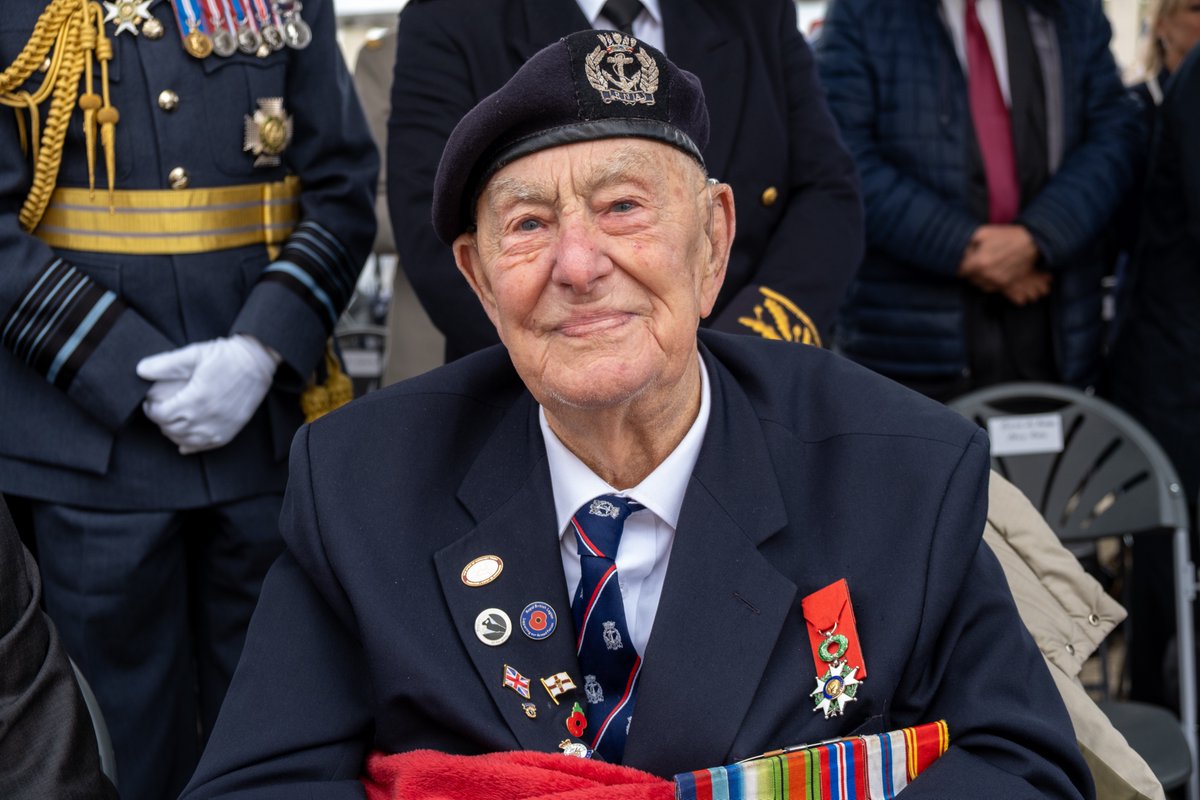
We are so saddened to learn of the death of our great friend, Henry Rice, who has died aged 100.
Normandy Veteran Henry was a Signalman serving on HMS Eastway, which was a Landing Ship used to supply men and equipment to the various beaches. HMS Eastway arrived off Juno Beach on D-Day +5.
Henry was one of the first Veterans to visit the Memorial after its completion in October 2021, and has visited every year since thanks to our partners Spirit of Normandy Trust. His passion for remembrance was truly humbling.
We will miss Henry so very, very much. His beaming smile, infectious warmth and wonderful zest for life brought such joy to everyone fortunate enough to know him.
We send our deepest condolences to the Rice family and all Henry's friends.
Rest in Peace, dear Henry. ❤️
📷 This is Henry at the Memorial a few months ago for the 82nd anniversary commemorations. Credit - Florence Marsac / British Normandy Memorial
THINGS WE DID DO:
Built This City
Shot the Sheriff
THINGS WE DIDN'T DO:
Start The Fire
Shoot the Deputy
THINGS WE WANT TO DO:
Break Free
Hold Your Hand
THINGS WE WILL DO:
Rock You
Survive
Anything for Love
THINGS WE WON’T DO:
Take It
Get Fooled Again
Talk About Bruno
Back Down
Stop Believin’
That
THINGS WE CAN’T DO:
Get No Satisfaction
Make You Love Me
Fight This Feeling
THINGS WE WILL NEVER DO:
Get Back Together (Like, ever)
Give You Up
Let You Down
Run Around
Desert You
Make You Cry
Say Goodbye
Tell A Lie
Hurt You
Rick Jolly’s interview and stopped when he said, “We couldn’t treat them all.” The part the recording leaves unstated is extraordinary: this Royal Navy doctor became the only serviceman decorated by both Britain and Argentina after the Falklands War.
At Ajax Bay, Jolly led the makeshift “Red and Green Life Machine”. His team treated more than 650 British and Argentine casualties and carried out around 210 operations. I find it deeply moving that nationality stopped mattering at the operating table.
Britain appointed him OBE. Argentina later awarded him the Order of May for the lives of its wounded that he helped save. I’m immensely proud that one of the clearest stories of British courage from that war was also a story of humanity towards the enemy.
A beloved priest was being honored at a retirement dinner celebrating his twenty-five years of service to the parish.
A prominent local politician and longtime member of the congregation had been chosen to give the keynote speech and present the priest with a farewell gift.
Unfortunately, he was running late, so the priest decided to share a few memories while everyone waited.
“I have to admit,” the priest began with a chuckle, “my very first impression of this community came from the first confession I heard here.
“At the time, I honestly thought I’d been assigned to the most wicked parish on earth! The very first man who entered my confessional confessed to stealing a television, lying to the police, robbing money from his parents, embezzling from his company, having an affair with his boss’s wife, abusing illegal substances, and being arrested multiple times for public nudity.
“I was horrified that one person could commit so many sins!
“But over the years, I realized he was a rare exception, and that this parish is actually filled with decent, honorable, and loving people.”
The crowd laughed politely.
Just then, the doors swung open, and the breathless politician hurried into the hall, apologizing for being late.
He walked straight to the stage, took the microphone, and smiled warmly at the audience.
“Ladies and gentlemen, I’ll never forget the day Father arrived at our parish twenty-five years ago.
“In fact, I had the distinct honor of being the very first person to enter his confessional!”
I’m stunned by what Kate Nesbitt did after the 70-metre dash under fire in Helmand in 2009.
At 21, Able Seaman Class 1 Nesbitt reached Lance Corporal John List of 1 Rifles and treated him for 45 minutes. She put an airway through his nose and held pressure on his neck while rounds struck nearby.
I’m in awe of what her explanation says about training: the drills had been repeated so often that, in the firefight, the medicine was the one thing she did not have to think about. (That is training doing its job.)
She became the first woman in the Royal Navy to receive the Military Cross. In 2018, a painting of the action was unveiled in HMS Raleigh’s chapel opposite Jack Cornwell VC. I love that new recruits are shown courage through real people.
I cannot imagine hearing “man down”, knowing a wounded soldier lay 70 metres away across open ground under Taliban fire, and choosing to run straight towards him. At 21, Royal Navy medic Kate Nesbitt did.
Lance Corporal John List had been shot through the mouth and neck. Kate reached him and spent 45 minutes keeping him breathing as rounds hit the ground around them.
I am in awe of that calm. John later said he would have died without her.
I love what came next. Nine years later they reunited at HMS Raleigh. John had recovered and was working as an outdoor activities instructor in Bude. One decision under fire became years of someone else’s life.
One day a florist went to a barber for a haircut.
After the cut, he asked about his bill, and the barber replied, I cannot accept money
from you, I'm doing community service this week.
The florist was pleased and left the shop.
When the barber went to open his shop the next morning, there was a
thank you card and a dozen roses waiting for him at his door.
Later, a cop comes in for a haircut, and when he tries to pay his bill, the barber again replied, I cannot accept money from you, I'm doing community service this week.
The cop was happy and left the shop.The next morning when the barber went to open up, there was a 'thank
you' card and a dozen doughnuts waiting for him at his door.
Then a Member of Congress came in for a haircut, and when he went to pay his bill, the barber again replied, I cannot accept money from
you. I'm doing community service this week.
The Member of Congress
was very happy and left the shop.
The next morning, when the barber went to open up, there were a dozen
Members of Congress lined up waiting for a free haircuts.
And that, my friends, illustrates the fundamental difference between
the citizens of our country and the politicians who run it.
Ships don’t win battles, sailors do. Well trained crews able to think as a single entity, utterly committed to both the mission and each other.
Courage, humour, spirit, determination, loyalty and teamwork.
The British Sailor.
The men of 2 PARA were pinned down. Argentine machine guns raked the hillside at Goose Green.
The attack had stalled. Casualties were mounting.
And somewhere ahead, hidden among trenches dug deep into the ridge, the enemy continued pouring fire into the advancing British paratroopers.
Lieutenant Colonel Herbert "H" Jones could see exactly what was happening.
If the attack stopped here, more of his men would die.
At that moment, he made a decision that would define his life forever.
Not from behind a radio.
Not from a command post.
But from the front.
Born in 1940 and raised in the quiet village of Kingswear in Devon, H Jones had been many things before becoming one of Britain's most famous soldiers.
He was the eldest of three brothers, a mischievous boy who sailed dinghies on the River Dart, raced through the village lanes, and dreamed of adventure.
Friends remembered him as energetic, competitive and impossible to ignore whenever he entered a room.
After leaving Eton, he joined the British Army and never looked back.
He served in Northern Ireland during some of the darkest years of The Troubles, earning an MBE for his leadership and courage.
By 1982 he was commanding officer of the 2nd Battalion, The Parachute Regiment.
His men simply called him "H".
On 28 May 1982, on a windswept hillside in the Falklands, his battalion faced one of the hardest battles of the war.
The Argentine positions at Darwin and Goose Green were heavily fortified and well prepared.
For over an hour the attack struggled to move forward under relentless fire.
H Jones knew something had to change.
So he grabbed a sub-machine gun and charged.
Witnesses watched him sprint uphill directly toward the enemy trenches through a storm of bullets.
He fell.
Got back up.
And charged again.
He was hit only a few metres from the enemy position he was trying to destroy.
Minutes later, inspired by what they had just witnessed, the men of 2 PARA renewed their assault.
The Argentine defenders surrendered shortly afterwards.
Goose Green was secured.
More than 1,000 Argentine troops were captured.
Many historians believe the victory changed the momentum of the entire Falklands campaign.
Prime Minister Margaret Thatcher would later say:
"His life was lost, but his death was the turning point in the battle."
For his actions, H Jones was awarded the Victoria Cross, Britain's highest award for gallantry.
But those who knew him best remembered something else.
Not the medals.
Not the headlines.
Not the history books.
His brother Tim once said:
"We're not here to remember that bleak hillside in the Falklands. We're here to remember the man, how much he loved Kingswear, and how much we enjoyed growing up here."
Because before he became Lieutenant Colonel H Jones VC, he was simply H.
A son.
A husband.
A father.
A brother.
A paratrooper who believed a commander should never ask his men to go somewhere he was unwilling to go himself.
And forty years later, the small plaque beside the ferry slipway in Kingswear still reminds people that one of Britain's bravest sons never made the journey home he had always planned to make.
Lest we forget. 📷📷
#HJones #HerbertJones #VictoriaCross #ParachuteRegiment #2PARA #FalklandsWar #GooseGreen #BritishArmy #MilitaryHistory #BritishMilitary #WeWillRememberThem #LestWeForget #NeverForgotten
A German, an Italian, a Frenchman, and a Brit are debating philosophy.
The question arises: What separates man from the animals?
“Technology,” says the German. “Other creatures use tools, but none can match the engineering feats we’ve accomplished. It is our industry that separates us from the beasts.”
“I disagree,” says the Italian. “It is food. Animals eat, but they do not cook. Humans create incredible dishes and endless combinations that make eating one of life’s greatest pleasures.”
“I say it’s art,” declares the Frenchman. “No other creature can create art. Since the earliest days of humanity, we’ve painted, sculpted, written, and composed. Wild animals can never know the deep emotion inspired by a beautiful work of art.”
The Brit sits quietly, sipping his tea.
After several moments, the Frenchman, growing impatient, asks,
“Well, what about you? What do you think separates man from the animals?”
The Brit takes another sip of tea and replies…
“The English Channel.”