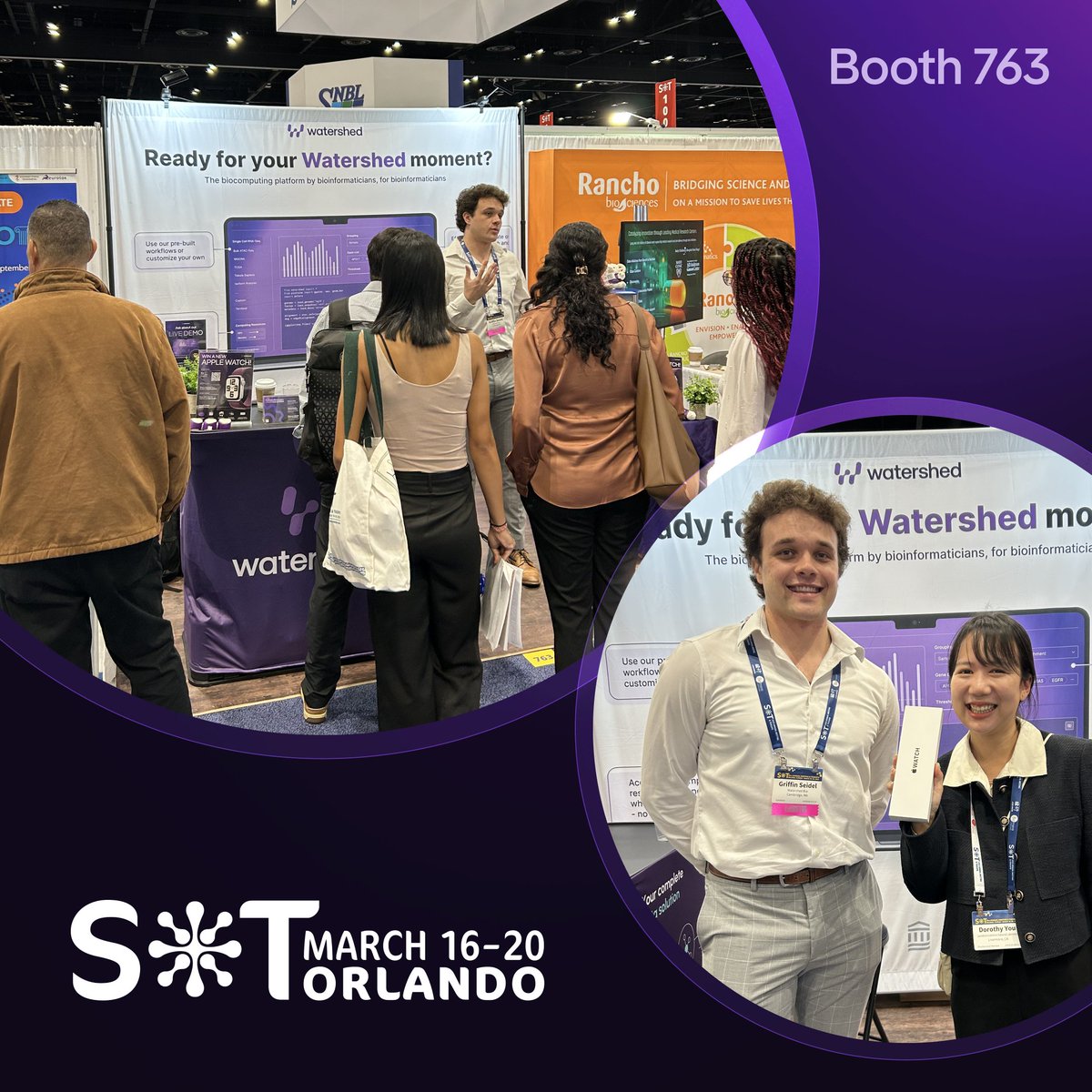
Society of Toxicology (SOT) is in full swing! Explore how to access #hpc resources and bring your team together on analyses at booth 763. 📍
Congratulations to Dorothy You on winning an Apple Watch yesterday from our gacha machine! ✨
#SOT#HPC#Watershedbio
☀️We’re looking forward to a brief escape from the snowy weather as we travel to Florida in a few weeks for @SOToxicology. Join us as we soak up the sun and chat all things bioinformatics, computational biology and beyond!
#SOTAnnualMeeting#2025SOT
🏅Our award-winning gacha machine is back for our 2025 conferences!
Heading to #HIMSS25 next week? Stop by booth 4761 to explore the Watershed Platform and try out our gacha machine for a chance to win exciting prizes—including a brand-new Apple Watch!
⏳The countdowns begins! We’re now a month away from exhibiting at the @SOToxicology in Orlando.
Meet up with the Watershed team at Booth 763 to discuss the latest challenges and innovations in leveraging #biologicaldata for #drugdiscovery and life sciences research.
#2025SOT
💜Scientists are growing and implanting heart tissue to help failing hearts recover their lost function, proving that sometimes, tender loving care (and a little biomedical engineering) can heal a broken heart.
🎉Congratulations to everyone involved: https://t.co/t0Jc1QjvmF
👀Biologists, we see you—copying, pasting, and manually cleaning data in spreadsheets. But what if there was a better way? Our latest blog series by Dr. Andrew Wight is here to help you take the first step into programmatic data analysis.
https://t.co/QmeuP1Xd8M
#Bioinformatics
⚡️Is your current compute setup just not cutting it? Are you attending #HIMSS25? Make sure you’re planning to swing by Booth 4761 to see how our easily accessible #HighPerformanceComputing resources can supercharge your #drugdiscovery and development efforts.
#HPC#WatershedBio
🟣 Want to try it for yourself? Contact Watershed to learn how we can transform your research using foundation models with state-of-the-art GPUs.
https://t.co/7GtPwCAZl2
🔦 Our research spotlight this week uses GPU-powered models, including #AlphaFold and #RELION, to analyze the dystrophin–glycoprotein complex (DGC), a critical muscle component affected in muscular dystrophies.
One month to go before our first conference of 2025, @HIMSS!
Join us and experience the Watershed Platform first hand as we bring our expertise in #bioinformatics & #computationalbiology to the epicenter of healthcare innovation.
March 3rd-6th, Las Vegas, booth 4761! #HIMSS25
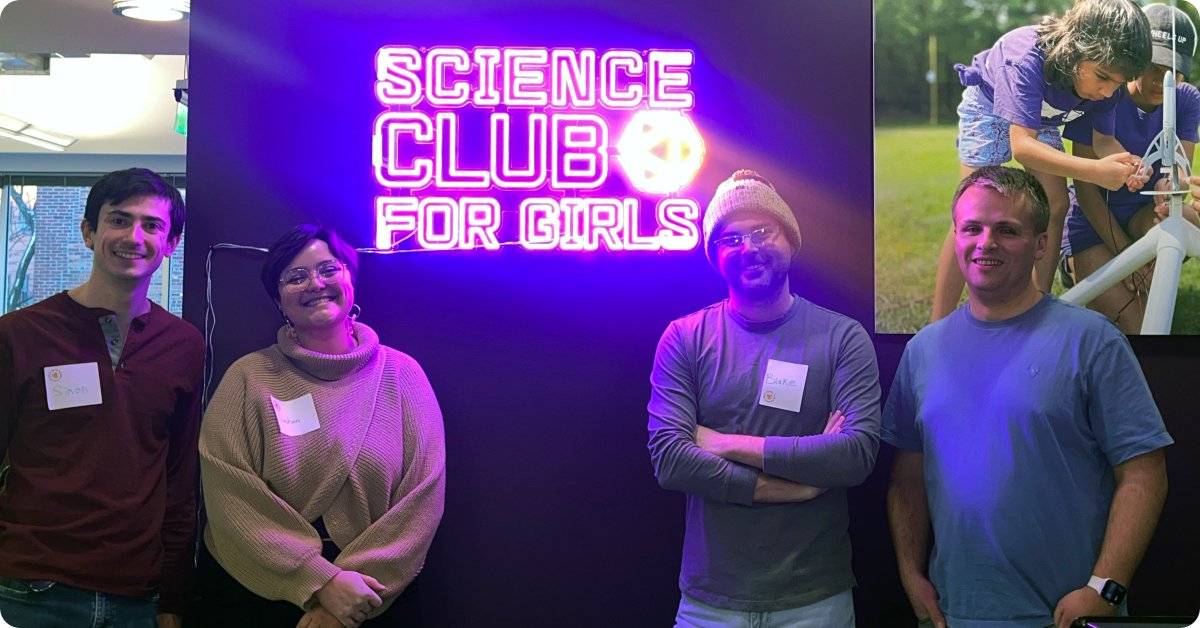
SCFG fosters excitement, confidence, and literacy in STEM for girls and gender-expansive youth from underrepresented communities by providing free, experiential programs and by maximizing meaningful interactions with women-in-STEM mentors. 💙
Last week, the Watershed Team had the wonderful opportunity to volunteer with @SCFG . We gained insights into their dynamic STEM programs and helped to organize curriculum supplies! 🤝
#biotech#watershedbio#scfg
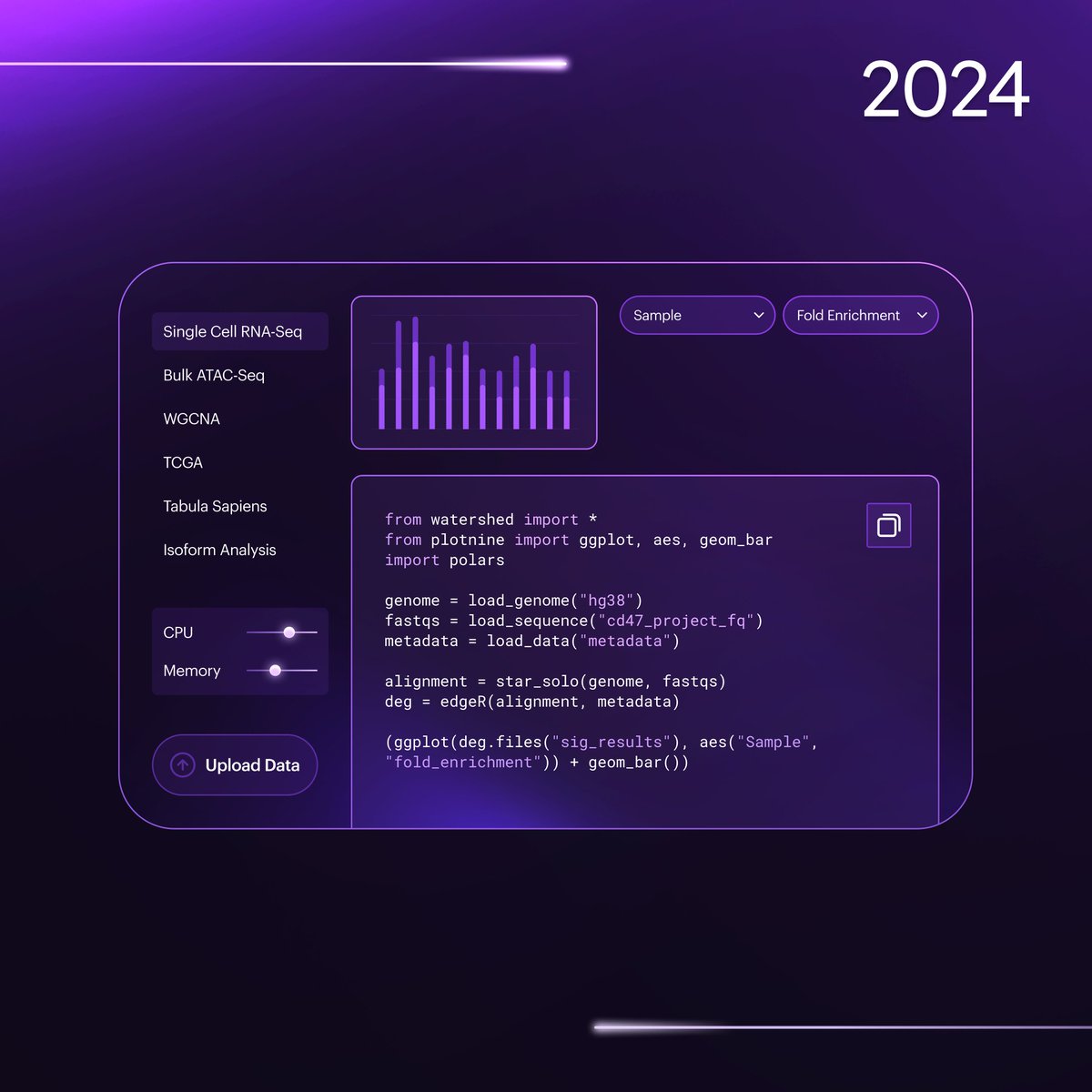
💜2024 was a pivotal year for Watershed which saw our platform bloom into the all-in-one operating system for developers, scientists, and organizations that are serious about data. But don’t just take our word for it:
#watershedbio#Bioinformatics#CloudComputing
🤝 We’re so excited to announce that Watershed is now a sponsor of The Black Women in Computational Biology Network!
📣 Our team is proud to support their work amplifying the voices of Black women in computational and quantitative biosciences across the globe.
📈 Looking to tackle a large data set of your own? Watershed provides the high-performance hardware you need to efficiently process and analyze large datasets. With access to our cutting-edge GPUs, you can power any advanced machine learning analysis.
https://t.co/lK8vJKR1iq
❓Curious to see how #machinelearning can be used to tackle large data sets?
🕰️ This study generates a high-resolution brain atlas using spatially resolved single-cell transcriptomics on more than 4 million cells...
https://t.co/4P5hA66TX5
...Tracking gene expression across ages and rejuvenating interventions like exercise and partial reprogramming. Using a machine learning approach, the authors developed “spatial ageing clocks” that represent a useful tool for studying cell–cell interactions in spatial contexts.