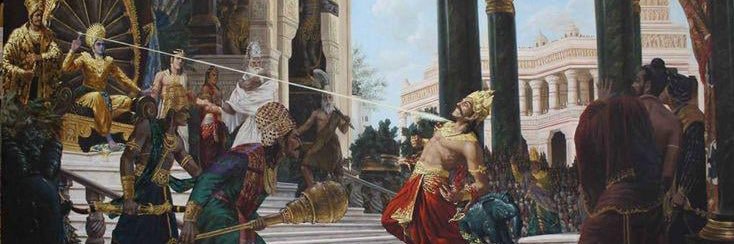
I invite you to explore https://t.co/H5QVrrFJD3 and go on a journey of amazing historical visual essays with me. 🙏🏻🫶
Currently live on the site :
The story of Persia
India at independence
The path of Buddhism
How 9 countries got the N bomb
Rise and fall of Napoleon
…and many more.
han is in the smell that betrays the kim family, it is in the basement beneath the basement, it is in the line about the rich, said without bitterness, said the way you describe weather
“if i had all this money, i’d be nice too. even nicer”
bong wrote that parasite was “a comedy without clowns, a tragedy without villains.”
parasite ends with a son writing a letter to his father, who is trapped in a basement beneath a stranger’s house. the son promises he will one day buy the house and let his father walk out into the sun.
When the camera cuts, he is still in the same half-basement his family began in.
the koreans have a word for this.
han (한) it’s the grief you did not earn but somehow possess. the pain of generations, accumulated, carried in the body without anyone teaching you how.
the word carries the weight of korean history. centuries of invasion, thirty-five years of japanese occupation, during which the korean language itself was suppressed in schools, korean names replaced with japanese ones, newspapers shut down.
then the war that split the peninsula. families on either side of a line, growing old, dying, still separated.
Hi X,
Can I ask you to check out this video about the journey of the Persian language? I would love it if you watch and share 😊
The Six English Words That Are Secretly Persian
https://t.co/tGaYwLb8gj
You know sometimes when you watch a boat disappear behind a distant island, and something stirs that you can’t quite name?
It’s not sadness, not awe either, it’s something older than both. The Japanese have a word for it: yūgen (幽玄), inherited from the vocabulary of Noh theatre.
An awareness of the universe that triggers feelings too deep for words.
Twenty-nine years. One hundred seventeen thousand kilometres. Forty-four modern nations. Before steam, before maps, before nations — one Moroccan scholar walked the medieval world entire.
A scrolling visual essay on Ibn Battuta — the man who walked further than Marco Polo, Zheng He, and any human until the age of railways. No one tells this story properly in English.
🔗 https://t.co/IiiOJkjBpC
Raskolnikov, in Crime and Punishment, having killed an old woman to prove a theory about himself, falls in love with a prostitute, kneels suddenly at her feet, and tells her he has bowed not to her but “to all the suffering of humanity.”
A moment later, he changes his mind. A moment after that, he changes it back.
The Russian language has a word for this nadryv for which English has no equivalent, though Pevear and Volokhonsky settled, after some struggle, on “laceration”
in the mahabharata, a spirit blocks a lake and won’t let the eldest pandava drink until he answers a riddle.
the spirit asks: what is the greatest wonder in the world?
yudhishthira answers without thinking -
day after day, countless creatures die. and the ones still alive believe they are exempt.
The message itself begins:
Thy lover lives, and from the holy peak
Asks if these absent days good health afford.
The Sanskrit poets had a name for the condition that produces such acts: viraha (विरह), separation. Against all common sense, they held that love attains its highest form only in the absence of the beloved.
Kalidasa, in fifth century, wrote the Meghaduta, the cloud messenger in which an exiled man, unable to reach his wife, engages a passing cloud to carry word on his behalf.
He instructs the cloud on the route, the cities to pass over, the rivers to drink from. He describes his wife so that the cloud will recognize her: thin from grief, hair untended, attempting to play a lute she has forgotten the strings of, marking the days of his absence with flowers laid out on the threshold floor.
The desert monks of fourth-century Egypt spoke of acedia, the noonday demon, the spiritual sloth that descended at midday, when the sun stood still and the cell felt like a tomb.
It doesn’t talk about laziness but something graver, the exhaustion of one who can no longer find a reason to care that he can no longer find a reason to care.
TIL that during pregnancy, cells from the baby cross the placenta and lodge in the mother’s bloodstream. they migrate to her heart, her liver, her brain. they stay there for decades, sometimes for the rest of her life.
every mother carries fragments of her children inside her skull.
We are, at the cellular level, never fully separate from the people who made us.
every other biome makes you trade. tropics give you abundance and parasites. forests give you seasons and scarcity. steppes give you horses and dust.
only here does the climate hand you wine, oil that doesn’t spoil, bread that keeps a week.
we evolved on the savanna. but the moment humans could choose, we picked the strip where the grape grows. rome. athens. barcelona. san francisco. cape town. adelaide.
2% of the earth. every place anyone has ever called paradise.
i’m in venice.
that orange ribbon on the map, mediterranean basin, coastal california, central chile, the cape, southern australia is the only land on earth with a mediterranean climate. about 2% of the planet.
on that 2%, three plants converge: wheat, olive, grape.
the entire calorie-and-pleasure economy of western civilization, growable on a single hillside.
The cherry blossom, is beautiful for the precise reason that it lasts a week.
Beauty becomes fully beauty only at the moment it is leaving.
The Japanese call it mono no aware (物の哀れ) - the pathos of things.