Today we are releasing our formal response paper to @Grid2TaskForce RFC #1: "Physics-Grounded Agents, Verifiable Intelligence, and the Path from Grid 1 to Grid 2."
We strongly support G2TF's vision of decoupling real-time system access from traditional peak-reliability planning. Our response focuses on a core incentive-compatibility challenge: in an unpriced protocol, pure proportional allocation rewards over-declaring capacity during constrained intervals.
We outline a price-free, delivery-weighted correction mechanism alongside a hybrid stack of deterministic physics models at the edge and verifiable execution.
Download link to the full 30-page position paper: https://t.co/BshOu9mUN1
Web PDF reader on our website: https://t.co/1VbWwzDX33
For more about our thesis: https://t.co/c2E1uaIFY8
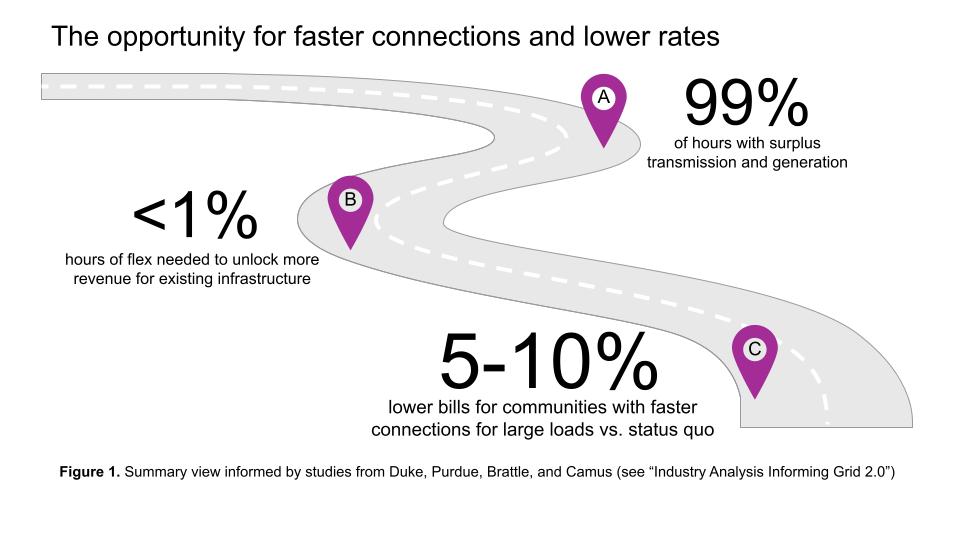
99% of hours: surplus transmission and generation.
~1% of load flexibility to unlock it.
5–10% lower bills for everyone.
📄Today we're publishing RFC #1 — Grid 2.0, an open standard for grid service access and allocation. https://t.co/8UlpS5iu94
A power grid asks every asset the same question: what can you do right now? The asset answers with a number it declares about itself, and that number is rarely checked against the state of the machine at the moment it matters.
We wrote about that failure mode through a horror film. Backrooms (2026) is built on a space that copies real places from memory and copies them worse each time, navigated by an architect with a map he drew himself and never verified.
Three minutes of our architecture walkthrough, cut against the film. Full essay: https://t.co/pvqYJvoARH
Key Technical Takeaways from the Wattness Position Paper:
1. The Incentive Compatibility Problem: In packet networks (DiffServ/TCP), unconsumed packets yield zero utility. On the grid, allocating headroom proportional to declared requests actively rewards phantom demand. A participant declaring 400 MW to draw 100 MW receives an outsized share during constrained intervals at the direct expense of honest actors.
2. A Price-Free Correction: G2TF explicitly committed to coordination without nodal pricing. To preserve that constraint without inviting manipulation, we propose weighting declared requests by a trailing, measured delivery score (actual delivery vs. declared commitment). Over-declaration lowers the multiplier and mathematically cancels the gain.
3. Temporal Clocks & Market Portability: A 1-minute protocol window nests neatly inside ERCOT's 5-minute SCED dispatch, but not ERCOT's 15-minute settlement interval—nor Singapore's 30-minute NEMS periods. Standards intended to travel across jurisdictions need explicit market profiling.
4. Edge Intelligence Needs Verifiable State: An Allocator with zero internal intelligence cannot verify physical constraints like battery state-of-charge, thermal headroom, or compute deferral windows without deterministic, inspectable physics models at the edge.
Grid 2.0 builds the road. Physics-grounded verifiable agents determine what vehicles do on it.
Today we are releasing our formal response paper to @Grid2TaskForce RFC #1: "Physics-Grounded Agents, Verifiable Intelligence, and the Path from Grid 1 to Grid 2."
We strongly support G2TF's vision of decoupling real-time system access from traditional peak-reliability planning. Our response focuses on a core incentive-compatibility challenge: in an unpriced protocol, pure proportional allocation rewards over-declaring capacity during constrained intervals.
We outline a price-free, delivery-weighted correction mechanism alongside a hybrid stack of deterministic physics models at the edge and verifiable execution.
Download link to the full 30-page position paper: https://t.co/BshOu9mUN1
Web PDF reader on our website: https://t.co/1VbWwzDX33
For more about our thesis: https://t.co/c2E1uaIFY8
99% of hours: surplus transmission and generation.
~1% of load flexibility to unlock it.
5–10% lower bills for everyone.
📄Today we're publishing RFC #1 — Grid 2.0, an open standard for grid service access and allocation. https://t.co/8UlpS5iu94
When environmental policy meets grid architecture in Texas, the battleground isn't state mandates—it's decentralized infrastructure governance.
Historically constrained by state-level preemption (like HB 40), Texas counties have virtually zero land-use authority. As gigawatt-scale data center queues collide with 765 kV transmission buildouts, that regulatory vacuum is creating systemic grid and physical risks.
Giving counties land-use code authority fundamentally alters project economics for large loads and developers across four critical vectors:
1. Energy-Water Nexus & OPEX: Local codes can regulate Water-Use Intensity (WUI), pushing developers from cheap, water-intensive evaporative cooling to closed-loop or air-cooled architectures in water-stressed zones.
2. Non-Wires Alternatives (NWAs): Mandating on-site resilience standards (solar, storage, microgrid switchgear) transforms passive demand sinks into active grid-balancing resources during scarcity events.
3. Stormwater & Low Impact Development (LID): Regulating impervious cover mandates engineered retention paths rather than standard flat grading.
4. Stranded Asset Risk: Strict 100/500-year floodplain setbacks prevent siting high-value power assets in high-risk floodways.
In an energy-only market like ERCOT, sustainable expansion will not come from top-down federal mandates. It comes from shifting the development paradigm from "fast-track, unchecked buildout" to "resilience-based planning" where large loads internalize their infrastructure externalities.
PJM is evaluating potential changes to interconnection reliability requirements, including existing and future ride-through standards and practices for Large Loads, specifically computational loads such as data centers and crypto-mining facilities, in the wake of a July 22 event that saw nearly 4,000 MW of data center load trip offline unexpectedly in Virginia. https://t.co/RUFptHC4Vw
Spot on. Interconnection queues and permitting delays have become the single biggest drag on new energy deployments.
While the policy debate works toward long-term permitting reform, the immediate challenge is operational: how do we extract more capacity from the grid we already have?
Physical infrastructure takes years to permit and build, but software-level co-optimization of flexible assets—batteries, compute, and industrial loads—can relieve grid strain immediately.
Permitting reform builds the grid of tomorrow, but verifiable intelligence unlocks the capacity we need today.
It has never been easier to block an energy project in America, and it has never been harder to build one.
We are running out of time to solve this problem – the time to pass permitting reform is right now!
Everyone loves funding the next lab breakthrough, but the IEA just pointed out the elephant in the room: almost 20% of the 640 clean energy technologies they track are already commercially available (TRL 9) but remain entirely undeployed.
The bottleneck isn't the hardware; it's the transition into a rigid market where commercial and regulatory barriers immediately replace technical ones. When grid operators are logically terrified of instability, new flexible capacity just rots in interconnection purgatory.
At Wattness, we realized that bypassing this deployment gap isn't a policy problem—it's a math and verification problem.
Grid operators demand absolute certainty. By bridging deterministic edge physics with wholesale market dispatch, we provide the hard mathematical bounds required to prove that autonomous assets (like batteries and data centers) can trade and co-optimize without breaking the system.
Hardware only scales when the intelligence layer makes it safe to dispatch and automate revenue settlement. We're building the verifiable protocol for the energy machine economy so these stranded technologies can finally get to work.
🗣️ “Almost a fifth of the 600+ energy technologies we track are commercially available but not yet adopted”
Read more on energy innovation’s commercialisation problem – and how supportive policies can help bring proven technologies to scale 👉 https://t.co/oTIs8j581w
Power grids balance physical energy @ 60Hz; blockchains balance digital state in blockspace. Yet both determine value through the exact same math: shadow costs on a constrained network graph. A microstructural translation bridging power markets and crypto: https://t.co/6OHOaQqYDZ
Every major era in global commodity trading was born at the exact intersection of a physical bottleneck and an evolving market mechanism.
In The World for Sale, Javier Blas (@JavierBlas) and Jack Farchy (@jfarchy) document how a small cadre of physical merchants became the indispensable clearing-house of the global economy:
1. The Spatial Arbitrageurs (1950s–1970s): When John D. Rockefeller's Seven Sisters controlled posted prices and closed supply chains, Theodor Weisser bypassed them by bringing Soviet crude to West Germany. When Gamal Abdel Nasser closed the Suez Canal, Marc Rich transformed the oil trade by moving Iranian barrels through the secret Eilat–Ashkelon pipeline into Europe.
2. The Temporal Arbitrageurs (1980s–1990s): When Nymex introduced WTI futures and created "paper barrels," Andy Hall at Phibro realized that physical storage and financial derivatives were two sides of the same trade. In 1990, he chartered an entire flotilla of VLCC tankers to store 37 million barrels at sea, locking in risk-free contango spreads before turning it into a massive directional bet during the Gulf War.
The fundamental lesson across 70 years of trading history is simple: market efficiency is never created by abstract financial speculation alone. It is built by traders who understand physical constraints before anyone else and engineer the operational rails to bridge them.
Today, that frontier has shifted. The most volatile, capital-intensive, and ruthlessly physical commodity market on earth is no longer oil, copper, or LNG.
It is the wholesale power grid.
The Ultimate Physical Exchange
Wholesale electricity markets (ERCOT, PJM, CAISO, NYISO, etc.) represent the most complex real-time exchange ever designed:
1. Spatial Arbitrage is Nodal, Not Geographic:
In oil, geographic spread is measured across oceans and pipelines. On the grid, locational marginal pricing (LMP) diverges node-by-node across high-voltage transmission lines. A substation in West Texas or Upstate New York can clear at negative $50/MWh due to localized solar or wind trapped behind a binding thermal constraint, while a load zone 40 miles away clears at $1,500/MWh.
2. Temporal Arbitrage is Governed by Physical State, Not Just Warehouses:
Andy Hall’s oil tankers held crude with near-zero physical degradation. A grid-scale battery (BESS) cannot store electrons without confronting the laws of electrochemistry. State of charge (SoC), ambient temperature, C-rate, and capacity fade mean that every discharge decision has a direct, physical marginal cost. Sizing an energy arbitrage trade without modeling asset degradation is like chartering a tanker that dissolves as you sail it.
3. The Cadence Has Collapsed to Seconds:
Oil settles on monthly cargo laycans; wholesale power clears on 5-minute Security-Constrained Economic Dispatch (SCED) intervals and settles on 15-minute clocks, with sub-second frequency response running underneath. Human trading desks and manual spreadsheets cannot operate inside a 60-second optimization window.
The Next "Merchants of Power"
For decades, the bulk power grid was managed like the old oil market: static 30-year utility planning, conservative seasonal line ratings, and firm interconnection queues that forced large industrial loads to wait 5 to 8 years for grid access.
Now, multi-gigawatt AI data centers, industrial electrolyzers, and massive battery fleets are colliding head-on with transmission constraints.
The operators who win this next cycle will probably not be those waiting for multi-billion-dollar transmission buildouts, nor will they be financial traders running naive price-forecasting models on top of static equipment assumptions.
We believe that new class of merchants will be deterministic, physics-grounded intelligences operating at the edge. They will co-optimize battery degradation with flexible compute scheduling, read dynamic line ratings and shadow prices in real time, and translate non-firm grid access into native, verifiable market offer curves.
Marc Rich understood the pipeline; Andy Hall understood the forward curve. And we believe the next era belongs to those who understand the physics of the node.
This week, The World for Sale comes out in paperback
It explains how oil and commodity markets work, how they influence geopolitics, and the extraordinary power of a few traders you've probably never heard of
Please take a look https://t.co/NZoL8VdgHs
Having just finished The World for Sale, what stands out most is how every generation of commodity trading was born from bridging physical bottlenecks with financial mechanics—from Marc Rich on the Eilat pipeline to Andy Hall navigating Brent floating storage.
The wholesale power grid (nodal LMPs, sub-minute SCED dispatch, battery degradation, and transmission physics) feels like the ultimate real-time culmination of this exact lineage.
We have explored how the modern grid has essentially become the world's most complex commodity exchange at @wattness_ai—huge inspiration taken from your book!
The argument that "New York batteries have no solar to store" confuses gross statewide energy with locational net load physics:
1. Electricity is Nodal, Not a Copper Plate: Measuring whether statewide utility solar tops total statewide load ignores transmission topology. Upstate NY runs on >85% zero-carbon power (hydro, nuclear, wind, solar) but is bottlenecked from moving it to NYC. Batteries solve local line congestion and nodal price divergence, not statewide averages.
2. BTM Solar Reshapes the Wholesale Curve: Behind-the-meter (BTM) solar doesn't sell into NYISO, but it dictates the net load shape. 8 GW of distributed solar creates a midday net-demand depression followed by an aggressive evening ramp. Bulk BESS exists to absorb the ramp rate and relieve transmission stress when solar drops off.
3. The Distributed Target: NY’s 6 GW storage mandate allocates 3 GW to distributed siting precisely so batteries can co-locate on distribution substations with the 8 GW of rooftop and community solar.
Sizing storage against aggregate statewide surplus rather than nodal congestion and net ramping misdiagnoses how power markets actually dispatch.
Where's the excess solar to store?
New York's battery buildout is sold as storing surplus renewable energy. So here's yesterday, hour by hour: the solar a grid-scale battery could actually see.
Nearly all of New York's 8 GW of solar is on rooftops and small community installations. The electricity goes onto local distribution circuits. NYISO can't dispatch it, wholesale batteries can't buy it, and it shows up on the grid only as demand that doesn't materialize.
The solar that actually sells into the wholesale market has to be utility-scale. Right now, that's 571 MW statewide. Yesterday, that fleet peaked at 400 MW and produced 2.7 GWh over the entire day. The utility-scale fleet is what we hear about when ORES projects are being discussed.
The state's storage goal is 6 GW by 2030; half of it bulk, grid-scale batteries.
One full, 4-hour charge of that 3 GW bulk fleet is about 12 GWh. Yesterday's entire utility-solar output would have covered less than a quarter of it, and that's if the batteries could have taken every megawatt-hour, which they couldn't, because every one was already being consumed the instant it was made.
Gas and oil generation never dropped below 8.1 GW all day.
Since May 1, in a total of 2,592 hours, utility-scale solar has not exceeded statewide demand for a single hour. For a genuine surplus, where solar tops all in-state fossil generation and there's actually something spare to store, yesterday's cloudy morning would have needed about 23 GW of utility-scale solar. That's 40 times what New York has built, and two and a half times everything in NYISO's interconnection queue, co-located projects included. Even the summer's sunniest day would have needed 8 GW more than the whole queue.
Until then, the batteries will charge from whatever is on the margin. Downstate, NYISO's own marginal-emissions accounting says that margin is fossil about 92% of the time.
The data is accurate on NYISO fleet numbers, but the conclusion rests on a copper-plate assumption:
1. Nodal vs. Statewide: Batteries don’t require statewide solar to exceed 100% of statewide demand to prevent curtailment. Upstate NY (Zones A–E) routinely sees zero/negative LMPs behind transmission constraints (e.g., Central-East), even while Downstate burns gas.
2. BTM Solar Dictates the Net Ramp: 8 GW of rooftop/community solar doesn’t have to be wholesale-metered to impact the bulk grid. It hollows out midday net load and creates a steep 5–9 PM net ramp. Bulk batteries arbitrage that net-load shape, not just direct photon output.
3. The 3 GW Distributed Split: Half of NY’s 6 GW target is distributed storage (under VDER/Order 2222), which sits directly on the distribution feeders alongside community solar.
4. Peaker Displacement: Even when charging from efficient CCGTs on the margin off-peak, evening battery discharge displaces high-heat-rate, sub-10% capacity factor peakers in Zone J.
The AI compute scaling curve just collided with the laws of power systems.
Securing 4.25 GW of power capacity is fundamentally different from securing wafer starts at TSMC:
• Chips operate in supply chains governed by capital and yield.
• Multi-GW power operates on transmission graphs governed by Kirchhoff’s laws, thermal line limits, and nodal clearing engines.
You cannot scale multi-gigawatt data centers as dumb, static loads without causing massive local transmission congestion and multi-year interconnection delays. The frontier AI factories that come online fastest will be those that integrate edge physics, battery buffering, and workload dispatch directly into the grid’s real-time operational clock.
NVIDIA’s balance-sheet backing of 4.25 GW+ at PORTS-Pike confirms the structural transition: the primary bottleneck to scaling intelligence is no longer semiconductor packaging, but bulk power transmission.
A few engineering realities of deploying multi-GW AI factories on the US grid:
1. Firm Interconnection vs. Time-to-Power: Building traditional firm transmission for 4 GW at a single node takes 5–8 years in RTO queues. Connect-and-manage / non-firm access is the only realistic path to meet 2028–2030 energization dates.
2. Compute Flexibility is Power Flexibility: Training workloads with checkpointing are inherently dispatchable. Treating compute as a tiered load (firm baseline for inference + interruptible band for pre-training) allows gigawatt campuses to bypass transmission bottlenecks.
3. The Co-Located Buffer: At this density, localized battery storage (BESS) isn’t just backup power—it is an active shock absorber for sub-minute ramp rates and locational marginal price (LMP) volatility.
The next critical layer of the AI stack isn’t just land and shell—it’s deterministic, real-time coordination between cluster compute schedulers and wholesale power market dispatch.
The shift from securing silicon capacity to securing power and shell is the logical progression of the AI factory model.
But at 4.25 GW to 8.0 GW on a single site (especially within PJM), the binding constraint quickly ceases to be land or shell—it becomes transmission corridor physics and nodal congestion.
Traditional utilities plan multi-gigawatt interconnections against static, worst-case peak reliability margins, which typically implies 5+ year substation and line buildouts. The only way multi-gigawatt clusters energize on accelerated timelines is by operating as dynamic, physics-aware loads: co-optimizing on-site storage, utilizing dynamic thermal ratings, and treating deferrable training workloads as non-firm flexible bands under connect-and-manage frameworks.
The software layer coordinating power at the edge is becoming as critical to AI factory uptime as CUDA is to GPU cluster throughput.
The core systemic risk here is a massive duration mismatch.
Energy infrastructure, substations, and firm PPA contracts are 15-to-25-year capital commitments. The GPU hardware inside has a 3-to-4-year depreciation cycle, backed by software monetization models that are still largely unproven at scale.
If hyperscaler capex cools or compute shifts architecture, you are left with stranded utility-scale interconnects and long-term take-or-pay energy obligations held on private credit and insurance balance sheets.
For the full interview and direct operational insights from Tomasz Sęk on building a multi-gigawatt storage pipeline, check out Why Poland's Energy Transition Is Moving So Fast (https://t.co/1G5OAKe5qA).
This video is directly relevant because it features Tomasz Sęk breaking down R.Power's 6.3 GWh battery deployment strategy, capacity market mechanisms, and the rise of hybrid PPAs in Poland.
Poland is quietly becoming Europe’s most compelling power market—and a masterclass in how thermal fleet inflexibility drives storage economics.
While the US looks to ERCOT for merchant volatility and rapid deployment, Central Europe is building its own high-volatility sandbox under a completely different market architecture.
1. The Volatility Catalyst: Inflexible Coal Meets Solar Surges
Over the past decade, Poland has transformed its generation stack:
- Coal generation: Dropped from ~95% to ~55%.
- Renewables: Scaled to over 30% of total generation.
The fundamental market friction isn't just renewable intermittency—it’s thermal baseload inflexibility.
Unlike combined-cycle gas turbines (CCGTs) or hydro, legacy hard coal and lignite units have rigid minimum generation limits, slow ramp rates, and severe restart costs. When solar generation surges at midday, coal plants often cannot ramp down fast enough or cycle off economically.
To avoid shut-down and restart cycles, thermal generators accept zero or deeply negative clearing prices on the exchange. This creates structural, recurring intraday and day-ahead price collapses that form the bedrock of battery energy storage system (BESS) arbitrage.
2. Market Architecture: Poland vs. ERCOT
(See attached image.)
In ERCOT, price spikes are driven by instantaneous extreme demand (heatwaves/freezes) and gas/wind ramping shortages. In Poland, price spreads are driven by midday solar cannibalization colliding with inflexible baseload, followed by evening peak ramp constraints.
3. Where the Trading Alpha Lives: The Intraday & Balancing Overhaul
The Day-Ahead Market (DAM) is no longer where optimal battery returns are maximized. As renewable capacity grows, the real spread volatility shifts into continuous intraday trading and the balancing mechanism:
- Intraday Forecast Divergence: Day-ahead solar and wind forecasts frequently deviate in real time. When cloud cover or wind changes suddenly, the system experiences sharp, localized supply-demand swings that legacy coal cannot absorb.
- 15-Minute Settlement Granularity: Poland’s balancing market overhaul (shifting to 15-minute imbalance settlement periods and enhanced Single Intraday Coupling / SIDC instruments) enables ultra-fast BESS response times.
- Multi-Market Stack Optimization: Storage operators don’t just execute a static 1-cycle day-ahead schedule (charge at 12:00, discharge at 19:00). High-performing algorithmic desks capture margin across:
(1) 15-minute Intraday Auctions (IDAs) & Continuous Intraday (XBID)
(2) Balancing services (aFRR, mFRR, FCR)
(3) Dynamic imbalance settlement arbitrage
4. Commercialization: The Rise of Hybrid PPAs
Solar-only Corporate PPAs in high-penetration zones are suffering from capture price cannibalization (the "solar curve discount").
Large corporate offtakers (hyperscalers, data centers, energy-intensive manufacturers) can no longer rely on unshaped solar volume. Co-locating utility-scale solar with 2-to-4-hour BESS allows developers to offer Hybrid PPAs:
- Shifting cheap, clipped daytime power into the evening peak.
- Eliminating profile risk and imbalance penalties for both buyer and seller.
- Establishing firm baseload-like green supply without relying on wholesale peak prices.
The Big Picture
The next phase of wholesale power trading won't be defined by standard day-ahead scheduling. It will be won by assets and platforms capable of real-time intraday optimization, dynamic capacity stacking, and automated algorithmic flexibility.
Poland's rapid transition proves that even in heavy legacy grids, flexibility assets backed by intelligent trading strategies can turn structural grid friction into profitable arbitrage.