Monarchy as the Biblically Mandated Form of Government
Across the arc of Scripture, monarchy is presented not merely as one permissible political arrangement among many, but as the normative and teleological form of human governance. Rather than viewing kingship as a late historical concession to human stubbornness, the biblical canon embeds the office of the king within the foundational law of Israel, anchors redemptive history to a royal dynasty, and defines rightful civil authority in terms of a single, covenantally bounded sovereign.
1. Kingship Embedded in the Law and the Messianic Promise
The legal and prophetic foundations of Scripture treat monarchy as both anticipated and purposeful:
• Constitutional Regulation in the Torah: In Deuteronomy 17:14–20, centuries before Israel asks for a monarch, Mosaic law presupposes that the nation will eventually install a king upon entering the land. Far from prohibiting the office, the text actively legislates it—establishing qualifications (an Israelite chosen by God), strict restraints (no hoarding of horses, wives, or gold), and positive duties (writing a personal copy of the Torah and reading it daily). Kingship is thus regulated from within the law itself.
• The Messianic Trajectory: Redemptive history ties the ultimate restoration of creation to a royal scepter. Jacob’s blessing in Genesis 49:10 promises that sovereignty will not depart from Judah, and the Davidic Covenant in 2 Samuel 7:12–16 establishes an eternal royal house and throne. When the New Testament opens, the angel Gabriel announces Jesus specifically as the heir to "the throne of his father David," destined to reign over an everlasting kingdom (Luke 1:32–33). Because the climax of biblical theology is the reign of a King, monarchy functions as the political form toward which the entire canon is ordered, rather than a primitive stage humanity outgrows.
2. Resolving the Tension of 1 Samuel 8
The primary scriptural objection to this view is 1 Samuel 8, where Israel’s demand for a king is met with divine displeasure and Samuel’s stern warning of royal exploitation. However, read within its canonical context, the passage condemns a corrupted model of kingship rather than the institution itself:
• Pagan Emulation vs. Covenant Rule: Israel’s sin lay in demanding a king "like all the nations" (1 Sam. 8:5, 20)—a warrior-despot who would fight their battles in place of Yahweh and mirror the absolute, self-aggrandizing monarchs of the ancient Near East.
• Echoes of Deuteronomy: Samuel’s warning that such a ruler will conscript sons for chariots, seize fields, and tax the people heavily (1 Sam. 8:11–17) directly illustrates what happens when a monarch violates the limits already laid down in Deuteronomy 17. The text is an indictment of tyranny and faithlessness, not a retraction of the royal office God had already provisioned in the Torah.
3. New Testament Affirmation of Sovereign Authority
The apostolic writings reinforce this framework by treating concentrated civil authority as a divine instrument rather than a necessary evil. In Romans 13:1–4, Paul describes the governing ruler as "God’s servant" bearing the sword to execute wrath on wrongdoers and commend the good. Similarly, 1 Peter 2:13–17 instructs believers to honor the emperor (the supreme monarchical figure of the Roman world) as an institution established by the Lord for the punishment of evil and the praise of those who do right. Across both Testaments, the coherent political vision is that of a singular, personal sovereign entrusted with coercive power to uphold moral order.
America is New Israel
The Puritans viewed themselves as a "New Israel" in covenant with God. This conviction was not a marginal idea but the central pillar of their entire political, social, and theological worldview.
They utilized a method of interpretation known as typology, in which the historical events and experiences of the Old Testament Israelites were seen as "types" or prophetic patterns that were being relived and fulfilled by the Puritan community in the New World.
I. The "Errand into the Wilderness"
For the Puritans, the narrative of Israel’s exodus from Egypt and their journey through the wilderness to the Promised Land was a literal template for their own migration.
• England as Egypt: They viewed the corrupt Anglican Church and the persecuting state apparatus of Stuart England as "Egypt"—a land of bondage from which they were commanded to flee.
• The Atlantic as the Red Sea: The perilous journey across the ocean was understood as a crossing through the waters, a divine deliverance from the house of slavery.
• New England as Canaan: They believed they were entering a "wilderness" that God had prepared for them, a new land where they could establish a holy commonwealth free from the idols and corruptions of the Old World.
II. Federal Theology (The National Covenant)
The Puritans operated under a structure called "Federal Theology" or Covenant Theology. They believed that God does not only enter into covenants with individuals for salvation, but also with nations as moral units.
• The Collective Responsibility: They believed that as a people, they had entered into a solemn, binding contract with the Almighty. If they obeyed His Law, He would bless them with prosperity, security, and fruitfulness. If they failed—if they tolerated idolatry, Sabbath-breaking, or moral rot—He would surely bring upon them the same judgments (plagues, famine, war, defeat) that He brought upon ancient Israel.
• John Winthrop’s Vision: In his famous 1630 sermon, A Model of Christian Charity, Winthrop laid this out clearly: "We must consider that we shall be as a city upon a hill. The eyes of all people are upon us." He explicitly warned that if they "dealt falsely with our God" and failed to keep the covenant, the world would see their ruin, and they would be a shameful proverb among all nations.
III. The Church as the True Israel
Crucially, the Puritans did not see themselves as "becoming Jewish" or reviving the rabbinic traditions. They held to the theological position that the Church is the true Israel, the spiritual heir to the promises made to Abraham, fulfilled in Christ.
• Spiritual Continuity: They believed the New Covenant superseded and fulfilled the Old. They were not replacing the Jewish people in an ethnic sense; they were functioning as the "New Israel" of the New Covenant, a holy nation set apart by the Blood of Christ to uphold the moral law of God in a secular world.
• The Law of Nature: They believed the moral principles found in the Old Testament were universal and binding, and that by organizing their laws and civil order according to these Biblical mandates, they were honoring the Creator in a way no other nation in their time was doing.
IV. Why It Mattered
This self-understanding gave the Puritans a unique sense of mission and national gravity. It meant that politics was never just about administration or commerce; it was about the sanctification of a people.
• Legislating Morality: Because they were a covenant nation, they viewed civil government as a divine institution. The state had a positive duty to protect the Church, punish sin, and ensure that the nation remained pleasing to God.
• A Legacy of Responsibility: This belief in being a "chosen people" with a "covenantal mission" deeply embedded itself in the American consciousness. Even as the theology shifted in later centuries, the belief that America possesses a unique, providential role in history; a moral duty to be a light to the nations.
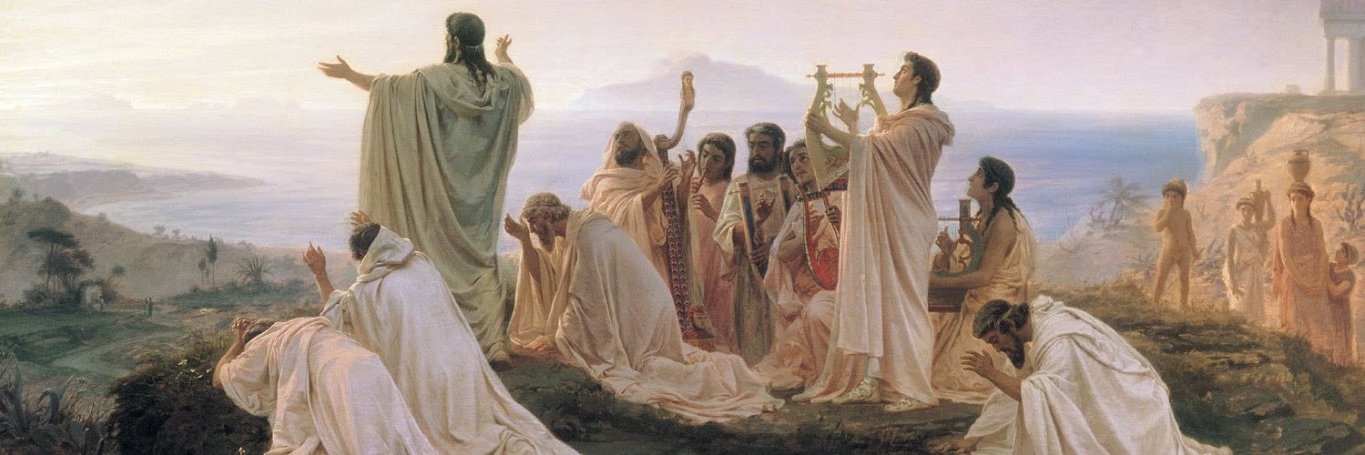
Pre-Christian Hellenistic Precursors of Hesychast Contemplative Psychology
The contemplative psychology later systematized in Byzantine Hesychasm—interior stillness, withdrawal from sensation, the gathering of the dispersed nous, purification of the passions, and non-discursive apprehension of the transcendent—has recognizable antecedents in classical and Hellenistic philosophy. The vocabulary itself is inherited: hēsychia belongs to the philosophical and medical register of antiquity well before its monastic appropriation. The parallels cluster in Platonism, Neopythagoreanism, Plotinus, the philosophical Hermetica, and Greco-Egyptian ritual texts. What the evidence supports is a shared contemplative psychology, not demonstrable transmission of the mature Hesychast psychophysical method, for which no pagan prototype exists.
Plato supplies the earliest systematic account. In the Phaedo (65c–67b) the philosophical life is a practice of dying to bodily distraction, analyzed as anachōrēsis (withdrawal from the appetites, sights, and sounds that agitate the soul), synagōgē (the concentration of dispersed faculties into a unified center of awareness), and theōria (the orientation of the purified nous toward the Forms). The Republic (518c–d) frames education as periagōgē, a turning of the whole soul from becoming toward Being. The structure anticipates later watchfulness and attentive presence, though Plato's terminus is intellectual apprehension of impersonal Forms rather than personal communion.
Neopythagoreanism, particularly in the late-antique accounts of Porphyry and Iamblichus, treated philosophy as a bios restoring cosmic harmony: ritualized silence (echemythia), morning and evening self-examination, contemplation of mathematical ratio, and the therapeutic use of music and chant to equilibrate the passions. These practices anticipate apatheia and the guardianship of thoughts; they do not attest prayer formulas, breath-synchronized invocation, or the localization of the intellect in the heart.
Plotinus offers the closest phenomenological parallel. The Enneads trace an inward ascent from fragmented sensation to henōsis through detachment, the silencing of dianoia, intuitive self-apprehension in the Nous, and the transcendence of subject-object duality, culminating in the "flight of the alone to the Alone" (phygē monou pros monon, VI.9.11). The passage beyond image and concept into luminous stillness closely resembles advanced contemplative prayer, but Plotinian union is an ontological realization of identity with an impersonal Absolute.
The philosophical Hermetica describe liberation as awakening into gnōsis of the Divine Mind. Corpus Hermeticum XIII presents palingenesia: twelve irrational torments expelled by ten divine powers through purification, interior recognition of the Nous, illumination, and unification, ending in sacred silence (sigē). The sequence approximates praxis, theōria, and divinization, while stressing the experiential goal over repeatable technique.
Iamblichus, in De Mysteriis, assigns priority to theurgy and to divine initiative: the descended soul cannot ascend by unaided intellect, and the gods must descend. He treats sacred names (onomata barbara) as acoustic receptacles of divine power that lose efficacy if altered—themes that resonate with later teaching on the gift-character of illumination and the potency of the Name, though the practice remains external and polytheistic. As a near-contemporary of early monasticism, he is a late-antique parallel rather than a strictly pre-Christian source.
The Greek Magical Papyri and related texts (1st–4th centuries AD) supply the most suggestive context for psychophysical technique: rhythmic repetition of divine names, sustained vowel vocalization, and regulated breathing directed toward systasis with a deity.
Mayor @randy_westlund invites the community to Post Falls City Hall on Nov 28th to "make a statement," that "we're taking Christmas back and celebrating the true meaning."
Elected officials will dedicate a new nativity set that members of the community raised funds for.
Why Everyday Life So Often Feels Unsatisfying: A Buddhist Perspective on Self, Enjoyment, and Freedom
Everyday life often carries a low-grade dissatisfaction (dukkha) because the constructed sense of “I” acts as a mental middleman between awareness and experience. Nearly every sight, sound, sensation, or thought is immediately filtered through self-referential concerns, so experience rarely feels complete in itself.
This “I” is not a solid entity behind the eyes. It is an ongoing construction built from ordinary habits: identifying with the body, weaving a continuous personal narrative from memory, appropriating transient thoughts and emotions as “mine,” projecting into the future, seeking control, and assuming a central owner of experience. The problem is not the appearance of a sense of self, but mistaking this dynamic process for an independent, permanent controller standing apart from experience.
Ordinarily, awareness does not simply meet the present. The mind instantly intervenes with questions such as “What does this mean for me?”, “Do I want more of this?”, or “How can I keep or get rid of it?” The result is continuous management of the relationship between the moment and the perceived needs of the self—a subtle tension that registers as dissatisfaction. Direct experience, by contrast, encounters the seen, heard, sensed, or cognized without the added layer of ownership or control.
Early Buddhist psychology maps this precisely: ahaṅkāra (I-making), mamaṅkāra (mine-making), asmimāna (“I am” conceit), upādāna (clinging), papañca (mental proliferation), and sakkāya-diṭṭhi (the view of a fixed self within the changing body-mind). The Bāhiya Sutta points to the alternative: “In the seen, there will be merely the seen…” Self-centeredness is an interdependent process that colors experience, not a separate observer that must precede every perception.
This framework also clarifies the appeal of intoxicants. Alcohol and certain drugs can temporarily weaken self-conscious overthinking, social inhibition, future-anxiety, compulsive labeling, the urge to control, and rigid identity boundaries. Experience then feels more vivid and engaging—not primarily because the substance creates enjoyment, but because it briefly suspends the habits that obstruct it. The relief is unreliable and often comes with impaired clarity, judgment, and increased suffering.
Contemplative practice works differently. Mindfulness, ethics, and meditation gradually loosen identification with the constructed self while cultivating clarity, concentration, balance, and insight. Liberating insight sees directly that the self lacks independent, permanent essence, undermining clinging at its root without dulling awareness. The goal is not to suppress the personality or destroy the sense of self, but to stop confusing the construction with ultimate identity—becoming more lucid and responsive rather than less.
Enjoyment often arises in the same way: when self-monitoring softens. Watching a sunset, absorbed listening or creation, or deep rest feels intrinsically fulfilling precisely because experience is no longer valued mainly for what it can deliver to “me.” Loving-kindness practice works on the same principle by expanding concern beyond personal interest, so happiness is no longer dependent on acquisition.
In short, dissatisfaction largely stems from placing a constructed self between awareness and the world, organizing experience around the ego’s perceived needs through clinging, resistance, and evaluation. Escape via intoxication seeks temporary chemical relief from this activity; contemplative practice seeks durable freedom through attention, ethics, and insight. Much of what we pursue through acquisition, achievement, or escape is already available when the constant effort of maintaining and defending the story of “me” relaxes.
The Art of Saying Yes to the Moment
Think about the last time you truly enjoyed something—not the fleeting dopamine hit of checking off a to-do list, and not the passive numbness of scrolling on your phone, but a moment that felt genuinely, quietly rich. Maybe it was the first warm morning after a long winter, a piece of music that caught you off guard, or a conversation where you forgot to check the time.
If you ask a neuroscientist what happened in that moment, they will point to reward pathways and neurotransmitters. If you ask an evolutionary biologist, they will talk about adaptive behaviors. Both answers are accurate, yet both leave out the most obvious part: what it actually felt like from the inside.
That inside view is the domain of phenomenology—the philosophical study of direct, lived experience. When phenomenologists examine enjoyment, they discover something surprising. Enjoyment isn’t merely a pleasant mood that washes over us; it is a distinct way of paying attention, a quiet shift in how we relate to the world.
Pleasure Is a Spark; Enjoyment Is the Fire
We tend to use pleasure and enjoyment as synonyms, but in lived experience, they are quite different. Pleasure is a raw sensory quality—the warmth of sunlight on your skin, the sweetness of a ripe peach. Enjoyment is what happens when your awareness settles into that sensation, welcomes it, and dwells inside it.
The twentieth-century philosopher Emmanuel Levinas went so far as to describe enjoyment (jouissance) as the very foundation of being alive; the basic, bodily delight of breathing, eating, and soaking in the world before we ever begin analyzing it. Pleasure is a physical signal; enjoyment is the conscious act of saying yes to that signal.
When the Ego Steps Out of the Frame
One of the clearest signs of deep enjoyment is that it quiets our constant self-monitoring. Most of our waking lives are narrated by an inner commentator evaluating how we are doing and what comes next.
When you become genuinely absorbed in a song, a craft, or a sweeping landscape, that commentator steps offstage. The experience moves smoothly from "I am enjoying this," to effortless absorption, to a state where there is simply the enjoyment itself—without you standing on the sidelines watching yourself have it. Your awareness hasn't vanished; in fact, you are wide awake. What has faded is the restless ego trying to own the moment.
The End of Inner Friction
Look closely at what disappears during enjoyment, and you find an even deeper secret: enjoyment is the temporary end of inner friction.
Throughout a typical day, the mind is locked in a subtle tug-of-war with reality—judging what is happening, resisting discomfort, or reaching for whatever comes next. In moments of enjoyment, that background hum of effort goes silent. For a brief window, the gap closes between what is happening right now and what you wish were happening. You no longer feel the urge for the present moment to be anything other than what it is.
Enjoyment Without a Trigger
This reveals something quietly radical. We usually assume enjoyment requires a specific trigger—a great meal, a vacation, a stroke of good luck. Yet when the mind’s grasping, resistant habits settle down, a different kind of satisfaction becomes possible: one that doesn’t depend on any external object at all. Ancient Indian philosophy calls this ānanda; a natural, unforced contentment woven into the simple fact of being awake and alive.
Ultimately, enjoyment is less about chasing the right experiences and more about how we meet the ones already in front of us. It is what surfaces naturally when we stop trying to fix, capture, or outrun the moment—and finally allow ourselves to inhabit it.