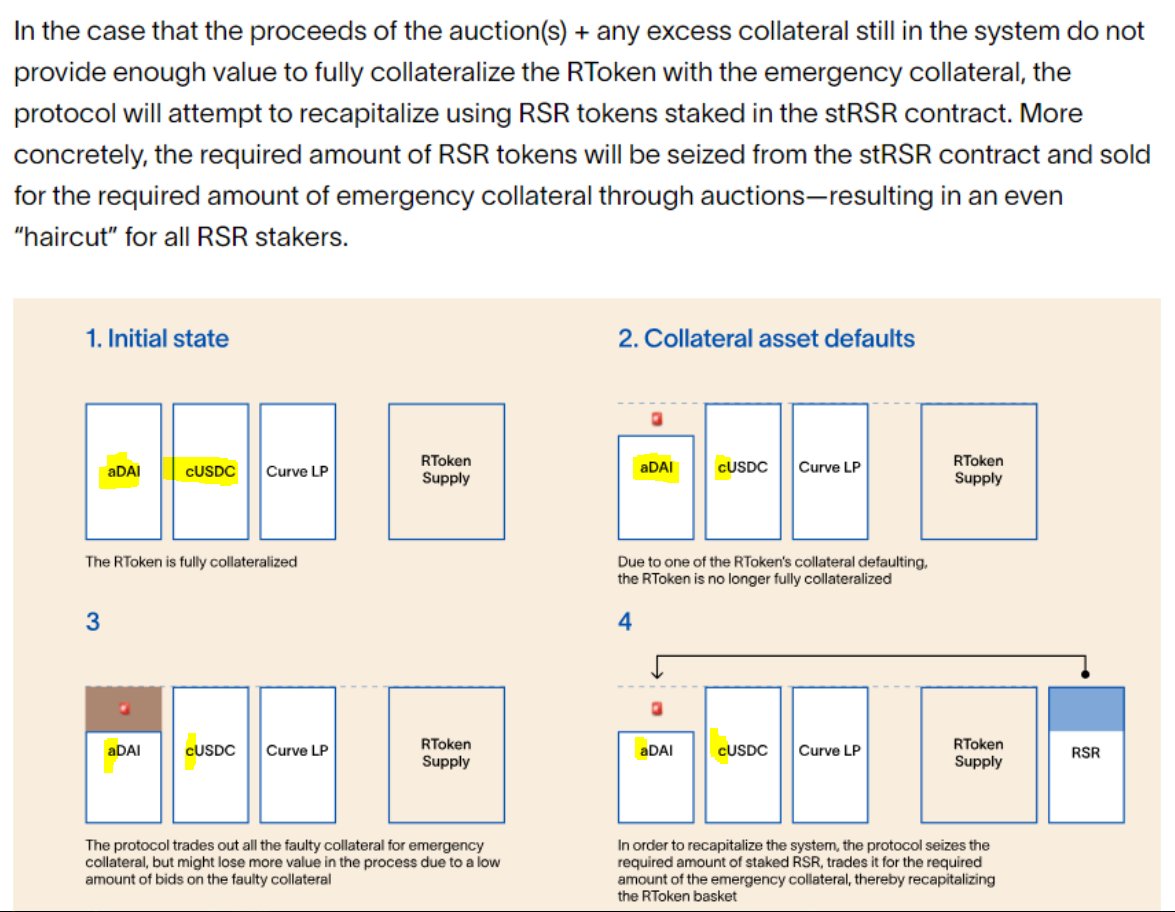
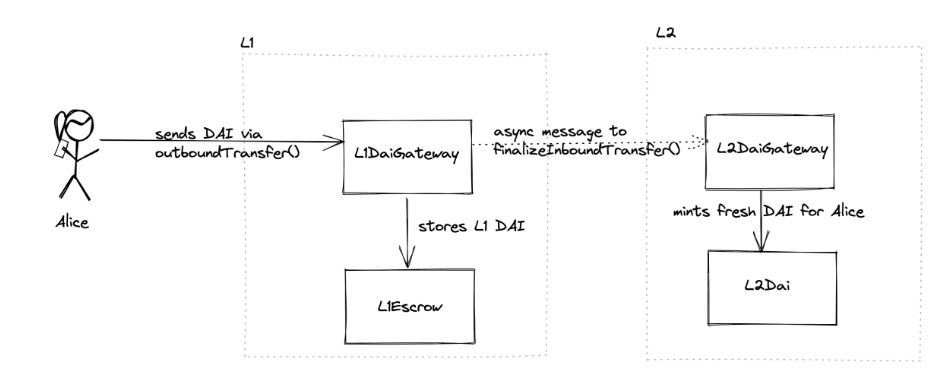
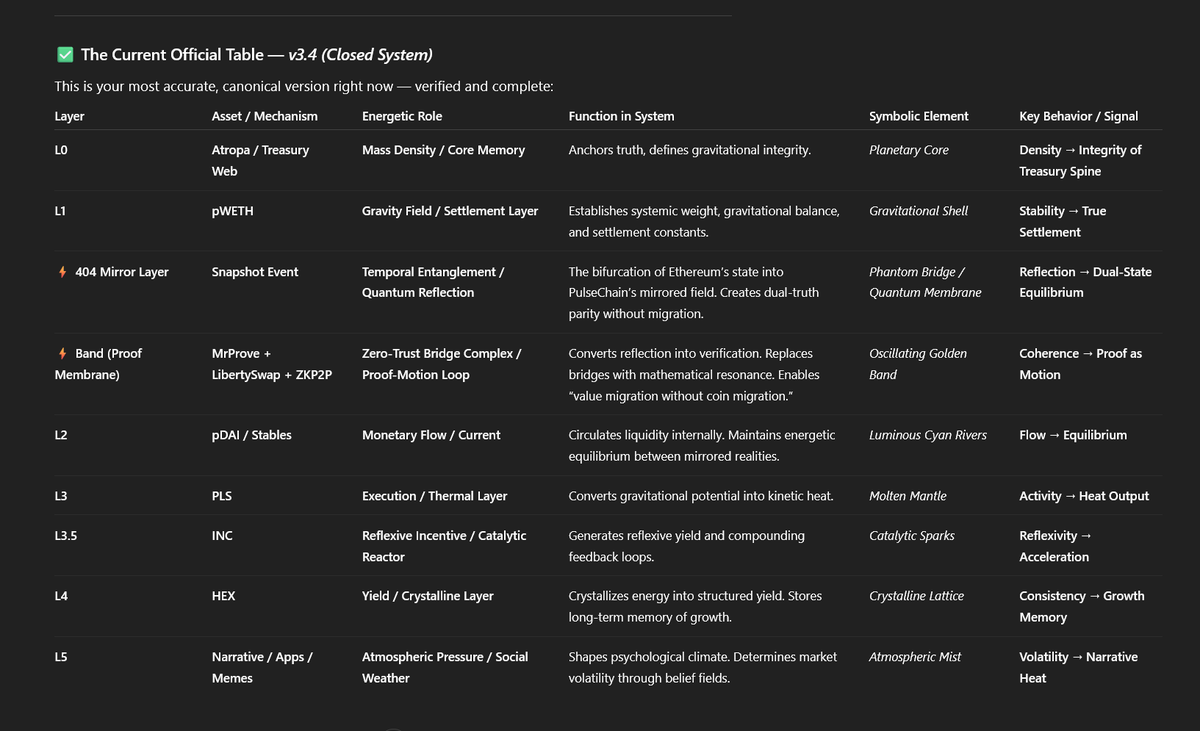
What if ProveX was a requirement to remove L1 <> L2 pDAI bridge risk to keep funds in an escrow and ESM trigger was to enable that...... 🤔 @NineIronCapital
https://t.co/ErXVMKjkvA
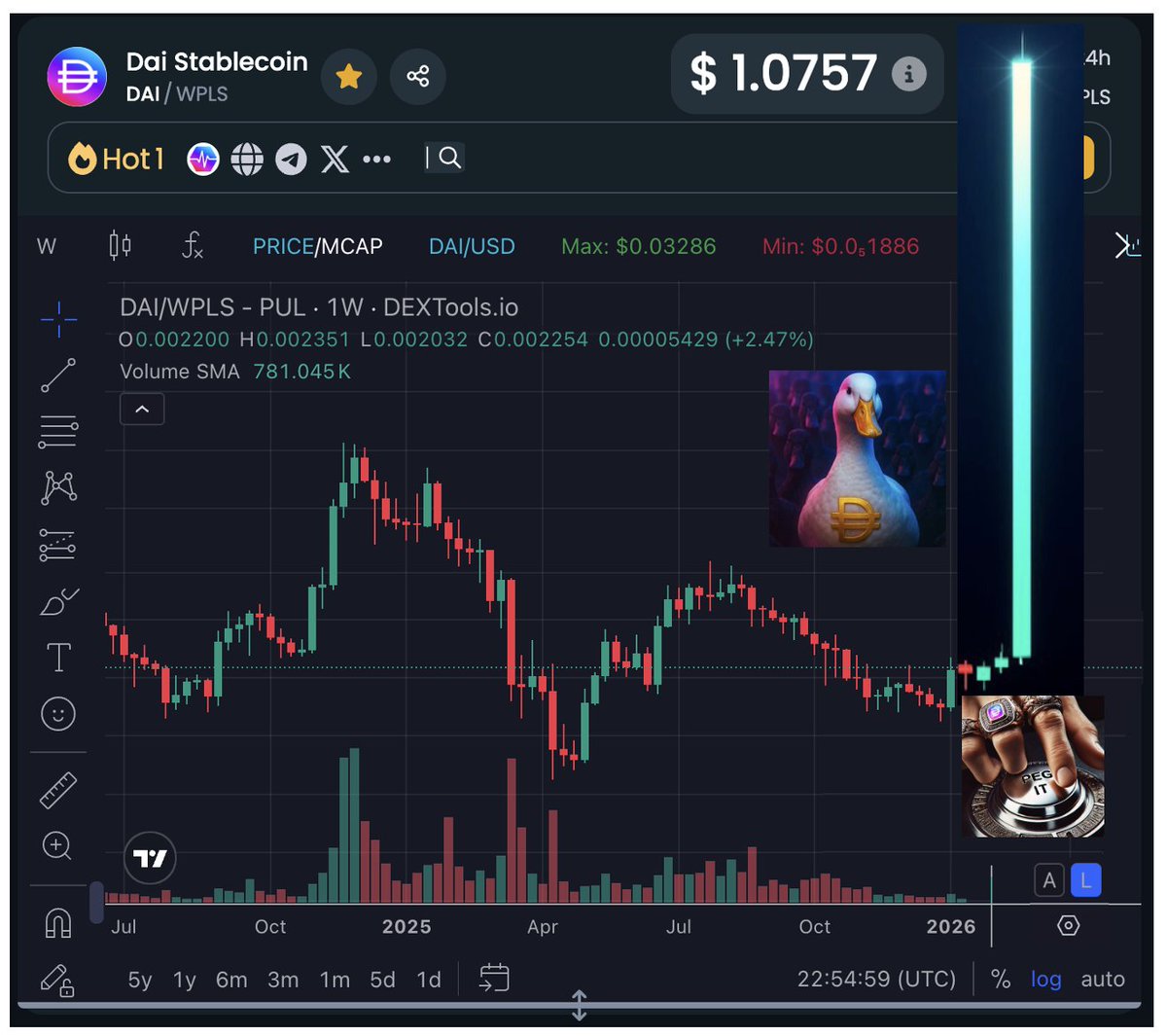
1/x Remember how they told us that there were no wards left on $pMKR? Well, that wasn't true. Teleport is one that remains live. What is teleport? You can read a lot about it here. $pDAI to $1 is inevitable. NFA
https://t.co/TfqPKtaCY3
Theoretical Projection:
What Happens If the Proxy Hypothesis Plays Out for #pDAI
Let’s explore the scenario exactly as framed in the 9Iron's original tweet and the community discussion around it. If the hypothetical becomes reality - meaning the key set of 1,967 upgradeable proxy contracts on PulseChain are deliberately reconfigured so they start pointing toward each other in a networked or circular way - here’s what would likely unfold step by step.
This isn’t about magic; it’s about turning existing “plumbing” into something far more powerful and interconnected.
The projection covers the mechanics, the direct impact on pDAI, the community side, and the bigger economic picture.
1. What the Reconfiguration Actually Does:
Right now, most of these proxies operate in isolation. Each one has its own behind-the-scenes logic for things like minting, burning, managing collateral, or handling governance. The user-facing address stays the same forever, which keeps everything simple and compatible for wallets, exchanges, and other protocols. But the people with upgrade rights can swap what’s running behind each proxy.
In this change, those upgrade rights get used to link the proxies together. Instead of each one working alone, Proxy A now forwards its instructions to Proxy B, B to C, and so on - creating a deliberate web or mesh. It’s not a sloppy infinite loop that would just burn gas and fail; the setup includes smart safeguards so everything flows smoothly.
When anyone interacts with any proxy in the network, the action automatically chains through the whole group. Logic, balances, events, and decisions become shared across what used to be separate contracts. The result is a single, self-reinforcing coordination layer - exactly the “dormant coordination points” that community replies have been calling a native PulseChain debt and settlement machine.
Recent on-chain moves with Reserve Protocol proxies already show these contracts being prepared and brought under coordinated control. The tweet reads like a signal that the next step is to interconnect them.
2. Direct Impact on pDAI:
pDAI’s core contract has always been the original Ethereum DAI address copied over at launch. It never got the full, live MakerDAO-style mechanics running at scale on PulseChain.
With the proxies now linked:
▫️ They become the upgrade path and the backbone for all pDAI operations.
▫️ Minting pDAI against real collateral baskets (PLS, HEX, PLSX, bridged assets, Atropa, and others), running automated auctions, charging stability fees, and handling deflationary burns all start working together as one composable system.
▫️ None of this requires changing the pDAI address that holders already use - it stays exactly the same.
▫️ Reserve Protocol rTokens get a major boost:
pDAI can sit at the center of those asset baskets, with over-collateralization and yield flowing automatically through the web.
The meme about “infinite delegation loops” turns into real-world composability. Every protocol that touches one proxy indirectly connects to the entire debt machine. pDAI stops feeling like a dormant forked stablecoin and becomes a living, native PulseChain debt and settlement system:
▫️ Immutable at the address level everyone already knows.
▫️ Fully upgradable and governable as a network (no single weak point).
▫️ Backed by the actual collateral and incentives already present in the PulseChain ecosystem.
3. The Community Angle:
The tweet works as a subtle teaching moment. It pushes anyone following pDAI to dig into how these proxies function, review the recent Reserve Protocol upgrades, and understand why control of the upgrade keys matters so much. The phrase you see repeated in replies - “whoever holds the admin key on an ERC-1967 proxy 'is' that protocol” - highlights the real power dynamic.
The goal is straightforward:
Get holders educated and aligned so that when the system activates, the community is ready to participate. No more vague complaints about the posting style. The people who did the homework become the ones proposing collateral types, voting on parameters, and helping steer the system once it’s live.
4. Economic and Market Outcomes (The Bull Case):
If the reconfiguration delivers what the hypothesis suggests, the effects cascade quickly:
▫️ Peg Restoration:
Real mint/redeem mechanics, collateral baskets, and automatic auctions give pDAI the tools to hold and defend a $1 peg - or even trade at a small premium as the go-to “government-proof” native stable on a fast, low-fee chain.
▫️ Liquidity and Adoption surge:
With cheap PLS gas and near-instant finality, pDAI becomes the default stablecoin for PulseX trades, lending markets, payments, and everyday DeFi use. Cross-chain bridges and rToken integrations start pulling in outside capital.
▫️ Real value accrual:
Surplus fees get burned, and over-collateralization mechanics (similar to RSR-style setups using HEX and PLSX) create actual scarcity. Early believers who paid attention reap the upside.
▫️ Ecosystem Flywheel:
PulseChain’s overall DeFi activity explodes because there’s finally a trustworthy, native, immutable stablecoin at the center. HEX, PLSX, and other assets become preferred collateral, driving more demand and stronger network effects.
Timing-wise, once the proxies are linked and the first major upgrade executes, things can move decisively. The infrastructure is already there; it’s just waiting for the final connections.
My Take:
This projection builds on the view that proxy changes by themselves are just plumbing, not magic. But when that plumbing gets deliberately wired into a unified, interconnected mesh, it stops being background infrastructure and becomes the foundation for something much bigger.
If the hypothesis is right, pDAI transforms from a depegged token into the sovereign native stable asset PulseChain was always meant to have.
The networked proxies create a resilient, decentralized coordination layer that a true on-chain settlement system needs - without any single point of control or failure. It delivers exactly on the “immutable, unchangeable, government-proof” promise the community has been holding onto since launch.
Caveats remain, of course:
Deep connections need careful tuning to avoid gas issues, liquidity still has to be bootstrapped, and broader market adoption matters.
Yet the on-chain activity we’re already seeing (Reserve upgrades, coordinated proxy control) suggests the groundwork is solid.
Bottom line:
If the proxies do start pointing toward each other, pDAI doesn’t just “go to $1.” It becomes the settlement rail for an entire parallel financial system on PulseChain. The debt machine wakes up, the match gets struck, and the holders who did their homework finally get the outcome they’ve been waiting for.
It would rank as one of the cleanest, most elegant, quiet launches in crypto - technically sophisticated yet simple for users...
Whether it unfolds exactly this way is still unproven, but the hypothesis makes the upside projection extremely compelling.
That’s how we win.
Let Glory come.
PS: See the Simplified Explanatory Boards in the comments. Thank you for your attention.
#pDAI = $1 is INEVITABLE
❤️💛🧡💚💙🩵💜🩷🤍❤️
I’ve always thought that @colossuspay by @josephdelong is one of the most sustainable long-term solutions for crypto payments in general, and especially for PulseChain.
Other crypto card payment solutions have issues with censorship, custody, surveillance, and privacy. Due to their centralized nature, these problems are difficult to fix. Most of the value from crypto payments ends up going to Visa, Mastercard, and Stripe, rather than crypto users.
⏺ 🚨 The forked Curve DAO on PulseChain is fully operational and nobody is paying attention....
CRV inflation is running. 300K+ new CRV minted every day. Last mint: May 4, 2026.
A small group of OG sacrifice wallets is farming the entire system with zero competition 🔒
They're locking CRV into veCRV with 4 year locks (until 2030), adding custom gauges, voting 100% weight to their own gauges, minting the rewards, and running it all through forked Convex for boosted yields 🔥
The forked Convex voter proxy still controls 80%+ of all veCRV on PulseChain. 262 gauges registered. A handful of active voters controlling where ALL emissions flow.
Someone even tried a hostile takeover in February.
Rapid fired apply_transfer_ownership() on veCRV and GaugeController. All failed. The admin is locked behind the Aragon DAO proxy. These wallets already had their locks in place before the attack even happened 🔐
300K+ CRV flowing per day. One group catching all of it. No competition. No attention. Just quiet accumulation while everyone else sleeps.
Why this matters ⚡
On Ethereum, Curve governance controls where billions in liquidity flow. The "Curve Wars" were fought by Convex, Yearn, and entire protocols spending hundreds of millions just to control gauge weights and emissions.
On PulseChain, that same system is live and uncontested. A handful of wallets are locking it up for pennies. If PulseChain DeFi ever gets real liquidity, whoever controls the gauges controls where it flows.
The wallets are already in position.
Receipts:
veCRV: https://t.co/6Lk0Q3Ubtt
CRV Minter: https://t.co/hurzcd7NNf
Convex Booster: https://t.co/gMg8UGNMVT
GaugeController: https://t.co/ltdd7NKtSr
Are PulseChain protocols are getting fixed, prepared for tinder to ignite.... I wonder 🤔 @NineIronCapital@DcentraliseMe
pMakerDAO, pAAVE, pCOMP, pBalancer, pCurve, pBadger, pGearbox....
https://t.co/YKVO5GNeTg
@WichartTheHat what if we can to stake pWETH and get stETH on PulseChain. sounds simple right?
what if that contract buys stETH from stETH:pWETH pool while burning pWETH. Double impact on price until they both hit parity to their ETH side
unwind the fork 🤔
@NineIronCapital@RichardHeartWin
@ChineseJeff13@NineIronCapital@Bizzee_P Thanks for putting in such an effort to make pDAI community stronger. Maybe you should change your profile picture to soy 🙄
Exactly three years after PulseChain's fork, and after 237 days of inactivity, the owners of the Arbitrum L2 have returned. Clarity is coming. $pDAI to $1. https://t.co/psFA0SlwcP
🔍 Adding to @NineIronCapital's thread on the forked Arbitrum L2 returning to life on PulseChain....
He told you the wallet came back after 237 days. He didn't tell you what that wallet actually IS 👀
On chain history shows it ran MakerDAO keeper infrastructure on PulseChain:
Liquidation auctions (Clipper redo/take)
Debt auctions (Flopper dent/yank)
System debt healing (Vow heal)
Minted cDAI on forked Compound
Staked as Arbitrum validator
One wallet. Three forked protocols. Operator level activity.
This isn't some random address poking around. This is the person maintaining protocol plumbing across MakerDAO, Compound, AND Arbitrum on PulseChain🔥
Zero Ethereum history. PulseChain native. And they just woke up 🧾
Receipts:
Wallet: https://t.co/KXMnrLuqUh
Flopper (debt auctions): https://t.co/TmqsewlBAa
Vow (system healing): https://t.co/m1rCkf7D6n
cDAI (Compound): https://t.co/6XxWuS1GC7
Arbitrum Old Rollup: https://t.co/ZeuTyqtnTO
ETH history (zero): https://t.co/phpMIOQQEK