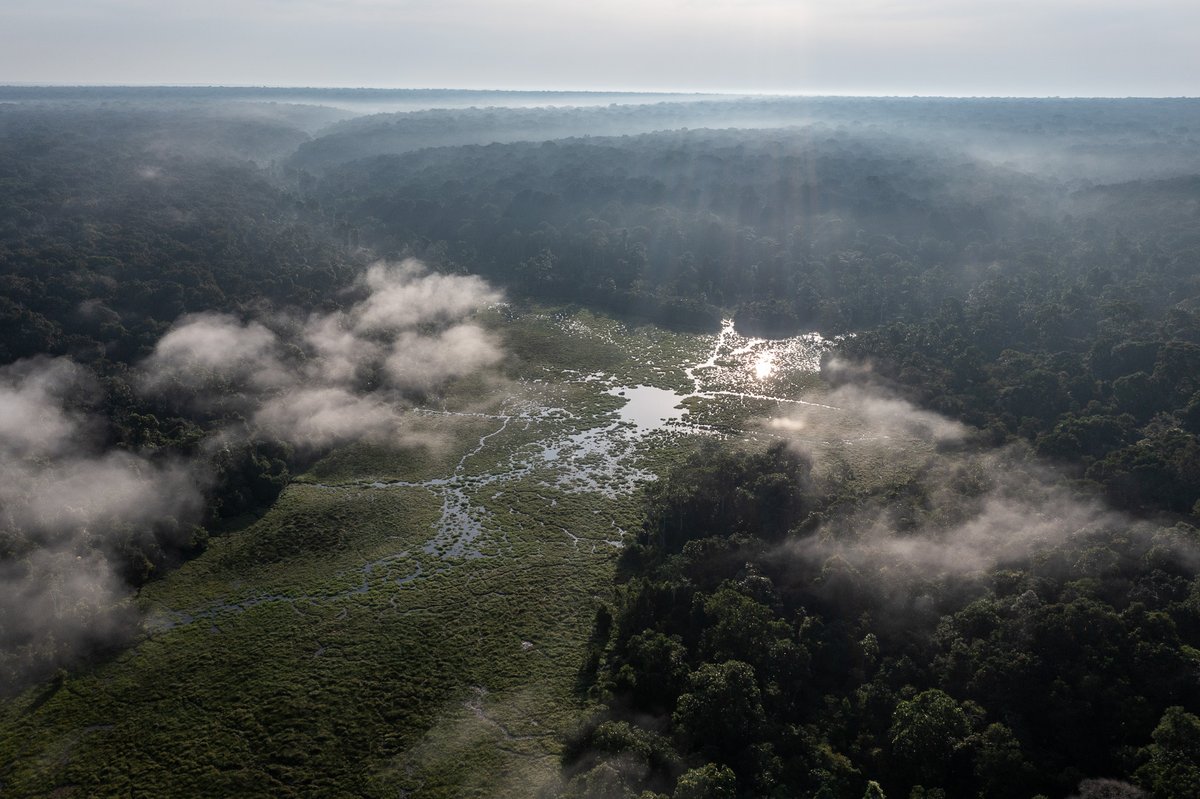
Working with communities and the government to save #wildlife and wild places in the Republic of #Congo. @TheWCS Country program. Join us #StandforWildlife
Protecting fruit trees means protecting #chimpanzees. At Goualougo, fruits made up over 70% of the diet of observed chimpanzees last month, with groups of more than 20 individuals gathering around a single fruit tree. Protecting #forests means protecting #wildlife.
A sitatunga amidst a herd of buffalo at Mbeli Bai: a peaceful interaction between different species recently observed by our researchers in #NouabaléNdoki National Park.
Find out the latest news from the NNNP : https://t.co/kHfI7RPifh
#congo#conservation#wildlifeconservation
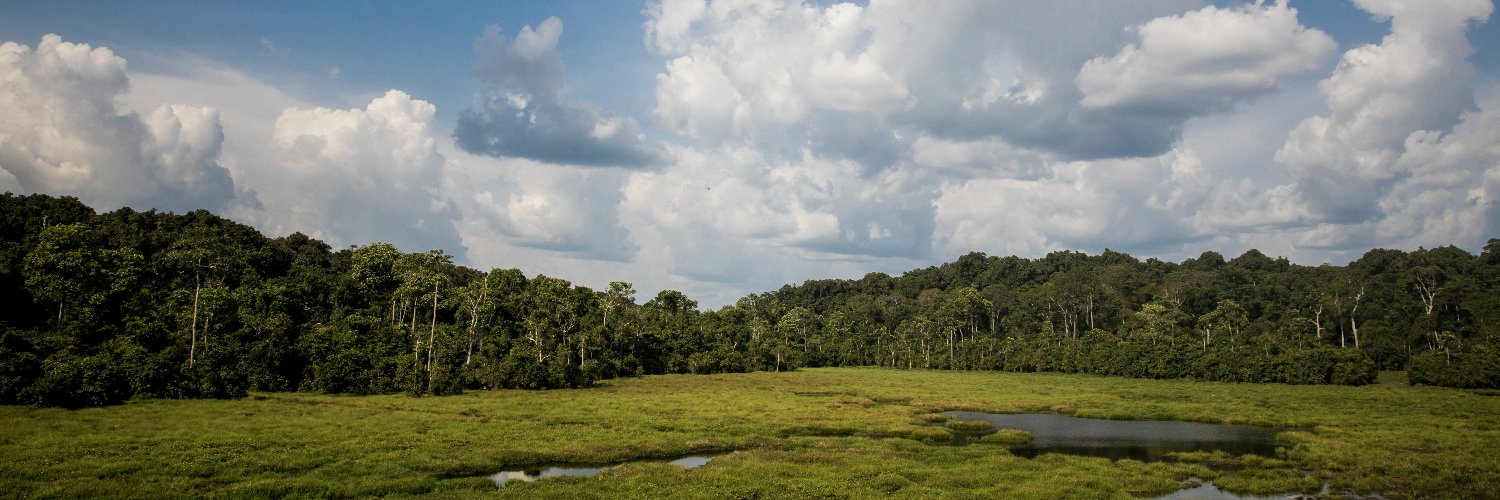
A recent feature by The Telegraph highlights the global importance of #NouabaléNdoki’s forests for #biodiversity and climate, while showcasing #wildlife research, Ba’Aka knowledge, and conservation challenges in the #CongoBasin.
👉 https://t.co/z2wLiqJfA7
Between 2018 & 2023, WCS & the University of Exeter monitored artisanal ray and shark fisheries in Songolo, Pointe-Noire. More than 40 species were recorded, including the critically endangered scalloped hammerhead shark (Sphyrna lewini).
#Congo#Fisheries#ConservationScience
On #EarthDay, we highlight a key milestone in Congo: with WCS support, national OECM guidelines were adopted: https://t.co/R1cMkI6Jiu
Today, the focus goes further—placing communities at the center through FPIC, ensuring they actively shape decisions on their lands.
#WCSImpact
#NouabaléNdoki NP has come through the first quarter of the year: community initiatives aimed at strengthening young people’s commitment to conservation have been carried out, and scientific monitoring has continued rigorously.
Here the lastet newsletter: https://t.co/UmxoXgtEVQ
Grooming in #chimpanzees is more than hygiene—it’s a key social behavior that strengthens bonds, reduces stress, and maintains group cohesion.
Observed in Goualougo, it highlights the role of alliances in chimp society.
#Congo#Conservation#NouabaleNdoki#Goualougo
From 2021 to 2024, seizures dropped significantly (191 to 103), along with intercepted biomass—potentially indicating reduced hunting pressure, but also possible shifts in trafficking routes or evasion strategies.
Since 2021, the PK38 checkpoint on the Epéna–Impfondo road has recorded 547 wildlife seizures (5.9 tons, 16 species), with dwarf crocodile accounting for nearly half.
Seizures declined by 2024, possibly due to reduced pressure or route shifts.
#congo#antipoaching
Despite climate change impacts in Nouabalé-Ndoki National Park, February brings hope: a new Park Director, an elephant birth at Mbeli Bai, and Kenga’s infant thriving at Mondika.
Read the newsletter: https://t.co/QarTnvmiHA
.
#congo#nouabaléndoki#consewrvation
What’s at stake? Anticipation. In a system where water shapes everything, changing rainfall is already reshaping forests, wildlife, and communities—subtly, but measurably. #conservation#climat
Is the Congo Basin drying before our eyes?
A silverback crosses the Ndoki River with ease, while field teams do the same nearby. Once deeper and harder to navigate, the river now runs noticeably lower—echoing a decade-long decline in rainfall recorded at Mondika.
#congobasin
Recognizable by his single tusk, Alino is a regular visitor to Mondika, often observed at close range by researchers and visitors alike.
During a joint session between Mondika and Mbeli teams, the elephant recorded as YAM480 at Mbeli Bai was confirmed to be Alino.
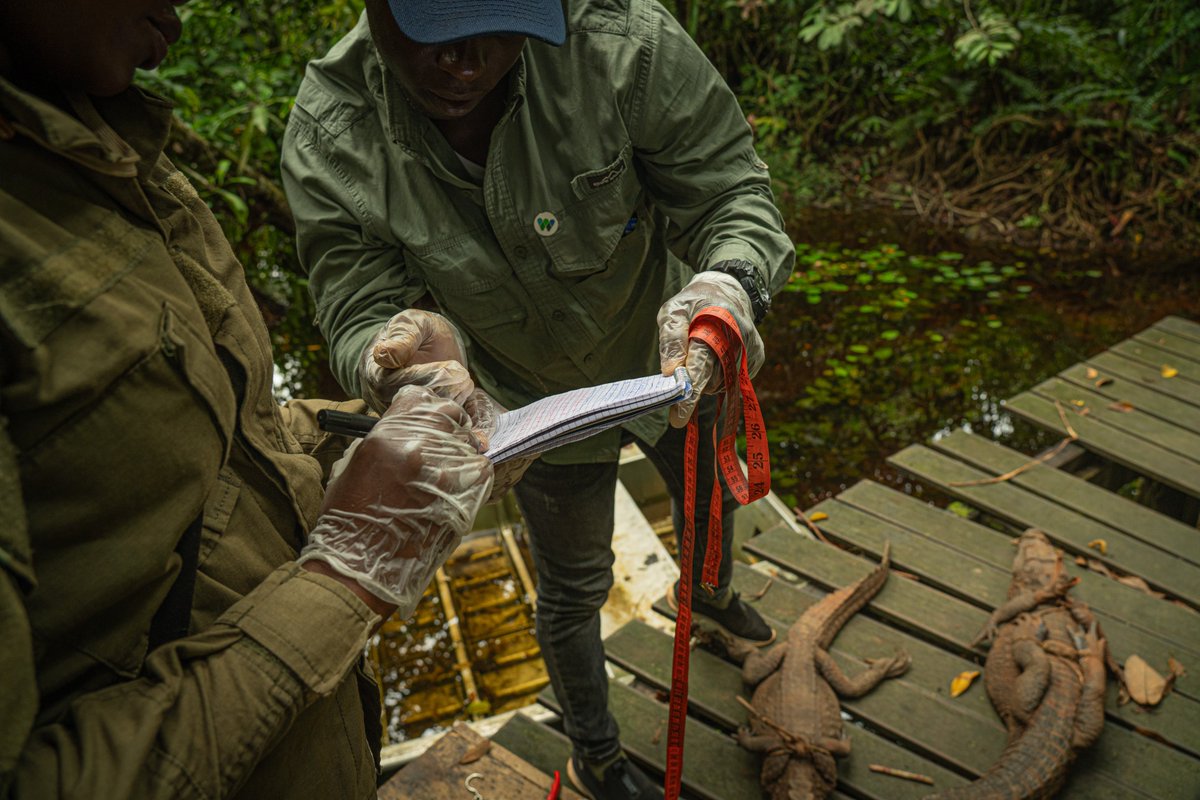
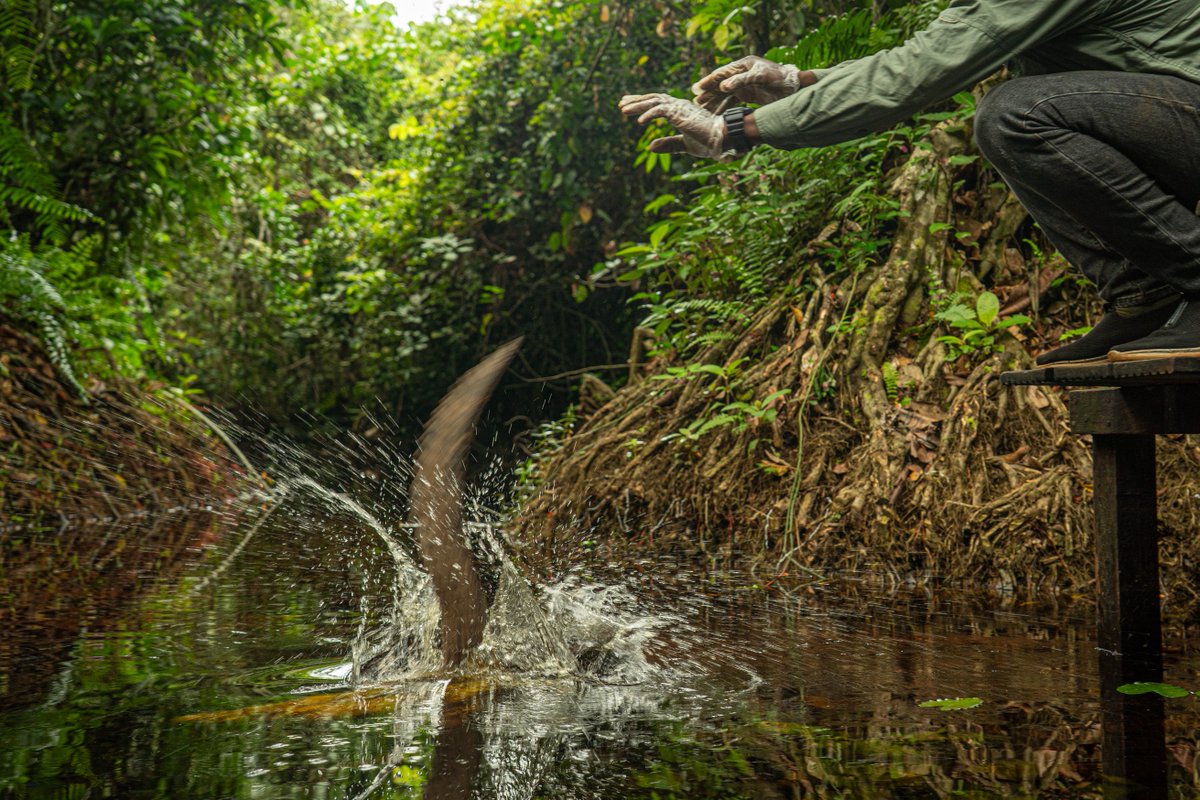
In 2025, the PROGEPP teams released 140 live animals confiscated from poachers, including 116 dwarf crocodiles.
Before release, each animal was measured and weighed to help monitor changes in the physical characteristics of wild populations.
👉https://t.co/Lpn3yAi2jx
At #NouabaléNdoki NP, teams balance #community conservation, #wildlifecrime prevention, and #research despite growing pressure on wildlife. In 2025: 195 patrols, 43,000+ km covered, ~9,000 research hours.
Read the 2025 Annual Report: https://t.co/5U7B23ZZ5D
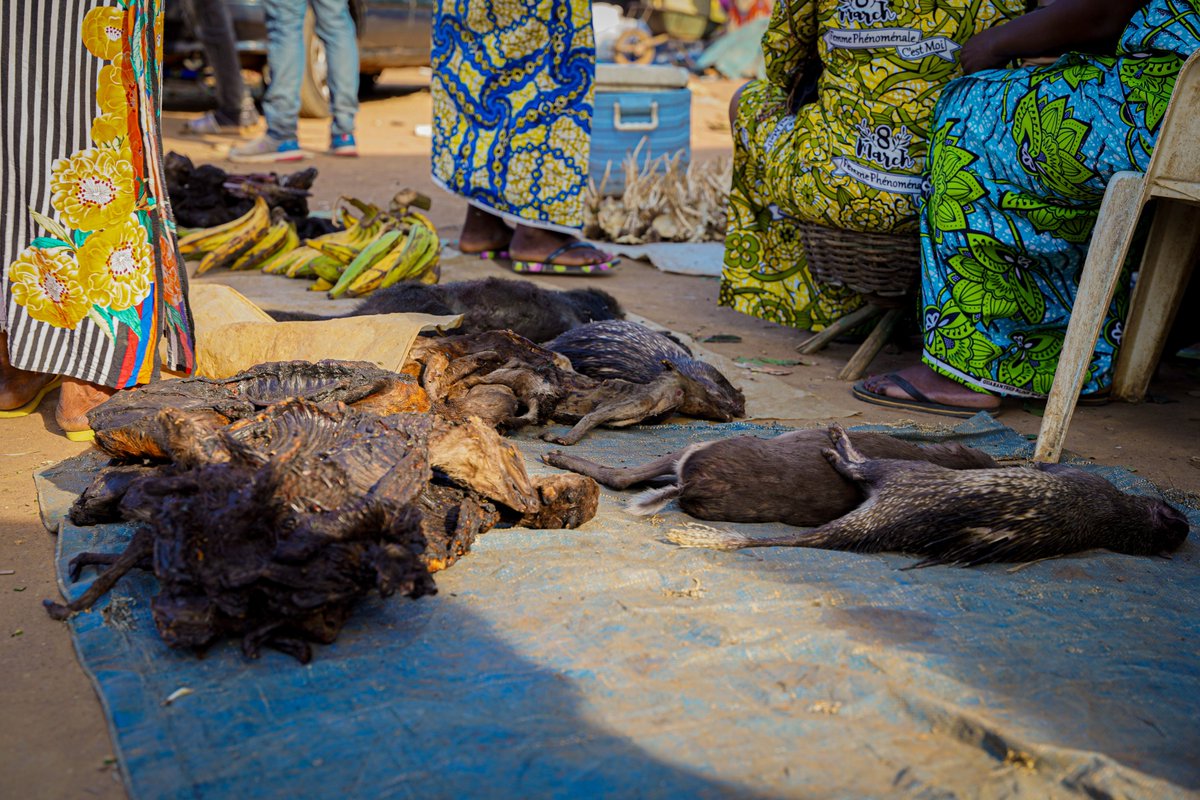
Rising bushmeat demand is accelerating wildlife decline, with some species now threatened, putting ecosystems and community resources at risk.
The SWM Programme supports solutions that link conservation, food security, reduced zoonotic risks, and sustainable livelihoods.