It’s time to challenge the dominant narratives and listen to the silenced voices. We are rewriting the script.
Are you ready to hear more than one story?
The conversation begins soon.
Stay tuned.
https://t.co/ykdZqWYvAl
#worlddecolonizationforum
What would it mean to imagine psychology through Frantz Fanon’s idea of a “new humanity”?
Kemal Sayar invites us to rethink psychology and psychiatry beyond singular ways of knowing toward more pluralistic epistemologies.
How “universal” is the knowledge we are taught?
In her opinion piece, “Decolonization in Education I,” İpek Coşkun Armağan reflects on how education has been shaped by colonial hierarchies.
Read the full article on our website.
https://t.co/dUAPfk0LoU
Anne Norton discusses the decades-long struggle to decolonize the academic canon by integrating marginalized perspectives. She highlights how each breakthrough is consistently met with resistance from pro-colonial forces claiming these contributions fail to meet standards.
Lilian Thuram challenges the facade of neutrality behind “white thinking,” urging us to look closely at the power imbalances shaped by colonialism.
For further recommendations, visit our website.
Syed Farid Alatas highlights a shift in modern geopolitics: the loss of the pretense to be civilized. He reminds us that true civilization requires a moral foundation. #WDF2026
What happens when human life becomes data?
Ulises A. Mejias reflects on the political nature of technology and the ways data is used to observe, predict, influence, and control.
#WDF2026
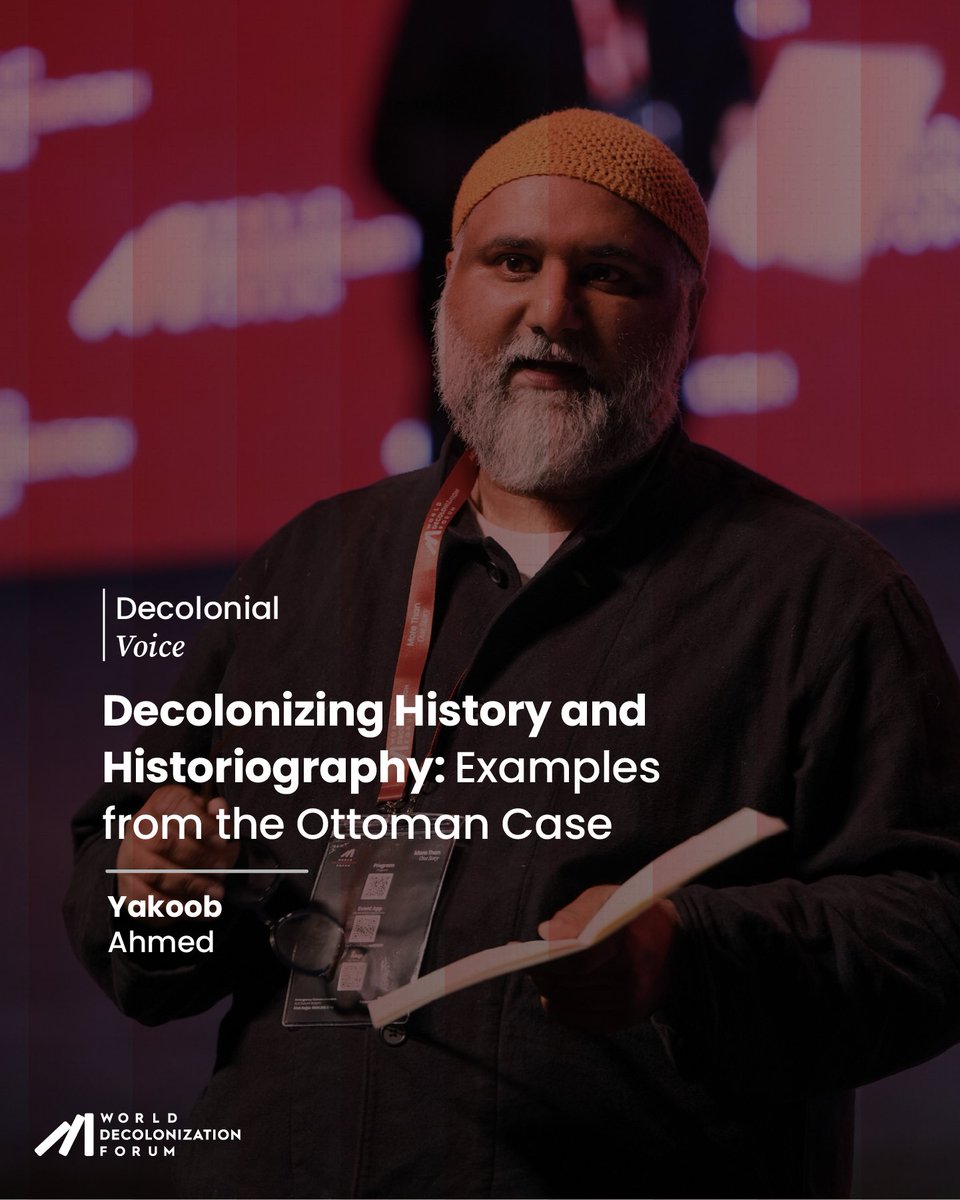
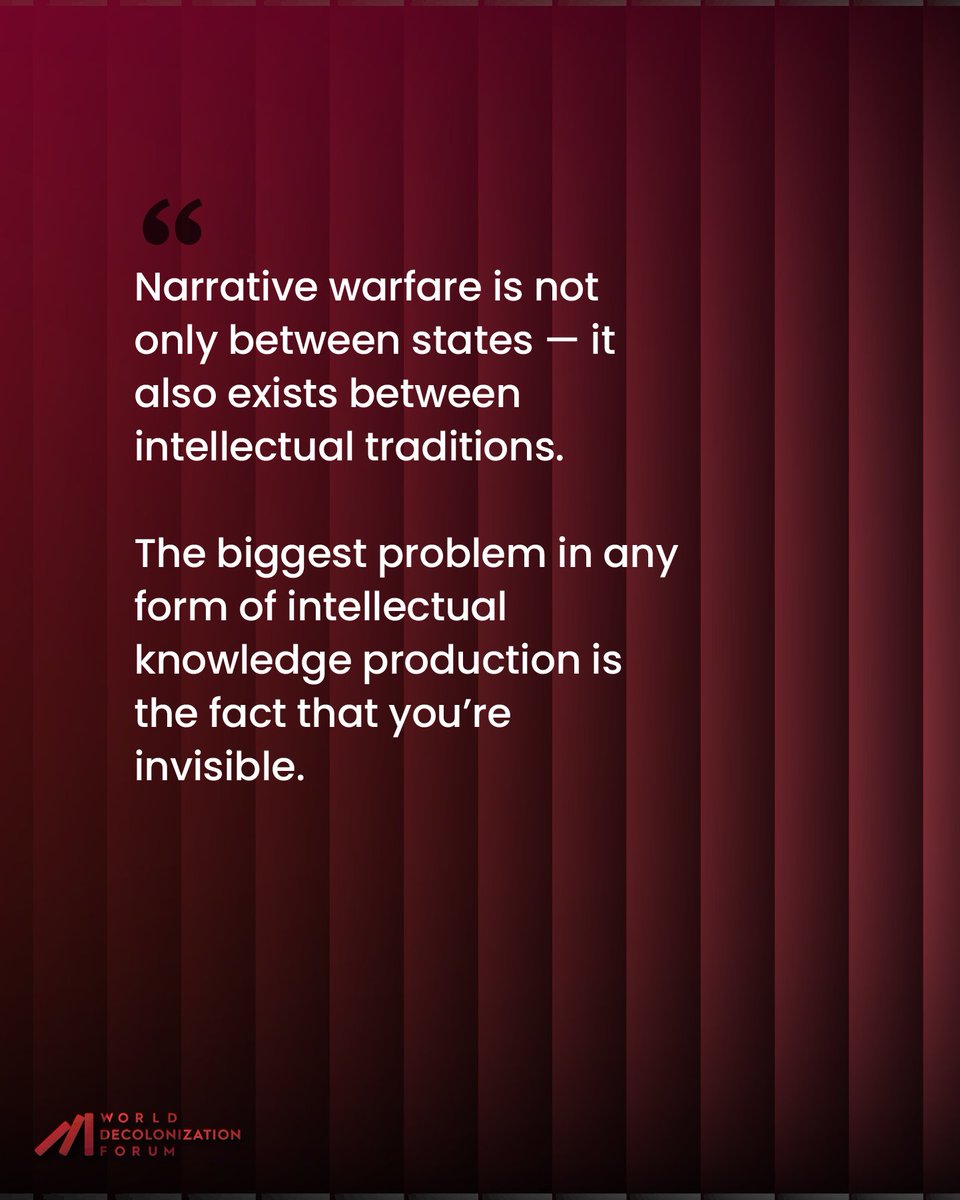
In his Decolonial Voice session titled “Decolonizing History and Historiography: Examples from the Ottoman Case” Yakoob Ahmed invites us to rethink how intellectual traditions shape our understanding of the past and present.
To watch the full session, visit our YouTube channel.
Beneath the promise of "universal" Al lies a deeper structural inequality.
Decolonial approach to technology requires bringing communities into the spaces where Al systems are designed, governed, and shaped.
Read the full news article on our website.
Prof. Walter Mignolo reveals the hidden layer of today’s world order by defining coloniality as its silent shadow.
His reflections remind us that true epistemic freedom begins with reclaiming our inner landscape.#WDF2026
In the documentary The Battle for Britain’s Heroes, one of our #WDF2026 speakers, Afua Hirsch, unpacks the deep-seated resistance to confronting the darker chapters of the British Empire.
You can read the full review on our website.
In the opening remarks of the World Decolonization Forum, Salman Sayyid reminded us that decolonization is far more than a theoretical or intellectual exercise. #WDF2026
Sushrut Jadhav challenges the idea that Western biomedical psychiatry can be treated as a universal model for understanding human suffering.
He invites us to rethink mental health by questioning the categories through which care, illness, and healing are defined.#WDF2026
Tullio Scovazzi reminds us that international law only has meaning when it can restrain the use of force by the most powerful states.
At a time when international law is facing a profound crisis, his words call us to rethink justice beyond the logic of force.
#WDF2026
World Decolonization Forum 2026 reminded us that decolonization begins with confronting the structures of power that still shape our world. It calls us to move beyond colonial frameworks and imagine more just, plural, and inclusive futures.
#WDF2026
Palestine: Settler Colonialism and the Ruse of Independence Roundtable II | World Decolonization Forum 2026
Palestine is the central site for understanding settler colonialism and the contradictions of the contemporary world order.
Watch the full session on our YouTube channel.
A conversation from #WDF2026 that lingers with us. Nadia Abu Zahra invites us to rethink learning as the polishing of inner gems, shaped not only by curriculum, but by family, community, and lived culture.
“Truth is not distilled from a single voice that legitimizes dominant power. It emerges from plural testimonies. Without acting simultaneously at the epistemic, institutional, and political levels, decolonization remains unfinished.” Esra Albayrak, Opening Remarks at #WDF2026
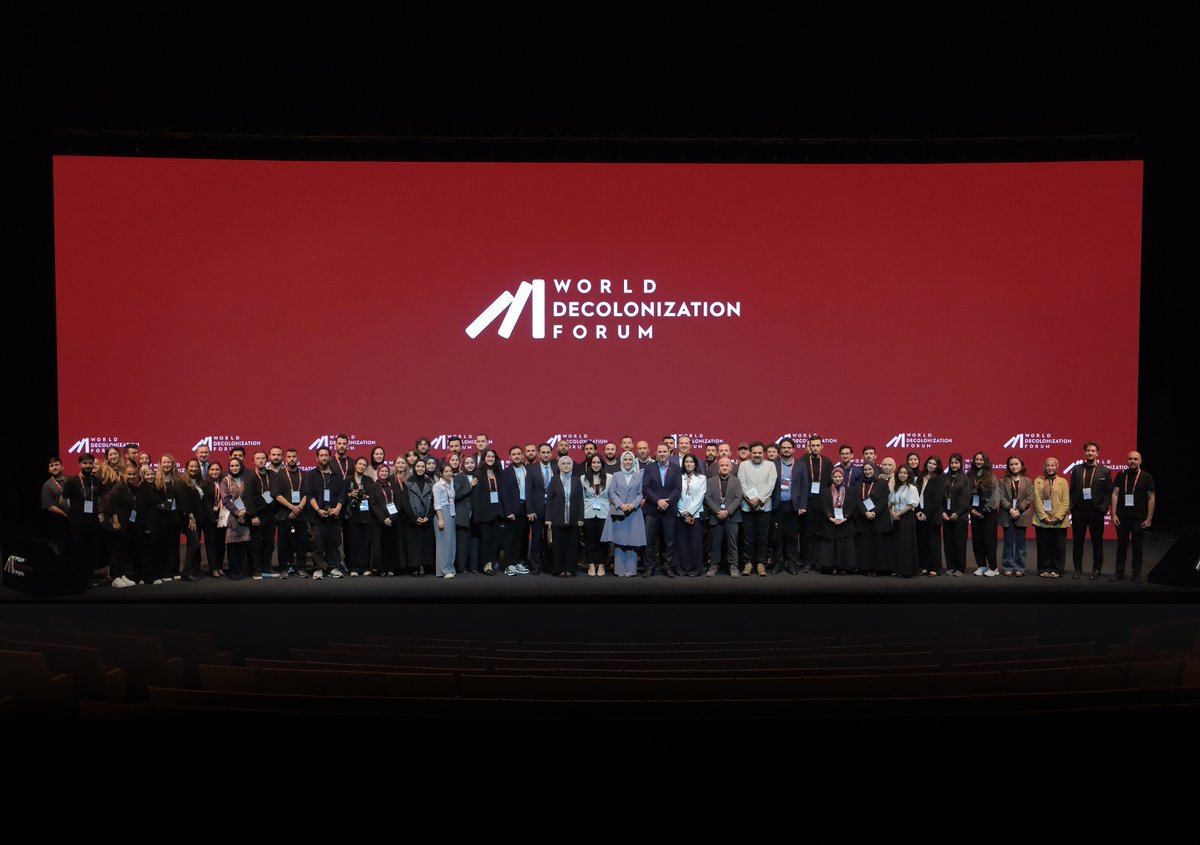
Two enriching days at World Decolonization Forum are behind us. Our deepest thanks to our speakers, our scientific committee, every participant, and our team that worked tirelessly behind the scenes at this meaningful forum in Istanbul. #WDF2026, More Than One Story.
Is it possible to decolonize cinema?
“Decolonize Film Days”, organized as part of the World Decolonization Forum 2026, has launched at Atlas Cinema. Majid Majidi, Mehmet Bozdağ, and Faysal Soysal discuss the link between cinema, memory, and conscience as a field of testimony.
Whose memory? Whose story? Whose gaze?
“Decolonizing the Screen” brought together Majid Majidi, Mehmet Bozdağ and Faysal Soysal to reflect on cinema, memory and representation at Decolonize Film Days.
Film screenings continue on 14 May at Atlas Cinema.
#DecolonizeFilmDays