Nielsen's 10 heuristics aren't just theory. They're UX audit checklist:
→ Visibility of system status
→ Match between system and real world
→ User control and freedom
→ Consistency and standards
→ Error prevention
→ Recognition rather than recall
→ Flexibility and efficiency
→ Aesthetic and minimalist design
→ Help users recognize errors
→ Help and documentation
What amazes me is that they were published in 1994, but are still relevant today.
More about heuristics: https://t.co/RtD21G6RIk
5 onboarding metrics that predict product success:
1⃣Time to first value (TTFV)
2⃣Feature adoption rate
3⃣User activation rate
4⃣Onboarding completion rate
5⃣Day 1/7/30 retention rates
What would you add to this list?
This week I facilitated a brand identity workshop using the Google Ventures approach 🎯
Google Ventures Brand Sprint steps ⬇️
Step 1: The 20-Year Roadmap (15 minutes)
Write 2-3 future magazine headlines about your company's success 20 years from now. This creates your north star vision and forces thinking beyond current limitations.
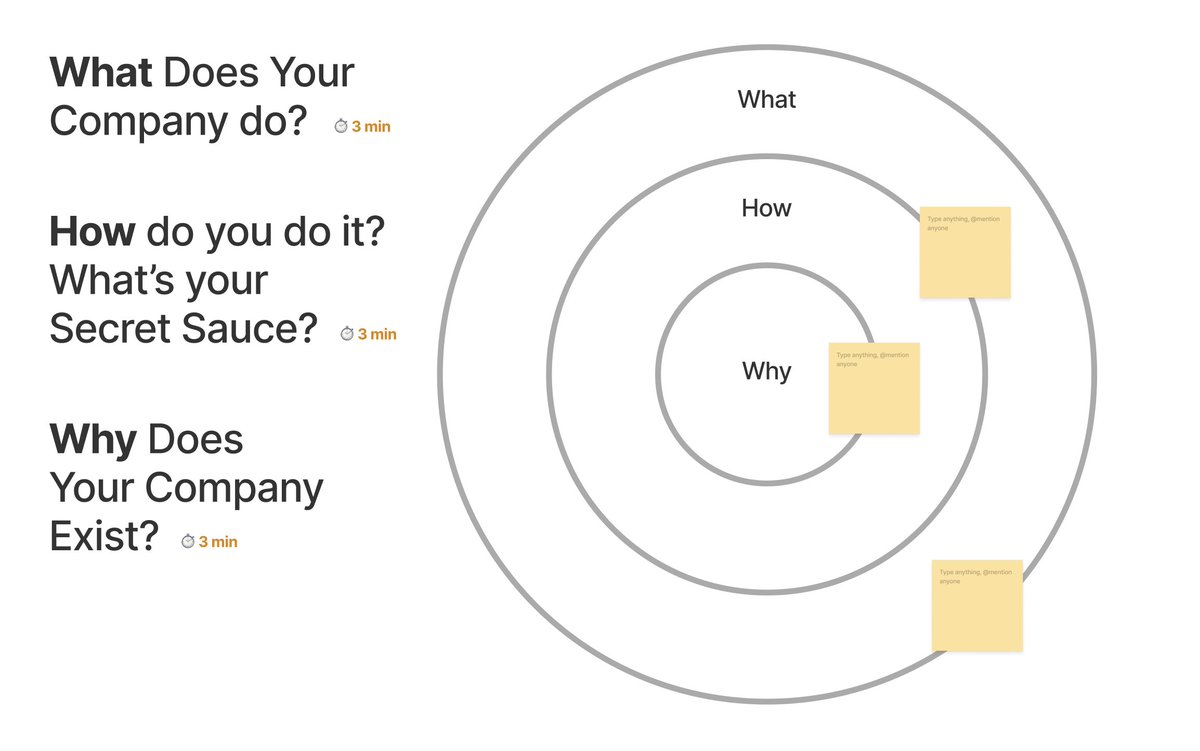
Step 2: What, How, Why Framework (10 minutes)
Define your company in three sentences:
WHAT: What does your company do?
HOW: How do you do it differently than competitors?
WHY: Why does this matter to the world?
Step 3: Top 3 Values (15 minutes)
Brainstorm 10 potential company values, then vote to select the top 3. Focus on values you actually live by today, not aspirational ones. These become your decision-making filter.
Step 4: Personality Sliders (20 minutes)
Rate your brand on 6 personality spectrums (1-5 scale):
Elite ←→ Mass Appeal
Serious ←→ Playful
Conventional ←→ Rebel
Authority ←→ Friend
Mature & Traditional ←→ Young & Innovative
Classic ←→ Creative
Step 5: Competitive Landscape (10 minutes)
Map 5-8 competitors on two axes (Premium/Budget vs. Established/Disruptive). Identify white space opportunities where you can position uniquely.
Step 6: Brand Adjectives (15 minutes)
Rapid brainstorm 20+ adjectives describing your ideal brand, then vote on the final 6. These become your brand filter for all future decisions.
⌛️Total Time: 90 minutes
✨ Output: Clear brand foundation with decision-making framework
Research insight: Users don't remember your interface.
They remember how it made them feel:
→ Confused (too much info)
→ Confident (clear next steps)
→ Frustrated (can't find things)
→ Accomplished (easy completion)
Most product teams track wrong metrics. Here's the AAARRR framework that actually predicts success... ⬇️
❌ What teams usually measure:
- Page views
- Sign-ups
- Feature clicks
- Session time
✅ What the AAARRR framework measures
- Acquisition: Free trial sign-up rate
- Activation: Time to value + activation rate
- Adoption: Feature adoption rate
- Retention: Daily/Monthly active users
- Revenue: Customer lifetime value
- Referral: Net Promoter Score
Truth:
→ 88% of users won't return after bad UX
→ Retaining customers is 5x cheaper than acquiring new ones
→ Companies with high NPS grow 2.5x faster than competitors
Real behavioral indicators to track:
📊 Instead of "sign-ups" → Track activation rate (% who complete key actions)
📊 Instead of "feature clicks" → Track adoption rate (regular usage patterns)
📊 Instead of "session duration" → Track time-to-value (how fast users get their "aha moment")
❤️ The UX researcher's secret:
Use Google's HEART framework alongside AAARRR:
Happiness: CSAT scores
Engagement: Active user ratios
Adoption: Feature uptake
Retention: Cohort analysis
Task success: Completion rates
Pro tip: Your North Star metric should connect user value to business growth.
Example: Slack's North Star = "Messages sent by teams" (not just users signed up)
The best products don't just track what users do. They track whether users achieve their goals.
What's your North Star metric? And does it actually predict user success?
MVP vs MLP - What's the difference? 🤔
MVP (Minimum Viable Product)
→ Bare minimum features to test your hypothesis
→ Focus: Does anyone actually want this?
→ Goal: Learn & validate
MLP (Minimum Lovable Product)
→ Minimum features that create genuine user delight
→ Focus: Will users come back and recommend it?
→ Goal: Retention & growth
🔎 Sometimes MVP with a hint of MLP could be your unique selling point.
😢 The Risk: Don't let the "hint of love" become feature creep. Pick one delightful element that supports your core value prop.
Do you agree / disagree? What's your take on it?