Mathematician, computer scientist and humanist looking for truth. For this journey, benevolent and scientifically interested people are always welcome.
Tradition ist ja auch was wichtiges. Hatte schon Angst, dass man im neuen Terminal 3 vom @Airport_FRA das Gepäck nach vernünftiger Zeit erhält. Aber alles gut, sitze seit 30 Minuten hier und nix kommt, wie es sein muss...
One of the worst forms of brainrot AI has cultivated is pessimism about basic research, ie the idea that important work can only happen inside a frontier/neo lab and only with 10k+ GPUs, so the rest should not even bother. What a bleak way to think about science. And it's false.
@Karl_Lauterbach Korrekte Problembeschreibung, aber keine Lösung. Wir KI Forscher:innen wissen ehrlich gesagt nicht weiter. Wir entwickeln LLM Modelle und können diese nicht veröffentlichen (geschweige denn betreiben). Warum gelten nicht die gleichen Bedingungen für OpenAI, Anthropic, Alabama,...
Terence Tao BDay Jul 17: "Professional mathematics is not a sport. The objective in mathematics is not to obtain the highest ranking, the highest score, or the highest number of prizes and awards; instead, it is to increase understanding of mathematics."
https://t.co/68GWqjbx9X
It's shocking, EU tries a third time to introduce chat control. It did not get a better idea, after being rejected twice.
It is still something that fits to surveillance states, not for democratic states.
https://t.co/jq3kNDuUpI
The cherry on top? Apparently requesting a third vote on something rejected already twice is incompatible with the EU parliament governing procedures and planned nevertheless. Voting until the outcome fits?
https://t.co/VqPlMRlovd
#events like #IdeenExpo are an awesome opportunity to demonstrate what machine learning can do and to spark research interest in the next generation of #researchers. Happy to be here. Wanna have fun with deep learning and robot hands? Visit our #University#Hildesheim booth.
This may be a controversial take, but I think it needs to be said: the gap between computer vision research in academia and industry is widening with every conference.
A huge fraction of @CVPR papers—especially those that boil down to "we tweaked/fine-tuned/RL'ed large-scale model X to improve on task Y"—will become obsolete with the next model release. That's not where academia creates lasting value. PIs should adapt much faster to this changing reality.
Academia should focus on fundamentally new ideas, new problem formulations, explaining emergent phenomenology, or uncovering blind spots that industry can later solve with scale, compute, and data.
We're hiring! PostDoc (3 yrs, full-time) in modern AI methods at U Hildesheim – 2/3 research on deep learning, neurosymbolic reas., time series, generative & explainable AI at ISMLL, 1/3 AI consulting for researchers across disciplines.
Deadline: May 3
https://t.co/tLrIFZsPtB
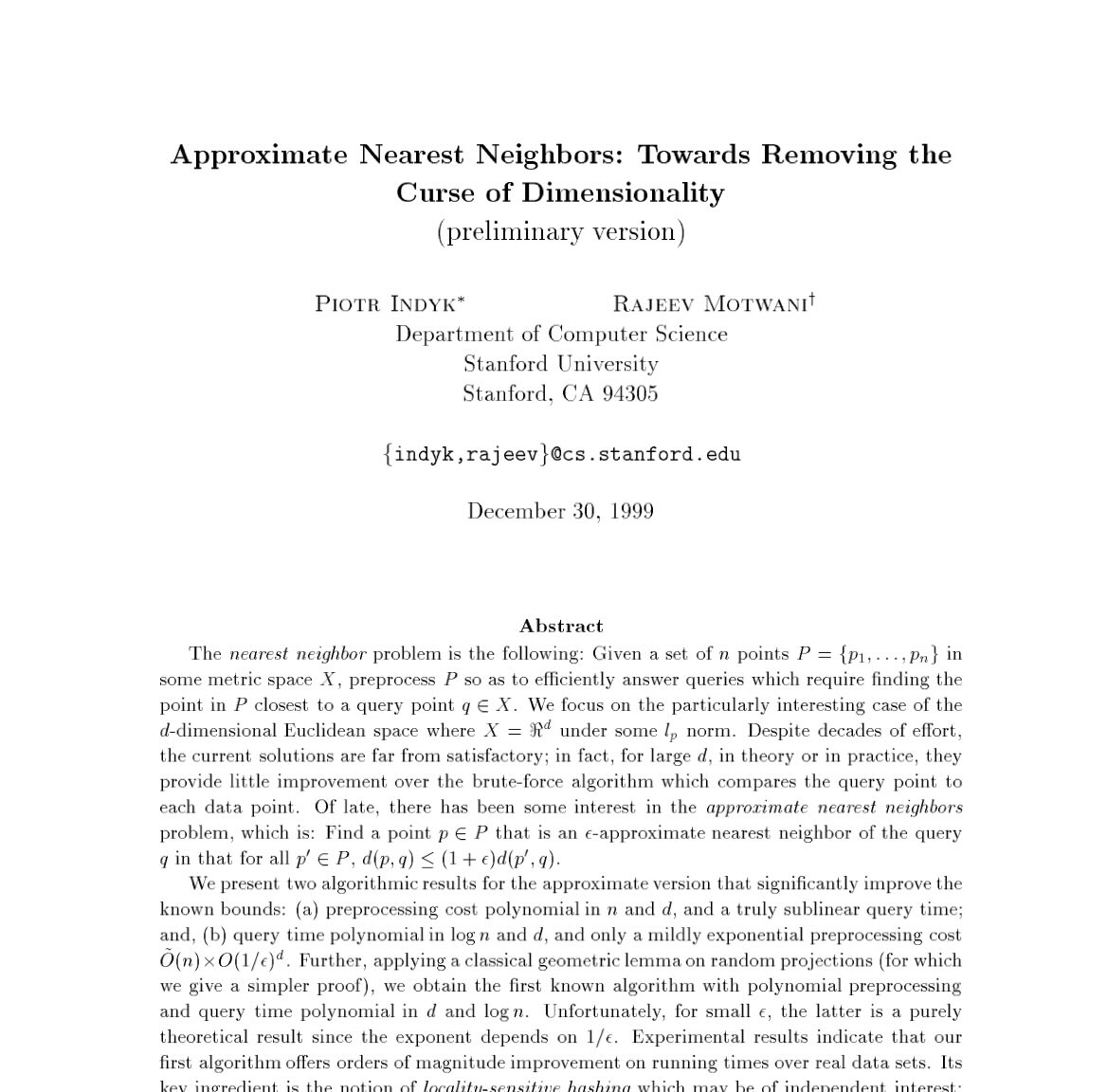
On average one out of three ML researchers I talk to knows about JL. One out of 10 can actually say something about the proof. One out of 20 can tell me a correct definition of VC dimension. Maybe I talk to the wrong people at conferences...
The Google turboquant paper is making ML folks in this decade discover JL lemma and interact with math folks (which is cool). It appears more cool and mysterious if you do not read ML papers from the 90s and early 2000s :)