Trader | Investor | Educator | Traveler | Foody
In the world full of scammers, I Want to make a positive difference in your life & help you grow wealth.
Dear friends (especially medical friends - young and old), my in-depth conversation on @bhatia_nachiket show is out now!
We discussed:
From MBBS failures to becoming India's most followed Liver Doctor ⦿ Why he chose Hepatology over Gastroenterology ⦿ And what makes liver disease uniquely brutal ⦿ How medical misinformation on social media is silently killing Indian patients ⦿ The real challenges doctors face when they dare to speak against popular narratives ⦿ What medical students must learn beyond textbooks ⦿ Why scientific literacy is the most important skill in medicine today.
Full episode: https://t.co/5zJtaQizl9
A woman went to work. She never came back home.
In Mohali, 30 year old Dimple was allegedly stabbed to death inside her office by her ex-boyfriend after a breakup. Captured on CCTV. The accused then attempted suicide.
This is not "love". This is not "heartbreak". This is obsession, entitlement and violence. No person owns another person because they were once in a relationship.
How many more women have to pay with their lives because some men cannot handle rejection? Society keeps teaching women to be careful, but rarely teaches men that "No" is a complete sentence.
Dear friends, as promised, the citizens funded generics vs. branded drugs project is now published after 4 months in peer review. It was hardwork, but worth the effort because all of you helped us realize this important work.
You can read the full detaild paper here: https://t.co/jZhm8ZcPCq
Here is a simplified summary:
Do cheaper generic medicines work as well as expensive branded ones? It's a question that worries patients and even many doctors, who often quietly assume that a low price must mean lower quality. This doubt has real consequences in India, where medicines make up nearly two-thirds of what families spend out of their own pockets on healthcare — a burden that pushes millions into poverty and forces people to split doses or stop treatment altogether.
To put the question to a fair, independent test, our team at the Mission for Ethics and Science in Healthcare (MESH) carried out a fully citizen-funded study, paid for entirely by donations from ordinary members of the public, with no money or influence from any drug company.
We bought 131 samples of 22 commonly used medicines — covering heart disease, diabetes, infections, pain, acidity, and more — from seven different kinds of outlets across Kerala, including government stores like Jan Aushadhi, private generic chains, and premium branded pharmacies. Every sample was then coded, blinded, and sent to a top accredited laboratory for rigorous testing against the Indian Pharmacopoeia 2022 standards. What makes this study unusual is that very few before it have tested branded and generic versions from the same market side by side, included government-supplied medicines, and combined strict quality testing with a hard look at price — all at the same time.
The result was striking in its simplicity: every single one of the 131 medicines passed every quality test. 100%. It made no difference whether a pill was generic or branded, cheap or expensive — they were all equally good in their active ingredient content, their purity, and how they dissolve in the body.
Yet the prices told a completely different story. Generic medicines were, on average, 48.6% cheaper than their branded twins, and the most expensive brand cost up to 13.9 times more than the cheapest generic of the very same drug. Government Jan Aushadhi stores were the cheapest source for 18 of the 22 medicines tested, with potential savings running into thousands of rupees a year per medicine — for instance, over ₹16,000 a year on a single liver drug.
For doctors, this is reassuring, hard evidence that prescribing a quality-assured generic is not a compromise on care; it is the same medicine at a fraction of the cost. For patients, it means you can stay on your treatment without it draining your savings, which is exactly what keeps people healthier over the long run.
And this is precisely why independent, publicly funded projects like this matter so much for the future of healthcare in India: they answer the questions ordinary people actually have, free from commercial pressure, and they build the trust that programmes like Jan Aushadhi need to truly succeed. Affordable and high-quality are not opposites — in a well-regulated market, they go hand in hand.
More here: https://t.co/jZhm8ZcPCq
@GANNTRADER2 What about being vegetarian or non vegetarian, is it a choice or planets play a role in the same, some astrologers say it's also due to some planets why some are veg and some non veg what is ur analysis if u could share
A Hidden Soul-Stirring Prayer
A Bengali Hindu girl lights a clay lamp in her Kolkata para and sings to Balaji Maharaj for the first time without fear her voice carrying decades of silence and the saffron dawn finally breaking over the Hooghly.
The khol drum and ektara hum beneath verses that travel from Bengali devotion to Sanskrit Chalisa, weaving Bengal back into the eternal thread of Sanatana Dharma.
🙏🏾 Jai Balaji Maharaj 🙏🏾
🙏🏾 Jai Shri Ram Chandra Ji Maharaj 🙏🏾
Credit : Beyond Conscious.
@davetweetlive@utkarshdotx@Swiggy i used to order with cc pre paid or gpay pre paid but after pathetic service from @zomato and @swiggy i only order once in a while on COD, if the same reaches on time i take else its there's now !
This guy literally broke down everything you need to master Claude:
6:07 - Why to Stop Using Chat
9:56 - Cowork vs Code vs Dispatch
18:44 - Skills and MCP Connectors
25:03 - The Skills Marketplace
29:06 - Strategy Canvas Demo
35:14 - Skill Iteration Cycle
40:46 - Why You Need Code
44:43 - Building a Second Brain
56:00 - Self-Improving Knowledge
1:10:00 - Dispatch and Remote Work
1:21:07 - Top Mistakes and Future
🚨Anthropic just showed a 24-minute workshop on how to actually do prompts for Claude.
Taught by the people who built it.
Free. No registration. No paywall.
I've seen $300 courses that don't cover what they teach in the first 8 minutes.
Watch it and bookmark it now.
Krishna Rao is the CFO of Anthropic, and this is his first podcast appearance.
He joined the company two years ago when run-rate revenue was about $250M. Today it is $30B. He has helped raise ~$75B and is responsible for the procurement and allocation of compute.
I feel lucky we get to hear what it is like to sit inside a company this consequential at a moment this pivotal.
We discuss:
- The cone of uncertainty
- How he allocates compute across Trainium, TPUs, and GPUs
- What investors misunderstand about model companies
- Why the returns to frontier intelligence keep rising
- Platform vs application and where Anthropic builds its own products
- How Anthropic uses Claude internally
I have asked my closing question about the kindest thing more than 500 times. Krishna's answer is one I have never heard before.
Enjoy!
Timestamps:
0:00 Intro
2:38 The Compute Canvas
6:51 The "Cone of Uncertainty"
11:58 Why the Returns to Frontier Intelligence Are So High
16:45 Recursive Self-Improvement
20:20 Scaling Laws
23:30 Sourcing $100 Billion in Compute
28:05 Platform vs. Application Strategy
32:52 Pricing Dynamics
38:48 How Anthropic’s Finance Team Uses Claude
43:24 Raising Capital & Overcoming Investor Skepticism
52:32 Public Perception, Risks, and Government Regulation
57:25 Mythos Release
1:12:33 What Could Derail the AI Revolution?
1:13:47 Biotech and Healthcare
1:15:31 The Kindest Thing
@MyntraSupport give where credit is due, I would like to thank the escalation team person who is responsible for the initiative of processing the credit of my refund which was pending from two months.
Finally got my money back today!
Imagine you make a product which costs you Rs 5, you sell that product to your sister for Rs 15, your sister in turn sells it to your mother for Rs 30, Your mother in turn sells it to your father for Rs 50
As money rotates within home, the product price goes 10x. The moment your father tries to sell outside, no one is ready to buy and prices crash. Thats a story of a country without Foreign money. As long as there is money with people of country, prices pump of stock market but loses value when people run out of money
The Indian salaried class has been methodically stripped of every single inflation hedge available to it, one budget at a time.
You tried crypto. They slapped a 30% flat tax on gains, allowed no set-off of losses, and added 1% TDS on transfers.
You tried equities. Budget 2024 raised STCG from 15% to 20%, raised LTCG from 10% to 12.5%, increased STT on F&O, and also killed indexation for most other long-term capital gains.
You thought fine, I’ll diversify some savings abroad through LRS. They put 20% TCS on remittances above 10 lakhs for investments abroad.
You tried Sovereign Gold Bonds, because surely a government-issued, government-backed gold hedge would be the one clean instrument they would not mess with. Then Budget 2026 came along and removed the capital gains exemption for secondary market buyers.
And now the final insult.
The Prime Minister has publicly asked you to avoid buying physical gold for a year in the “national interest,” because gold imports use foreign exchange.
So let me get this straight. A middle class wagie earning in depreciating rupees, watching FD rates hover around 6.5% while real life inflation keeps eating his purchasing power, has now been told:
Crypto is taxed like a vice.
Equities are more expensive to hold and exit.
Foreign diversification gets hit with TCS.
SGBs are being wound down and tax-narrowed.
Buying physical gold is now unpatriotic.
Basically, every single exit from rupee depreciation has been systematically curtailed. You are expected to hold your savings in instruments the government controls, at returns the government sets, for a currency the government is rapidly inflating away.
Does this sound like Amrit Kaal to you?
My guest today is Paul Tudor Jones (@ptj_official), one of the greatest macro traders of all time.
He correctly predicted the 1987 stock market crash and shorted the Japanese bubble in 1990. For over 40 years, his flagship fund has had a negative correlation to the S&P 500. 100% of his returns are alpha.
He says today's market has so many similarities to 2000, "the easiest bear market I've ever seen in my whole life."
He makes the case for going long dollar-yen, why Bitcoin beats gold as an inflation hedge, and why he was wrong about Warren Buffett.
But what I'll remember most from this conversation is Paul's zest for life. He's 71 and still wakes at 2:30 every morning to trade the London open. He works out for two hours a day. He walks with his wife every evening. He travels the country chasing peak spring and peak fall. He's so excited about the songs picked for his funeral that he wishes he could be there to hear them.
Paul has lived five lifetimes in one. He's one of the most entertaining and interesting people I've met, and the conversation will leave you searching to be as passionate about what you do as he is about what he does.
Enjoy!
Timestamps:
0:00 Intro
1:00 The Kindest Thing
13:19 Trading vs. Investing
17:33 Lessons from Warren Buffet
22:24 The Existential Risks of AI
29:54 The Nature of Trading
31:46 Bitcoin
35:55 Bubbles
42:08 A Day in the Life of PTJ
46:00 Information Overload
47:07 Passion for Markets
50:49 The Robin Hood Foundation
54:18 The Workless World
56:03 Journalism
1:00:00 Principal Components of a Great Life
1:05:06 Kill Them With Kindness
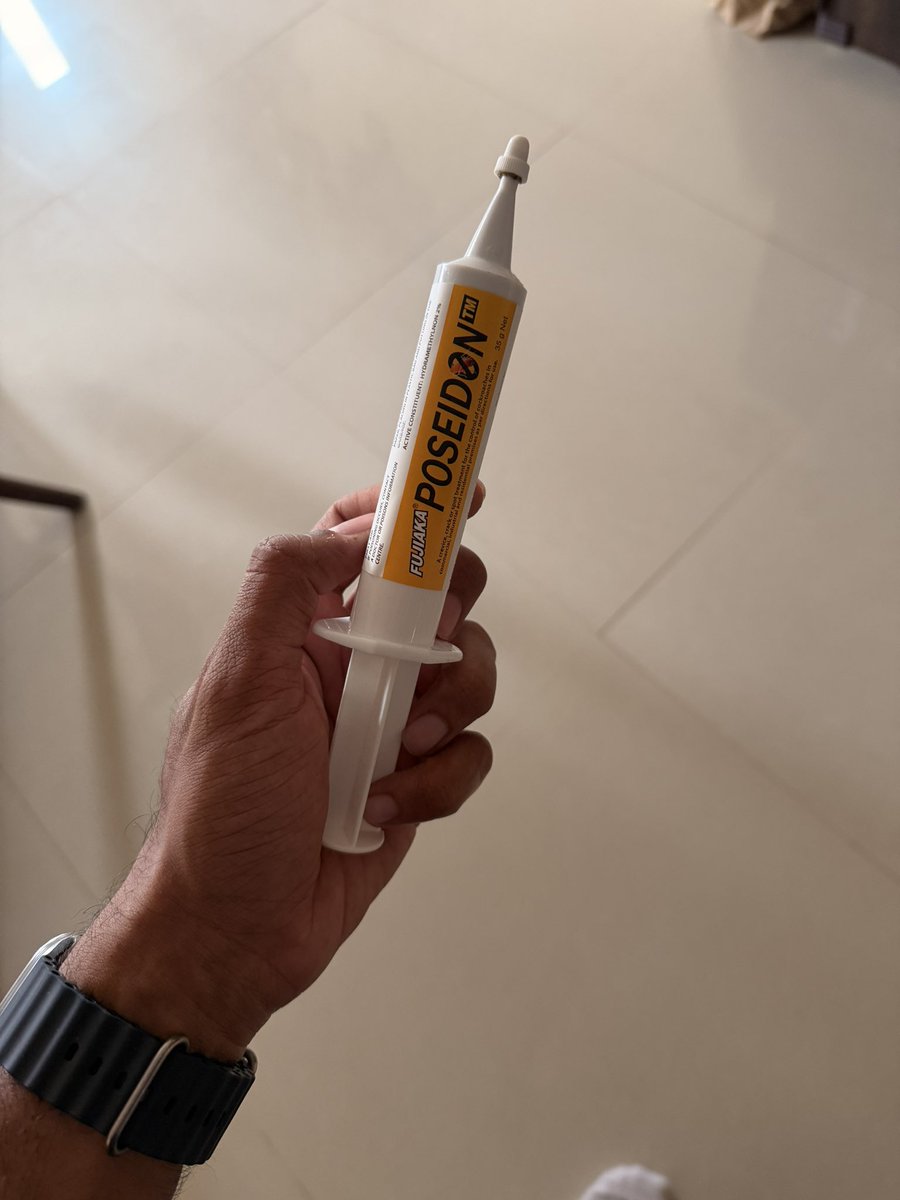
THANK YOU EVERYONE FOR SUGGESTING THIS NUCLEAR BOMB. I had no idea i was living with so many cockroaches in my home!!! Every morning looks like trump pressed the button
@DrSarvapriya Fact Is no one cares for us, u will end up wasting time energy money on consumer courts and feel more pathetic better fly abroad on foreign carrier take travel insurance before hand from a good brand enjoy your holidays