This #DVAM, turn awareness into action. 💜
Give HOPE: https://t.co/LS2x34nGMN
Your gift helps connect survivors with critical resources through https://t.co/zuGKUo48cQ, Family Justice Centers, training and Camp HOPE America.
A10. “Why don’t they just leave?” often has a financial answer. Without money, credit or work, leaving can mean choosing between violence and homelessness. Financial independence is a safety issue and an investment in freedom. #CreditChat
A9. Financial empowerment means having choices: your own account, knowing your credit, setting goals and making decisions without fear. It can begin with a budget and grow into savings, a career or a home. That’s hope. #CreditChat
A8. Be a Friend Against Fraud: talk openly with loved ones and friends about fraud and scams. And stay connected. Isolation often feeds abuse, so regular contact with supportive friends and relatives is one of the most powerful protections there is. #CreditChat
A8. Believe survivors and let them lead. Offer practical help, like safely storing documents, lending a phone or providing a ride, without taking over their decisions. Support should restore choice and expand options. #CreditChat
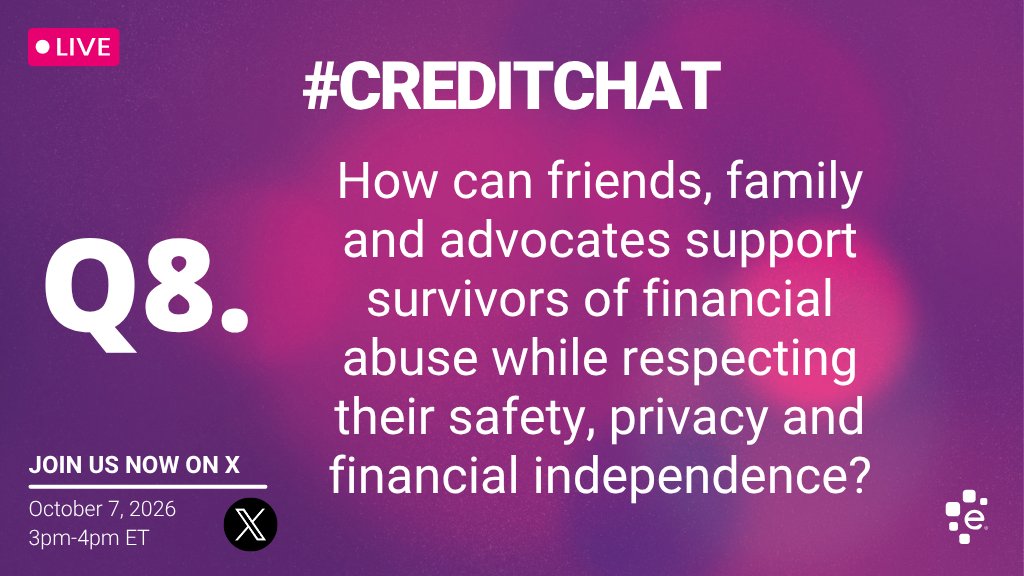
Q8. How can friends, family and advocates support survivors of financial abuse while respecting their safety, privacy and financial independence? #CreditChat
A7. Help is available. Family Justice Centers can connect survivors with advocates, legal services & community partners in one place. Legal aid, nonprofit credit counselors and financial empowerment programs can also help. Find a FJC near you: https://t.co/NXzSE1O3tL #CreditChat
A6. A credit freeze can block new credit from being opened in your name. Fraud alerts tell lenders to verify your identity. Consider planning next steps with an advocate or financial professional. Visit https://t.co/vF2YPHDHVF to find help near you. #CreditChat
A5. Check your credit reports and dispute accounts you didn’t authorize. Report identity theft at https://t.co/JvHZKwEun9. Then start small: an account in your name, a secured card and on-time payments. Rebuilding takes time. #CreditChat
A4. Safety comes first. When safe, review credit reports from all 3 bureaus, bank and card statements, loans, leases, tax returns and benefits. Keep copies of ID and important documents somewhere safe or with a trusted person. #CreditChat
Q4. If someone is experiencing financial abuse, what financial accounts, credit information or documents may be important to review when it is safe to do so? #CreditChat
A3. Financial abuse can cause years of harm. Coerced debt can damage credit, making it harder to rent a home, get a job or set up utilities. Many survivors stay because they can’t afford to leave. Financial independence is a safety issue. #CreditChat
A2. You might say: “We’ve missed you at breakfast. Is everything okay?” Or: “I’ve noticed a lot of mail and unknown callers lately. I’m here for you. Is there anything I can do to support you?” #CreditChat
A2. Warning signs include no access to cash or cards, needing permission for purchases, job loss due to someone’s interference or unexplained debt. Shame can make it hard to talk about, so respond gently and without judgment. #CreditChat
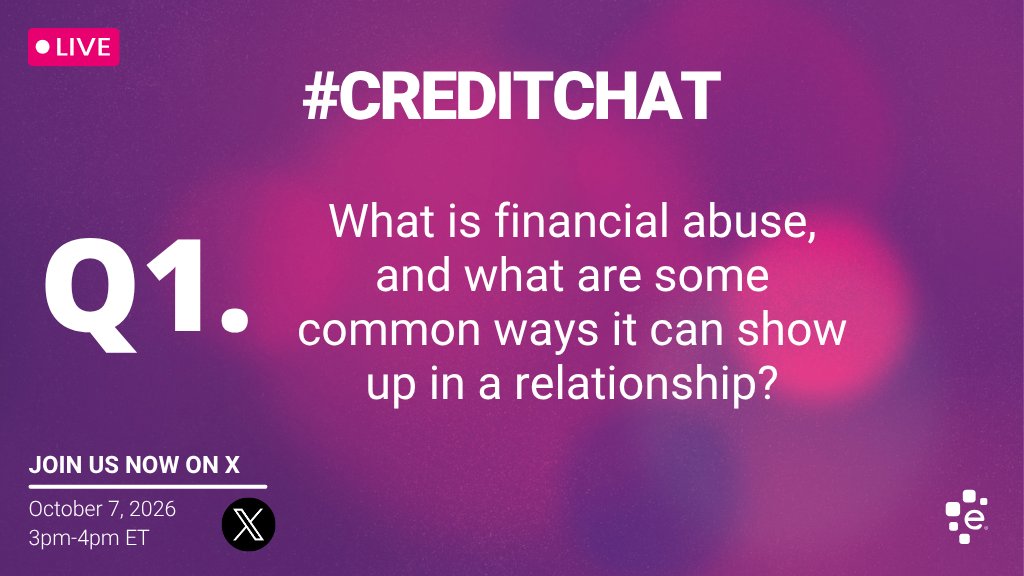
A1. Financial abuse uses money and resources to control someone. It can look like controlling access to money, sabotaging a job or running up debt in their name. It’s not about money. It’s about control. #CreditChat
Hey #CreditChat family! We’re looking forward to today’s important conversation about recognizing financial abuse and supporting financial independence. We have an amazing panel joining us today!
Join us today at 3 p.m. ET for this week’s #CreditChat as we recognize Domestic Violence Awareness Month and discuss financial abuse, its potential impact on credit and finances, resources available to survivors and steps that can help support financial independence. https://t.co/njOEbdWtmY