The ultimate support system for small Web3 creators.
Follow us to get your posts seen, shared, and retweeted by the community!
Powered by @Stardom_Labs ✨
AI has spent the last few years learning how to do more..
Write a report, analyze a dataset, build an application, answer a customer, create a campaign, and the progress has been impressive.
But there’s a difference between an AI that can perform a task and an AI system that can understand how different tasks fit together.
That difference may become more important as AI moves deeper into business, because businesses don’t work through isolated tasks.
A marketing decision can affect sales, customer feedback can change a product, a sales conversation can create new support needs, new data can change the next decision, everything is connected.
Yet, most AI tools still see a business in pieces.
One tool knows the marketing, another knows the customers, another knows the product.
But they can each be capable on their own without actually understanding the bigger picture.
The next step then, isn’t simply giving AI more abilities, it’s giving those abilities coordination, shared context and consistency.
Vanar Orgs by @Vanarchain are built around this idea.
An Org brings different AI capabilities into one structure, working from shared memory, permissions and business information.
Marketing, sales, support, growth, SEO, community and other functions can work as parts of the same Organization instead of as disconnected tools.
So, whether it’s a start up, an existing service, or an established company, Vanar Orgs are designed to give it an AI workforce that can work across multiple business functions.
It’s a subtle shift, but an important one:
AI is moving from completing tasks to coordinating work.
And when AI can coordinate work across an entire business, the benefits won’t just be seen in individual tasks, they could change how efficiently the whole business operates.
Explore Vanar Orgs
👉 https://t.co/qg6BdW6bpY
gM….The past 5 days has been hell<<<
>Lost 2 of my Business accounts
>Lost my Main Account.
>Sent $1.7k to an unknown wallet
>Mentally Broke Down.
But then, I had You- Yes You🫵 — And God. SO I TRIED AGAIN 🥷🏽❤️.
There’s an economy forming beneath AI, but most people haven’t noticed it yet.
For a long while, data was treated as something to collect and store:
Companies collected it, researchers published it, organizations saved it, and over time, a lot of it was never used again.
Not because it wasn’t valuable, but because there wasn’t an easy way to make use of it.
Then AI came along.
Suddenly, reports, documents, spreadsheets, research papers, and knowledge bases became more than just files, they became the fuel that powers AI.
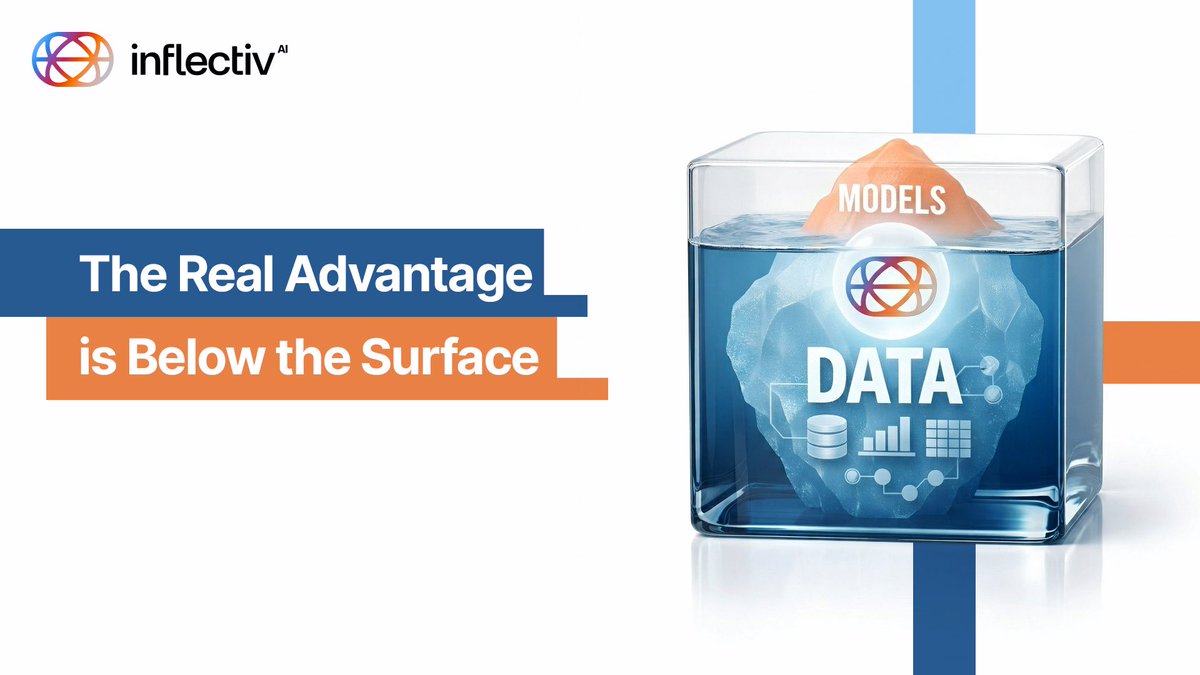
Today, most conversations about AI focus on models:
Who’s building the smartest one
Who’s launching the next big update
Who’s leading the race
But there’s another side of the story that deserves just as much attention.. the data behind the AI.
No matter how smart an AI model is, it can only work with the information it has access to.
If the data is hard to find, scattered, or poorly organized, the results can only go so far.
That’s why I believe data is becoming one of the most valuable parts of the AI economy, not just storing it, but making it easy to find, easy to use, and valuable for both the people who create it and the people who build with it.
That’s where @InflectivAI comes in.
Inflectiv is building a platform where useful datasets can be discovered, searched, used in AI applications, and even monetized.
That creates value for everyone.
Developers spend less time looking for good data and more time building,data creators have new ways to earn from the knowledge they’ve created, and businesses can turn years of information into something useful instead of leaving it buried in folders.
And this isn’t just an idea.
Through the App Builder Challenge, builders used datasets from the Inflectiv Marketplace to create real AI applications, showing what’s possible when quality data is easier to access.
As AI continues to grow, we’ll keep seeing better models and smarter tools, but the platforms that make knowledge easier to access and easier to use could become just as important.
Because every great AI application starts with good information, and that’s the opportunity Inflectiv offers.
Learn more
👉 https://t.co/T07eZhQFUn
We’ve reached the point where every blockchain seems to have an AI announcement.
The real question is: what actually changes?
Every week, another blockchain announces an AI integration, another AI agent, another AI assistant, or another AI-powered feature, but once you look beyond the announcement, you realize something:
The blockchain is still doing exactly what every other blockchain does.. stores data, executes transactions, and that’s where its job ends.
AI is becoming smarter every day, but blockchains? not so much.
They’ve remained excellent at recording information, but they’re still almost entirely dependent on off-chain systems to understand, interpret, or act on that information.
That creates a massive gap, because the future isn’t just about connecting AI to blockchains, it’s about building blockchains that can actually work with AI.
That’s the difference @VanarChain is chasing.
Not by adding AI as a feature, but by redesigning what a blockchain can fundamentally become.
Most chains can store, most chains can execute, but Vanar is asking a much more ambitious question:
What if a blockchain could reason?
That single question changes everything, because reasoning isn’t simply processing data, it’s understanding context, connecting pieces of information, and making intelligent decisions based on what it already knows.
Instead of acting like a passive database, the chain becomes an intelligent coordination layer.
Think about how most applications work today:
Your data lives everywhere
• Emails
• Documents
• Wallet activity
• Smart contracts
• Messages
• Files
They’re disconnected.
AI has to pull information from different places before it can generate meaningful responses.
Now imagine a blockchain designed to organize all of that knowledge into structured memory, not random storage, but usable memory.
That’s where Vanar’s architecture starts making sense.
The next generation of blockchains won’t be defined by who can process the most transactions, it will be defined by who can make those transactions meaningful in an AI-driven world.
Most chains were built for the internet we know, Vanar is building for the internet that’s coming.
If that future interests you, now is a good time to start paying attention.
👉 https://t.co/J9hBbSGgat
I've covered camera movement and camera angles
With simple examples showing how they can make an AI video better
Now, let's wrap up the camera series.
The quoted post is today's reference.
If you haven't watched it yet, I'd appreciate your thoughts.
You might wanna read these for deeper knowledge:
⇨CAMERA MOVEMENT
https://t.co/QmEuPoCoIS
⇨ CAMERA ANGLES
https://t.co/nwcDNvareR
Now for today…
I kept this video simple on purpose but there's a difference
I used the same camera angles you'd see in films instead of relying on a static eye level shot.
The goal was to make a simple ad feel more dynamic through visual storytelling.
Just 6 scenes, each with a different camera angle or movement.
Here are my camera prompts for each scene
▼
⇨SCENE 1: Macro lens shots, Slow motion, Concentrated zoom in
⇨Scene 2: Drone following from above, Tracking shot from behind, Side profile walking through valleys.
⇨Scene 3:
River Crossing: FPV drone skimming inches above water.
Mountain Climb: Wide IMAX-style aerial.
Forest: Handheld cinematic tracking.
Ridge: Orbit shot around the character.
⇨Scene 4: Matrix style motion control, Slow orbit around character, Holograms reflected in his eyes
⇨Scene 5: Extreme wide shot, Huge scale, Sun rays piercing clouds, Camera pushes in to reveal logo
Scene 6:
Slow tracking shot following behind him.
Transition to a low angle shot emphasizing the scale of the entrance.
Slow motion as the doors open.
Camera circles slightly as warm light pours from within.
Upward tilt as he looks toward the structure.
The camera slowly pulls back as the character stands beneath the illuminated ABEY logo, framed by the open entrance and golden light, creating the feeling that the journey has finally reached its destination.
▼
And that pretty much it. It might take a while to create but it's doable with repeated practice
I'd like to add I didn't know most of these camera style by name
I made clear to my tool the image and video I had in my imagination and how I wanted it to go
It took it from there and gave me the words which I've come to know over time
Was this helpful?! Goodluck
A new ambassador opportunity is now open with @Astros_ag
They’re bringing in people who don’t just watch the space, but actively contribute to it, through ideas, content, analysis, and community building.
Roles they’re looking to fill:
• Traders
• Content creators
• Market analysts
• Community builders
If selected, you get:
◆ Open global access
◆ Early entry into upcoming updates
◆ Rewards + recognition for contributions
◆ Direct link with the core team
This is for people who are already part of the conversations shaping the market and want to be closer to what’s being built.
If you are ready to lead, educate, and grow with Astros, fill out the form here:
You might just be the next Astros Pilot ✈️
📝 Apply here:
https://t.co/xV1XOce4wR
AI is moving fast, but the real change isn’t just the tools, it’s how fast people are learning to trust and use them.
Today, AI agents are not just chat tools anymore, they can take real actions like moving money, accessing systems, or making decisions.
But that also brings a big risk.
A single agent, if not controlled well, can cause serious damage in seconds.
This is the problem @Vanarchain is solving.
xBPP adds simple rules for AI agents, it clearly defines what an agent can and cannot do before it acts.
So the agent is not just “free to act”, it acts within safe limits.
This is important because:
Without rules, AI can be risky.
With rules, AI becomes useful in the real world.
xBPP makes AI agents safer to use.
If you are building with AI agents and care about safety, control, and real use cases, this is worth checking out.
Read more: https://t.co/uou83CNvlp
The market doesn’t move out of nowhere.
Before major price moves happen, there are usually signs pointing in that direction.
A change in sentiment. A shift in liquidity. Increased activity across different ecosystems. Small signals that most people either miss or notice too late.
The challenge isn’t finding information. It’s connecting the dots fast enough before everyone else catches on.
That’s where @tryquantio comes in.
It helps you track market activity, uncover emerging trends, and spot opportunities before they become obvious to the crowd.
In crypto, being early often makes all the difference.
Have you tried using AI to improve your market research yet?
Explore smarter market intelligence with Quant AI
👉 https://t.co/wEz7fESAcy
Everyone is excited about AI agents.
But if an agent can move money, access sensitive data, approve transactions, or make decisions on your behalf, one question matters:
How do you know it’s following the rules?
That’s one of the biggest barriers to AI adoption in enterprises and regulated industries.
It’s not enough for an agent to be intelligent, it needs clear boundaries and a way to prove what it did.
That’s where @Vanarchain comes in:
• xBPP sets the rules for what an agent can and cannot do
• Veil records every action the agent takes in a verifiable way
One provides control, the other provides proof.
Together, they help make AI agents more transparent, accountable, and ready for real-world use.
This is the difference between an AI demo that looks impressive and an AI system that organizations can actually trust and deploy.
If you’re building AI applications and need trust, compliance, and verifiable actions built in from day one, explore what Vanar is building.
Learn more: https://t.co/Ps0HglVwO3