@22385_@vheeorji22@Faruqmayorwa@ezekiel_aleke@officialladi_T In the code above.
SQL selects two columns and then for the over function, it finds the minimum date in the order_date column and places it in a new column called earlier order date.
@22385_@vheeorji22@Faruqmayorwa@ezekiel_aleke@officialladi_T I have not learnt the full scope of how to use over function but here is what I know:
It creates like a window for rows and then perform calculations inside those rows, it is familiar to using agg functions like COUNT with GROUP BY.
Day 5 of learning SQL on Kaggle.
I was supposed to do some exercises but I was occupied today. 😪
I only had time to read the functions.
I got familiar with how the OVER AND PARTITION BY function works.
I will be doing some exercises tomorrow.
Day 4 of learning SQL on Kaggle.
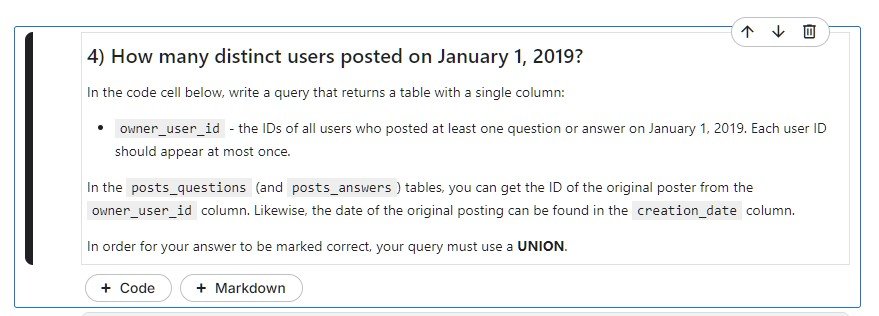
I was asked to use the UNION function to join two columns together, I also filtered within a specific time frame while returning only distinct values from the columns asked.
Day 4 of learning SQL on Kaggle.
I was asked to use the UNION function to join two columns together, I also filtered within a specific time frame while returning only distinct values from the columns asked.
Day 3 of learning SQL on Kaggle.
Today's exercise asked me to include a specific time frame for the users table, include the first time the user posted question in the question table and answers in the answers table. while joining the three tables together by their identical ID.
Good morning my fellow data analyst. 😆
I completed the into to Sql course on kaggle.
I have already started the Advanced SQL course.
More updates on that soon.
Day 3 of learning SQL on Kaggle.
Today's exercise asked me to include a specific time frame for the users table, include the first time the user posted question in the question table and answers in the answers table. while joining the three tables together by their identical ID.
Day 2 of learning SQL on Kaggle.
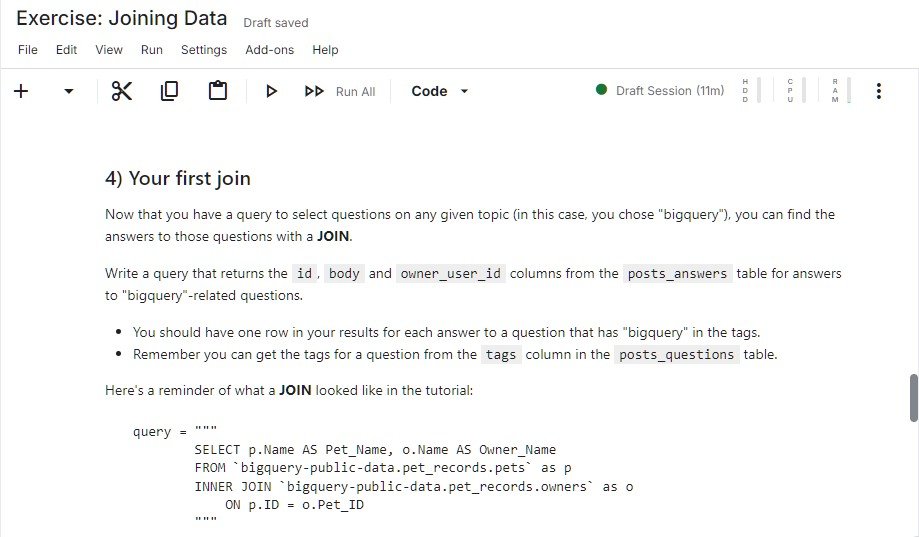
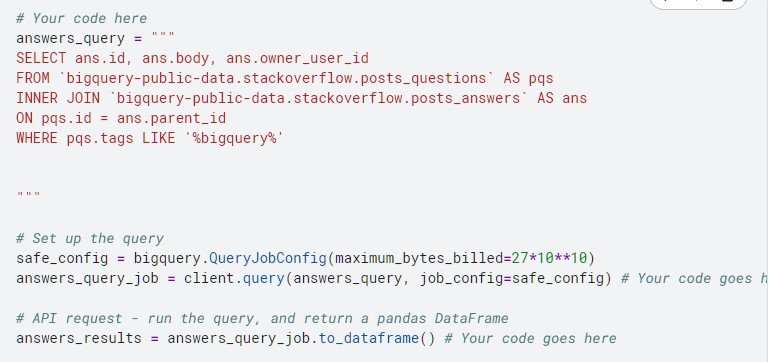
I used the JOIN function to combine two tables together using the column "Id" available in both tables.
I also filtered out words including biqquery using the wildcard operator "%"
I also used aliasing to remame the tables used.
Day 2 of learning SQL on Kaggle.
I used the JOIN function to combine two tables together using the column "Id" available in both tables.
I also filtered out words including biqquery using the wildcard operator "%"
I also used aliasing to remame the tables used.
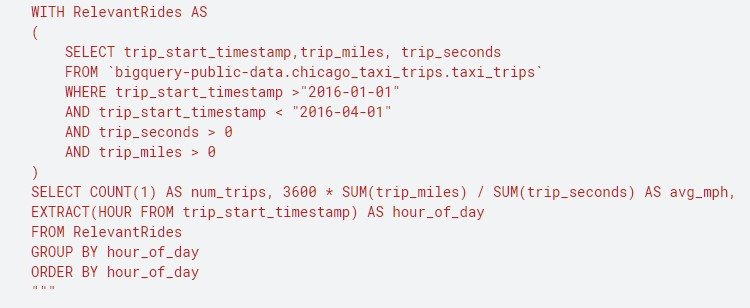
Day 1 of learning SQL on KAGGLE.
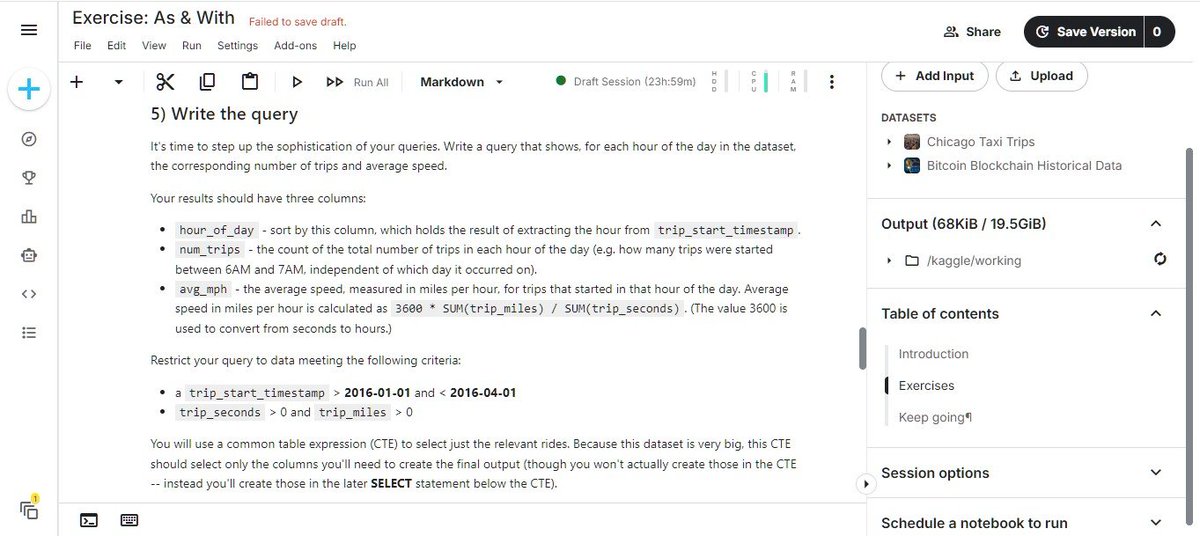
I learnt about CTE(Common table expression) using the WITH....AS clause.
This function is helpful in creating and querying a temporary table that helps to understand the full table.
Day 1 of learning SQL on KAGGLE.
I learnt about CTE(Common table expression) using the WITH....AS clause.
This function is helpful in creating and querying a temporary table that helps to understand the full table.