Hey Adventurers,
Testnet Rewards are coming 🎁
Eligible players must register through our Discord Bot to receive rewards.
⚔️ Knight of Valor: 1 free Pochi
🛠️ Dev Slayer: 5 free Spring Chests
📜 Loreweaver: 2 free Pochies
...and more
Claim guide below 🧵👇
FTK MAINNET JUST PASSED 1M ONCHAIN TRANSACTIONS ⚔️🔥
Only 4 days after launch, FTK has already crossed 1M+ txs on @risechain
We’ve also launched our Dune dashboard here: https://t.co/1VMOYo9DCJ
Soon, we’ll add more data on revenue, player spending, key in-game actions & more.
Huge thank you to everyone who created a character, joined a Kingdom, backed the World Treasury, opened a Pochi Egg, or simply kept grinding every day 💚
$435M in cumulative volume on @risextrade. $100M of it in week one alone.
This isn't a testnet. This isn't hype. This is a fully onchain perps DEX doing CEX numbers.
https://t.co/wNomZQPVRW
right now if you want to do anything on RISE you need to bridge your assets over from ethereum first. that means you’re paying bridge fees, waiting for confirmations, and dealing with extra steps before you even do anything. it’s very very annoying and some people choose not to bother with it at all
a native stablecoin removes all of that. USDR lives on RISE directly, 100% backed by US treasury bills. you don’t need to bring anything over from another chain, it’s already there, ready to use, fast and cheap because it’s built specifically for RISE’s infra
every serious chain needs its own stablecoin at some point. imo it’s not optional because without it you’re always depending on assets from other chains and that creates risk and limits how far the ecosystem can actually grow
normally people don’t talk enough about the yield side. with USDC or USDT all the yield from the backing assets goes straight to the issuer, you get nothing. USDR works differently because the yield from the t-bills accrues back to RISE and gets used to incentivize users who actually interact with it
more usage means more yield -> more yield means better returns -> better returns bring more users -> the cycle keeps going. so growth becomes funded by real yield not token emissions
with USDR @risechain now has that foundation. trading, lending, liquidity, collateral, it all works natively. apps can build around it and users can just show up and use the chain without the extra steps
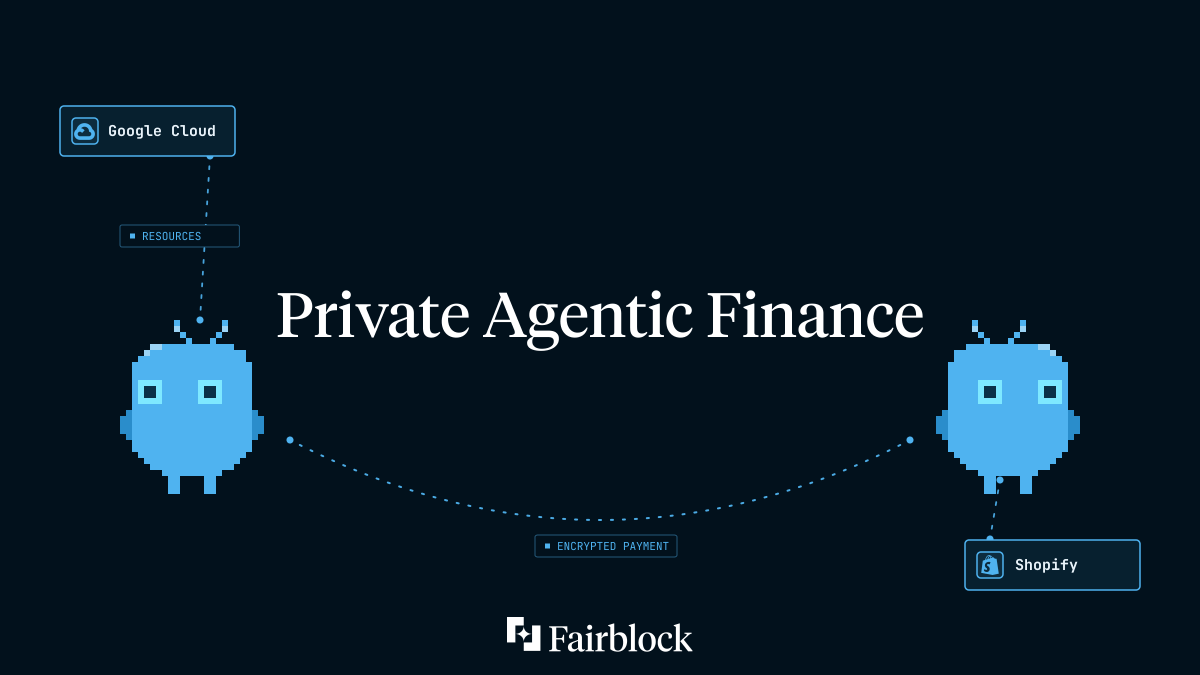
No business would publicly expose its revenue, suppliers, customers, salaries, treasury in real time.
AI agents and online merchants won't either. Confidential payments and private economic relationships will become core infrastructure for agentic commerce.
Promising new Perp DEX
Today I want to talk about @risextrade. The project launched literally a month ago, and the current metrics are:
- $2.7M TVL
- $500M cumulative volume
- $2.4M open interest
- 2,500 traders
Backed by: @VitalikButerin + @StaniKulechov + @galaxyhq + @coinbase
Building on their own L2 chain - @risechain, which just launched their native stablecoin - $USDR, 100% backed by US Treasury bills
Already features include:
- AutoYield on collateral
- Portfolio margin
- Fully onchain orderbook perpetuals with CEX like speed + DeFi composability
Currently invite only
DM me - will provide invites to everyone!
AI agents are about to become the most active economic participants on the planet.
We just built the financial privacy layer they need to actually operate.
Here's why this matters more than anything else in agentic infrastructure right now.
The flowchart below shows the lifecycle of how an AI agent manages money privately through the Stabletrust API.
It starts with the AI agent depositing USDC into the system, which creates a privately managed balance. The agent can store and use funds without revealing all of its activity or holdings.
The “Transfer Funds Privately” step represents the agent sending money to another party, another AI agent, a merchant, or an external service, while keeping transaction flows hidden from public observers.
The idea is that the agent can operate economically without broadcasting its financial behavior on-chain.
The final stage is withdrawal. The AI agent withdraws funds from the private system back onto the blockchain or to an external destination, producing a final updated balance.
The chart is essentially illustrating a private financial operating layer for autonomous AI agents.
RISEx has a pretty useful feature for perp traders: Reverse Position.
Instead of close LONG, wait execution, open SHORT manually.
You can flip your position instantly in one click.
Example: LONG 0.00053 BTC → Reverse → closes LONG + opens SHORT automatically.
Trading @risextrade on treadfi 10x boost in tread points just ended. Hope you gather enough don't be like me 😹
Here's recent update on @risechain :
-> $435M in cumulative volume on @risextrade
-> RISE is live on @Dune.
-> RISEx API is live.
-> @LorisTools is tracking RISEx in real time.
alot more coming thoon.!!
Hey hey Adventurers,
Today we’re revealing more details on Crystals 💎, our in-game premium currency.
FTK’s in-game hard currency powers:
⚔️ Player earnings.
🏦 The World Treasury.
🎲 Premium content acces.
🏰 Kingdom Treasuries.
Here’s how the system works 🧵👇
RWA tokenization is no longer some distant crypto narrative.
It’s already happening.
Real estate, bonds, treasury products, private credit, more real-world assets are moving on-chain, and large institutions are paying attention.
You have firms like BlackRock and JPMorgan actively building around this shift because the advantages are obvious.
Faster settlement.
24/7 markets.
Global access to assets.
Less friction between buyers and capital.
The infrastructure is improving fast.
But there’s still one major issue most people overlook:
public transparency.
For institutions, that’s a serious concern.
Imagine moving large treasury positions or managing tokenized assets while every transfer, allocation, and movement is visible on-chain.
That’s valuable information.
And in competitive markets, valuable information gets watched closely.
This is one of the biggest reasons institutional adoption still moves cautiously.
Not because the assets can’t move on-chain.
Because sensitive financial activity was never designed to live fully exposed.
This is where @0xfairblock comes in.
Fairblock is building the privacy layer that makes institutional-grade RWA activity more practical.
Assets can still move across chains and settle on public infrastructure, but the sensitive details around balances, transfers, and positions don’t have to be fully exposed to everyone watching.
That changes the conversation.
What also matters is that this doesn’t remove accountability.
If regulators or auditors need access to specific transaction details, disclosure can still happen when required.
So institutions aren’t forced to choose between compliance and confidentiality.
That balance is important.
I also think this becomes more powerful when combined with ecosystems where liquidity already exists, like Arbitrum and Plume Network.
Because tokenized assets only become meaningful at scale when they can move efficiently across markets while still protecting sensitive financial information.
RWA tokenization isn’t just about putting traditional assets on-chain.
It’s about rebuilding financial infrastructure in a way that institutions can actually use comfortably.
And privacy is a huge part of that.
Gfairy.