Business, meet your next manager.
For years, we talked about AI replacing jobs.
I think the more interesting shift is happening somewhere else:
AI is changing what it means to manage.
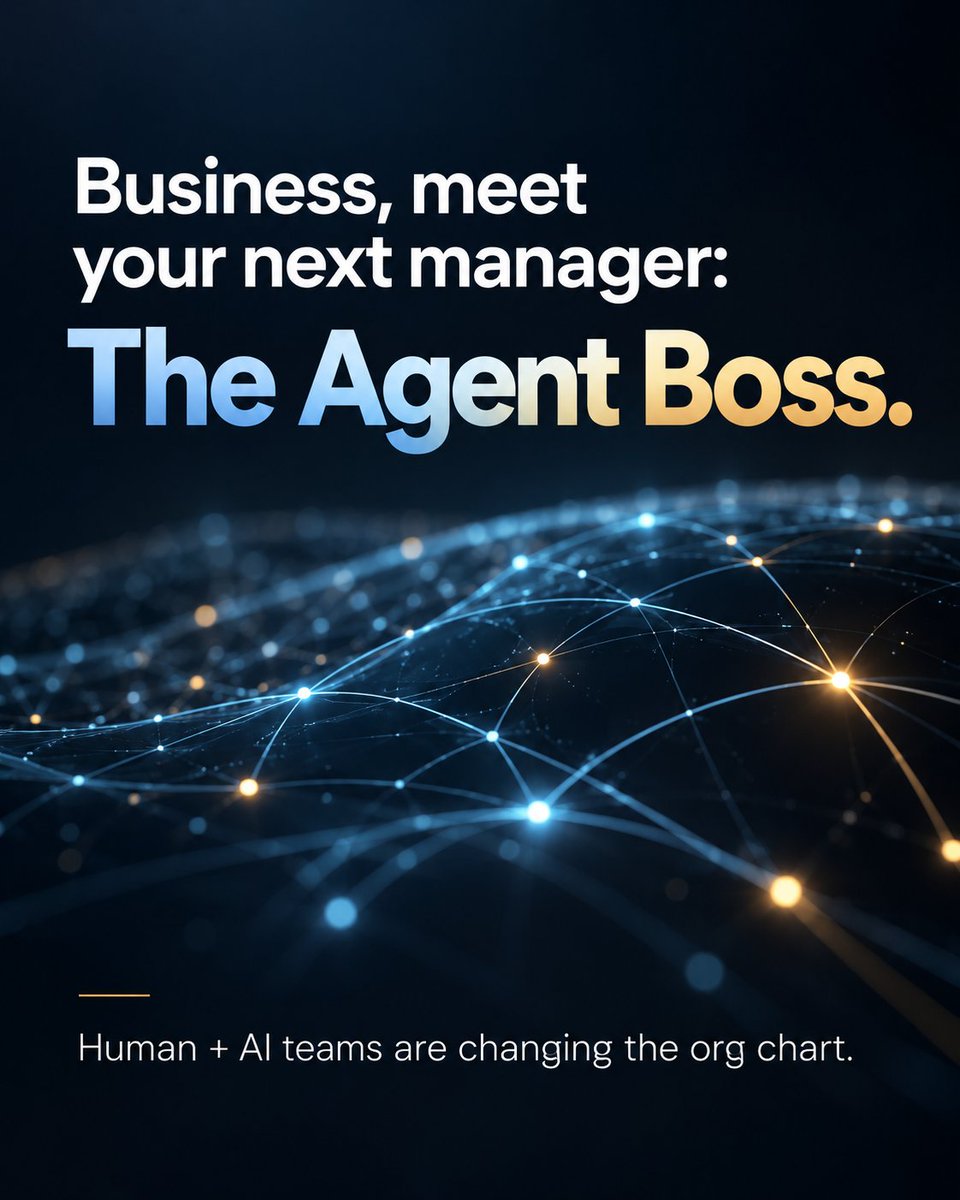
@Microsoft already has a name for it: the “agent boss” — someone who builds, delegates to, and manages AI agents.
According to Microsoft’s 2025 Work Trend Index:
28% of managers are already considering hiring AI Workforce Managers to lead hybrid teams of people and agents.
32% plan to hire AI Agent Specialists to design, develop, and optimize them.
@McKinsey & Company is talking about the rise of the “agent manager,” while @LinkedIn co-founder Reid Hoffman has predicted the rise of the “AI agent manager.”
This changes the org chart.
Imagine a Growth team where:
→ one agent researches the market and competitors
→ another analyzes ICP and buying signals
→ another prepares account research for Sales
→ another monitors campaign performance
→ another identifies funnel anomalies
→ another updates CRM and reporting
→ humans make the strategic decisions and own the outcome
The important part is not having more agents.
It is designing the system they operate inside.
Someone still needs to decide:
What should be automated?
What requires human judgment?
Where does one workflow hand off to another?
What business outcome should all of this produce?
That is why I believe the next phase of AI adoption is not simply “AI tools.”
It is AI-powered operating models.
Growth systems.
Agentic workflows.
Human + AI teams connected across Marketing, Sales, Product, and Revenue.
The winners will not necessarily be the companies with the most agents.
They will be the companies with the best architecture behind them.
Welcome to the Agent Boss era.
My take: start from architecture.
Map the business process before adding agents.
Otherwise, AI can simply automate a broken process faster.
Architecture first. Agents second.
Scale third.
Sources:
Microsoft — 2025 Work Trend Index: The Frontier Firm is Bornhttps://www.microsoft.com/en-us/worklab/work-trend-index/2025-the-year-the-frontier-firm-is-born
McKinsey & Company — The Rise of the Agent Managerhttps://www.mckinsey.com/capabilities/tech-and-ai/our-insights/rewired-takes-how-ai-is-unlocking-creativity-and-heralding-the-rise-of-the-agent-manager
LinkedIn News / Reid Hoffman — AI Agent Manager
https://t.co/yZ2K56UMBp
Think big. Think architecture. High-level targets first!
Yesterday, looking out over Miami from the 38th floor, I could see the towers, offices, ocean, and Metromover as parts of a much larger picture.
The city invites a wider scale of thinking. So did the people I met that evening.
We spend our working days close to one part of a business: a product decision, a customer conversation, a campaign, a new AI application. Architecture asks us to step back. Where does the business fit in its market and ecosystem? Who is it built for? How does a customer move from first contact to lasting value? Which investments strengthen that path?
This is the perspective behind AARRR 2.0: AI Growth & Revenue Architecture
Market Fit → ICP → JTBD → Acquisition → Activation → Revenue → Retention → Referral → AI & Tech → ROI
Start with the high-level targets and the client happy path. Let that understanding guide the budget, technology, and execution.
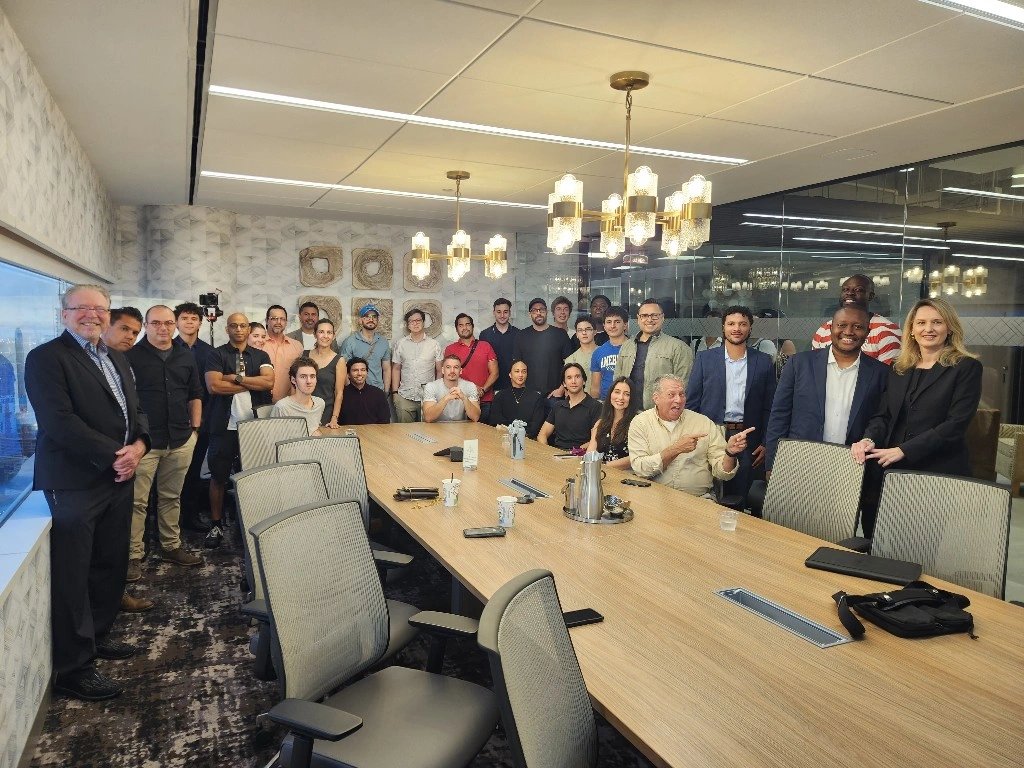
I enjoyed sharing this approach yesterday with the Mindstone Miami community. The room brought together founders, CEOs, enterprise and IT leaders, business partners, cybersecurity professionals, students, and people from government and the Miami-Dade Beacon Council @beaconcouncil.
Attendees came from Miami, Fort Lauderdale, Coral Gables, Orlando, Paris, and beyond. The questions opened a substantive conversation about AI, innovation, risk, and real business cases — and led to new connections and friends.
Gustavo Grande’s presentation on the PortMiami @PortMiami showed what this perspective means at another scale: infrastructure in one city with strategic importance to the entire United States.
Thank you, Junior Charles, for having me and creating a space for people with such different expertise to think together. And thank you to everyone who brought their questions and experience.
Being surrounded by people who see possibilities beyond their own field is one of the most exciting things about building in Miami.
Anthropic’s Fable 5.1 is here. More AI models and features are coming.
And here is my confession:
I don’t know how to code on Fable 5.1
And here is my perspective on who in business actually should.
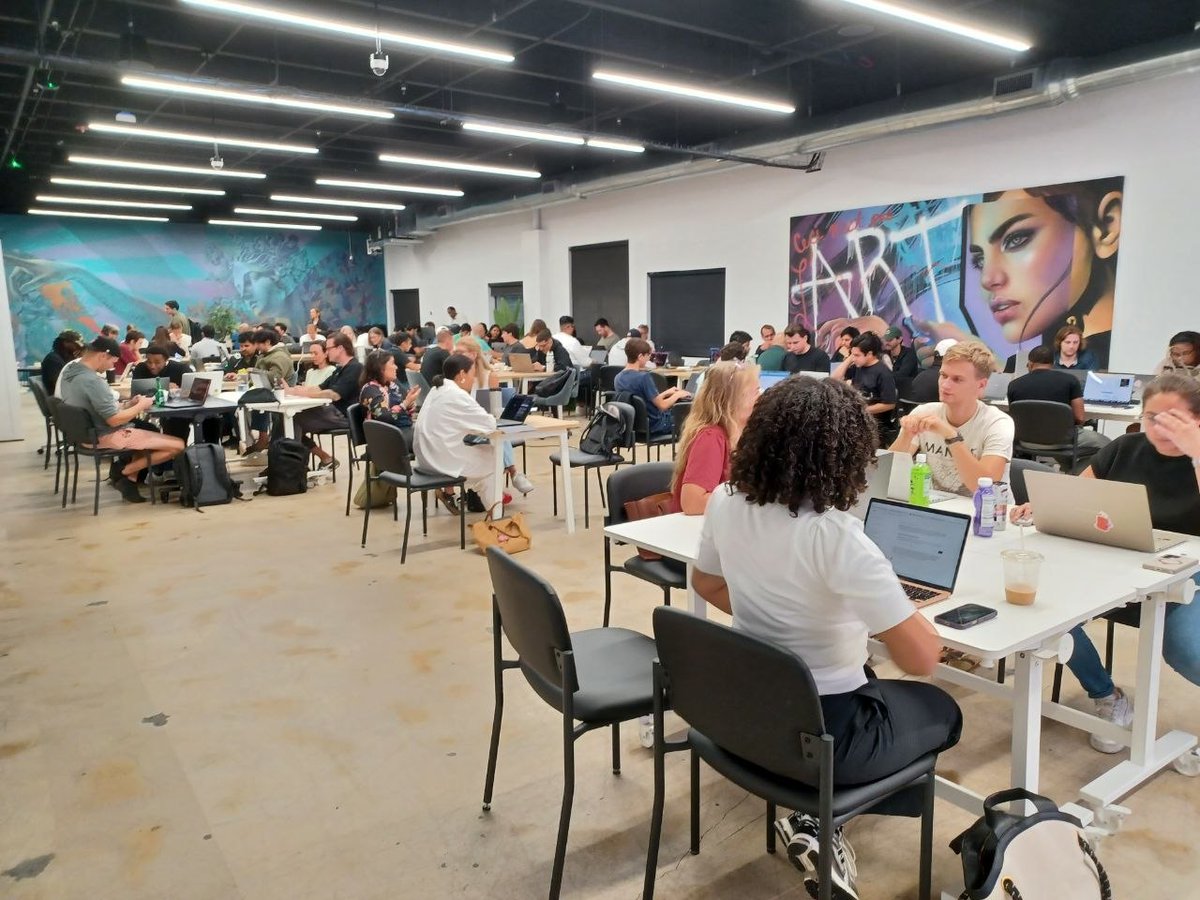
This Sunday at Fable 5.1 Build Day with Claude Code Community Miami, we explored what can already be built with the newest capabilities.
More than 10 demos and business ideas were presented after just a few hours of work.
The speed and quality of the prototypes were impressive.
For me, working with AI professionally also means continuing to learn, explore, and understand what I can do, where my expertise ends, which tools can help — and when the work should be in the hands of professional developers.
My takeaways as a Growth & Revenue Architect:
1. AI prototyping is the new Software Discovery tool.
A preliminary prototype is a digital sample of your software company’s real expertise. Weeks spent on discovery can be reduced by teams leading with rapid prototyping, followed by more focused discovery.
2. A great prototype is not a commercially successful business.
A prototype can look great and demonstrate that an idea works technically. But it doesn’t have a business model or Revenue Architecture behind it.
3. In a world of endless AI tools, one filter remains core: Jobs-to-Be-Done.
What Job-to-Be-Done are we hiring this tool to do?
This should be a mandatory question before any implementation. The technology must follow the problem and the expected business outcome.
4. Data protection and responsibility are yours — not embedded in the AI tool.
There are things we can build for ourselves, test quickly, or use to automate routine work. The moment customer data, company data, storage, transmission, APIs, or enterprise infrastructure are involved, the requirements change completely.
AI products evolve quickly. Features and defaults can change, including how data is processed or stored. For those environments, I believe in relying on professional developers and AI specialists with relevant industry experience, technical education, and certifications.
My takeaway from the day:
Fast prototyping creates enormous opportunities. But a prototype alone does not create a commercially successful business.
Development, Product Marketing, Sales, and AI need to work as one connected system:
Market Fit → ICP → JTBD → Acquisition → Activation → Revenue → Retention → Referral → AI & Tech → ROI
This is the foundation of AARRR 2.0 — AI Growth & Revenue Architecture.
A special thank you to Justin Elliott and Claude Code Community Miami for creating a place where people can test new capabilities in practice and learn alongside professional developers.
The business challenge remains: what to build, for whom, for which Job-to-Be-Done — and how to turn it into a repeatable revenue engine.
#AI #Revenue #Growth #AARRR20 #ClaudeCode
Microsoft, Citigroup & Addepar on AI Across Banking, WealthTech & Family Offices — Miami FinTech Club
Financial institutions adopt AI. The challenge is deploying AI at scale without breaking core systems while delivering measurable business outcomes.
Today at the Miami Fintech Club Executive Breakfast: Deploying AI in Financial Services, I had the opportunity to ask the panel — leaders from Citi, Microsoft, and Addepar — directly about AI Growth & Revenue Architecture.
1. Everything starts with back-end architecture.
Driss Temsamani — Managing Director, Americas Head of Digital at Citigroup and author of The Agentic Bank — anchored his response in what sits behind every process: the back-end architecture.
Agentic banking and scalable AI cannot exist on fragmented foundations.
2. The structural clash: Vertical company structure vs. horizontal reality.
Emilio Iturmendi Kustner — Area Lead Business Applications | Latin America at Microsoft — broke down one of the fundamental challenges behind enterprise AI adoption:
Companies are built vertically. But the customer lifecycle, buying journey, and business architecture run horizontally.
Deploying AI vertically — department by department, tool by tool — can deepen existing silos.
Real leverage comes when AI, systems, data, workflows, and customer journeys are connected end-to-end across the entire business architecture.
3. What comes next: Business AI management at your fingertips
Blake Rose — Senior Global Partnerships & Strategic Alliances Manager at Addepar — pointed to the future: AI as a must-have, with one intelligent layer orchestrating workflows, teams, systems, and data streams — accessible at your fingertips from a mobile device.
My takeaway from this room:
I don’t believe AI can replace an expert empowered by AI.
Architecture + Expertise + AI is where the real advantage is created.
A disconnected AI stack can quickly become technical debt in disguise. Business outcomes require connecting the entire engine:
Market Fit → ICP → JTBD → Acquisition → Activation → Revenue → Retention → Referral → AI & Tech → ROI.
This is the foundation of AARRR 2.0 — AI Growth & Revenue Architecture.
A special thank you to Alejandra Slatapolsky, Co-Founder of Miami FinTech Club, and the team, in partnership with Blackbird Labs, for convening a power room where we could ask industry leaders direct questions and discuss complex systemic challenges candidly.
Alejandra’s strategic expertise helping FinTech companies enter and scale in the U.S. market shows in the caliber of the community and conversations she curates.
If you are building or scaling in FinTech, I highly recommend becoming a member of Miami FinTech Club — to connect with exceptional experts and be part of meaningful conversations shaping the industry.
👉 Become a member: https://t.co/o6gLw76GyG
Because tools come and go.
Architecture and expertise build lasting value.
#FinTech #AI #RevenueArchitecture #AARRR20 #WealthTech #FamilyOffices
The Future of AI Is Human — Artifact AI Summit 2027 brings together legends and expertise
Legends who changed industries. Experts who turn ideas into real businesses. Unique perspectives, experience, and people — all in one truly unique place.
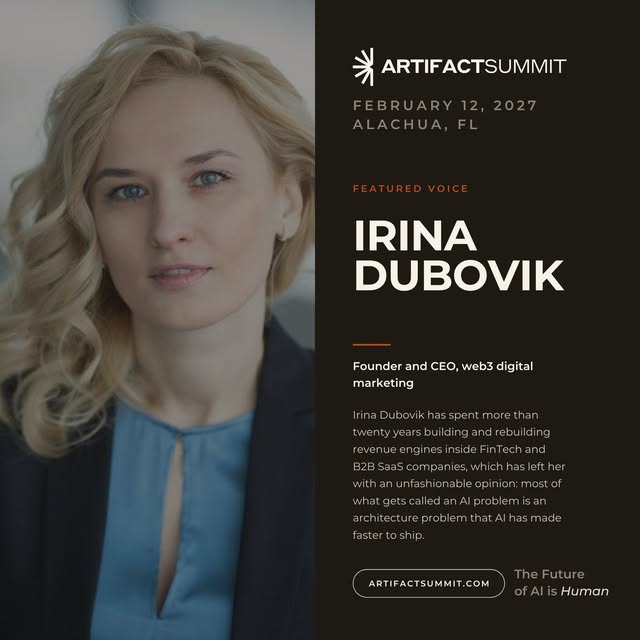
I’m honored to be speaking at ARTIFACT® AI Summit.
Behind every project are people who make it happen.
And there is double value when people who create new approaches meet those who implement them — making businesses, founders, and teams stronger, driven by values and big missions that can last for generations.
I’m honored to share the stage with Dr. Temple Grandin, whose work transformed how we understand animal behavior, visual thinking, neurodiversity, and humane system design — one of TIME ’s 100 Most Influential People in the World, and the subject of HBO’s Temple Grandin, winner of 7 Emmy Awards by Academy of Television Arts & Sciences — alongside an exceptional lineup of experts and speakers.
My session will focus on where AI, Human Judgment, and Revenue Architecture meet — and how we connect them to measurable business outcomes. Featuring the AARRR 2.0 framework, practical tools, and actionable insights.
Boaz S. — my deepest gratitude for turning our case into something real — troubleshooting AI Architecture and the business case together, and for connecting exceptional people. To be continued :)
Thank you, Bruce Floyd, the ARTIFACT® AI Summit team, and neuromatch® — for making this possible.
And the setting itself is part of the experience:
Santa Fe River Ranch is a 1,500-acre working cattle ranch in Alachua, Florida — a place designed to change the conversation.
Exceptional people.
Exceptional ideas.
An exceptional place.
Join the early-access list or explore partnership opportunities:
https://t.co/ppJBuUUsyZ
📍 Santa Fe River Ranch, Alachua, Florida
📅 February 12, 2027
Driving Real Capital into Miami: Built in Miami — From Local Founders to Funded Startups
In 2024, I was a mentor for the second Built in Miami cohort.
Today, seeing those founders raise capital, build companies, and create wealth shows that the program delivers. It connects local builders with institutional investors and real pathways to capital.
Honored to have been part of their journey.
A strong startup ecosystem is built when founders, communities, opinion leaders, and city leadership support and amplify one another.
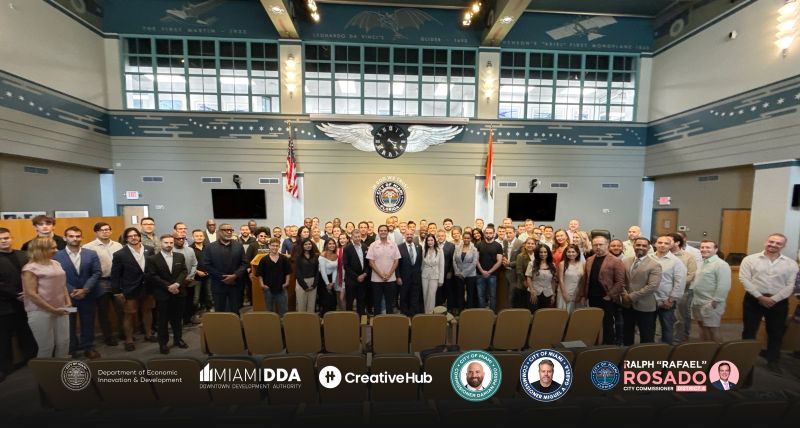
That takes people committed to making it happen: Mayor Eileen Higgins, Keith A. Carswell and the City of Miami Department of Economic Innovation and Development, Michaeljohn Green and the Miami DDA, and Arijana Koskarova.
Miami founders are raising the bar — and making Miami the ROI Capital.
If you're building in Miami, applications for the new cohort are open:
👉 https://t.co/S5e8UcdE0m
#BuiltInMiami #MiamiTech #CityOfMiami #MiamiDDA #VentureCapital #Startups #MiamiFounders
From Seed to Exit: Your Growth Model Needs Capital Architecture
When founders build a growth model, the playbook is almost always the same:
Market → ICP → Product → GTM → Scale
We obsess over funnels, CAC, pipeline, burn rate, and growth velocity.
But this morning at Capital Strategies for Founders, hosted by Miami Fintech Club × BNY Wealth, one critical layer stood out:
Capital Architecture.
Especially for founders entering the US market, the early journey often looks like this:
1. Incorporate through an agent or online platform — fast, efficient, transactional.
2. Run early corporate documentation founder-led — formation documents, agreements, cap table, governance basics.
3. Bring in a CPA when tax, entity structure, filings, and compliance become relevant.
3. Use standard Y Combinator SAFE or other market templates when the first capital comes into the conversation.
4. Layer in advice from lawyers, other founders, friends & family, and the broader network as new questions appear.
5. Start pitching funds and negotiate within the structure already created.
Each step solves a specific need.
But together, they still may not answer the strategic question:
Is the company structured today for where the founder wants to be 3–5 years from now?
That is where Capital Architecture enters the Growth Model.
→ Architecture comes before capital.
State selection, founder equity, QSBS eligibility, cap table structure, governance, and ownership decisions can materially shape future flexibility, tax exposure, liquidity, and exit outcomes.
→ There is an advisory layer many founders never build.
CPA and legal expertise are essential. But founders may also need wealth strategists, capital advisors, and M&A expertise capable of looking across the full lifecycle:
Ownership → Dilution → Tax → Governance → Liquidity → Exit
Not as isolated experts or decisions, but as one system.
→ Investor terms are not your capital strategy.
Funds naturally evaluate a deal through their own mandate, economics, and lifecycle.
The founder also needs a long-term view of what those terms mean for ownership, optionality, enterprise value, and future liquidity.
→ US market entry runs on two parallel architectures.
Growth Architecture:
Market → ICP → Product → GTM → Sales → Scale
Capital Architecture:
Entity → Ownership → Tax → Governance → Liquidity → Exit
For me, this was the strongest insight from today:
A Growth Model should not only explain how a company grows.
It should account for the capital structure that makes that growth sustainable — from Seed to Exit.
Architecture precedes acceleration.
Huge thanks to Miami Fintech Club — Alejandra Slatapolsky and Omar Arab — and BNY Wealth for bringing together 30+ founders, investors, funds, and operators for such a high-value discussion.
And thank you to Gina Gingrow, Alyse Reiser, Danielle Price, and Sneh Parmar for bringing wealth strategy, legal, and founder perspectives into one conversation.
#Growth #AARRR20 #VC
AI vs Brain: Can Claude Build Revenue Architecture? 8 Findings From the AARRR 2.0 Experiment
Every founder right now is rushing to become “AI-powered.” But speed without a system is just faster failure.
AI didn’t fix growth — it made bad architecture faster to ship.
Together with Justin Elliott, we stress-tested WRTH, a real AI-native business, with Claude using AARRR 2.0:
Market Fit → ICP → JTBD → Acquisition → Activation → Revenue → Retention → Referral → AI & Tech → ROI
Here are the Growth & Revenue patterns that surfaced through the experiment, diagnostics, Claude Code Community participant discussions, and the AARRR 2.0 framework:
1. Market Fit, ICP & JTBD
Many founders find it difficult to clearly formulate the Job to Be Done. Many learned this formula for the first time:
Market Fit = ICP + JTBD
2. “Funnel” and “Architecture”
Teams mean very different things by both terms, which leads to broken handoffs.
“Funnel” is often associated with infomarketing and Instagram. Here, we are looking at the conversion funnel of the entire business.
“Architecture” here is not technical architecture. It is Growth architecture + integrations.
3. Customer Journey Map vs. User Story Map
A critical gap surfaced between the journey teams imagine — Customer Journey Map touchpoints — and what actually happens in the real Buying Journey / Happy Path with triggers and converters.
4. AI Tools
AI tools are frequently duplicated across Marketing, Sales, and Product instead of being applied end-to-end across the full system.
5. Lead Magnet
Almost no one uses a Lead Magnet as a digital mini-version of the product or service. It can deliver higher conversion.
Different from the Instagram mechanic of “fill out a form and get a PDF.”
6. Digital Product Is Part of the Business
For CTOs and developers, it became clear that behind a website there needs to be Growth architecture, an AARRR 2.0 conversion funnel, and an understanding that every Digital Product is part of the business.
7. Visibility for LLMs and SEO
AI does a great job diagnosing project visibility for LLMs and SEO.
Yet many teams still do not use this and simply code the product.
8. Referral
The Referral mechanism must be embedded directly into the User Journey, not exist as an isolated program.
For B2B SaaS, this is a core conversion channel.
The main conclusion:
AI can diagnose, inspect, and execute faster.
Human expertise still determines what connects, in what order, with which owner, converter, metric, and ROI logic.
🏆 One more highlight — Raising talent:
Pablo Pupo, Founder of Accordo, won the Best Question Award — AARRR 2.0 Review.
Miami founders are raising the bar — and we’re getting closer to becoming a real ROI capital for founders.
Thank you all for coming!
Special thanks: Justin Elliott, Anthropic, Dave McClure, Sergei Lavrinenko Dmitry Dubovik, The LAB Miami
👉 Full article:
https://t.co/90z55QhTO2
#AI #Claude #Product #AARRR2
Stop shipping broken funnels at 10x speed.
Every founder right now is rushing to become “AI-powered.” But speed without a system is just faster failure. AI didn’t fix growth — it made bad architecture faster to ship.
You can build faster. But you still cannot prompt away a broken handoff, a fuzzy ICP, or a product that doesn’t convert to revenue.
Last Friday at The LAB Miami, Justin Elliott and I brought this directly to the stage for Claude Code Community: AI vs Brain.
We stress-tested WRTH’s real product and constraints, and my own Revenue Architecture expertise, using AARRR 2.0:
Market Fit → ICP → JTBD → Acquisition → Activation → Revenue → Retention → Referral → AI & Tech → ROI
AI is your superpower. It can diagnose, inspect, and execute faster.
But Revenue Architecture still requires human decisions: how the system connects, who it serves, what happens in what order, and how it contributes to Revenue and ROI.
I want more founders and builders to create sustainable, revenue-driven companies, not facades, prototypes, or products without Revenue Architecture and a working funnel behind them, with Product, Marketing, Sales, AI & Tech connected as one system.
My dream is to scale and embed AARRR 2.0 into the Claude ecosystem, an AI Growth & Revenue Architecture Framework for AI-native businesses.
And I hope one day to continue this conversation with the Anthropic team and Boris Cherny.
Thank you to everyone who joined us. I’m really proud of the Claude Code Community, such a warm atmosphere, so many thoughtful questions, shared insights, and reposts.
And personally, thank you to Justin Elliott for your continued support since my first mentorship with Built in Miami by City of Miami & Keith A. Carswell, and for everything you’re doing to grow the Claude community in Miami.
Grateful to be making an impact together with Justin Elliott, WRTH, Claude Code Community Miami, Anthropic, Dave McClure, Sergei Lavrinenko, my brother Dmitry Dubovik, and The LAB Miami.
Watch the recap below. 👇
For anyone who wants to see the architecture in practice, I built the AARRR 2.0 Scanner with Claude.
It walks through the full Growth & Revenue Architecture, identifies potential revenue leaks, and generates a personalized report with priorities and a Claude prompt for deeper analysis.
Market Fit → ICP → JTBD → Acquisition → Activation → Revenue → Retention → Referral → AI & Tech → ROI
https://t.co/RWbLr4TgzG
Growth gets expensive when a company scales faster than its AI Growth & Revenue Architecture.
Strong product. Active marketing. Sales team. CRM. AI tools.
And still — revenue leaks between functions, ownership becomes fragmented, priorities compete, and Growth turns into a collection of local optimizations instead of one operating system.
This is a company-level Growth problem.
Currently considering a small number of long-term embedded Growth & Revenue leadership opportunities with companies that already have a product and traction — and are ready to build the next layer of scale.
The engagement can operate at Head of Growth / Growth & Revenue leadership level:
Market Fit → ICP → Jobs-to-Be-Done → Acquisition → Activation → Revenue → Retention → Referral → AI & Tech → ROI.
Connect Product, Marketing, Sales, Customer Success, and AI & Tech into one revenue architecture.
Find where revenue is leaking.
Define what needs to change, in what sequence, and where ownership belongs.
Deploy the resources required to turn the architecture into an operating system — not another strategy deck.
The strongest fit: B2B SaaS, AI, Fintech, Financial Services, and Commerce — as well as VC funds and portfolio companies that need a stronger Growth & Revenue architecture across the portfolio, at the stage where isolated Growth tactics are no longer enough.
Recent work around AARRR 2.0 — AI Growth & Revenue Architecture Framework has made one thing increasingly clear:
The bigger the company becomes, the more expensive the gaps between functions become.
Selective about the company, the problem, and the engagement.
If this is the stage your company is entering, let’s talk.
Hidden Reality: Revenue leakage rarely looks like one big broken funnel.
It usually appears as a series of smaller breaks across the customer journey.
→ A demo path that does not preserve intent.
→ A signup that does not lead to a defined first-value moment.
→ Product behavior that never reaches Sales.
→ CRM data that does not carry enough context.
→ A customer getting value with no structured expansion or referral mechanism.
→ A channel generating attention that is not connected to the rest of the commercial system.
Most teams do not have a marketing or sales problem — they have an architecture problem.
I find where a B2B SaaS or AI company is losing revenue across Product, Marketing, Sales, AI & Tech — then map what to fix, in what order, and what it should return.
In one recent 48-Hour Revenue Architecture Review for a B2B SaaS company:
9 observable Revenue Leaks
6 of 9 largely fixable by the existing team
The issues were distributed across product access, demo mechanics, identity capture, first value, content discoverability, conversion tracking, purchase paths, feature and pricing logic, activation, retention, expansion, and referral.
The larger opportunity was not to add more channels, but to connect what the company already had.
AARRR 2.0 Fix:
founder reach → social → search → website →
Then add a Pre-Product Value Layer to create a useful first outcome before full product adoption, and connect the commercial path →
demo → Revenue Layer / clear purchase options → CRM → product → retention → referral
The exact revenue impact becomes measurable once internal funnel data, conversion rates, pricing, and close rates are applied.
That is what I mean by Revenue Architecture.
Not another funnel audit.
A structured view of where the current business is losing revenue, what can be fixed, in what order, and how the pieces should connect.
I build this through AARRR 2.0:
Market Fit → ICP → JTBD → Acquisition → Activation → Revenue → Retention → Referral → AI & Tech → ROI
I run a 48-Hour Revenue Architecture Review for B2B SaaS teams, AI startups, and VC-backed companies.
You get the full roadmap: where revenue is leaking, what is breaking between teams and systems, and what to fix in what order.
To start, send me your company URL + one current business or product challenge: [email protected]
UPD: We’re growing 🚀
We’ve had more registrations than expected, so AI vs Brain: Can Claude Build a Revenue Architecture? is moving to The LAB Miami.
📍 The LAB Miami
2750 NW 3rd Ave #24, Miami, FL 33127, USA
August 21
Same experiment, same agenda — just more people and more space.
See you at The LAB Miami!
https://t.co/2kOjyncHNw
UPD: We’re growing 🚀
We’ve had more registrations than expected, so AI vs Brain: Can Claude Build a Revenue Architecture? is moving to The LAB Miami.
📍 The LAB Miami
2750 NW 3rd Ave #24, Miami, FL 33127, USA
August 21
Same experiment, same agenda — just more people and more space.
See you at The LAB Miami!
https://t.co/2kOjyncHNw
UPD: We’re growing 🚀
We’ve had more registrations than expected, so AI vs Brain: Can Claude Build a Revenue Architecture? is moving to The LAB Miami.
📍 The LAB Miami
2750 NW 3rd Ave #24, Miami, FL 33127, USA
August 21
Same experiment, same agenda — just more people and more space.
See you at The LAB Miami!
https://t.co/2kOjyncHNw
AI vs Brain: Can Claude Build a Revenue Architecture?
Every founder is now "AI-powered." Almost none of them are revenue-architected.
AI didn't fix growth. It made bad architecture faster to ship. Speed without architecture doesn't scale a business — it breaks it faster. You can prompt a landing page in an hour, but you can't prompt Product ↔ Marketing ↔ Sales ↔ Customer Success into one system. You can't prompt away a broken handoff, a fuzzy ICP, or a funnel with no ownership.
AARRR 2.0 wasn't built in a lab. It was born from 20 years in the trenches of FinTech, B2B SaaS, and startups — solving the brutal pain of broken handoffs, fired marketing teams, and burning cash.
I found Dave McClure’s @davemcclure legendary Pirate Metrics — the framework that defined growth for a decade — and evolved it for the AI era:
Market Fit → ICP → JTBD → Acquisition → Activation → Revenue → Retention → Referral → AI & Tech → ROI
On August 21, we put this framework to the test with the Claude Code Community in Miami.
The case: @WRTHapp (https://t.co/G0fQ7OYJZp) — an AI-native infrastructure platform powering trust, pricing, and settlement for peer-to-peer commerce, co-founded by Justin Elliott @LLCoolBlaze (CTO, WRTH | Anthropic Ambassador). WRTH just raised $3M. Real GTM mechanics, real product, real capital on the line.
The experiment: Claude builds the funnel logic. I build the Revenue Architecture around it.
The questions:
• Can Claude find the Revenue Leaks?
• Can it build the Revenue Architecture?
• Where does the human architect still matter?
Claude takes the diagnostic layer — finding evidence, contradictions, broken handoffs, and missing data. The Human Architect builds the commercial engine around it — First Value, converters, ownership, systems, metrics, sequencing, and ROI logic.
My dream is to integrate AARRR 2.0 directly into the Claude ecosystem as a reusable Growth & Revenue Architecture framework — so founders, startups, and VC portfolios worldwide can use @claudeai to build complete Revenue Architectures themselves.
Being accepted into the Claude for Startups Program by @AnthropicAI is the first step toward making that a reality.
The takeaway for attendees:
An AARRR 2.0 AI Growth & Revenue Architecture Framework Template that every founder can use to run their own preliminary Revenue Architecture diagnostic with Claude.
Special Prize: The best insight or question gets a free AARRR 2.0 48-Hour Revenue Leak Review for their project with me.
August 21 · 6:00 PM–9:00 PM
The DOCK · 400 NW 26th St, Miami, FL
Endless respect to Dave McClure — creator of the original AARRR framework that gave this industry its language for growth. 🏴☠️🦜📈
And Sergei Lavrinenko @Serg_Lavrinenko — thank you for helping me shape the lead magnet and test the AI diagnostic layer behind this experiment.