𝐁𝐚𝐥𝐝, 𝐛𝐮𝐭 𝐮𝐧𝐦𝐢𝐬𝐭𝐚𝐤𝐚𝐛𝐥𝐞
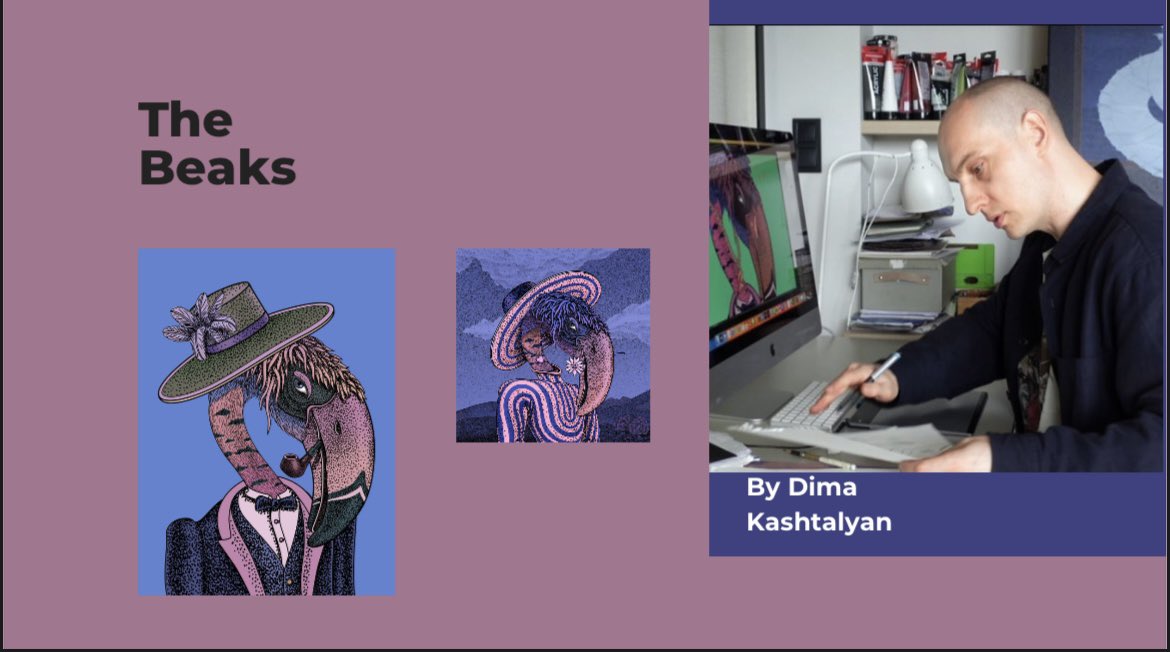
Once you’ve seen Dima Kashtalyan’s work, it’s hard to confuse it with anyone else’s.
Not because it’s loud, but because it feels intentional.
Every piece is made up of thousands of tiny marks, strange characters, and quiet details that slowly pull you in the longer you look. There’s always something hidden beneath the surface, emotion, tension, meaning.
Over time, that style became its own language.
And that same unmistakable identity carries into The Beaks.
Ride with me.🧵
@thebeaksart@DKashtalyan
Seeing Ritual trending because of community art and onchain builds is actually crazy to witness in real time.
What started as people experimenting on testnet is turning into a culture of builders, creatives, and contributors pushing AI x crypto forward together.
Proud to be contributing to Ritual. The energy around Ritual right now feels different.
gritual
@ritualnet@ritualfnd@Jez_Cryptoz@joshsimenhoff@0xMadScientist@dunken9718
𝐀𝐈 𝐓𝐇𝐀𝐓 𝐓𝐇𝐈𝐍𝐊𝐒, 𝐁𝐋𝐎𝐂𝐊𝐂𝐇𝐀𝐈𝐍 𝐓𝐇𝐀𝐓 𝐀𝐂𝐓𝐒; 𝐑𝐢𝐭𝐮𝐚𝐥 𝐛𝐫𝐢𝐧𝐠𝐬 𝐭𝐡𝐞𝐦 𝐭𝐨𝐠𝐞𝐭𝐡𝐞𝐫
Most people still think AI and blockchain are two separate worlds.
AI thinks.
Blockchain stores.
Ritual is one of the few networks trying to merge both into a single system and honestly, that’s where things start getting interesting.
On Ritual, AI isn’t just some external tool giving outputs anymore.
It can actually observe what’s happening on-chain, make decisions, and execute actions by itself through something called Agents.
That changes everything.
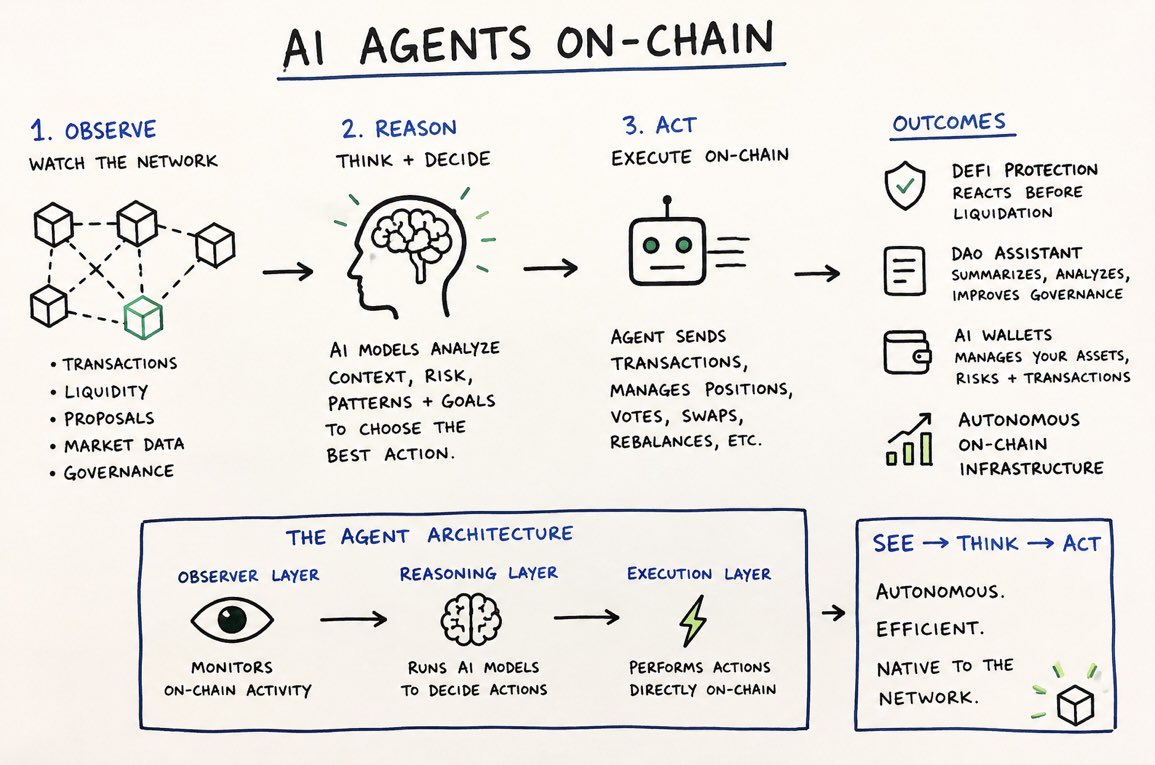
An Agent on Ritual basically works like this:
➜ it watches the network
➜ understands what’s happening
➜ decides what to do
➜ executes the action on-chain
Not manually.
Not through constant human commands.
Autonomously.
Imagine a DeFi position becoming risky and an Agent reacts instantly before liquidation happens.
Or a DAO Agent summarizing proposals, analyzing voting patterns, and helping governance become easier.
Or even personal AI wallets in the future:
an on-chain assistant that manages your positions, alerts, swaps, risks, and transactions automatically.
That’s the direction Ritual is pushing toward:
AI becoming a native part of the network itself instead of sitting outside of it.
What makes this even more interesting is how Ritual structures it.
Agents have:
• an observer layer → monitors on-chain activity
• a reasoning layer → runs AI models to decide the best action
• an execution layer → performs the action directly on-chain
So the Agent can literally:
see → think → act
And because computation only happens when needed, it stays more efficient instead of wasting resources constantly.
To me, Ritual Agents feel less like “AI features”
and more like the beginning of autonomous on-chain infrastructure.
A network that can react, optimize itself, and eventually operate with minimal human coordination.
That’s a very different future from the blockchain systems we’re used to today.
@ritualnet@ritualfnd@joshsimenhoff@Jez_Cryptoz@0xMadScientist@Kash_060
𝐑𝐢𝐭𝐮𝐚𝐥 𝐈𝐬 𝐓𝐮𝐫𝐧𝐢𝐧𝐠 𝐂𝐫𝐨𝐬𝐬-𝐂𝐡𝐚𝐢𝐧 𝐈𝐧𝐭𝐨 𝐁𝐚𝐜𝐤𝐠𝐫𝐨𝐮𝐧𝐝 𝐈𝐧𝐟𝐫𝐚𝐬𝐭𝐫𝐮𝐜𝐭𝐮𝐫𝐞
One of the biggest problems in crypto right now is that users are expected to understand way too much infrastructure just to use an app.
You open a dApp and suddenly you need to:
➜ switch networks
➜ bridge funds
➜ hold different gas tokens
➜ reconnect wallets
➜ pray the bridge works 😭
For most people, that’s exhausting.
The crazy part is users don’t actually care what chain they’re on.
They just want the app to work smoothly.
That’s why Ritual’s approach to Chain Abstraction feels important.
Instead of making users manage all the cross-chain complexity themselves, Ritual abstracts it away in the background.
You interact with one unified experience while Ritual handles:
➜ routing
➜ liquidity access
➜ chain communication
➜ execution across networks
So instead of “using 5 chains,” it just feels like using one seamless system.
Why this matters:
➜ better UX for normal users
➜ less friction moving across ecosystems
➜ easier liquidity access
➜ simpler development for builders
➜ fewer headaches from bridges/manual operations
For devs → build once without forcing users through chain chaos.
For users → crypto starts feeling less like infrastructure management and more like actual technology.
Cross-chain should feel invisible.
That’s the direction Ritual is pushing toward.
@ritualnet@ritualfnd@Jez_Cryptoz@joshsimenhoff@0xMadScientist@Kash_060
Every other blockchain:
Needs
➜ bots
➜ keepers
➜ cron jobs
➜ prayers
Ritual:
“the contract can literally schedule itself.”
@ritualnet@ritualfnd@Jez_Cryptoz
𝐓𝐇𝐄 𝐅𝐀𝐈𝐑𝐁𝐋𝐎𝐂𝐊 𝐖𝐀𝐘: 𝐎𝐧𝐞 𝐩𝐫𝐢𝐯𝐚𝐜𝐲 𝐥𝐚𝐲𝐞𝐫. 𝐀𝐥𝐥 𝐞𝐜𝐨𝐬𝐲𝐬𝐭𝐞𝐦𝐬.
One thing killing user experience in crypto is fragmentation.
Every new chain usually asks you to:
➜ bridge assets
➜ create another wallet
➜ move liquidity
➜ learn a whole new ecosystem
Most users are honestly tired of that cycle.
That’s why @0xfairblock feels different to me.
Fairblock is not trying to replace Ethereum, Arbitrum, Cosmos, or force people onto another isolated chain.
Instead, it works like a privacy layer that plugs into the networks people already use.
Your assets stay where they are.
Your users stay in the same ecosystem.
But now transactions can become programmable and private.
That changes a lot.
Imagine:
➜ protecting trades from MEV bots
➜ running sealed-bid auctions privately
➜ hiding sensitive transaction data until execution
➜ building apps with privacy without abandoning existing liquidity
And the important part is:
you don’t need to migrate everything just to get those benefits.
That’s the kind of infrastructure crypto actually needs more of, tools that enhance existing ecosystems instead of fragmenting them even further.
Fairblock doesn’t feel like “start over on a new chain.”
It feels more like upgrading the chains we already use.
@fsdtope
𝐁𝐋𝐎𝐂𝐊𝐂𝐇𝐀𝐈𝐍𝐒 𝐂𝐀𝐍’𝐓 𝐖𝐀𝐊𝐄 𝐔𝐏 𝐎𝐍 𝐓𝐇𝐄𝐈𝐑 𝐎𝐖𝐍, 𝐑𝐈𝐓𝐔𝐀𝐋 𝐂𝐇𝐀𝐍𝐆𝐄𝐒 𝐓𝐇𝐀𝐓
One thing most people don’t realize about blockchains:
Smart contracts can’t really “wake themselves up.”
If a contract needs to execute something later (rebalance a vault, trigger a game event, close a vote, run an AI action), most chains depend on external bots/keepers to poke the contract at the right time.
That creates extra trust assumptions, more complexity, and another thing that can fail.
@ritualnet handles this differently with Scheduled Transactions.
Instead of relying on off-chain automation, contracts can schedule their own future execution directly at the protocol level.
Meaning:
➜ DeFi strategies can automate themselves
➜ Games can run timed events on-chain
➜ Governance actions can execute predictably
➜ AI agents can react and act autonomously
No keeper networks.
No “hope the bot runs.”
No workaround infrastructure glued on top.
Just native on-chain automation.
That’s a much bigger shift than it sounds.
@ritualfnd@Jez_Cryptoz@joshsimenhoff@Kash_060
Other chains:
➜ move tokens
➜ maybe scale
➜ argue on CT
Ritual:
➜ runs AI natively
➜ proves computation
➜ lets agents cook on-chain
➜ casually building the infrastructure for machine economies
People still think Ritual is “just another AI project.”
Brother… this thing is teaching blockchains how to think.
@ritualfnd@ritualnet@Jez_Cryptoz@joshsimenhoff
Most people hear “Zero-Knowledge proofs” and immediately think privacy.
But the real superpower of ZK in crypto is verification without blind trust.
That’s why I think Ritual’s approach is so interesting.
On most blockchains today, if an AI model gives an output, users basically have to trust:
➜ the oracle,
➜ the server running the model,
➜ or whoever submitted the result on-chain.
That breaks the whole “don’t trust, verify” idea crypto was built on.
@ritualnet changes this by making ZK proving part of the chain itself, not just some extra feature bolted on later.
So instead of saying:
“Trust me, the AI got this right,”
the network can actually prove the computation happened correctly, without exposing all the raw data or rerunning the entire model.
That unlocks a lot:
➜ Verifiable AI outputs on-chain
➜ More privacy for sensitive computations
➜ Lower computational burden for the network
➜ Better interoperability across chains
➜ Smarter contracts that don’t rely on blind trust
The easiest way to think about it:
ZK proofs are like showing the answer to a math problem with proof that you solved it correctly, without forcing everyone else to redo the entire calculation themselves.
Now apply that to AI on-chain.
That’s the shift Ritual is pushing:
AI systems that are not only powerful, but cryptographically verifiable.
And honestly, that matters a lot.
Because AI without verification creates trust issues.
Blockchain without scalable computation hits limits.
Ritual is trying to solve both at the same time.
@ritualfnd@Jez_Cryptoz@joshsimenhoff@Kash_060@0xMadScientist
𝐀𝐈 𝐈𝐒𝐍’𝐓 𝐉𝐔𝐒𝐓 𝐀 𝐓𝐎𝐎𝐋 𝐀𝐍𝐘𝐌𝐎𝐑𝐄, 𝐈𝐓’𝐒 𝐁𝐄𝐂𝐎𝐌𝐈𝐍𝐆 𝐀 𝐏𝐀𝐑𝐓𝐈𝐂𝐈𝐏𝐀𝐍𝐓
At some point, AI stops feeling like just a tool and starts acting like a participant.
That’s the shift @ritualnet is pushing with Agents.
Right now, AI usually lives outside the chain.
You query it, get an answer, then decide what to do.
Ritual flips that.
AI isn’t just advising anymore, it’s watching, deciding, and acting directly on-chain.
So what are Agents really?
Think of them like on-chain operators that:
➜ watch what’s happening
➜ figure out what it means
➜ take action instantly
No constant human input. No delay. Just execution.
What makes this interesting is how they work:
➜ They monitor things like price, liquidity, wallet behavior
➜ They only “think” when something actually matters (saving cost)
➜ Then they execute (rebalance, trigger contracts, send transactions)
It’s basically:
see → think → act
And honestly, this unlocks a lot:
DeFi that adjusts itself in real time
DAOs that actually understand what’s going on
Wallets that don’t just hold assets, but manage them
Imagine your wallet warning you, protecting you, even making moves for you.
The bigger idea?
AI shouldn’t sit outside the system.
It should be part of it.
Agents are what that looks like in practice.
A network that doesn’t just run… but responds, adapts, and evolves on its own.
If this works at scale, we’re not just interacting with protocols anymore.
We’re interacting with systems that are alive in their own way.
And Agents are the layer making that possible.
@ritualnet@ritualfnd@Jez_Cryptoz@joshsimenhoff@Kash_060@0xMadScientist
Ritual really said:
‘What if smart contracts could actually think?’
And now the rest of crypto is pretending they always cared about verifiable AI.
Gritual.
@ritualnet@ritualfnd
When firms like a16z go this big, it signals one thing: the future of finance will be programmable, intelligent, and onchain
@ritualnet is that future.
Gritual, we are almost there.
@ritualfnd
Most AI today runs behind closed doors.
You send a prompt, get an output… and just trust it’s legit.
But what if AI could be verified the same way we verify transactions onchain?
That’s where Ritual’s “Guardians” come in
Think of Guardians as the people making sure AI isn’t just guessing in the dark.
There are two roles:
➜ Some Guardians run the AI and produce results
➜ Others double-check those results to make sure nothing shady happened
No blind trust. Everything gets checked.
And this matters because AI isn’t like normal blockchain transactions.
It’s:
➜ Not always deterministic
➜ Expensive to run
➜ Easy to fake if no one’s watching
Guardians fix that by adding a system where honesty is actually rewarded.
They stake.
They build reputation.
And the more reliable they are, the more influence they have.
So if you try to cheat, you lose. Simple.
Even better, every AI result is tied to things like:
➜ the model used
➜ the input/prompt
➜ a cryptographic signature
Meaning anyone can go back and verify or reproduce the result.
No black boxes.
And it doesn’t stop there…
With zero-knowledge proofs, Guardians can even prove an AI result is correct without exposing the data behind it.
Private + verifiable at the same time.
That’s a big deal.
The cool part? This system is modular.
Builders can define how strict validation should be depending on their use case, whether it’s DeFi, gaming, or something entirely new.
@ritualnet@ritualfnd@joshsimenhoff@Jez_Cryptoz@Kash_060@0xMadScientist
𝐑𝐞𝐬𝐨𝐧𝐚𝐧𝐜𝐞: 𝐑𝐞𝐚𝐥-𝐓𝐢𝐦𝐞 𝐅𝐞𝐞 𝐌𝐚𝐫𝐤𝐞𝐭𝐬 𝐟𝐨𝐫 𝐀𝐝𝐚𝐩𝐭𝐢𝐯𝐞 𝐁𝐥𝐨𝐜𝐤𝐜𝐡𝐚𝐢𝐧 𝐄𝐱𝐞𝐜𝐮𝐭𝐢𝐨𝐧 𝐨𝐧 𝐑𝐢𝐭𝐮𝐚𝐥 𝐍𝐞𝐭𝐰𝐨𝐫𝐤
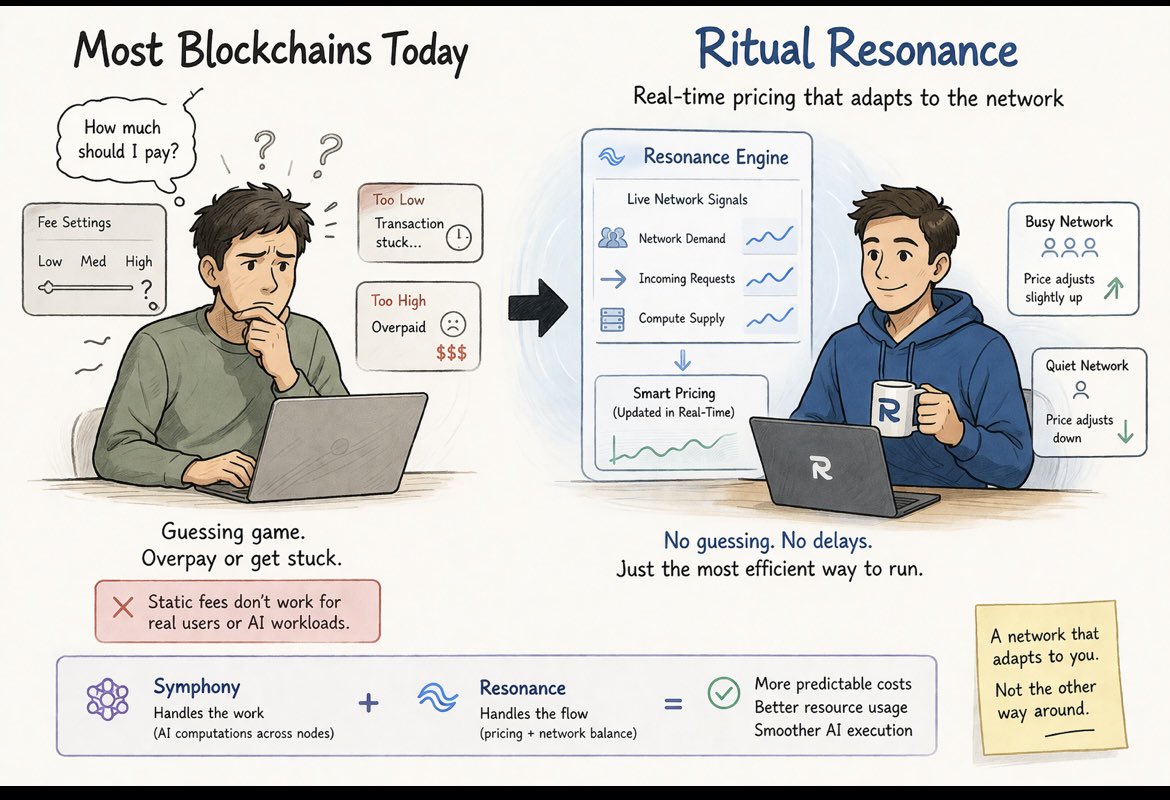
Most blockchains treat fees like a guessing game.
You either overpay just to get your transaction through, or underpay and get stuck waiting. It’s annoying for normal transactions, and it completely breaks down when you bring heavy AI workloads onchain.
That’s the problem Ritual is trying to fix with Resonance.
Instead of static or guess-based fees, Resonance works more like a live market.
It constantly watches what’s happening across the network:
➜how busy things are
➜how many requests are coming in
➜how much compute nodes are providing
Then it automatically adjusts pricing in real time so things flow smoothly.
Think of it like this:
If the network is crowded → prices rise slightly to manage demand
If things are quiet → prices drop so you’re not overpaying
No guessing. No unnecessary delays.
What makes this interesting is how it fits into the bigger picture.
@ritualnet already has Symphony handling the “work” of splitting and running AI computations across nodes.
Resonance handles the “flow”, making sure everything runs at the right pace and cost.
So instead of:
“Can my transaction go through?”
It becomes:
“What’s the most efficient way for this to run right now?”
The result:
➜more predictable costs
➜better use of network resources
➜smoother execution for AI tasks
In simple terms, Resonance turns the network into something that actually adapts to you, instead of forcing you to figure it out.
That’s what makes it feel less like using a blockchain… and more like using a system that just works.
Gritual
@ritualfnd@Jez_Cryptoz@joshsimenhoff@0xMadScientist@Kash_060