I started staking on @basis__pro because I wanted to understand how market-neutral yield works in practice.
What caught my attention is that BASIS focuses on market opportunities rather than relying on token inflation. I’m still learning the system, but I like having a clearer view of how my assets work.
Always DYOR before depositing.
#BASIS
One thing I find interesting about @RebateLaunch is that buyers get a 3% bonus on every buy, with the rate shown before confirming.
Holders also receive USDG payouts without staking or claiming.
The real test is how well the model holds up as activity grows. 👀
@RebateLaunch $REBATE is already showing activity in its first 14 hours 👀🔥
902 holders, 455K USDG traded, and 1.5M $REBATE burned. The next thing to watch is whether this momentum continues as more community launches arrive. 🚀
@RebateLaunch $REBATE is live on Robinhood Chain! 🔥
Bonus tokens on every buy and USDG payouts for holders. Interesting model to watch as Rebate Pad grows. 👀🚀
@starlisting@RebateLaunch Round 2 is live! 👀🔥 Time to show up, create quality content about $REBATE, and climb the leaderboard. 1,000 USDT up for grabs! 🚀
@base58labs_ The presser is where the real volatility could come from. One word from Powell can shift expectations fast, especially with the market already leaning hawkish. 👀
One thing I like about BASIS is that staking feels more structured when you understand how the yield works.
Instead of focusing only on the APR, I pay attention to the Dynamic Reward Rate (DRR) and how market conditions can affect returns. For me, understanding where yield comes from matters more than chasing the biggest number.
Still learning and watching how BASIS performs over time.
@basis_pro
If someone asked me why I pay attention to @basis__pro, I wouldn't start with APY.
I'd start with the bigger picture: how market-neutral yield strategies aim to generate returns without relying entirely on market direction.
BASIS focuses on productive digital assets, and that's what makes it worth exploring.
For me, the real test is execution, transparency, and how the strategy performs over time.
Always understand the risks before staking. DYOR.
𝗔𝘁𝘁𝗿𝗮𝗰𝘁𝗶𝗻𝗴 𝘂𝘀𝗲𝗿𝘀 𝗶𝘀 𝗼𝗻𝗹𝘆 𝗽𝗮𝗿𝘁 𝗼𝗳 𝘁𝗵𝗲 𝗷𝗼𝗯. 𝗞𝗲𝗲𝗽𝗶𝗻𝗴 𝘁𝗵𝗲𝗺 𝗮𝗤𝘁𝗶𝘃𝗲 𝗶𝘀 𝘄𝗵𝗮𝘁 𝗿𝗲𝗮𝗹𝗹𝘆 𝗺𝗮𝘁𝘁𝗲𝗿𝘀.
That’s one thing I’ll be watching with @RebateLaunch.
The 3% purchase bonus, USDG distributions for $REBATE holders, and buybacks funded by launch fees give users a few reasons to pay attention. But incentives alone don’t guarantee long-term engagement.
What happens when the bonus is gone or the next payout hasn’t arrived?
Will users still explore new launches, follow the ecosystem, and find enough value to stay involved?
That’s where the real test begins.
Rewards can bring people through the door, but the overall experience is what gives them a reason to return.
For Rebate Pad, I’m more interested in consistent activity between reward distributions than a temporary spike whenever incentives are announced.
Getting the first visit is marketing. Earning the next one is product value.
Smaller projects often struggle to gain visibility, even when they have something valuable to offer.
I’m curious how @RebateLaunch could help new teams reach interested users through clear project information, accessible pages and better discovery tools.
Visibility shouldn’t automatically mean quality, but discovery shouldn’t depend on popularity alone either.
At the same time, bonuses may attract users, but lasting interest comes from the value a platform provides beyond its incentives.
The real question is whether users who arrive for rewards find enough value to explore other projects and keep coming back.
That balance between discovery, incentives and organic demand will be important to Rebate’s long-term potential.
Sharing this perspective through @starlisting.
Looking at a token's features individually can miss the bigger picture. Sometimes, the more useful analysis is understanding how those features interact.
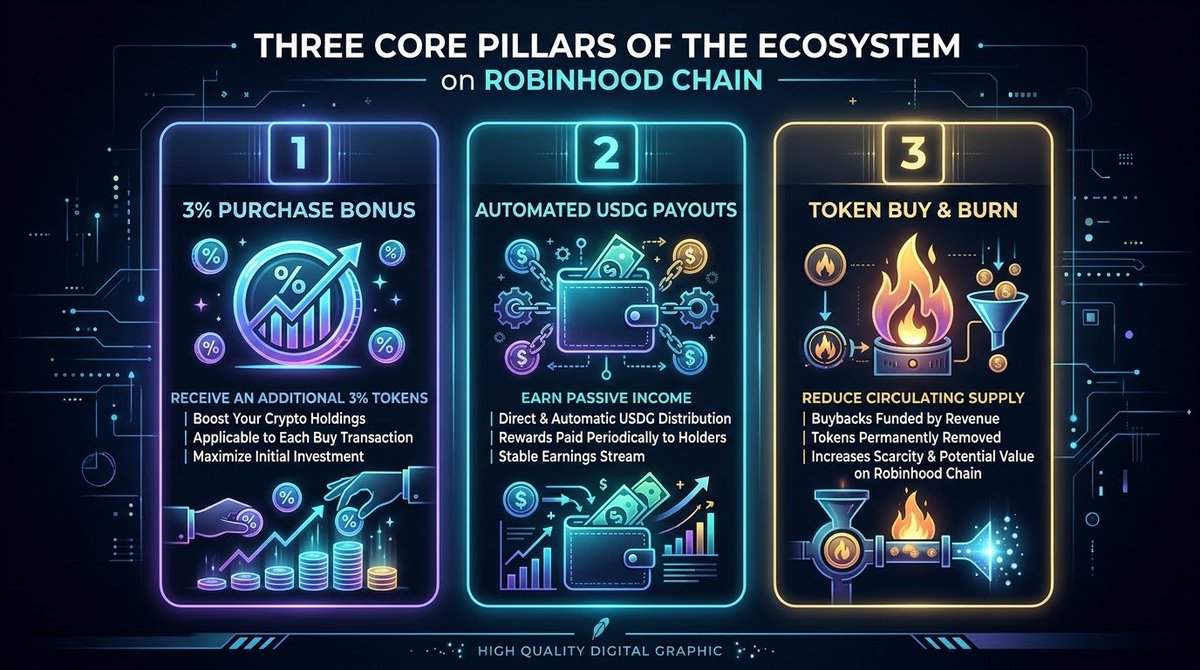
@RebateLaunch combines three mechanisms within Rebate Pad.
The first is a 3% bonus on every $REBATE purchase, giving buyers additional tokens at entry.
The second is the distribution of USDG payouts to holders, with no staking contract or manual claim process.
The third is the use of platform fees from launched tokens to buy and burn $REBATE.
Together, these mechanisms connect buying incentives, holder rewards, and platform-generated fees.
But there are important distinctions. A purchase bonus does not guarantee appreciation, holder payouts depend on the reward model and underlying activity, and token burns do not automatically create price increases.
The key question is whether the platform can generate sufficient genuine usage to support its model over time.
That is what makes following the actual mechanics more useful than focusing on promotional numbers alone.
I’m keeping an eye on @RebateLaunch and exploring these questions through the @Starlisting creator campaign.
If I were evaluating the long-term progress of @RebateLaunch, I would look beyond the number of launches or the attention its rewards attract.
I would focus on three areas.
1. Consistent platform activity. Since Rebate Pad says its bonuses and holder payouts are funded by activity on the platform, real usage is an important part of understanding the model.
2. The relationship between fees and buybacks. Fees from tokens launched on the pad are used to buy and burn $REBATE. Tracking this activity over time could help explain how platform usage connects to the token's supply.
3. The actual user experience. The 3% purchase bonus and direct USDG payouts are designed to make buying and holding more rewarding. How clearly and consistently these features operate will matter as more users arrive.
I would also watch liquidity, market conditions, and the progress of the broader Robinhood Chain ecosystem.
These indicators would give a more balanced picture than relying on incentives alone.
Rebate Pad has an interesting model to follow, but its long-term performance will depend on execution and genuine demand.
I’m sharing this kind of research on @RebateLaunch through @Starlisting, where creators can post about early projects and compete for rewards.
The most important milestone for a launchpad may not be its first successful launch. It may be what happens after the initial excitement fades.
@RebateLaunch is building a model around purchase bonuses, holder payouts, and token buybacks.
Every $REBATE purchase comes with a 3% bonus. Holders receive USDG payouts without staking or manual claims, while fees from tokens launched on Rebate Pad are used to buy and burn $REBATE.
These mechanisms could help differentiate the platform, but sustainable growth requires more than incentives.
I would be watching three things closely:
First, whether projects continue choosing the launchpad as the ecosystem expands.
Second, whether genuine buyers and sellers create consistent activity rather than short bursts of trading.
Third, whether the reward mechanisms remain understandable and function as described as usage changes.
Robinhood Chain provides the environment in which this model is being developed, while the project's longer-term plans include tokenized stocks and stock pairs.
The opportunity is worth researching, but delivery and real adoption will determine how much of that potential becomes reality.
I’m continuing to follow @RebateLaunch and share my perspective through @Starlisting.
For someone new to crypto launchpads, complicated reward processes can make an already unfamiliar experience harder to understand.
One interesting feature of @RebateLaunch is its approach to buying and holding.
When someone buys $REBATE, they receive a 3% bonus in additional tokens. The applicable rate is shown before confirmation, and the bonus is delivered in the same transaction.
After buying, holders can receive USDG payouts directly to their wallets several times a day. There is no staking contract to navigate and no claim button to remember.
That makes the reward process easier to explain to a newcomer, although understanding the risks of the underlying token remains essential.
I would still want to examine the available liquidity, the reliability of distributions, and the way platform activity supports the reward system before making any investment decision.
Accessibility is valuable, but it works best alongside transparency and a realistic understanding of risk.
That is one angle I’m exploring while following @RebateLaunch through the @Starlisting creator campaign.