I didn’t drift as a leader because I stopped caring, I drifted as a leader because I was so focused on finishing the day that I stopped noticing the moments that gave it meaning. Eventually, surviving the day became more natural than actually leading it.
#LEADFROMWHOYOUARE
Your team isn’t looking for a flawless leader. They are looking for a predictable one.
Consistency is the quiet currency of TRUST.
The version of you that shows up on a random Tuesday in between big events is the one shaping the culture of your building. #LeadFromWhoYouAre
My lack of preparation became their burden.
Preparation is about giving the people around you a better version of you to work with…but also letting them focus on what they need…not what you need.
Try these three things tomorrow…
#LeadFromWhoYouAre
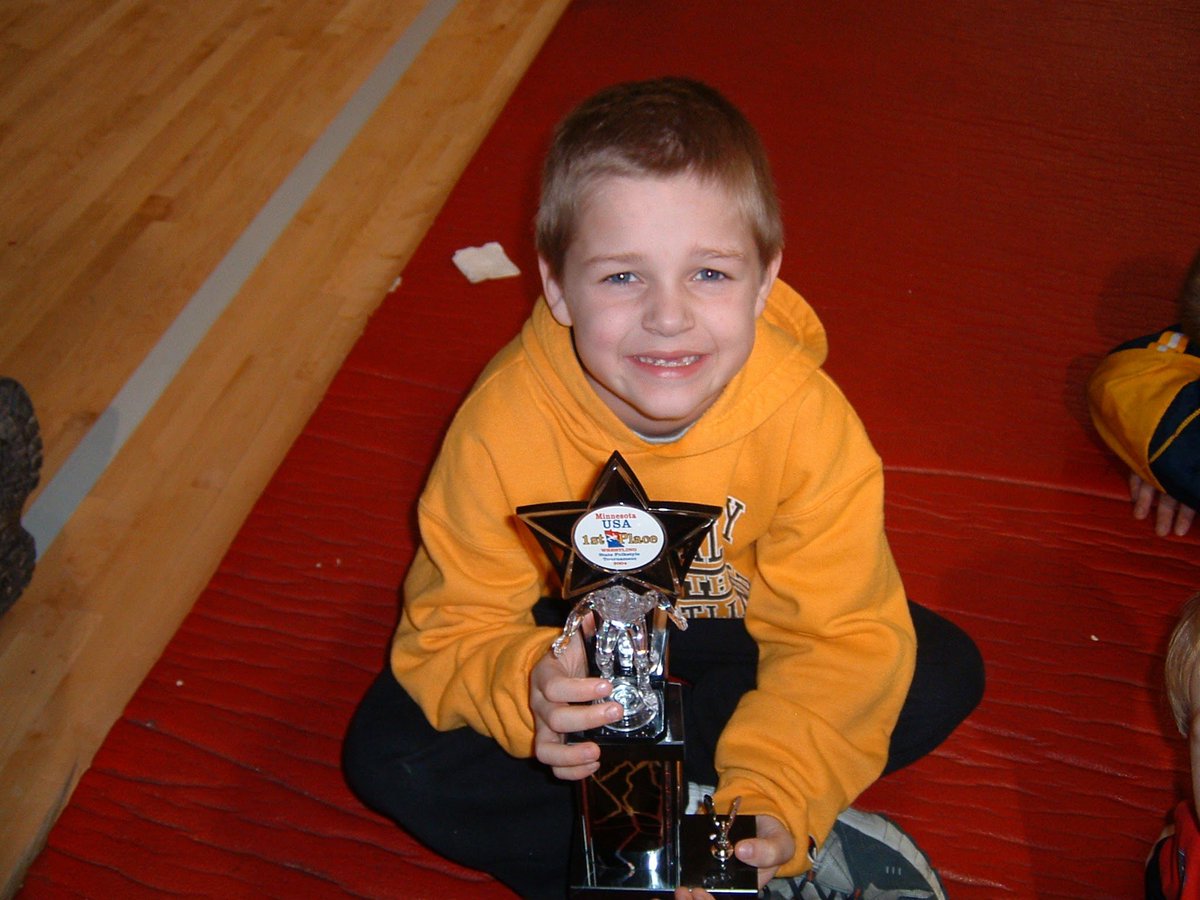
There’s no single path in wrestling.
Some kids need to be pushed early. They’re winning everything, dominating locally, and if you don’t get them into better rooms and tougher tournaments they get comfortable. They start thinking they’re better than they actually are. Those kids need to get tested early so they stay hungry and stay humble.
But on the flip side, some kids are already getting tested every day. They’re losing in the room, losing at tournaments, struggling to place. And that’s where parents panic. They think something’s wrong so they try to add more—more training, bigger events, tougher competition.
That’s where it gets messed up.
If your kid is already getting beat, already dealing with adversity, already having to figure things out… they’re on the right path. That’s how you build resilience. Not from winning. From losing, adjusting, and showing back up anyway. Throwing them into something even harder doesn’t speed it up. Most of the time it just buries them. Harder isn’t better. Better is what they actually need.
The biggest problem is comparison. Parents see another kid dominating at the same age and think their kid is behind. So now it becomes blaming coaches, blaming the room, blaming everything instead of just understanding they’re on a different timeline.
You’re watching a snapshot and acting like it’s the whole story.
Some of those early studs never learn how to lose. Then they hit college, get beat every day, and they don’t know how to respond. No resilience. No identity. They fade out. Meanwhile the kid who couldn’t win a bracket at 10 learned how to handle losing, learned how to adjust, learned how to keep showing up when it sucked. That kid becomes dangerous later.
And then people get burnout completely wrong.
Burnout almost never comes from training too much. It comes from pressure. It comes from a kid feeling like every match defines them, like they’re letting people down, like they’re never doing enough. That’s what drains them.
You rarely see a kid who truly loves it and owns it burn out from mat time. What you do see is kids start to check out. They stop focusing in practice, go through the motions, avoid hard situations, and become inconsistent. Then people say they’re burned out.
No—they’re detached.
Wrestling stopped being something they enjoy and became something they feel judged on. And a lot of the time those kids were never fully bought in, they were just carrying expectations.
That ties right back into the path.
When you force a kid into a path that isn’t theirs—chasing rankings, chasing other kids, chasing results—you don’t build confidence, you build anxiety. So when things get hard they don’t lean in, they pull away.
The kids who last are the ones who were allowed to develop. Win, lose, struggle, figure it out. Because it’s theirs, not yours.
If your kid is winning, good—challenge them.
If your kid is losing, good—let them grow.
Either way stop panicking. Most kids don’t fail because they were on the wrong path. They fail because someone rushed it or made it about themselves, and eventually the kid walks away.
No behavior problem students! Behaviors are the solutions students are choosing to solve their problems. They probably don't even know what their real problems are. We have to help them discover the root cause of their behaviors and offer solutions to their problems.
#education
The Ben Smith Perugia Linen Shirt combines breathable cotton and linen for comfort and durability— Perfect for travel.
Shop now 👉https://t.co/zpfbu5SfMl
After getting the upset of the tournament against Christian Carroll, Shilo Jones (NDSU) gets disqualified from the tournament for this illegal move against Luke Rasmussen
Stop using the term "behavior problem" when discussing students. Behaviors are not the problems, but rather the solutions kids are choosing to their problems. We just need to show them a better way to solve their problems!
#BehaviorSupport#TeachingTips
The best teachers aren’t thermometers.
They’re thermostats.
They don’t walk into a room and adjust to whatever temperature is already there.
They set it.
They set the standard.
They set the expectation.
And then they raise students to meet it.
NEW WALK!!! Don’t trust your future self with today’s connections. LEADERSHIP DRIFT happens when we cut corners that no one else sees. Send the text. Send the picture. Celebrate smiles and laughs…in the moment.
#1minwalk2work#LeadFromWhoYouAre#LeadFromWhereYouAre
Mike Vrabel gives a masterclass on mindset, self-talk, and dealing with doubt.
"You can't let doubt creep into what you do as a person. I don't care what you do."
"You have to be able to talk to yourself and not listen to yourself so much. You have to tell yourself what to believe."
Read that again about your self-talk. Talk to yourself - don't just listen to yourself.
Your mind will feed you doubt, fear, and negativity. Your job is to challenge it. Tell yourself what's true, not what's easy to believe.
"That doesn't say that there aren't tough times that you struggle with failure. You have to be able to recognize it and know that that is a part of all of us."
Failure isn't the opposite of success - it's part of the path to it.
Successful people don't avoid adversity. They expect it. They know that they must learn from the setbacks and challenges.
"If you coach long enough, you're gonna get fired. Just like if you play long enough, you're gonna get cut or you're gonna get traded. That's just how this business is."
That's the reality. Not cynicism...clarity.
"I've tried to explain it to the players that this is what happens. And I'm grateful for the opportunity to be able to do it with this group of guys."
Tough times happen. The choice is to be a tough person that overcomes those tough times.
(🎥New England Patriots )
⚠️STUDENT GIVEAWAY⚠️
Students, YOU can enjoy Sunday’s dual against Northern Colorado from the comfort of the matside couch! To enter, just like + RT this post! 💙
*must be following to win, couch sits 3-4.
#GetJacked x #GoJacks 🐰
Here’s an important message for assistant principals, deans, and anyone who carries the responsibility of discipline in a school.
The research is clear. When school leaders spend the majority of their time on instructional leadership and coaching, student outcomes improve. Instructional leadership has a significantly greater impact on learning than reactive, managerial work alone. Discipline matters, but it does not move achievement the way strong instruction does.
This is why the goal should be for roughly 70 percent of our day to be spent in classrooms. Observing instruction. Coaching teachers. Giving meaningful feedback. Supporting high-quality teaching and learning. Being visible instructional leaders where learning actually happens.
This does not minimize discipline. When discipline occurs, it must be handled at a high level. Procedures matter. Documentation matters. Consistency matters. We must cross our T’s and dot our I’s to support students, protect systems, and maintain a strong school culture.
But when our role becomes mostly reactive, we miss the opportunity to be preventative. Strong instruction, engaging classrooms, and clear expectations reduce discipline issues before they ever reach the office. The more time we invest in instruction, the fewer fires we have to put out later.
As Baruti Kafele reminds us in The Assistant Principal 50:
“Instructional leadership is not an add-on to the role. It is the role.”
If students only see us when something goes wrong, we are missing our greatest leverage point. Our impact grows when we are in classrooms, building capacity, strengthening instruction, and supporting teachers.
This work is not about doing less discipline.
It is about doing more of what research, experience, and great leadership tell us matters most.
#InstructionalLeadership
#AssistantPrincipalLife
#DeanOfStudents
#InTheClassrooms
#LeadLearning
#ProactiveNotReactive
#SchoolLeadership
#ImpactOverActivity @PrincipalKafele
Standardized tests were never designed to capture the full range of how students learn.
They were designed to compare performance under identical conditions.
Research in cognitive psychology and educational measurement has shown for decades that standardized tests are highly sensitive to factors like:
processing speed
reading stamina
test anxiety
working memory load
familiarity with test formats
In other words, they measure how a brain performs in a narrow, timed environment, not how deeply it understands content.
That’s why standardized tests consistently favor certain cognitive profiles:
fast processors
strong abstract and language-based thinkers
students comfortable with pressure and prolonged focus
They reward speed, stamina, and format fluency,
not curiosity, creativity, reasoning depth, or real-world application.
Which leads to a misunderstanding we keep making.
Some students test well but disengage from school.
Others engage deeply, explain their thinking, apply concepts, and grow , yet struggle on tests.
Both can be true.
And neither tells you who a student really is.
A test score is not a measure of learning capacity.
It’s a snapshot of performance under artificial conditions.
When we confuse the two, we don’t just misread students.
We mis-teach them.
Too often, our systems treat an IEP like a label instead of a support.
I don’t lead with an IEP—I shelf it until it’s needed to help a student reach the standard.
The goal isn’t to define kids by paperwork, but to teach them as capable learners first.