All gBulk!
The most important topic on the agenda is, of course, "How does BulkTile work?" and "What and where will the Bitcoin exchange rate go?"
I can't help you with the second one. :( Then tell me and help me understand its structure in more detail, your humble servant, at your service.
BulkTile is a prime example of a high-performance core that runs in-memory on each validator node, which allows you to achieve millisecond-level latency.
Now let's analyze each element separately.
The first one is the brain of the entire exchange, responsible for matching orders from buyers and sellers — it’s called the Matching Engine. How does it work? It's simple; there are key elements:
-Central Limit Order Book (CLOB)
-The FIFO principle
-Lock-striping
-Self-Trade Prevention (STP)
-Deterministic cycle
1. CLOB
To begin with, I want to note that this is exactly the system used by CEXs (Nasdaq, Binance).
This is a trading model where all buy and sell orders are stored in a single order book and automatically matched by price and time.
For you, this will be visible in the Order Book, Candlestick Chart, Trades, and Orders.
As a result:
The order book shows real orders from other participants, not an estimated price.
You see the market as it really is.
Price is determined by agreements between buyers and sellers.
I don’t think it makes sense to dwell here for long, since you’ve probably traded on Binance (likely more than I have).
But just in case, here are links for those who want to explore further:
https://t.co/aXQCOluk46
https://t.co/z662bgf3HE
2. The FIFO principle
Everything is simple and clear. FIFO stands for First-In-First-Out.
This principle means that orders are processed in queue order. It is widely used in programming, so it should be familiar to programmers.
For trading, it ensures fairness: if you place an order at the same price as others, yours will be executed first if it arrived earlier.
3. Lock-striping
To ensure maximum speed, the order book is divided into 64 independent buckets. This allows multiple operations to be processed simultaneously, minimizing data access delays.
The system will not slow down - orders continue to be accepted and processed quickly, even during high market activity.
The "Buy" / "Sell" buttons respond almost instantly. This mechanism ensures extremely fast execution.
I would like to note that, in my opinion, the chosen number of buckets is optimal. Some may think that more buckets are better - 128 or even 256.
But after a certain point, increasing buckets gives little benefit. 128 is justified only under proven high load; otherwise, it adds unnecessary complexity without gain.
4. Self-Trade Prevention (STP)
STP is a mechanism that prevents a user from accidentally trading with themselves. How does it work?
If a user’s new order matches an existing order in the order book, the passive order is canceled. No trade occurs, and no fees are charged.
5. Deterministic cycle
This has been mentioned before. The matching engine processes all orders in 25-millisecond batches.
The benefits:
Predictability - no random “races” between orders; at the same price, the earlier order wins, regardless of network latency.
Stable interface updates - the order book and trades refresh at fixed intervals, making market dynamics easy to track.
I’ll stop here for now. The article is already long, and this is only 1/3 of the condensed description of how the BulkTile Matching Engine works.
Bye, hug everyone!
#BulkExchange #Solana #DeFi #Perps #CLOB #JitoAgave #TradingTech #HighPerformance #Crypto #SolanaEcosystem
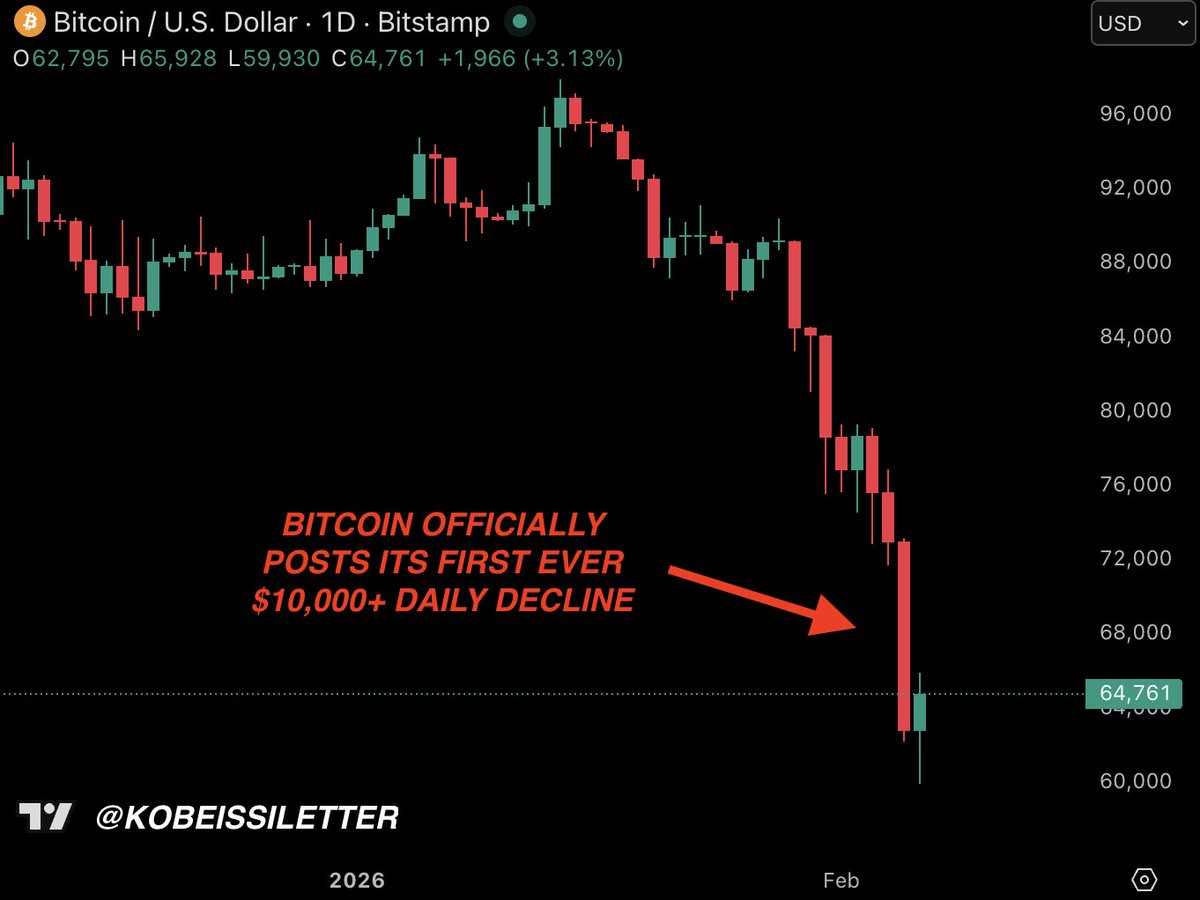
It's official:
Bitcoin just posted its first ever daily decline of OVER -$10,000.
Not even the record -$19.5 billion liquidation on October 10th came close to today.
It appears that someone "big" was liquidated.
All gBulk!
The most important topic on the agenda is, of course, "How does BulkTile work?" and "What and where will the Bitcoin exchange rate go?"
I can't help you with the second one. :( Then tell me and help me understand its structure in more detail, your humble servant, at your service.
BulkTile is a prime example of a high-performance core that runs in-memory on each validator node, which allows you to achieve millisecond-level latency.
Now let's analyze each element separately.
The first one is the brain of the entire exchange, responsible for matching orders from buyers and sellers — it’s called the Matching Engine. How does it work? It's simple; there are key elements:
-Central Limit Order Book (CLOB)
-The FIFO principle
-Lock-striping
-Self-Trade Prevention (STP)
-Deterministic cycle
1. CLOB
To begin with, I want to note that this is exactly the system used by CEXs (Nasdaq, Binance).
This is a trading model where all buy and sell orders are stored in a single order book and automatically matched by price and time.
For you, this will be visible in the Order Book, Candlestick Chart, Trades, and Orders.
As a result:
The order book shows real orders from other participants, not an estimated price.
You see the market as it really is.
Price is determined by agreements between buyers and sellers.
I don’t think it makes sense to dwell here for long, since you’ve probably traded on Binance (likely more than I have).
But just in case, here are links for those who want to explore further:
https://t.co/aXQCOluk46
https://t.co/z662bgf3HE
2. The FIFO principle
Everything is simple and clear. FIFO stands for First-In-First-Out.
This principle means that orders are processed in queue order. It is widely used in programming, so it should be familiar to programmers.
For trading, it ensures fairness: if you place an order at the same price as others, yours will be executed first if it arrived earlier.
3. Lock-striping
To ensure maximum speed, the order book is divided into 64 independent buckets. This allows multiple operations to be processed simultaneously, minimizing data access delays.
The system will not slow down - orders continue to be accepted and processed quickly, even during high market activity.
The "Buy" / "Sell" buttons respond almost instantly. This mechanism ensures extremely fast execution.
I would like to note that, in my opinion, the chosen number of buckets is optimal. Some may think that more buckets are better - 128 or even 256.
But after a certain point, increasing buckets gives little benefit. 128 is justified only under proven high load; otherwise, it adds unnecessary complexity without gain.
4. Self-Trade Prevention (STP)
STP is a mechanism that prevents a user from accidentally trading with themselves. How does it work?
If a user’s new order matches an existing order in the order book, the passive order is canceled. No trade occurs, and no fees are charged.
5. Deterministic cycle
This has been mentioned before. The matching engine processes all orders in 25-millisecond batches.
The benefits:
Predictability - no random “races” between orders; at the same price, the earlier order wins, regardless of network latency.
Stable interface updates - the order book and trades refresh at fixed intervals, making market dynamics easy to track.
I’ll stop here for now. The article is already long, and this is only 1/3 of the condensed description of how the BulkTile Matching Engine works.
Bye, hug everyone!
#BulkExchange #Solana #DeFi #Perps #CLOB #JitoAgave #TradingTech #HighPerformance #Crypto #SolanaEcosystem