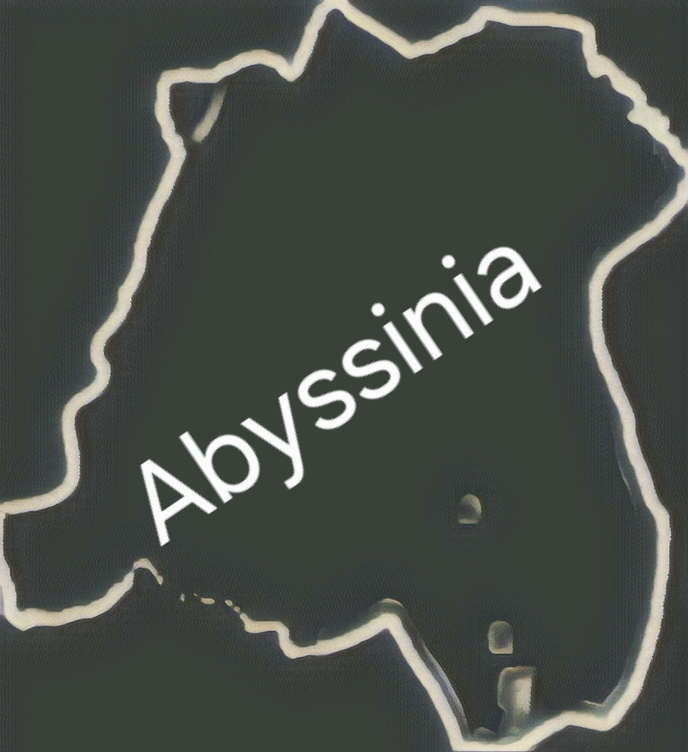
The Red Sea Myth: A Symbol of Fabricated Splendor and insatiable Geopolitical Hunger.
Ethiopia never had a lawful sovereign titles to Eritrean Red Sea coast.
Abyssinia had a turbulent history as a fragmented, landlocked highland polity confined in the Plateau, roughly encompassing modern-day northern Ethiopia (Shewa, Tigray, Amhara, and parts of Gojjam).
At its core, it was a feudal system riddled with overlapping claims to power—absolute monarchies in theory, but in practice a patchwork of rival emperors and regional warlords vying for dominance. This "quasi-state" dynamic fueled internal chaos but also birthed an enduring imperial ambition.
Menelik of Shewa (later Emperor Menelik II, r. 1889–1913) transformed this obsession into action, but southward and eastward, not directly to the sea. As a regional king in the 1870s–1880s, he navigated the "Zemene Mesafint" (Era of Princes), outmaneuvering rivals like Tekle Giyorgis II and Gojjam's Tekle Haymanot. By 1889, after Yohannes's death, Menelik consolidated the throne and launched expansion campaigns, roughly doubling Abyssinia's territory from ~350,000 km² to over 1 million km² by 1900.
These weren't noble conquests—they were genocidal land grabs. Menelik's armies subjugated 25+ polities: including. Kaffa and Oromo kingdoms in the south (e.g., Jimma, Wollega), Sidama chiefdoms, and Somali-Afar groups in the east. Tactics included scorched-earth raids, mass executions, and *gult* land grants to loyalists, displacing indigenous populations. Estimates of deaths range from 500,000–2 million (from famine, battles, and forced marches), per historians like Bahru Zewde. Enslavement was systemic: captives were marched to highland markets or exported via the Red Sea, funding further wars. This built modern Ethiopia but sowed ethnic resentments that echo today.
According to the Anti-Slavery Society statistics, Ethiopia's population hovered at 8–14 million, making 2 million slaves (15–25%). Slavery wasn't peripheral; it was the empire's engine. Menelik's wars swelled the trade: Oromo, Gurage, and Somali captives were herded to Addis Ababa or Gondar markets, branded, and sold to Arabia or local nobles.
Outlawing it in 1942 (under Allied pressure during WWII) was performative—enforcement lagged until the 1950s. This history undercuts romanticized views of Abyssinia as Africa's uncolonized beacon; it was a slaveholding empire, rivaling the Americas in scale relative to population.
For Ethiopia, the Red Sea is a psychological and strategic fixation, rooted in ancient lore, and the myth stems from Ethiopia's self-image as heir to the biblical empires embedding a divine mandate for maritime dominion. By the 19th century, Abyssinia had been landlocked for centuries.
Despite these undeniable facts and harsh realities on the ground, Ethiopia's leaders and elites appear determined to embark on a march of follies.
@ethioluptus@kushNegus Yeah but Galas are subhumans and a human being and subhuman subjects having sex doesn’t make sense! 😂They are just worthless subjects and they will be dealt soon as worthless subjects! A 40 million cheap gala ridden like a cattle for 30 years by 4 million Tegaru? 🤣