We've opted for a fairly easy map this week to help you #startyourweekwithamap. Can you make sense of this choropleth of the countries of Asia? We'll be delaying the hints by a day because most schools are out for the President's Day holiday.
Quick reminder that, on account of the President’s Day holiday, the first hint for the week won’t be posted until tomorrow—so you can still get five points today. | https://t.co/5r0pqbHsCe
@KevinLMaps I dunno. It's not on Wikipedia's list of operational ski jumps, and Calgary's 2026 Olympic bid is proposing using the jump from 2010 in Whistler. But the Calgary jump still exists, so I'm not sure.
Last week's map depicted all of the world's currently operational ski jumping venues. As you can see, most are in Nordic Europe or the Alps. | https://t.co/Yt5LtLPM6x
That was back in 1960. Today, the Winter Olympics have continued to get more and more expensive to host—especially if you're trying to put them in a city that doesn't already have the sort of infrastructure that appeals to Norwegians and Slovenes.
Notably, the ski jumping facilities in Squaw Valley were taken out in the 1970s, just over a decade after the 1960 Winter Olympics. When we previously made a map of operational bobsleigh tracks, we noted that Squaw Valley didn't even build one to save on money.
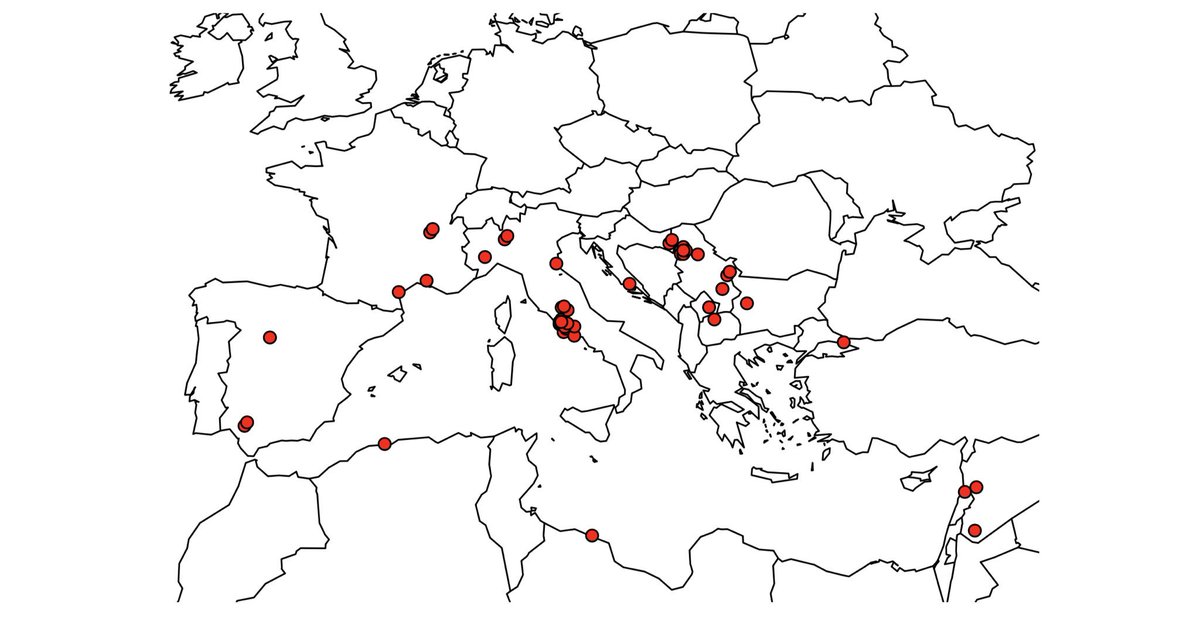
Thanks to Dallas for creating last week’s map, which showed the birthplaces of Roman emperors. As Dallas noted in his write-up, the map shows that emperors were born throughout the empire—but even so, a majority were born in Rome. | https://t.co/9i3XUCv8nx
Dallas also created a more difficult companion map, on which blue dots indicate modern-day cities of over 5,000 people that take their names from Roman emperors.
But wait, there's more! In case this week's map proves too easy for you, Dallas also created a harder version that adds some blue dots to the red ones. If you can figure out what's up with the blue dots (good luck!), we'll give you three extra points.