Perhaps belatedly, we are shutting down on twitter - thank you to all the chemists out there who participated. It was pretty awesome while it lasted! Times change and so must we. Check out our website for the latest news as we change up how we share things. -DJW
Our work on the translation of Nickel-Catalyzed C(sp2)–C(sp3) Cross-Electrophile Coupling to Non-Amide Solvents is now online in @JOC_OL! Congrats to Brett, Julianna, Michelle, and wonderful collaborators at @NovartisScience. Check it out! https://t.co/RO0RYk1aNI
Honoring Excellence in Chemistry Teaching!
Congratulations to our 2025 Chemistry Teaching Award winners! Thank you for all of your hard work!
Learn more here https://t.co/mTSMmkwxig
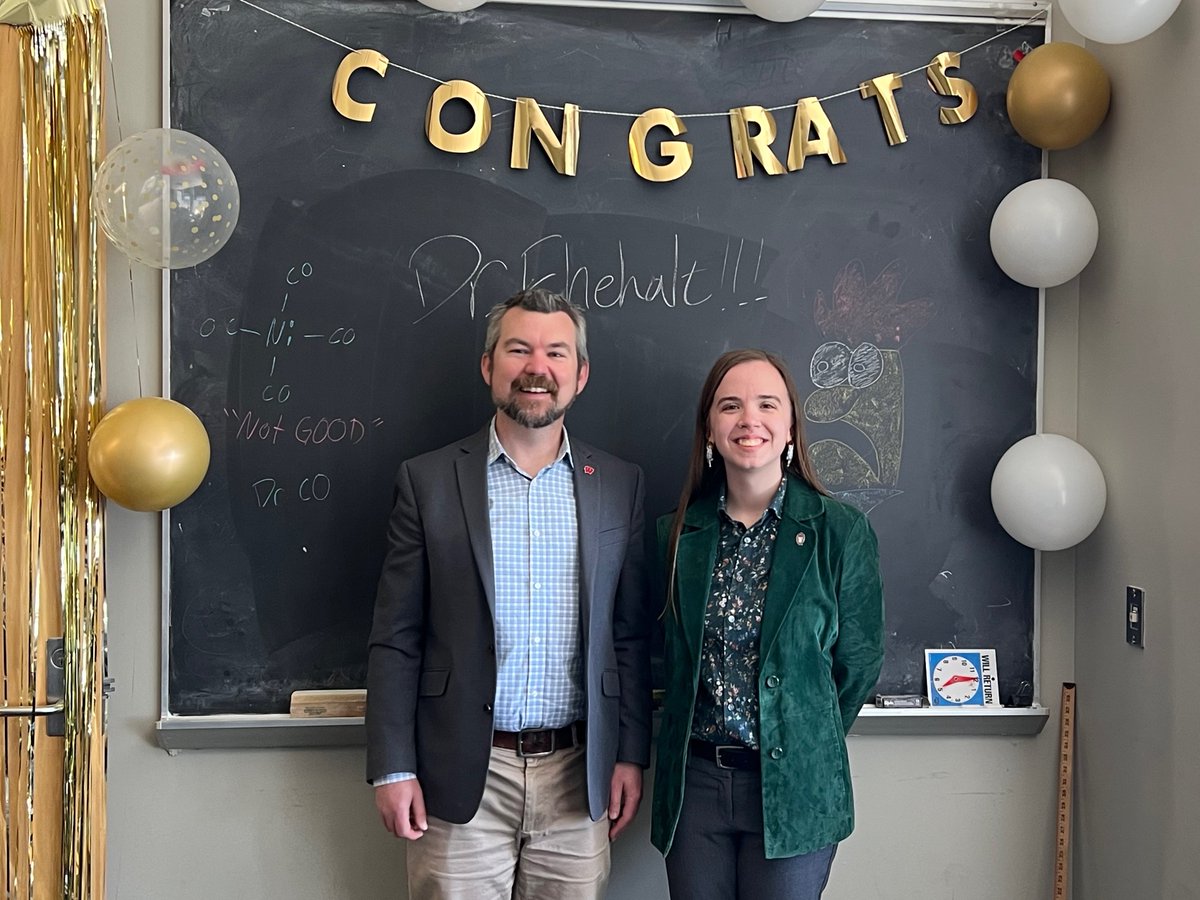
Congrats to Julianna for receiving an Outstanding Chemistry Teaching Assistant Award for your work with Chem 636 and the NMR facilities! Well deserved! 🎉
@AndyChem8 @J_A_C_S@KozlowskiMarisa@NovartisScience Currently XEC reports are published at a rate of 1 publication every ~45 hours so it’s very likely something will emerge soon!
Our work on Ni- and Co-catalyzed Cross-Electrophile Coupling to Form Sterically Hindered C(sp2)–C(sp3) Bonds is now online at @J_A_C_S! Congrats to Tianrui, Anthony, Kasturi, and our collaborators Madeline (@KozlowskiMarisa) and @NovartisScience https://t.co/IcRhcF3KCV
Cross-Electrophile Coupling to Form Sterically Hindered C(sp2)–C(sp3) Bonds: Ni and Co Afford Complementary Reactivity | Journal of the American Chemical Society @UWMadison@UWMadisonChem@weixgroup@TotalSyntheses https://t.co/SThMv7OD2y
Our work on in-situ generation of alkyl chlorides using Ghosez’s reagent and coupling with aryl chlorides is now online at @JOC_OL Congrats Ben! Check it out! https://t.co/Q3RGxK92i7
Ni-Cat Cross-Electrophile Coupling of ArOTf/AlkHal: Mechanism-Informed Design of General Conditions | Journal of the American Chemical Society @UWMadisonChem@UWMadison@TotalSyntheses -optimal ligand selection & LiCl avoids deleterious transmetalation https://t.co/ZIqgtl0kR9
Our work on Ni-Catalyzed Cross-Electrophile Coupling of Aryl Triflates with Alkyl Halides is now online at @J_A_C_S Congrats to Seoyoung, Matt, Ben, and Daniel! Check it out! https://t.co/N3JOGa1qkE
Wondering "What is XEC"? Want to use XEC but don't know where to start? Check out our guide to XEC, which includes a flowchart comprised of all the data we compiled during the writing of our Chemical Reviews publication! https://t.co/iNcKI13E5u
We're incredibly proud to say that our review of Cross-Electrophile Coupling: Principles, Methods, and Applications in Synthesis is now online and open access at @ACSChemRev! Congrats to the team for this labor of love (and data!) https://t.co/x2Q8zOPdEM
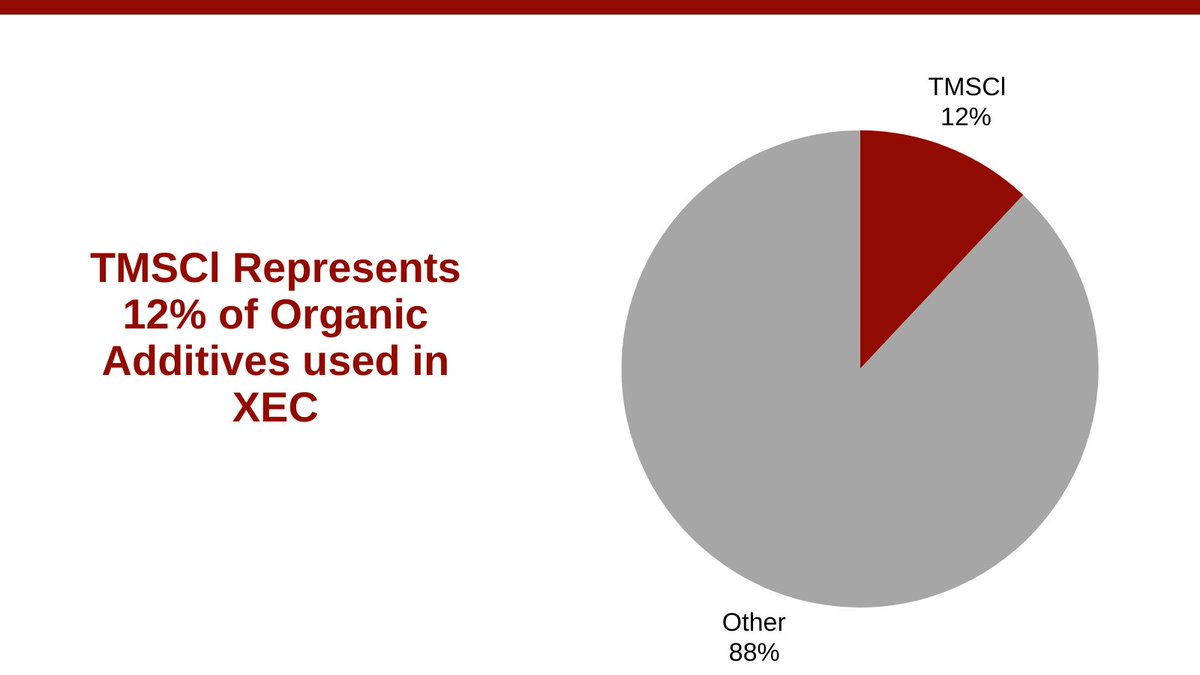
The wide variety of organic additives used means that TMSCl represents the largest portion with only 12% of all organic additives used. Silane reagents like TMSCl can activate metal powder reductants or by playing a direct role in the reaction mechanism.
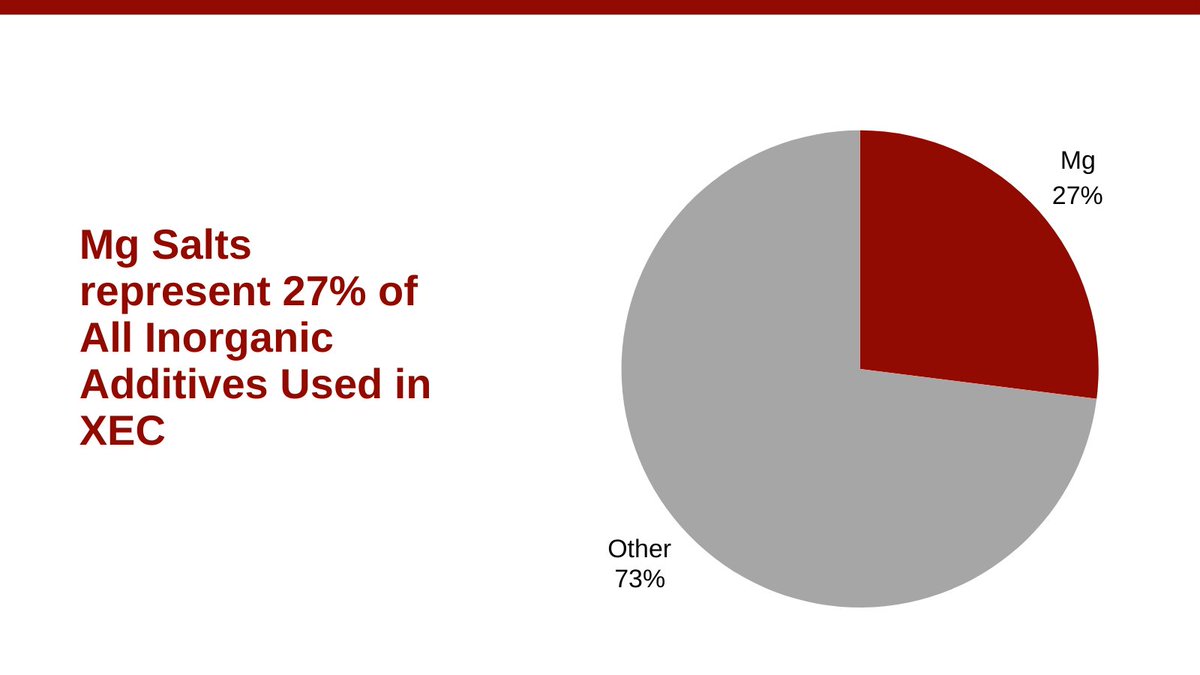
While Zn salts can be generated in situ over the course of an XEC reaction, alkali and alkaline earth metal salts predominate by one to two orders of magnitude over other salt additives. Among all salt additives, Mg Salts (eg. MgCl2 and MgBr2) are the most common (27%)
While Csp2-Csp3 bonds do make up 55% of all XEC publications reported, the remaining 45% is comprised of a wide variety of other coupling types, from Csp2-Csp2 and Csp3-Csp3 to alkene and alkyne difunctionalization, among many others!