Most agencies charge $80K/month. 12 engineers
on retainer. 6-month timelines.
We do the same work for $3K/month. Different
architecture: AI agents + senior team.
5-day audit to see if it fits: $950.
https://t.co/gi7MPv3Wwv
AI didn't make code cheaper. It moved the cost downstream.
Generation went to nearly free. But a METR study put experienced devs 19% slower with AI - while they felt 20% faster. The typing got faster. The reviewing, the rewrites, the incidents got slower.
The real unit cost of a line of AI code was never the tokens. It's the review it demands and the blast radius when it's wrong.
Microsoft just said it at Build 2026: «Coding agents can generate an app in seconds. Getting it to production is still the slow part.»
That's the gap Forge was built for.
Agent writes the spec. Senior engineer approves. Agent writes code. Second model reviews. Engineer triggers deploy. Agents never hold deploy keys.
Generation is solved. The accountability layer is what most teams are still missing.
https://t.co/dDvp6AoYGf
E-commerce paradox: most traffic is mobile. Most conversions happen on desktop.
Not an audience problem. An experience problem.
Browser checkout on mobile: 3 extra steps, no biometrics, no saved payments that actually work. Native app removes all of that. One codebase, iOS + Android, connected to your existing backend.
Shipped in weeks.
https://t.co/dDvp6AoYGf
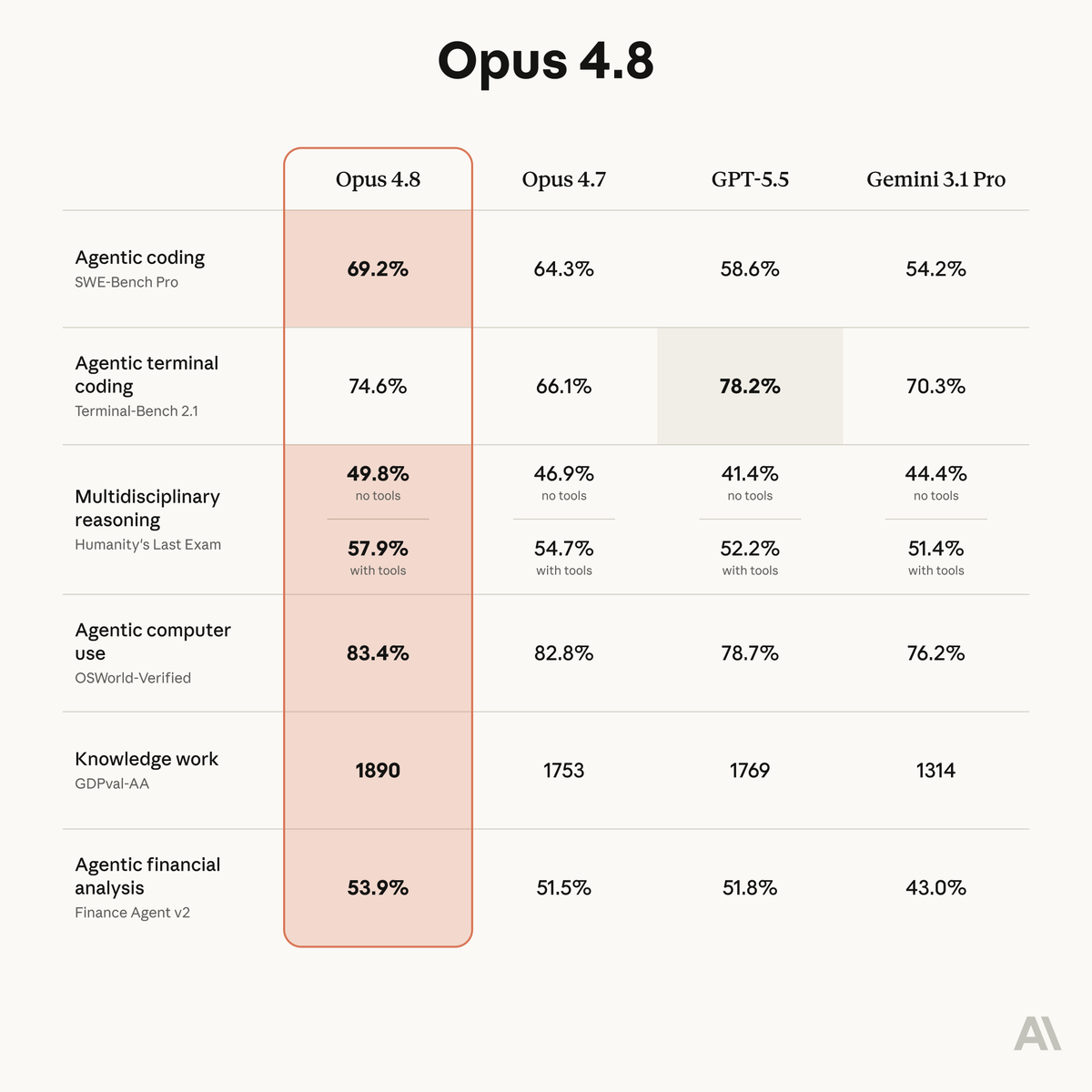
Anthropic shipped Opus 4.8. Top coding benchmarks.
We've been running Claude in production - spec review, architecture decisions, PR checks. Every model upgrade shows up directly in delivery speed.
The question isn't whether to use it. It's whether your engineers are in the loop when it runs.
Introducing Claude Opus 4.8: it builds on Opus 4.7 with sharper judgment, more honesty about its own progress, and the ability to work independently for longer than its predecessors.
Available today at the same price.
Your analytics team spends Monday pulling data. Tuesday assembling it. Wednesday writing the report. By Thursday the insights are already stale.
That's not an analytics problem.
That's a pipeline problem.
We build a custom AI layer on top of your existing data infrastructure. Automated ETL pipelines, an LLM assistant that flags anomalies automatically, and a live dashboard with demand forecasting.
Reporting happens without anyone touching it. Your team focuses on decisions, not spreadsheets.
Most teams are live in 3 weeks.
@Chillwithmeii No catch. We scope it tight - one broken system, not the whole codebase.
AI does the audit and rewrite draft. Senior engineer reviews. That's why 5 days works.
Need a legacy refactor or building from scratch?
We ship MVPs in 4 weeks. Refactors in 5 days.
Not because we work harder. Because we built a
different stack: AI agents + senior engineering
team. Same team end-to-end. Fixed pricing.
5-day Clarity Sprint to scope: $950.
Microsoft cuts Claude Code access for engineers to curb AI costs.
The biggest cloud vendor in the world just confirmed what every mid-size engineering team has been struggling with: AI tooling without cost guardrails breaks margins fast.
Routing matters. Quotas matter. Harness engineering matters.
BREAKING: MICROSOFT JUST ANNOUNCED TO BAN ITS OWN ENGINEERS FROM USING AI DUE TO THE COST OF USING IT.
VP OF NVIDIA SAID, “THE COST OF AI FOR MY TEAM WAS MORE THAN HUMANS”
“AI CAN COST MORE THAN HUMAN WORKERS NOW”
🚨 BREAKING: Active supply chain attack across npm, PyPI, and Crates.io.
Socket detected TrapDoor, a crypto stealer campaign hitting 34 malicious packages and 384 versions and artifacts, with attackers repeatedly pushing new releases across ecosystems.
TrapDoor targets #crypto, #DeFi, AI, and security developers, stealing wallets, SSH keys, cloud credentials, GitHub tokens, browser data, env vars, and API keys.
Socket detected releases with a median detection time of 5 minutes, 27 seconds. The fastest detection occurred 58 seconds after publication.
Late-stage crypto rounds dominated Q1 2026. Series C and above surged dramatically year-over-year - driven by payments, prediction markets, and infrastructure.
These are not early-stage projects figuring out product-market fit. They're funded companies with proven traction that need to ship faster than their team can build.
The constraint isn't capital. It's engineering capacity. Hiring a senior team takes months. Building internal processes takes longer.
At Welldone, a senior engineer with Forge closes 4 features in the time a traditional team closes 1. No hiring, no onboarding. Clarity Sprint in 5 days, first sprint within a week.
Need a legacy refactor or building from scratch?
We ship MVPs in 4 weeks. Refactors in 5 days.
Not because we work harder. Because we built a
different stack: AI agents + senior engineering
team. Same team end-to-end. Fixed pricing.
5-day Clarity Sprint to scope: $950.
You won the strategy pitch. Lost the build.
The client needed both. You subcontracted. It showed.
Most agencies lose the development half of every deal - not because they lack talent, but because dev delivery isn't their core setup.
Welldone sits behind your brand. White-label engineering - your client sees you, we stay invisible. You set the margin. We ship production-ready code faster than any team they've worked with before.
Three ways to work together:
- White-label: full delivery under your brand
- Subcontract: we handle overflow, you stay lead
- Referral: 10% of every invoice for 6 months. One intro is enough.
Agencies get exclusive pricing on every plan.
How do you currently handle client requests that go past strategy?
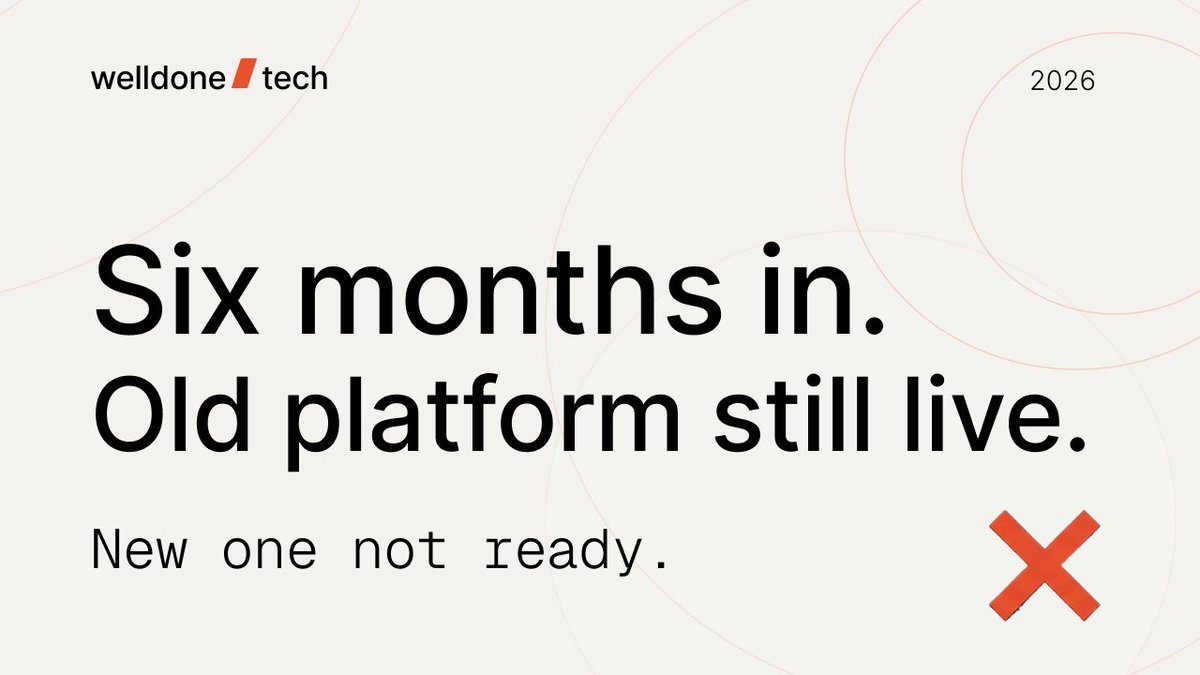
Six months in. Old platform still live. New one not ready. Team maintaining both.
Most rebuilds end here. The platform wasn't the problem.
At Welldone, we migrate section by section - checkout, catalog, CMS. Zero downtime. Old platform keeps earning while the new one ships.
Clarity Sprint maps the full path in 5 days. Cost, timeline, risk - before you commit.
https://t.co/dDvp6AoqQH
OpenAI just open-sourced Symphony - an agent orchestrator that routes coding tasks to autonomous agents via issue trackers. Humans review completed work. No interactive sessions.
The shift makes sense. The gap is in what "review" means.
Reviewing AI output after it's written is not the same as approving a spec before any code exists. The first catches errors. The second prevents them.
Symphony moves the human to the end of the loop. At Welldone, the human is at the beginning - before any agent touches a file - and at the end, before anything ships.
The orchestration layer isn't the hard part. The hard part is deciding what "done" looks like before the agent starts.
AI writes the code in minutes. Nobody changed how it gets shipped.
Same review process. Same deploy pipeline. Same gates - or no gates at all.
Forge runs every feature through AI first. Then a senior engineer reads the output. Not a summary. The actual output. They own it. They sign off. Nothing reaches the repo without that step.
The speed changed. The accountability didn't.
At Welldone, the engineer who approves the spec is the same name on the sprint board two weeks later. AI writes code. A senior signs off before any file is touched. A different model reviews the diff. Deploy keys never leave human hands. Live sprint board, Monday AI report, Friday demo with working software - not slides.
Fixed price every month. IP yours from day one.
https://t.co/dDvp6AoYGf
The pattern is predictable. «We'll start with strategy, then build» means six weeks of decks and no shipped code. «We have a senior AI engineering team» means a senior on the intro call and juniors in the codebase by week two. «Fixed price discovery, T&M build» means scope creep is the margin model. «We've shipped X production AI features» almost always means demos - not systems under real load. «AI moves fast, you need a partner who keeps up» is justification for a permanent retainer.