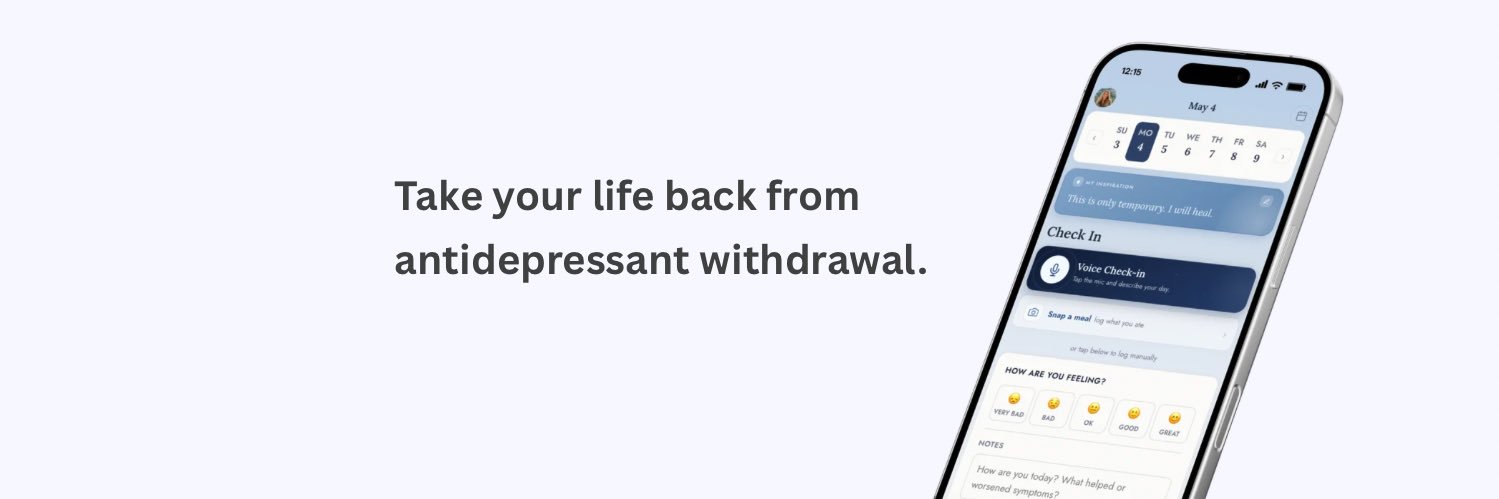
Meet @welloffapp! Your new favorite app for antidepressant tapering and withdrawal (including protracted).
Guided by experts @_AndersSorensen, @jengio333, @HengartnerMP and founded on lived experience by @taperingtay.
Sign up for the waitlist at https://t.co/7OO6oKDHdd
We believe every user's story can help someone else.
That's why users can opt in to support research. Our advisors—researchers @HengartnerMP & @_AndersSorensen—helped us make sure our app is set up to do just that.
In the context of conventional deprescribing and the resulting harmed patients, lived experience > clinical experience. With the exception of few clinicians who have extensive experience safely tapering patients (and apply principles of hyperbolic tapering), understand the nuances of a sensitized nervous system (aren’t promoting supplements, etc.), and aren’t grifting, I only trust patient testimony and will only endorse apps like @taperingtay’s @welloffapp.
Join our founder @taperingtay live with @MedicatingNorm1 this Wed @ 12pm ET/9am PT!
They’ll be talking all things @welloffapp, withdrawal, and answering questions!
Meet @welloffapp! Your new favorite app for antidepressant tapering and withdrawal (including protracted).
Guided by experts @_AndersSorensen, @jengio333, @HengartnerMP and founded on lived experience by @taperingtay.
Sign up for the waitlist at https://t.co/7OO6oKDHdd
New resource! A new tapering app launched today for anyone tapering off antidepressants or navigating withdrawal. This free tool helps you track your symptoms, medication reductions, menstrual cycle and more, making it easier to monitor patterns, progress and healing over time. Developed by our esteemed board member, Taylor Fisher, basic membership is completely free, making it accessible for all! https://t.co/HFZhaCVOQN
If you’re a HCP and wondering what all of the hullabaloo around antidepressant withdrawal is about, may I recommend this new accredited CME course from @_AndersSorensen.
Great way to learn the latest in safe tapering, withdrawal vs. relapse, etc.
https://t.co/opLbRPpPNj
Antidepressant withdrawal and online support 2025 update
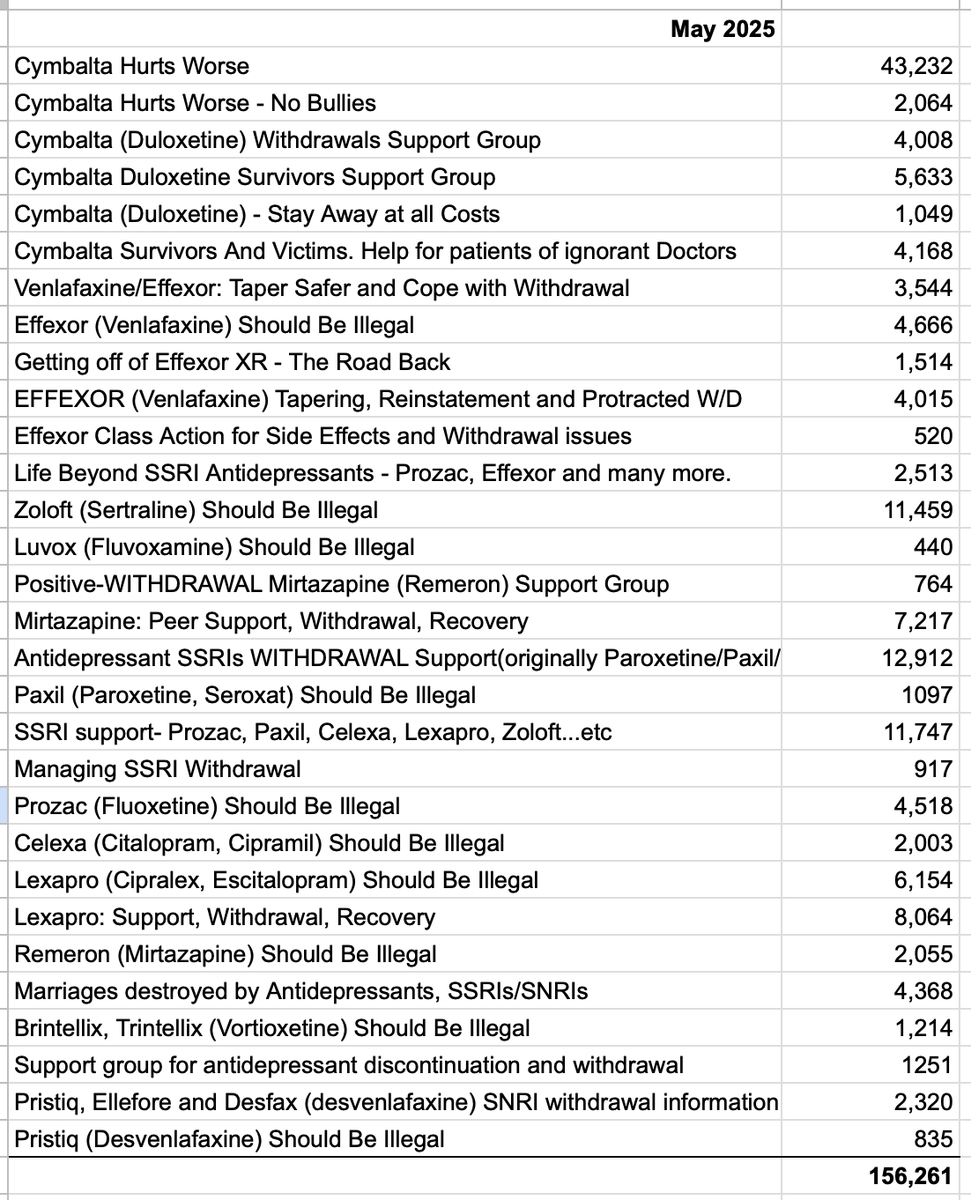
Last August, I pointed out that over 100,000 people were in Facebook groups trying to get help for antidepressant withdrawal, and that Surviving Antidepressants was getting over 200,000 visits a month.
Less than a year later, that number has jumped to 156,261.
Psychiatrists keep insisting withdrawal is rare or mild.
But the sheer scale of peer-led support tells another story.
Why are so many people turning to Facebook groups and forums instead of doctors?
Because the professionals who prescribed these drugs aren’t equipped to help them come off.
Still think withdrawal isn’t a major issue?
#SSRIs #morethan2weeks #prescribedharm
This past week I had a chance to go to the @APApsychiatric conference here in San Francisco. I had planned to share a little bit about my experience today but after seeing the piece from @EllenBarryNYT this morning, I'd say she did a good job capturing the general sentiment toward deprescribing.
So I'll just add a personal note. I left the conference feeling very hopeful about the future of support for antidepressant withdrawal and safer deprescribing practices. While I still believe there is more work to be done—for example, those of us who have experienced withdrawal know Stahl's guide misses the mark—there was a real openness to exploring antidepressant discontinuation and better support.
I deeply appreciate these conversations. My hope is that as they continue, patients and psychiatrists find more chances to sit at the table together—as partners. I believe we all want the same thing: for patients to get the best mental health support possible. And no one understands that support better than the people living it.
If you didn't get a chance to read Ellen's article yet, you can check it out here: https://t.co/tKCqhQADap
Stop and read this excellent piece on “iatrogenic PTSD” - PTSD that develop in patients following a traumatic interaction with doctors and/or the health system in general.
We need to talk about this more
For the millions of long-term antidepressant users in the US, hyperbolic tapering is currently the best strategy to reduce the risk of severe and protracted withdrawal. Linear tapers can work for short-term users, but many people who’ve been on antidepressants for >12 months find they need progressively smaller dose reductions at lower doses. Why? Antidepressants interact with serotonin transporters in a hyperbolic way, meaning tiny reductions become much more powerful near zero. Featuring ACE founder Morgan Stewart @morgan_stewar, Mark Horowitz @markhoro and Awais Aftab @awaisaftab, read more about hyperbolic tapering from WebMD below.
If you’re curious about how much $$ people are spending on antidepressant withdrawal, check out the comments on the original TikTok post: https://t.co/tmW6vKdSot
So many important conversations happening right now around better support for antidepressant withdrawal. As someone who had their life absolutely turned upside down due to a severe, protracted withdrawal off of Lexapro, I welcome it. Here’s some of my story
If we want to improve mental health care, psychiatrists need to be part of the conversation, not excluded from it.
At the @APApsychiatric meeting this week, there was discussion about government efforts to influence or change prescribing practices for antidepressants and other psychiatric medications. Some psychiatrists voiced concern about what they see as “government interference” in clinical care.
At the same time, there are many people who feel harmed by psychiatry, harmed by medications, or unheard by the mental health system. Their experiences matter too. Dismissing them is neither compassionate nor scientifically responsible.
These tensions are real.
Psychiatry has helped millions of people. It has also fallen short, or even harmed, others. Both things can be true.
If we want meaningful reform, it cannot come from attacking psychiatrists, nor from psychiatrists becoming defensive and refusing criticism. Real progress will require humility, open scientific inquiry, honest discussion of benefits and harms, and collaboration among clinicians, patients, researchers, families, and policymakers.
The goal should not be protecting institutions or ideologies.
The goal should be helping people recover and live better lives.
What does severe antidepressant withdrawal look like?
In 4 months, I went from managing a multi-million dollar budget at a Fortune 500 company to struggling to enter in someone's loyalty phone number at a local retail shop.