We’re a citizens movement. We want to stop climate change, reverse biodiversity loss, create more space for wild nature, and help emerging countries develop.
NEW REPORT: A single fishing corporation could be jeopardising the food Antarctic wildlife depends on.
A new WePlanet analysis estimates that Aker QRILL’s 2025 krill catch alone could have fed ~20 million Adélie penguin chicks.
Krill are the foundation of the Antarctic food web. Penguins, whales, seals and seabirds all rely on them - and climate change is already putting on their populations.
Yet the @MSCecolabel looks set to recertify this fishery as “sustainable.”
When the stakes are this high, certification must reflect ecological reality.
Read the full report ⬇️
https://t.co/50xQwtzI1M
In this episode of Saving the World from Bad Ideas, Mark Lynas speaks with science writer Rowan Hooper about one of the deepest misconceptions in biology: that nature is all about competition. Drawing on Hooper’s new book Togetherness, they explore how symbiosis and cooperation run through life at every scale, from lichens and corals to ants, orchids, the human microbiome, and even the origin of complex cells.
The conversation also revisits Darwin, Malthus, ecology, overconsumption, and the ways modern society has been shaped by an overly narrow reading of evolution. It is a wide-ranging discussion about why life’s greatest successes often come not from ruthless struggle alone, but from collaboration, interdependence, and living together.
Togetherness: Symbiosis and the Hidden Story of Life’s Greatest Collaborations will be published on June 4 in the UK, and on August 14 in the US and Canada.
Full episode linked below.
Their message is even more urgent today.
At the start of 2024, 35 Nobel laureates and more than 1,000 European scientists called on Members of the European Parliament to back New Genomic Techniques and help Europe unlock more sustainable agriculture.
Now, with climate change accelerating, global instability rising, and energy shocks exposing the fragility of our food systems, that message has only become more urgent.
In just two weeks, MEPs will vote again. They must decide whether Europe will embrace innovation, strengthen food security, and lead on sustainable agriculture — or hold back science while other regions move ahead.
Europe cannot afford to fall behind.
https://t.co/1tKWBGeXvc
After years of debate, Europe is finally close to approving New Genomic Techniques (NGTs). A vote in the European Parliament is now just weeks away.
Yet the biggest threat to their adoption may no longer be an outright ban, but a growing web of bureaucracy.
As policymakers enter the final vote, they must ensure that Europe does not approve these technologies on paper while regulating them out of existence in practice.
Europe is facing an increasingly difficult agricultural challenge: producing enough food while reducing environmental pressures, adapting to climate change, and strengthening the resilience of its food system in a world that becomes more hostile by the day.
Innovations like NGTs are a critical part of the solution.
In February 2024, together with scientists across Europe, we urged MEPs to vote yes to supporting NGTs.
Now we need your help to finish the job.
Act now: https://t.co/arFh3kw4gH
Will the European Parliament back Europe’s scientists?
After years of debate, Europe is finally close to approving the use of New Genomic Techniques, or NGTs, in agriculture.
These tools can help researchers and breeders develop crops that are more resilient to drought, heat, disease and pests. That means better food security, fewer losses for farmers, and more ways to reduce the environmental pressure of food production.
Across Europe, world-leading scientists, universities, public research institutes and plant breeders are ready to use these tools responsibly. The question is whether politics will let them.
The danger now is that NGTs are approved in theory, while being buried under traceability rules, labelling requirements and administrative burdens that make them too costly or legally uncertain to use in practice.
That would be a serious mistake.
NGTs should be regulated in a way that is proportionate, science-based and focused on the characteristics of the final plant, rather than the method used to develop it.
We therefore call on Members of the European Parliament to support the adoption of the Regulation on plants produced by certain New Genomic Techniques, in line with the compromise text agreed during trilogue negotiations in December 2025.
Europe has a chance to support better crops, stronger food security and better outcomes for the environment.
MEPs should take it.
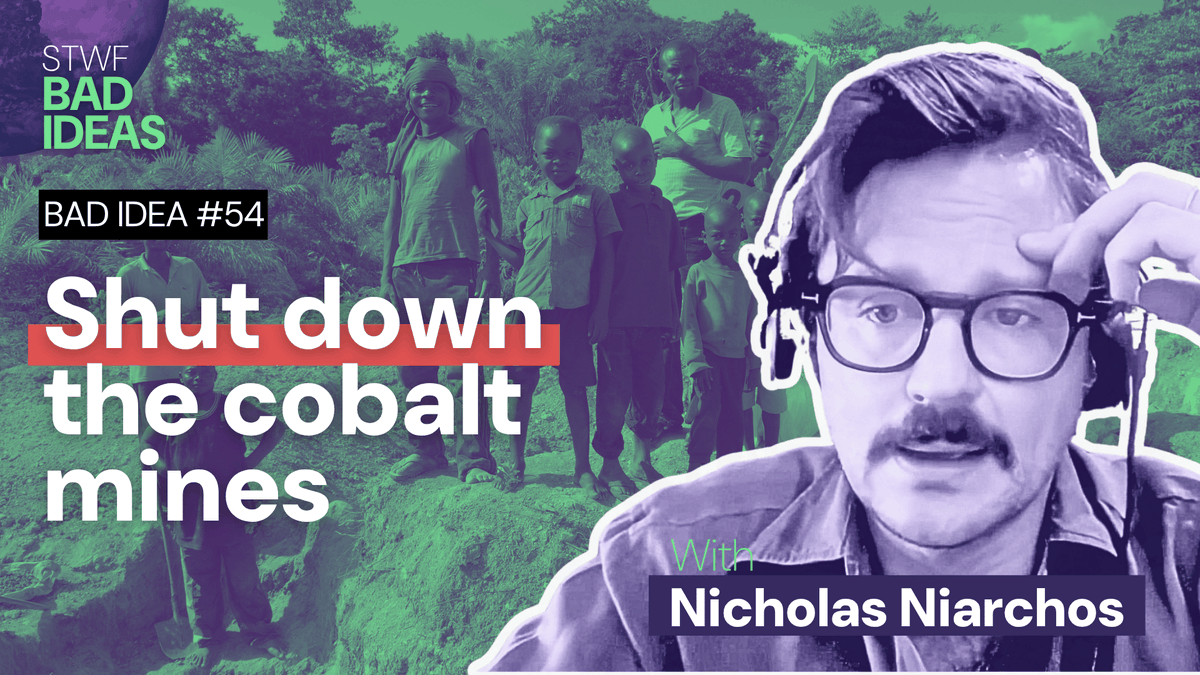
Cobalt has become a symbol of everything wrong with the clean energy transition: child labour, unsafe mines, corruption, colonial legacies, and global supply chains built to keep consumers comfortably distant from the damage.
But the answer isn’t as simple as “move away from cobalt.”
Yes, many newer battery technologies have reduced or removed cobalt, meaning some of the worst cobalt controversies now belong partly to an earlier generation of lithium-ion batteries. That shift matters.
But cobalt remains a powerful material for battery performance. And abandoning it entirely risks dodging the real issue: broken supply chains, weak governance, and moral outsourcing.
In the latest episode of Saving the World from Bad Ideas, Mark Lynas speaks with journalist Nicholas Niarchos about cobalt mining in the Democratic Republic of Congo, and why the clean energy transition must be both fast and fair.
The problem is not the mineral.
The problem is a world that demands clean technology while tolerating dirty supply chains.
We don’t need less ambition.
We need better accountability.
Listen now.
We should all be eating insects!
Now that we have your attention…
A global “protein shift” is underway, as researchers, companies, and governments explore new ways to strengthen food security and reduce the environmental impact of our diets.
In this short clip, Dr Martin Reich looks at one of the most controversial alternative proteins: insects.
For the full picture, watch his complete presentation at the link below, where he explores the wider range of protein options being developed around the world.
In our latest episode of Saving the World from Bad Ideas, @mark_lynas speaks with Stanford historian David Holloway about one of the most dangerous assumptions of the nuclear age: history shows nuclear war will never happen.
Drawing on Holloway’s new book Nuclear Weapons and International History, they trace the development of the bomb from the Manhattan Project to the thermonuclear age, the Cuban Missile Crisis, launch-on-warning doctrines, arms control, and the unraveling of the post-Cold War nuclear order. The conversation makes clear that the fact nuclear war has not happened yet is no guarantee it never will. Instead, it is a story of repeated near misses, fragile restraint, and a continuing risk that humanity has learned to treat as background noise.
Food systems account for roughly a third of global greenhouse gas emissions, yet dietary change remains one of the most politically sensitive—and often polarizing—topics in sustainability. What would a meaningful “protein shift” actually look like in practice, across both production systems and everyday consumer choices?
With a rapidly expanding landscape of alternative proteins—from plant-based to cultivated to fermentation-derived—the conversation can quickly become complex. Each option comes with its own promises and trade-offs, making it difficult to separate real potential from hype. And let's put the cards on the table — which of these new protein sources would you actually put on your plate?
Martin Reich cuts through the noise, offering a structured overview of the main approaches and protein sources, along with a candid assessment of their opportunities and limitations. What if the foods we love to have on our plates wouldn’t have to change that much after all?
Full recording: https://t.co/vS29gmgTdz
The future of food is here!
Countries around the world are grappling with this future. Some are choosing to reject innovation, while others are embracing it and its benefits.
Join us tomorrow (May 19th) to find out about the future of food.
RSVP: https://t.co/wHkHt5VXUp
“Attenborough’s films ignore human impacts.”
In this episode of Saving the World from Bad Ideas, Mark Lynas speaks with filmmaker and environmental storyteller Colin Butfield, co-founder of Open Planet Studios and a long-time collaborator of David Attenborough. They discuss how Attenborough’s work has evolved from classic nature spectacle toward a much more explicit confrontation with ecological destruction, restoration, and humanity’s role in shaping the living world.
Through the making of Ocean with David Attenborough, they explore the shocking reality of bottom trawling and Antarctic krill fishing, the changing grammar of nature documentaries in the Anthropocene, and why stories of damage now have to sit alongside stories of recovery. It is a rich conversation about storytelling, responsibility, and the power of film to show that human impacts can no longer be ignored.
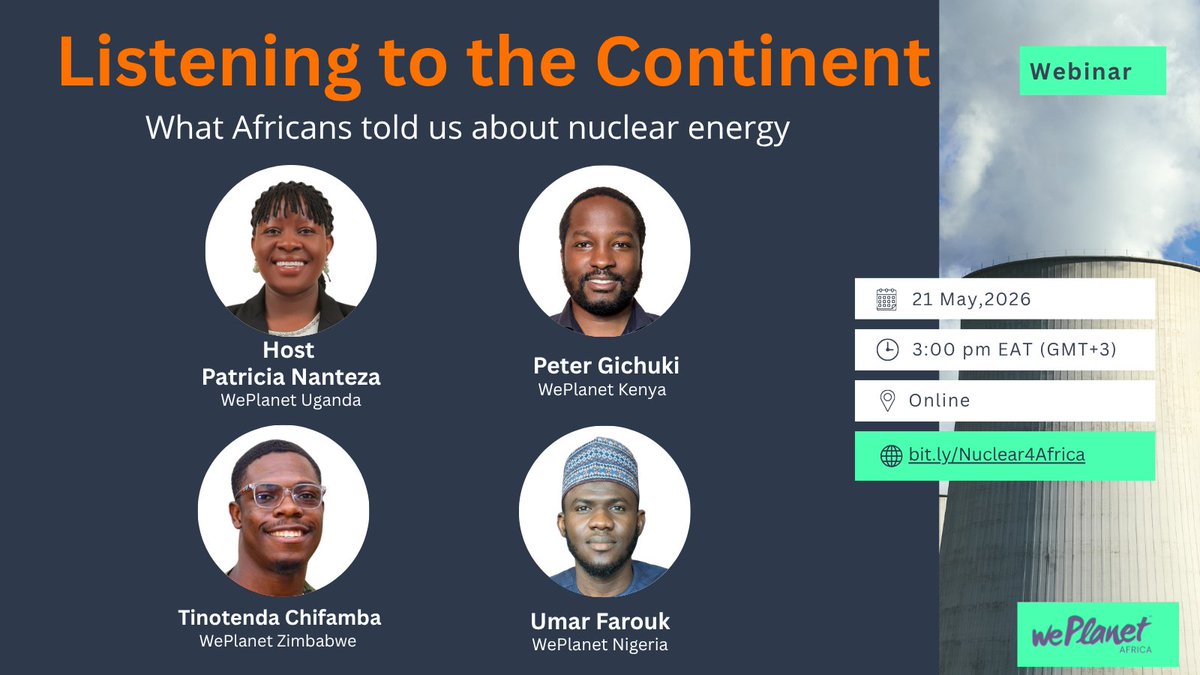
📢 WEBINAR UPDATE
Due to scheduling adjustments, our “Listening to the Continent: What Africans Told Us About Nuclear Energy” webinar has been postponed.
We’re excited to continue the conversation on the new date below:
🗓 Thursday, May 21, 2025
⏰ 3:00 PM (GMT+3)
📍 Live on Zoom & YouTube
African voices are shaping the future of energy conversations across the continent, and we look forward to having you join us.
Registration is still open:
🔗 https://t.co/b91DsqDLwu
#NuclearEnergy #Nuclear4Africa
The future of food is here!
Countries around the world are grappling with this future. Some are choosing to reject innovation, while others are embracing it and its benefits.
Join us next week to hear from Martin Reich about the future of food.
RSVP: https://t.co/wHkHt5VXUp
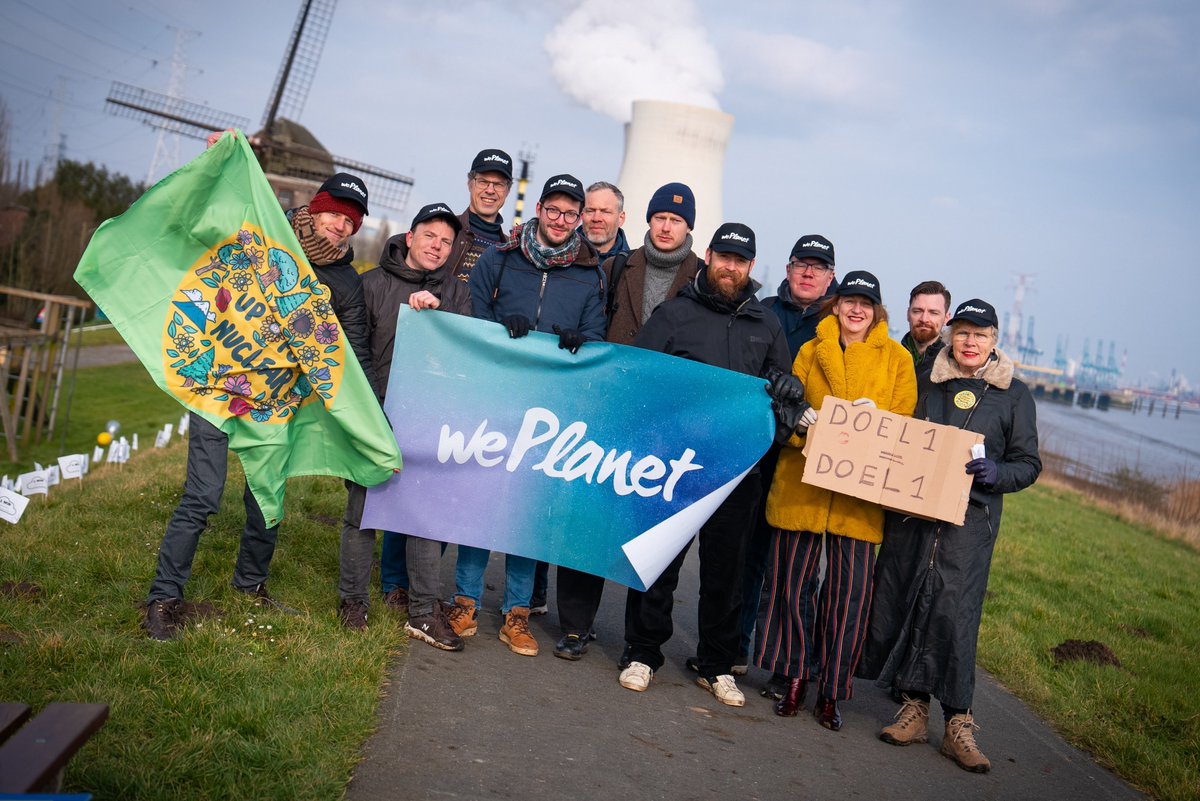
We’ve helped stop Belgium’s nuclear shutdown!
After years of sustained campaigning — with WePlanet leading this effort alongside allies since 2021, and many individuals within our movement advocating for even longer — we are now seeing real results.
Two months after WePlanet won a court injunction freezing demolition, the Belgian government has ordered an immediate halt to all nuclear decommissioning work. And it has entered talks to take control of all seven of the country’s reactors.
This is a huge moment: a historic shift in Belgian energy policy, and a sign that the nuclear debate across Europe is changing fast. And it came just in time. Within weeks, critical equipment at the Tihange 1 plant was set to be removed – a point of no return.
Replacing that low-carbon power with gas would have locked the country into fossil fuel dependence for another generation.
To everyone who showed up at rallies, signed petitions, wrote to decision-makers and donated towards our work – thank you. This is your win.
There is more work to do in the months ahead. The government’s negotiations with nuclear operator Engie will run until October 1st. Regulatory approval is required. And anti-nuclear organisations are already mobilising to reverse the decision.
But the direction is clear: Belgium is choosing reliable, clean, domestic power over imported gas – and setting a vital precedent for Europe.
Nuclear and renewables. That's the grid we're fighting for.
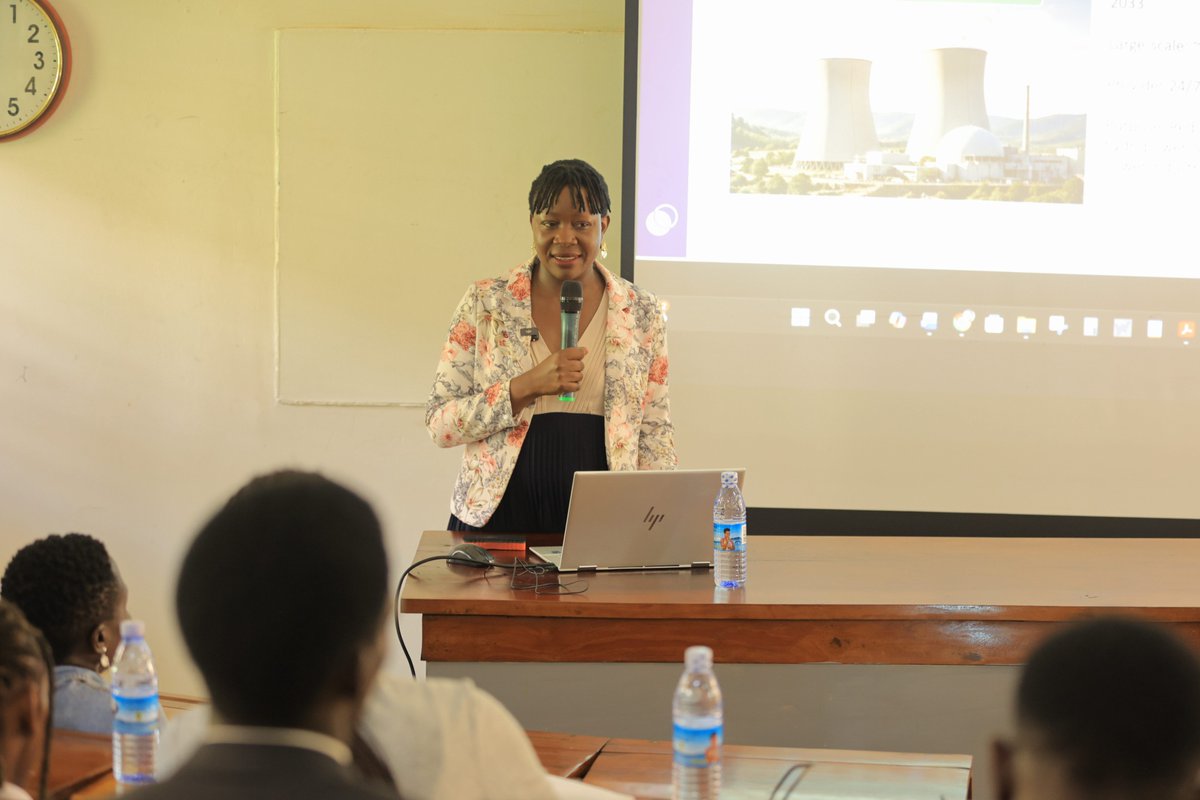
Speaking at Kyambogo University, @PatNanteza noted:
"Nuclear energy is the bedrock of industrial sovereignty. While renewables drive sustainability, nuclear provides the 24/7 baseload power required to move Uganda from potential to industrial reality.
We aren't just building a power plant in Buyende; we are securing the consistent energy foundation required for middle-income growth."
🌍 Nueva adhesión a la plataforma: @weplanetint se suma a la defensa de un futuro energético sostenible y basado en la evidencia.
Una organización europea que impulsa soluciones como la energía nuclear para avanzar en la descarbonización y la seguridad energética.
Más info 👉 https://t.co/w8aOzmbUmq
#YoApoyoAlmaraz #SiAlmaraz #EnergíaNuclear #AlianzaPorAlmaraz #Sostenibilidad