Por favor quien nos colabora para la validación y emisión de boleto realizada por web, donde el dinero ya se débito pero el boleto no se emitió. Ya se escribió a callcenter y ventas web
@conviasa_ve
Ya esta disponible el portal de opensource-colombia: https://t.co/FA8EjH0FKf donde pueden consultar todos los proyectos de código abierto creados por colombianos que están impactando el mundo. En Github pueden crear un issue con un proyecto que este no este en la lista.
ATENCIÓN: Playa Los Cocos, Caraballeda. Llega este video desde la OPPPE 27, donde voluntarios solicitan
Linternas
Herramientas de corte hidráulicos o eléctricos, cómo cortadoras o martillos
Plantas eléctricas
Cizallas
Picos
Palas
Guantes de Carnaza
CAP, BASE, SOLID, KISS, What do these acronyms mean?
The diagram below explains the common acronyms in system designs.
🔹 CAP
CAP theorem states that any distributed data store can only provide two of the following three guarantees:
1. Consistency - Every read receives the most recent write or an error.
2. Availability - Every request receives a response.
3. Partition tolerance - The system continues to operate in network faults.
🔹 BASE
The ACID (Atomicity-Consistency-Isolation-Durability) model used in relational databases is too strict for NoSQL databases. The BASE principle offers more flexibility, choosing availability over consistency. It states that the states will eventually be consistent.
🔹 SOLID
SOLID principle is quite famous in OOP. There are 5 components to it.
1. SRP (Single Responsibility Principle)
2. OCP (Open Close Principle)
3. LSP (Liskov Substitution Principle)
4. ISP (Interface Segregation Principle)
5. DIP (Dependency Inversion Principle)
🔹 KISS
"Keep it simple, stupid!" is a design principle first noted by the U.S. Navy in 1960. It states that most systems work best if they are kept simple.
Over to you: Have you invented any acronyms in your career?
--
Subscribe to our weekly newsletter to get a Free System Design PDF (158 pages): https://t.co/FIzCeaWsZV
@esosiquetetengo Hace 2 semanas y media falleció mi mamá como consecuencia de enfermedad terminal,mi hermano y yo nos toco atenderla en la clínica. La sensación de impotencia,desesperanza y saber que era cuestión de tiempo que ya no iba estar más con nosotros es una montaña rusa de sentimientos.
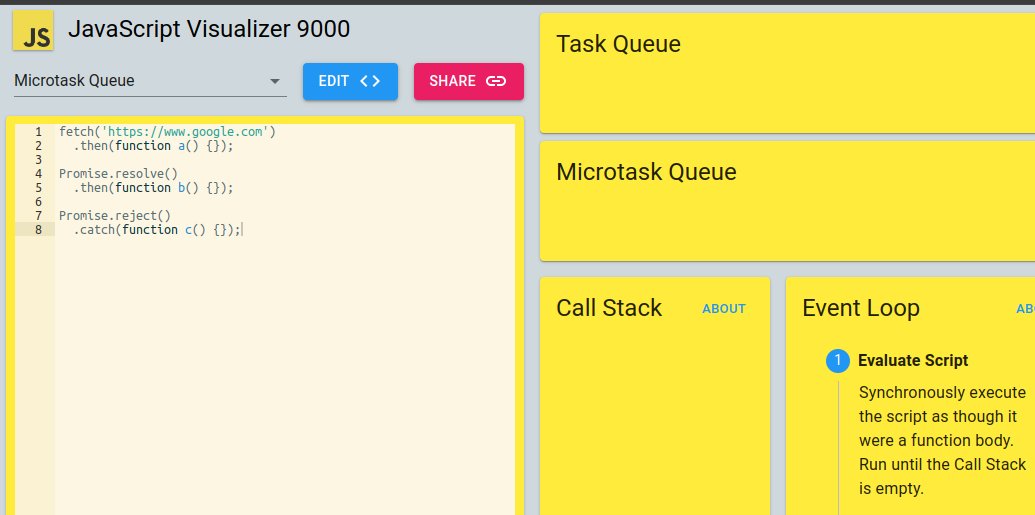
Si supieran cuántos meses estuve intentando aprender esto de JavaScript... 😩🕓 (ojalá estas herramientas hubieran existido antes... 🙌)
Con esta herramienta 👇👇🛠️ puedes entender cómo funciona JavaScript 🚀#javascript#programacion
¡Somos los CAMPEONES de Venezuela!🏆🇻🇪
¡Celebra GUAIRISTA! Los Tiburones de La Guaira son los campeones de la temporada 2023-2024 de la Liga Venezolana de Beisbol Profesional 🥁🦈
Lo logramos equipo, siempre #UnidosYMásFuertes
Libro de código libre para aprender TypeScript de forma concisa.
61 capítulos con explicaciones claras que cubren todos los aspectos de la última versión del lenguaje.
📘 https://t.co/fqb1FGRHJJ
¡GitHub ha lanzado CERTIFICADOS oficiales!
Hay 4 disponibles en distintas especialidades:
https://t.co/CkVEMKy9Yg
Tienen rutas de estudio gratuitas de cada una.
Te dejo el enlace en el siguiente post ↓
Si estás estudiando programación necesitas esto.
¡Una página que te explica cualquier código!
Funciona con Python, JavaScript, C, C++ y Java
https://t.co/Lo9Az9HF1o
Ejemplo con una función recursiva paso a paso ↓
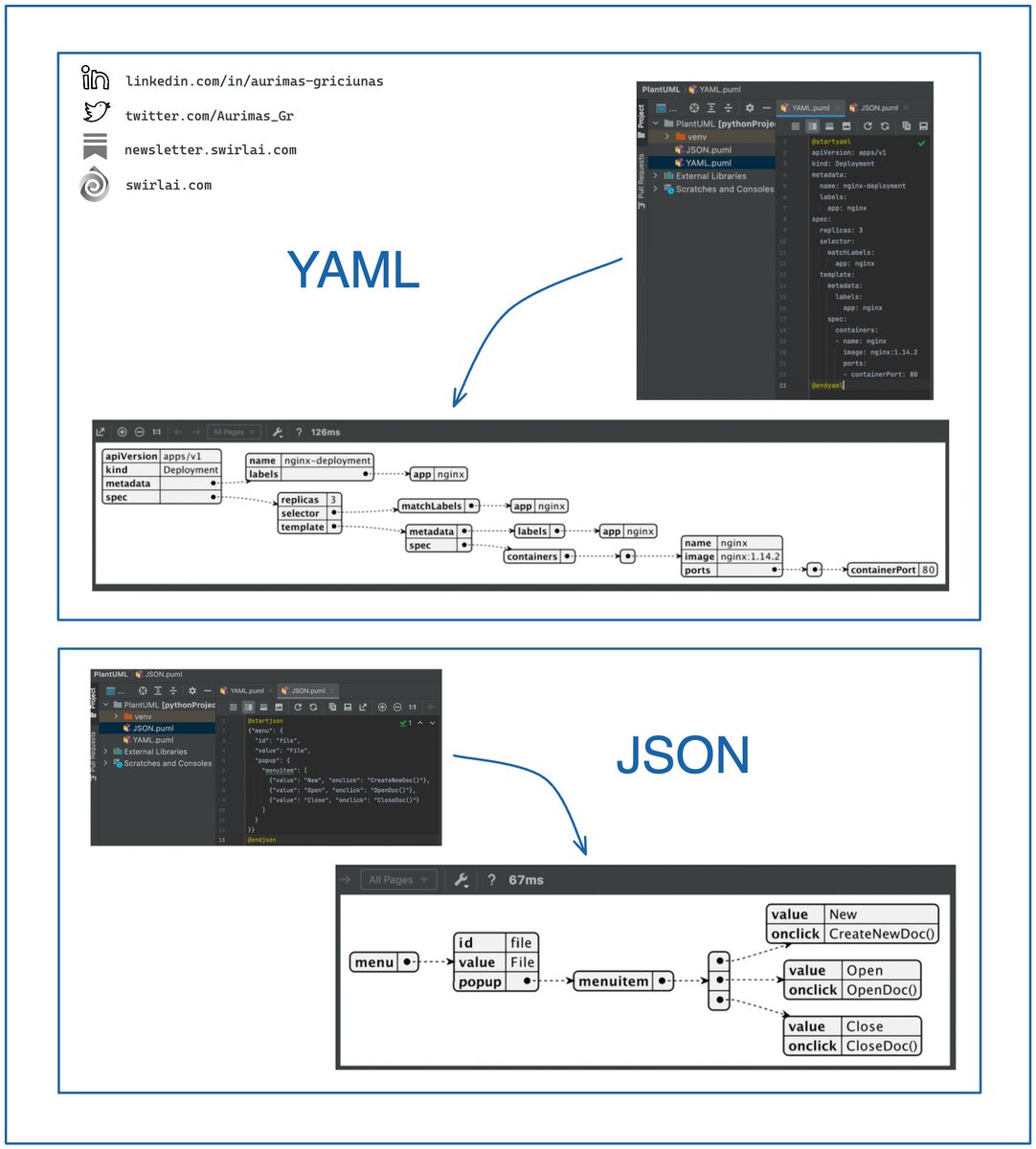
Did you know that you can visualize YAML, JSON and Data of many other formats in comprehensive and easy to navigate graphs directly in your favorite 𝗜𝗗𝗘 or in an 𝗼𝗻𝗹𝗶𝗻𝗲 𝗲𝗱𝗶𝘁𝗼𝗿?
Check out PlantUML.
Here is how you can take advantage of the tool:
➡️ Install PlantUML extension in your favorite 𝗜𝗗𝗘 - it supports 𝗣𝘆𝗖𝗵𝗮𝗿𝗺, 𝗜𝗻𝘁𝗲𝗹𝗹𝗶𝗝, 𝗩𝗦𝗖𝗼𝗱𝗲 and many more.
➡️ Create a file with .𝗽𝘂𝗺𝗹 extension.
➡️ Add 𝗬𝗔𝗠𝗟/𝗝𝗦𝗢𝗡 content or one of many other supported formats enclosed in a specific decorators. e.g. @𝘀𝘁𝗮𝗿𝘁𝘆𝗮𝗺𝗹 <𝗰𝗼𝗻𝘁𝗲𝗻𝘁> @𝗲𝗻𝗱𝘆𝗮𝗺𝗹 for yaml.
➡️ See your diagram created and changed in real time as you type!
𝗧𝗵𝗲𝗿𝗲 𝗶𝘀 𝗺𝗼𝗿𝗲:
➡️ The graphs are interactive, each time you press on an object in the graph you get the source code representing the object highlighted and ready to be edited!
➡️ You can style the output graph using code!
➡️ You can save the graph as a picture in different formats making it easy to be used as part of documentation!
➡️ There is an online editor as well, link in the comment section.
𝗡𝗲𝘃𝗲𝗿 𝗴𝗲𝘁 𝗹𝗼𝘀𝘁 𝗶𝗻 𝘁𝗵𝗲 𝗬𝗮𝗺𝗹 𝗝𝘂𝗻𝗴𝗹𝗲 𝗮𝗴𝗮𝗶𝗻!
-------
Follow me to upskill in #MLOps, #MachineLearning, #DataEngineering, #DataScience and overall #Data space.
Also hit 🔔to stay notified about new content.
𝗗𝗼𝗻’𝘁 𝗳𝗼𝗿𝗴𝗲𝘁 𝘁𝗼 𝗹𝗶𝗸𝗲 💙, 𝘀𝗵𝗮𝗿𝗲 𝗮𝗻𝗱 𝗰𝗼𝗺𝗺𝗲𝗻𝘁!
Join a growing community of Data Professionals by subscribing to my 𝗡𝗲𝘄𝘀𝗹𝗲𝘁𝘁𝗲𝗿: https://t.co/qgNCnGtF4A
How to improve API performance?
The diagram below shows 5 common tricks to improve API performance.
1. Pagination
This is a common optimization when the size of the result is large. The results are streaming back to the client to improve the service responsiveness.
2. Asynchronous Logging
Synchronous logging deals with the disk for every call and can slow down the system. Asynchronous logging sends logs to a lock-free buffer first and immediately returns. The logs will be flushed to the disk periodically. This significantly reduces the I/O overhead.
3. Caching
We can cache frequently accessed data into a cache. The client can query the cache first instead of visiting the database directly. If there is a cache miss, the client can query from the database. Caches like Redis store data in memory, so the data access is much faster than the database.
4. Payload Compression
The requests and responses can be compressed using gzip etc so that the transmitted data size is much smaller. This speeds up the upload and download.
5. Connection Pool
When accessing resources, we often need to load data from the database. Opening the closing db connections add significant overhead. So we should connect to the db via a pool of open connections. The connection pool is responsible for managing the connection lifecycle.
Over to you: What other tricks do you use to improve API performance?
–
Subscribe to our weekly newsletter to get a Free System Design PDF (158 pages): https://t.co/90RMwmA3Mu
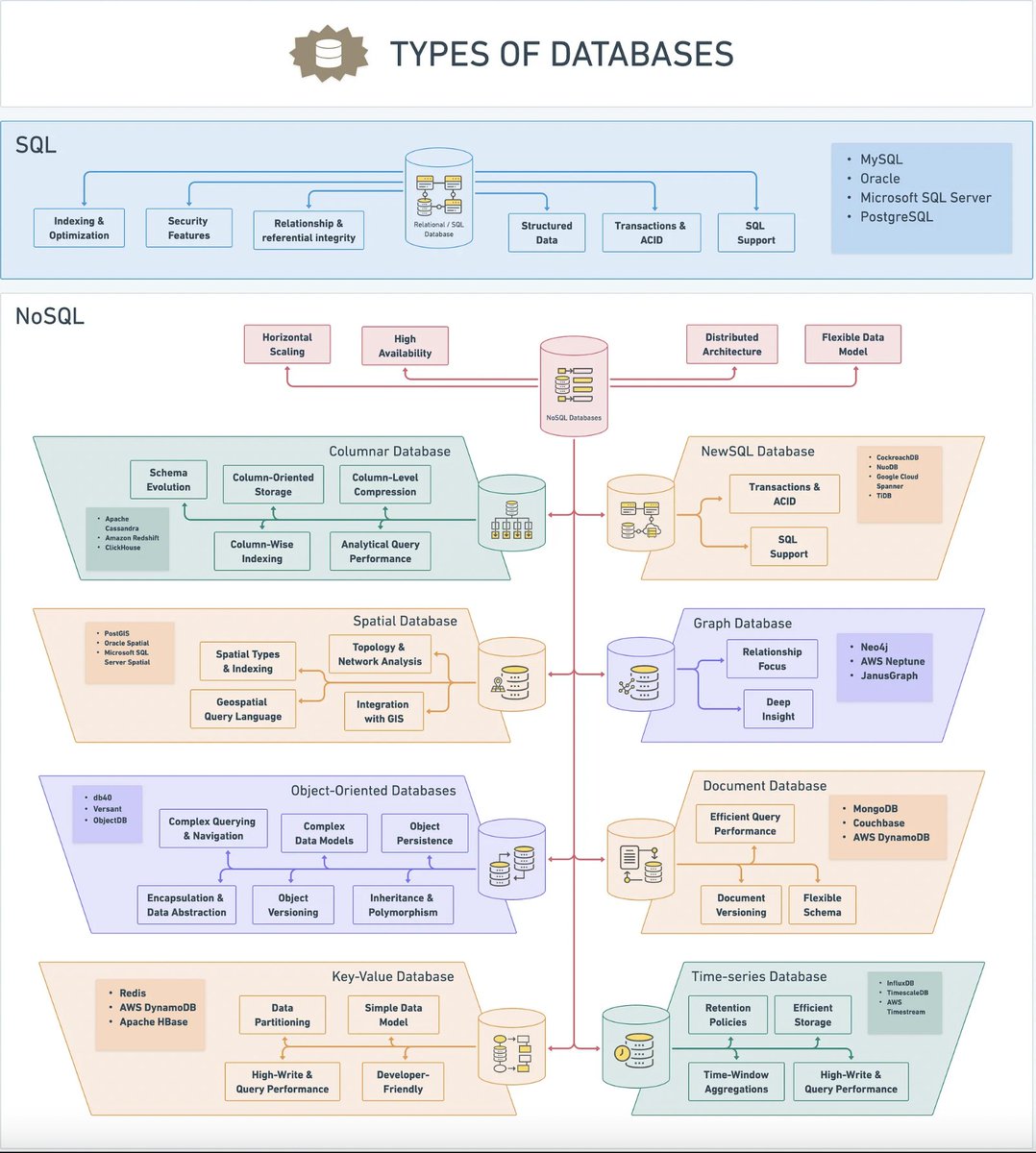
A handy Cheatsheet for SQL and NoSQL databases.
Selecting the right database is crucial for project success. Here's a summary of key points:
- SQL databases offer structured data storage, SQL support, and relational capabilities.
- NoSQL databases provide flexibility, scalability, and distributed architectures.
- Specialized databases like columnar, graph, spatial, and time-series cater to specific needs.
- Evaluate key features, benefits, and providers to make an informed decision.
--
Subscribe to our weekly newsletter to get a Free System Design PDF (158 pages): https://t.co/4QcX8btXGL
#systemdesign #coding #interviewtips
.