Warner follows music, sustainability, philosophy, sailing and soccer respecting open markets and minds, a free press, centers of faith and the rule of law.
Reminder that experiencing awe quite literally improves your health.
Awe has been shown to:
• Reduce stress
• Trigger the release of oxytocin
• Lower levels of inflammatory cytokines
Being made to feel small (experiencing “self-diminishment”) even quells our negative self-talk, by deactivating the part of the cortex involved with how we perceive ourselves.
Through awe, we become less attuned to ourselves and more attuned to the world around us. Dr. Dacher Keltner of UC Berkeley:
“We are at this cultural moment of narcissism and self-shame and criticism and entitlement; awe gets us out of that.”
Neuroscientists define awe as the emotional response to something vast that defies (and changes) our existing frame of reference of something. Awe is a complex emotion, usually “elicited by perceptually vast stimuli.”
What's one way to experience it? Travel to your nearest cathedral and gaze upward.
Gothic architecture was built for this very purpose, by maximizing height and light. Important breakthroughs by medieval engineers (e.g., the flying buttress and pointed arch) made much taller and thinner walls possible — allowing for truly vast windows.
Those builders believed that light itself was divine, and that when it poured in through the great windows it elevated one's consciousness to the heavens.
English poet Samuel Taylor Coleridge put it like this:
“The principle of the Gothic architecture is infinity made imaginable.”
@Handre It would quite interesting to consider fiction, such as Frazier's The Trackers, that takes a highly conventional/neo socialist view of the depression, in light of this antithesis.
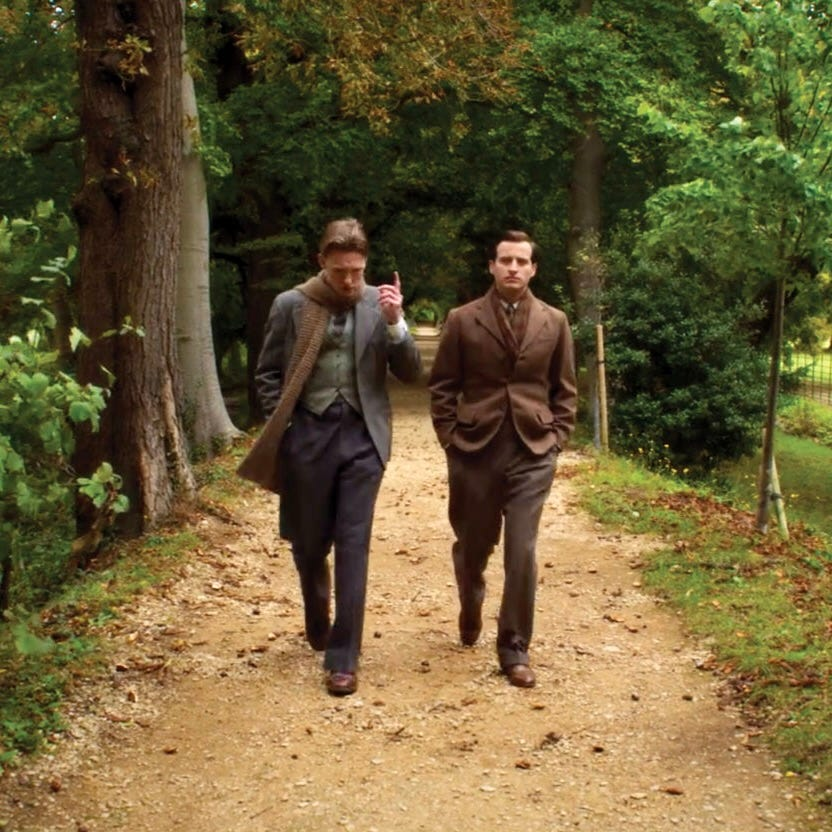
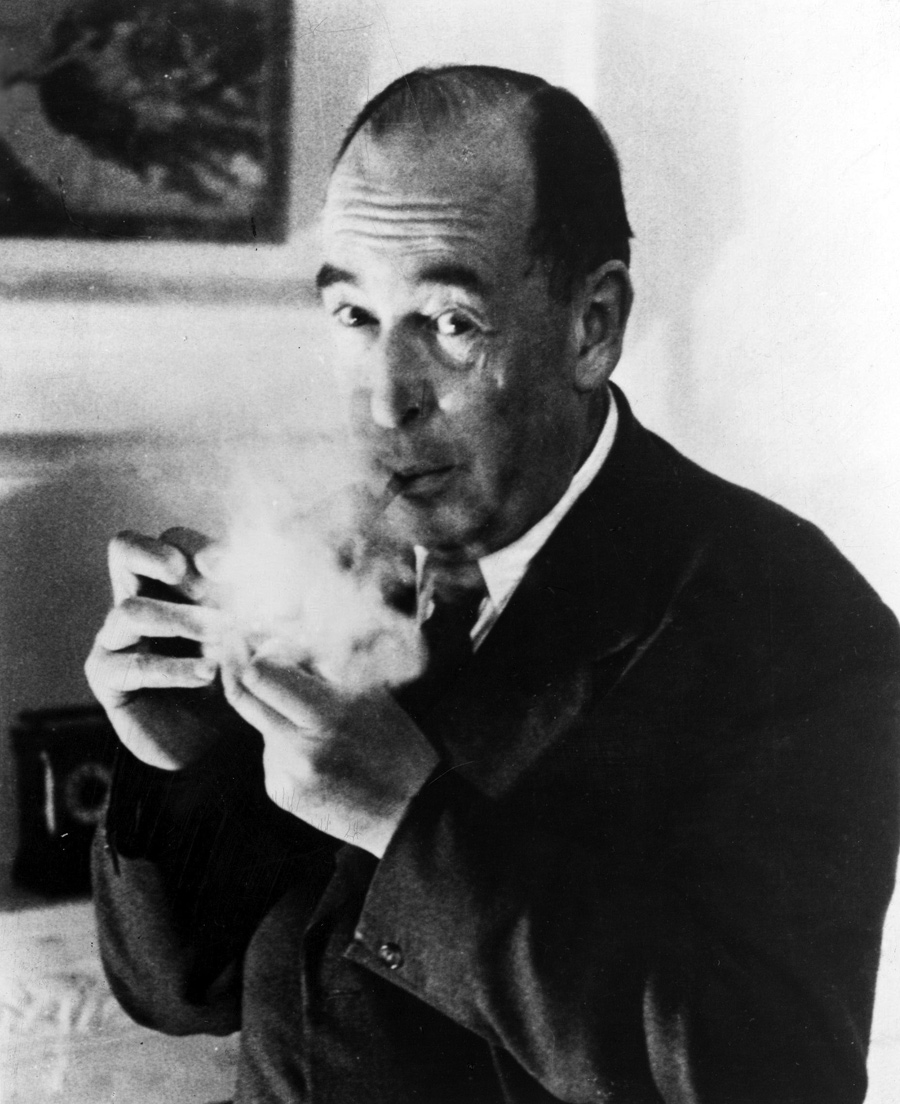
C.S. Lewis was an atheist for 30 years.
Then finally, one conversation with J.R.R. Tolkien changed his mind.
So what did Tolkien say?
Here's what they discussed, and how it led to the conversion of the 20th century's greatest theologian…
"If it starts, a nuclear-arms race will be unstoppable," so how do we measurably lessen the odds of this horrible scenario?
https://t.co/ZLtCvcEzFJ
From The Economist
Important reminder as we read the great books...
"The books or the music in which we thought the beauty was located will betray us if we trust to them; it was not in them, it only came through them, and what came through them was longing.
These things—the beauty, the memory of our own past—are good images of what we really desire; but if they are mistaken for the thing itself they turn into dumb idols, breaking the hearts of their worshipers. For they are not the thing itself; they are only the scent of a flower we have not found, the echo of a tune we have not heard, news from a country we have never yet visited."
— C.S. Lewis
"The first gulp from the glass of natural sciences will turn you into an atheist, but at the bottom of the glass God is waiting for you."
― Werner Heisenberg
@sebastianjunger Numerous studies cited in @EconUS have shown the opposite in our country (outside of the less than one percenters) so this will be an interesting read
Classical literature is not just harder content. It is liberation.
It rips students out of the tiny prison of their own age, their own trends, their own slogans, their own shallow assumptions about what matters. It reminds them the world did not begin with them, and that their feelings are not the measure of truth.
Shakespeare doesn’t teach “skills.” He reveals ambition, lust, betrayal, guilt, and the cost of sin. Homer teaches courage and honor. Augustine exposes the restless heart. Dante shows that loves can be ordered rightly or twisted into ruin. These books give students a map of the soul.
Our greatest enemy is a culture training kids to be bored by silence and incapable of deep thought.
@fairforall_org I often wonder how we better illuminate to young people how corrosive ideology is when adopted above philosophy, theology or common sense?
A better way to think about books, according to Goethe:
“I have always found that the greatest benefit from books is not the accumulation of what others have thought, but the awakening of one’s own thoughts. A book should act upon us like a living force, not as a burden of borrowed ideas, but as a stimulus that sets our inner faculties into motion.”
The great lesson from history is that civilizations do not die primarily by conquest. They die by a slow onset of amnesia.
When a culture stops reading the books and ideas that created it, it ceases to exist.
The Athenaeum Book Club has just become one of the fastest growing substacks in the world because people are realizing how precious our inheritance is. The West has given us the greatest texts ever written, but it is OUR duty to read and preserve them.
We set up this community to read the great books of the Western canon, together. 5,000 of you have joined in the past 7 days.
So far, we've read works from Homer, Augustine, Dante, C.S. Lewis, and more. We are about to start Virgil's Aeneid.
Every month, we read a new text and discuss it inside our group, biweekly.
We rely entirely on YOUR support. Please become a paid member if you can (for just a few dollars per month). It makes a huge difference to the resources we can throw at this.
The majority of what we put out is free, with the intention of guiding as many people as possible through the great books. However, paid supporters can join us for all discussions directly, up on stage.