There is no better chart to visualize the absurdity of the euro’s introduction in Italy. In the 28 years before the euro, the Italian lira was devalued by 83% against the Deutsche Mark. Italy could not keep up with German productivity growth and chose currency devaluation to stay competitive. The last 27 years the currencies have been pegged, and productivity growth or real wage suppression are Italy’s only avenues to remain competitive.
Many companies struggle to grow productivity fast enough and must keep wages low. This explains why Italian real wages have stagnated for decades while others became more prosperous. One must really admire the calm way Italians accept that. The euro in its current form has not made sense in the past and will not work going forward. The next euro crisis, which will likely begin in France, may become its final chapter.
Da una parte, il giorno di San Michele Arcangelo; dall' altra, la giornata nazionale del riciclo della carta...
Non v'é nulla, della modernità che valga la pena conservare.
L’Europa che conosciamo, con il suo patrimonio spirituale e morale, affonda le sue radici nella vita e nell’opera di uomini e donne che hanno vissuto, predicato e condiviso gli insegnamenti del Vangelo. Da lì ci sono stati trasmessi i fondamenti morali del mondo in cui viviamo: principi quali il primato della persona e il carattere sacro e inviolabile della vita umana; la tutela della libertà; l’importanza primaria della famiglia; l’attenzione verso i poveri e i più bisognosi; l’accoglienza dello straniero, il rispetto degli anziani. #ViaggioApostolico #Francia
Qui a Lourdes, città dei malati e della speranza, invito tutta la comunità degli operatori sanitari a ricordare il significato profondo della propria vocazione: prendersi cura di una persona che soffre, e non eliminarla. Siate servitori appassionati della vita! Nessuno ha il diritto, mai, di decidere della vita di una determinata persona. La medicina non potrà mai farsi serva della morte programmata! #ViaggioApostolico #Francia https://t.co/OE0DdJAqbn
Ratzinger aveva capito prima di altri che la crisi dell'Europa non era economica o istituzionale, ma d'identità: un continente che aveva smarrito le proprie radici e con esse la capacità di dire chi è. Per questo parlava di rievangelizzare l'Occidente, e per questo sembrò...
1/4
Lo spot di Sky è offensivo: ridicolizza i sacramenti, ridicolizza il sacerdozio, mette in burla la Santa Messa, addirittura scimmiottando le parole dell'istituzione. Il sacramento della Riconciliazione è drammatico: non può essere ridotto a barzelletta. Non si può accettare.
La mancanza di un termine corrispettivo ad "high trust societies" in italiano sta penalizzando di parecchio la comunicazione di destra.
Se non puoi dare un nome alle cose, queste non esistono. Non a caso Dio nella Genesi da un nome alle cose quando le crea.
The Constitution does NOT give you rights. You already have them.
The Constitution simply tells the government that it cannot take those s rights away.
I wish more people understood this.
"It is a common complaint that many years ago Marx identified: all capitalists want that workers of other capitalists be paid higher wages so that they can become their customers, but they want their own workers to be paid as little as possible. This is exactly what the West is doing now: London and New York financial newspapers that attack any workers’ improvement at home are full of articles urging China to “decompress” wages and introduce more generous social transfers. Suddenly, The Financial Times and The Wall Street Journal are brimming with concern about workers’ welfare."
This is sort of funny, and Brazil have definitely got worse, but it misdiagnoses the problem. In fact, this is a story of what has happened to society and with our economies, and the ideology of our ruling elites.
The first point to accept is that *all* football nations have lost their particular style: there has been a flattening of the way in which teams play. I first started watching football as a very young boy in the late eighties, and through until the early 2000s, most of the big nations maintained a distinct way of playing. The Netherlands, Germany, Italy, Brazil and England all spring to mind. But two things have happened -- the first connected to the latter.
First, the Champions League (and later the Europa League) means that the best teams in Europe play each other almost every week during the season. That provides a consistently present interface for an accelerated exchange of ideas, formations, and tactics. But it also acts as a kind of gain of function research for football: there is now an extremely rapid cycle of tactical, transfer policy/player selection, and fitness innovation, response and counter response. The football OODA loop has never been tighter.
Second, and connected to this, there has been an extreme version of the Pareto Principle income inequality that has happened among western societies as a whole. Wealth, partly due to the Champions League, and partly due to the Premier League, has accrued to a smaller and smaller number of teams, even as the size of the pie, due to the massive increase in TV revenue in Europe, has expanded beyond all recognition. This means that all the best players in the world end up in the same handful of clubs. We can name them: Arsenal, Manchester City, Manchester United, Liverpool, Juventus, Bayern Munich, PSG, Real Madrid and Barcelona. Furthermore, with the advent of global scouting networks and post-Moneyball databases, this means the best players from anywhere in the world, often at young ages. Remember when an unknown player would have a great World Cup and find himself playing for, say, Tottenham or Monaco or wherever? Those days are gone. We know about every player in the most minute detail. There is no mystery. The good players are already in Europe.
The first time I noticed this process of wealth accumulation was with the great Ajax team of 1995. I was only just a teenager, and that team was like a revelation for me in terms of the way football could be played. All of them (bar Danny Blind and Frank Rijkaard, who were an earlier generation) came up through the Ajax academy system and blossomed at the same time. They played in the Ajax/Dutch style (4-3-3, with two wingers that stayed very wide, and a centre back pushing into midfield when they had the ball, holding possession playing in the opponent's final third). But within two seasons, the entire team was broken up: Davids, Seedorf, Klijvert, Ovremars, Rijzeger, Kanu, Litmanen, even Van Gaal, the young manager -- they'd all gone to richer clubs elsewhere. In the 1960s or 70s, they'd have stayed together and won multiple European trophies. In England, we saw a similar thing with Southampton. Newcastle are suffering the same now.
All this means that players don't stay in their home environments and countries, with their clubs, and the process of mimesis breaks down. Add that to the first point, related to the way intra-European football forces a flattening through various mechanisms, and you have what we see now.
A couple of World Cups ago, the Netherlands played a 3-5-2, to my absolute horror. The Netherlands playing without proper wingers! Now we have a Brazilian team that has two Arsenal players, two Man U players, one Newcastle player -- even a Bournemouth player, for goodness sake. And they'll all have had the majority of their careers outside Brazil. Some will have left when they were 15 or 16, scouted by Shaktar Donetsk (famous for bringing in young Brazilian players) or Real Madrid. Why are we therefore surprised that they play like any other European team?
The Netherlands style lives on -- but through Barcelona and therefore the Spain national team (via Cruyff, and thence Guardiola), not in the Netherlands national team. But the Brazil style (a languid slow, slow, slow, punctuated by sudden bursts of incredible skill, raking passes, speed, and crackerjack long shots) is dead. When better Brazilian players emerge in future, and maybe they return to winning World Cups, they'll do so as Europeans would, not Brazilians. The German and Italian styles are also dead. The English style is also pretty much dead, although that was an evolutionary dead end in terms of International Football, so we do not lament it.
This, rather than boozing or religion, is the reason for what we see with the Brazil national team. I find it deeply sad. But no doubt the neoliberal progressives who run our countries will view it as a great success.
@AaronBastani@WilliamClouston@georgegalloway@jj_bull
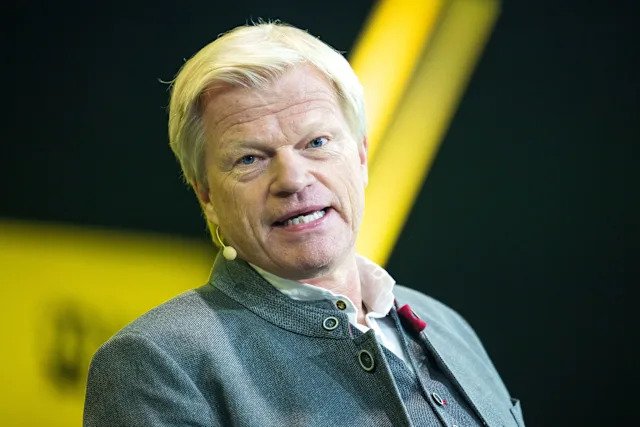
Oliver Kahn:
"Three national team coaches have failed at the same point: Joachim Löw, Hansi Flick, and Julian Nagelsmann. Three different game plans. Three different leadership styles. When three coaches with different approaches always fail at the same point, the cause lies deeper.
One scene says more about this elimination than any statistic. When the penalty shootout went beyond 5 takers, you could see Joshua Kimmich looking for penalty takers. For me, that was the most revealing moment of this elimination. A top team doesn't look for volunteers at that moment. They have players who demand the ball
Germany doesn’t have a talent problem. This team has exceptional footballers. What they lack is the confidence to take responsibility in the biggest moment. Those who don’t take it may be protecting themselves from failure. But at the same time, they’re forfeiting the chance to make history
"We're arguing about who has to go now and pinning our hopes on the next savior instead of asking why we've been repeating the same patterns for years. We replace faces and call it change. But we avoid the real question: Are we still willing to pay the price that elite performance has always demanded?
The defining moment doesn't begin when you put on the national team shirt. It begins many years earlier, the moment a young player learns that responsibility isn't something you pass on to someone else, it's something you take on yourself
Talent gets you to the World Cup. Responsibility determines how long you stay there."
Continuare a confondere il Politico con l'amministrativo è un errore grossolano che la maggioranza continua a ripetere. Se poi, insieme, ci mettiamo le istanze prepolitiche, il danno è totale. Ma tutto questo, i cialtroni della politica, non lo sanno o fingono di non saperlo.
Attaccare e ridurre la proprietà della casa di abitazione è sempre stato un obiettivo UE, e le ragioni sono evidenti: la casa di proprietà salvaguardia il risparmio, e di conseguenza limita fortemente l'indebitamento. Dona stabilità e tiene ancorate le persone a una progettualità di vita e di lavoro stabile. Cose che non stanno bene a un'entità che favorisce la precarietà e l'indebitamento come mezzo politico ed economico per garantire la stabilità dei prezzi, scaricando sul lavoro la svalutazione.
E' sempre stato così e sarà sempre così. Pensare di cambiare da dentro questo sistema, è semplicemente utopico. E' necessario uscirne, ed è perciò urgente prendere piena coscienza che se si vuole perseguire gli interessi dei cittadini italiani, non si può stare nel sistema europeo, né si può sottostare ai suoi mezzi.
A maggior ragione se si pensa che la nostra Costituzione, all'art. 47, favorisce l'accesso del risparmio popolare alla proprietà dell'abitazione.
Tutte le organizzazioni di categoria, i sindacati e i partiti che hanno preso coscienza del problema dovrebbero sostenere l'uscita dell'Italia dall'Unione Europea. Ne va dell'interesse dei cittadini e di piena attuazione della Costituzione.
🧵JUVE DEGENERAZIONI DI UN SISTEMA
Ho immaginato l'involuzione della società Juventus 2011-2026 come le iterazioni frattali del romanzo Jurassic Park
All'inizio il frattale è pulito, semplice, lineare, fuziona.
Poi si complica, diventa caotico, fuori controllo e distruttivo.
⬇️
Unpopular Fact:
Boomers took lunch pails and a thermos to work each day with the most basic meals and leftovers you’ve ever seen
You can blame them for a lot of things
Your own decision to spend bank on lazy fat gut desires rather than making meals for yourself almost every day isn’t one of those things