Although the USA has pulled out of the #ParisAgreement and is leaving the #UNFCCC, some CSO Observer groups are domnates by Americans or American-based researchers, such as #RINGO's...African researchers and research institutions are marginalized.
At #WHA79 there has been a subdued atmosphere. @WHO seems to be in disarray. Some of the leading problems in global health--eg climate change and the crisis in maternal and infant mortality--aren't even on the agenda.
Melei's Argentina--a country that like the USA pulled out of the World Health Organization--is the source of the latest deadly treat to global health. Together Trump and Melei are dragging their countries to dangerous depths of incompetence that adversely effect us all.
The recently concluded Executive Board meeting of WHO evidenced an organization in steep decline. This is due in no small part to the USA's strangulation of the organization. Why does WHO still have an American chief Legal Counsel?
The Ecocide (Prevention and Accountability) Bill, 2025 was introduced by Sujeet Kumar, an MP (Bharatiya Janata Party) in the Rajya Sabha, India’s upper house of Parliament, which represents the states and territories.
Senator Ngindu Biduaya of the Democratic Republic of the Congo formally lodged a bill in the national Parliament to establish ecocide as a domestic criminal offence, marking a decisive step towards strengthening legal protection for ecosystems across the country & Congo Basin.
The Scottish Parliament has voted to advance the Ecocide (Scotland) Bill, placing Scotland on track to become the first UK nation to criminalise severe environmental destruction.
At #EB158@WHO staff expressed disappointment at the limited transparency surrounding
strategic priorities & departmental structures, the lack
of explanation and rationale for certain decisions, and the absence of information regarding job
losses by grade and contract type.
At #EB158 the weak leadership of the @WHO Secretariat was on display as decisions were not properly prepared. For example, WHO did not confirm UNOG rooms for WHA79 in May, which led to a lengthy debate about when and where the WHA should be held.
Health Day at #COP30 the Belém Health Action Plan (#BHAP) has been launched, now we need to fix it to make sure it works. It needs to be integrated in finance at COPs.
Health Day at #COP30: Belém Health Action Plan (#BHAP) launched, but it may be still born if merely another instrument of oppression controlled by Western interests and uncaring IGOs. INTLawyers Right to Health Team on the BHAP.
Health Day at #COP30: Belém Health Action Plan (#BHAP) launched, but it may be still born if merely another instrument of oppression controlled by Western interests and uncaring IGOs. INTLawyers Right to Health Team on the BHAP.
As #COP30 opens in Belém, Brazil, we are on the ground lobbying States to use the health consequences caused by the adverse effects of climate change as a means for lobbying for greater climate finance ambition. We need to make health relevant to the climate negotiations.
@UNReliefChief Yes, there's more humanitarian aid flowing into Gaza, but it's not nearly enough to reverse the effects of the famine that was caused by Israel and its allies.
We need to ensure the accountability of every individual who participated in the genocide of the Palestinian people
Packed day with our teams at the Rafah crossing to Gaza, as trucks move in via Kerem Shalom as part of President Trump’s ceasefire deal. Thank you to everyone who made this possible.
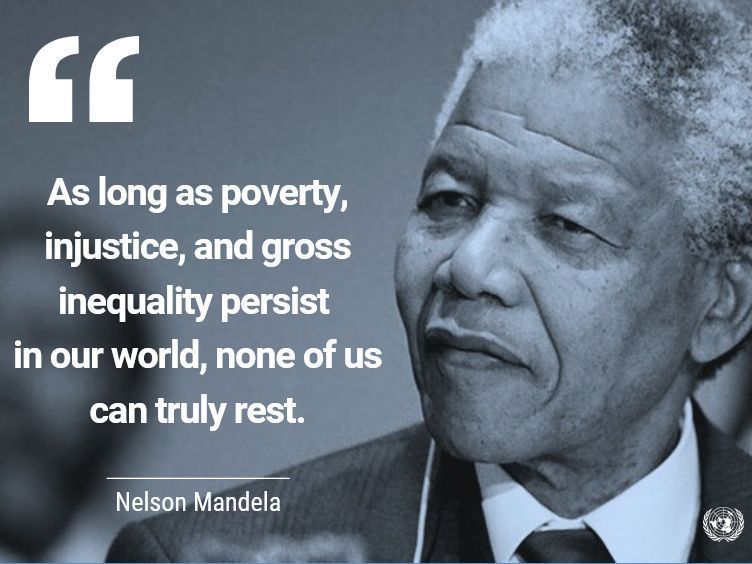
“As long as poverty, injustice & gross inequality persist in our world, none of us can truly rest”
Nelson Mandela's words reminds us: it is still in our hands to fight poverty & inequality.
On #PovertyDay & every day, let’s honour Madiba’s legacy by taking #ActionAgainstPoverty.
Despite many learnings and much progress since the #COVID19 pandemic, many health systems remain fragile.
Low- and middle-income countries face rising debt burdens, shrinking fiscal space, and declining development assistance.
My asks to the #G20 leaders at the #WBGMeetings:
1. Protect and prioritize health in national budgets.
2. Support and strengthen the mobilization of domestic resources for health.
3. Improve efficiency and accountability in health spending.
We must work together with urgency, because as we all know, the next pandemic is not a matter of if, but when.