Our party has suffered a historic defeat.
Many good Labour colleagues have lost their seats despite working hard for those they represented. We have lost good Labour administrations and lost the chance for more.
What we are doing isn’t working, and it needs to change. This may be our last chance.
The Labour Party must now live up to our name: we must be the party of working people.
We’ve heard the same on the doorstep as we’ve seen in the polls - the cost of living is the top issue for voters of all parties. People have turned to populists and nationalists because we have not done enough to fix it.
Living standards are barely higher than they were a decade and a half ago. People feel hopeless - that the cost of living crisis will never end, and now they see oil and gas companies use global instability to post record profits.
Once again, ordinary people are paying the price for decisions they didn’t make. It’s no wonder that across the UK, working people feel the system is rigged against them.
Things can be so much better than this. Countries including Spain and Canada have shown that economies can grow and people can thrive when governments stay true to labour and social democratic values and put people first. We need to learn from that.
In London, we lost young people who fear they will never afford a home. In my patch and across the north, we lost working people whose wages are too low and costs too high. In Scotland and Wales, people do not currently see Labour as the answer.
We are in danger of becoming a party of the well-off, not working people.
The Peter Mandelson scandal showed a toxic culture of cronyism.
Decisions like cutting winter fuel allowance just weren’t what people expected from a Labour government.
For too long, successive governments have allowed wealth and power to concentrate at the top without a plan to ensure the benefits of economic growth are shared fairly. The result is an economy that does not work for the majority, with wealth concentrated in too few hands. This level of inequality, alongside squeezed living standards, is the outcome of a model built on deregulation, privatisation, and trickle-down economics.
But we have the chance to fix this.
1/2
@Alejandro_SocEU I think it’s 3 out of 4 of the last Dutch elections in which D66 has siphoned progressive voters from GL-PvdA / PRO, then has gone onto form a government with parties to its right.
The Global Progressive Mobilisation just concluded here in Barcelona. An impressively global gathering - with representatives from Europe & US but also across Latin America, Africa, Asia. My observations:
“GL/PvdA calling themselves progressive symbolises the end of social democracy and politics for the working class”
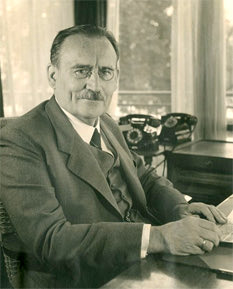
Meanwhile Dutch PM Willem Drees (PvdA) who built the welfare state: “We progressives always fight for the next group to experience social progress and improvement”
Progressief Nederland, roepnaam: PRO.
Dat is de nieuwe naam van GroenLinks-PvdA. PRO staat voor een eerlijke en rechtvaardige samenleving.
Ik ben Pro. Jij ook? https://t.co/ARH1qclJmY
What should alarm us about the Epstein files isn’t just the appalling details.
It is the degree to which enormously wealthy and powerful people live by their own rules — and continue to get away with it.
It’s a club where the rules and the law don't apply. And you’re not in it.
De blokkadepolitiek van de VVD wordt beloond. Mensen die voor verandering hebben gestemd worden belazerd met wéér een riskant experiment. Wij blijven knokken voor iedereen die een groener, socialer en progressiever Nederland wil.
Brazilian lawmakers are pushing a historic rollback of environmental rules that would strip protections from the Amazon — less than a week after the country wraps up hosting the UN climate talks.
https://t.co/VszKazNwpu
OPINION: The world economy is already locked into a 19 percent loss of income by 2050 due to climate change.
This makes one thing clear: The consequence of inaction is far greater than the consequence of action and #COP30 needs to be transformative.
🔗 https://t.co/PZwyX92L5h
Today, in a vote on the Sustainability Omnibus, the conservative EPP Group and far-right groups in the 🇪🇺Parliament joined forces to eliminate companies' responsibility for the damage they cause to people and the planet.
@acmendes73@repasi
https://t.co/DEnYbxHXNe
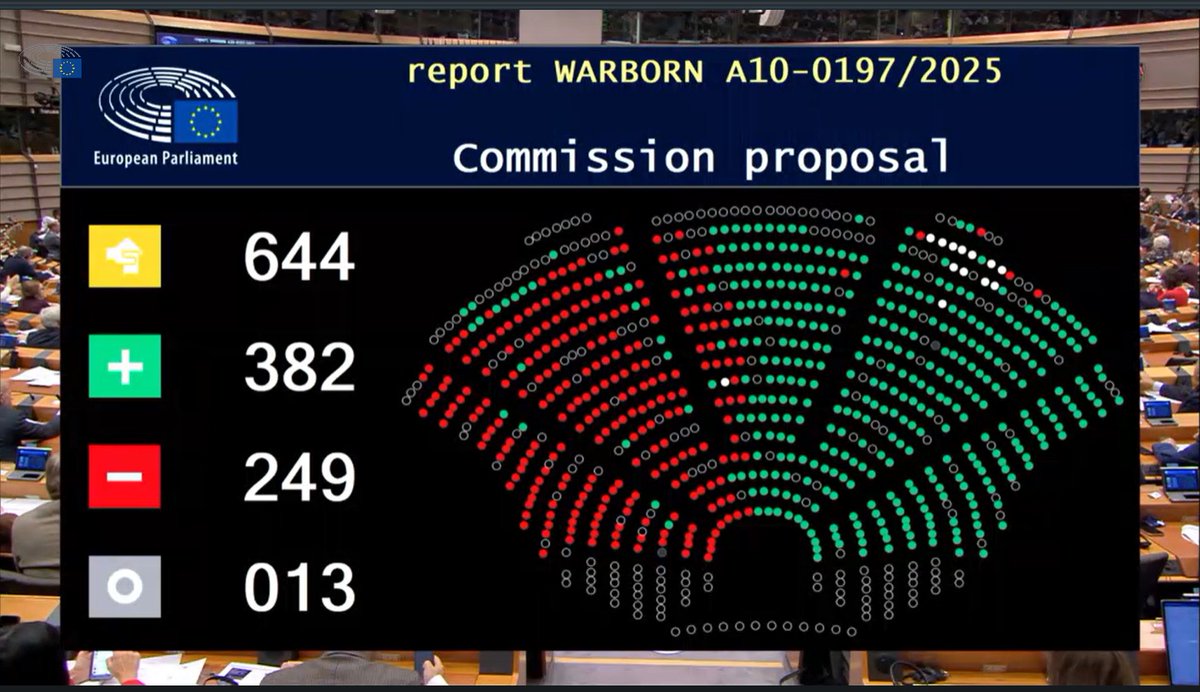
Historical image BELOW! The political parties that have built and governed Europe since its inception are being sidelined in the EU Parliament today. They bear responsibility for their own demise.
Today's vote on the Omnibus Simplification Directive not only dismantles the Green Deal but also redefines the political majority governing Europe from now until 2029.
As of tomorrow, von der Leyen's political majority will be the right and far-right only, with devastating repercussions for the EU's economy, society, and democratic foundations - while giving Trump's administration a free hand in Brussels.
It's a short-sighted, self-defeating move for the EU EUCO injecting the same unpredictability that the Simplification agenda was meant to avoid!
Not so long ago, wild forests, free-flowing rivers and rich wetlands stretched across Scotland – buzzing, croaking and hooting with life.
Today, despite its spectacular views, much of Scotland is quieter. Emptier. Its wildlife diminished.
But there is hope: nature responds quickly to a second chance, bouncing back and recovering its balance.
Rewilding gives it that chance – rebooting the natural processes that keep ecosystems, and us, alive: predator and prey, growth and decay, pollination, water purification, nutrient cycling… all the intricate workings of nature’s complex life support system.
Inviting this vibrant and abundant nature back to Scotland also means welcoming beauty, resilience, wonder and joy. And it will help us tackle biodiversity loss, climate breakdown and our growing disconnection from the natural world, too.
That’s why we work with others, including landowners, farmers and rural communities to make rewilding happen – for nature, climate and people.
#MakingRewildingHappen #ForNature #RewildScotland
Kinda fascinating the way seemingly every European country now has their own collection of right wing e-grifters selling doom narratives to an almost exclusively American audience
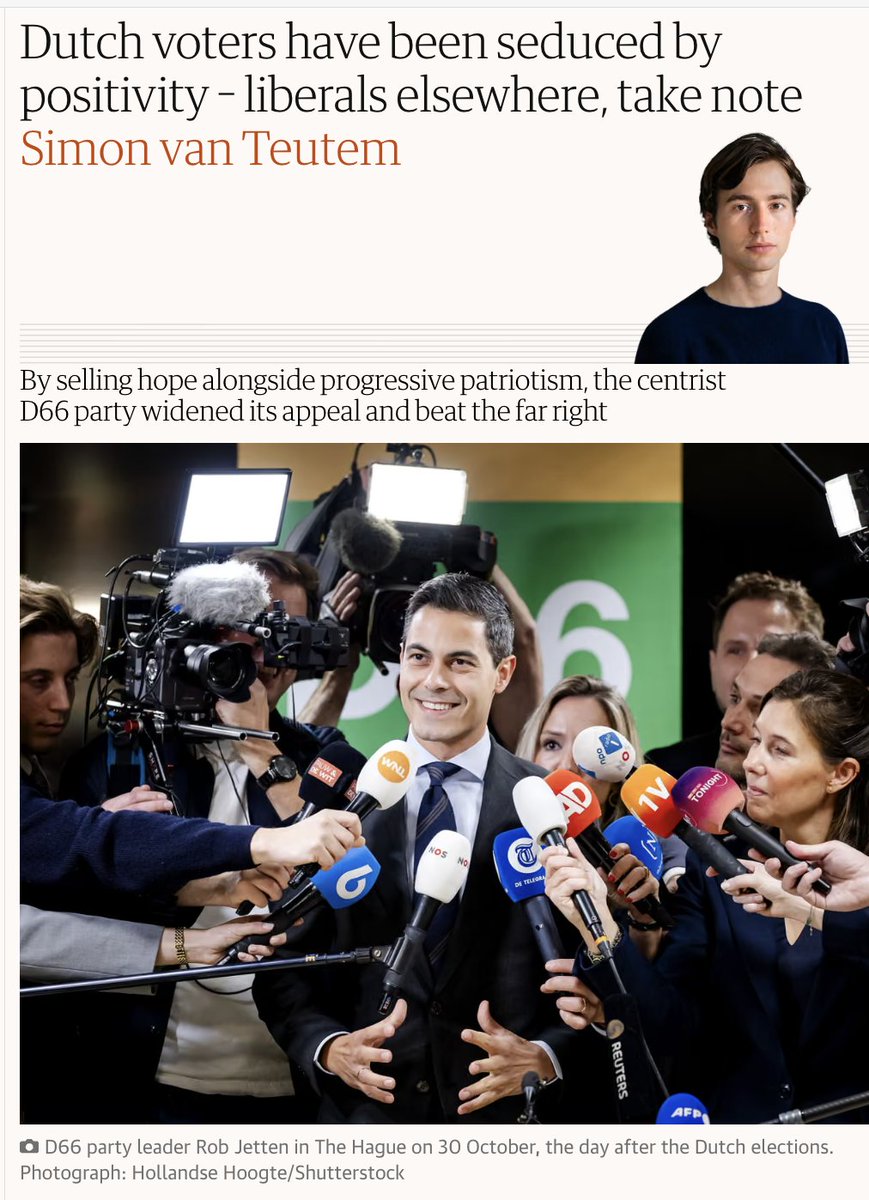
The far right tightened its grip in the Dutch elections. But for liberals, D66 offered a glimmer of hope. Here are five lessons from their campaign that liberals everywhere could take to heart.
1. Optimism. D66 understood that a civilisation obsessed with averting every possible ill renders itself incapable of doing any measurable good. For years, the Dutch left has often sounded like a nagging parent – “can’t do”, “won’t do”, “impossible”. Jetten flipped the script. His message wasn’t: “The world is doomed, so we must stop everything from flying to eating meatballs or even having children.” Instead he told people: “This country can do so much better, so why not get going?” It echoed the Yimby philosophy popularised by US writers @ezraklein and @DKThomp.
2. Progressive patriotism. For years, nationalism was considered the preserve of the right. Expressions of pride were ceded to the far-right Freedom party (PVV) and to farmers’ protests. D66 broke with that misplaced self-flagellation. It showed that one can take pride in a country ranked among the happiest in the world without excluding minorities or vilifying outsiders. At the D66 party congress, Jetten stood beaming beneath a billowing Dutch flag.
3. Take off the gloves when you need to. Many leaders have a fear of heated exchanges poisoning the political atmosphere. “When they go low, we go high” remains a mantra for many liberals. But elections are meant to expose policy differences – all the more so in a parliament with 15 parties. Jetten avoided needless squabbles with ideologically adjacent parties and focused instead on his polar opposite.
4. An unapologetically left wing economic story. D66 campaigned for a more progressive inheritance and gift tax, the abolition of a regressive mortgage interest deduction and, above all, higher rewards for work. The party even proposed a millionaires’ tax. And it worked. Voters are not afraid of such policies – polling shows that they want them. No anti-capitalist posturing, no talk of degrowth – just straightforward, good-old social democratic ideas. Liberals misread the public if they think voters fear such policies.
5. Build a big tent. Progressives who agree among themselves on 80% of issues often fixate on the 20% where they differ. Jetten broke that habit, opting instead to triangulate on major issues, including immigration, by building a broad, if imperfect, voter coalition. According to Ipsos I&O figures, 20% of those who voted D66 in this election came from the centre-left GreenLeft/Labour alliance (GL/PvdA), 13% from the centre-right NSC, 11% from the rightwing VVD, 9% were previous non-voters and even 7% had backed the far-right PVV. Since 2012, the overall progressive bloc has steadily shrunk. Jetten managed to reach into the rightwing electorate and build a big tent.