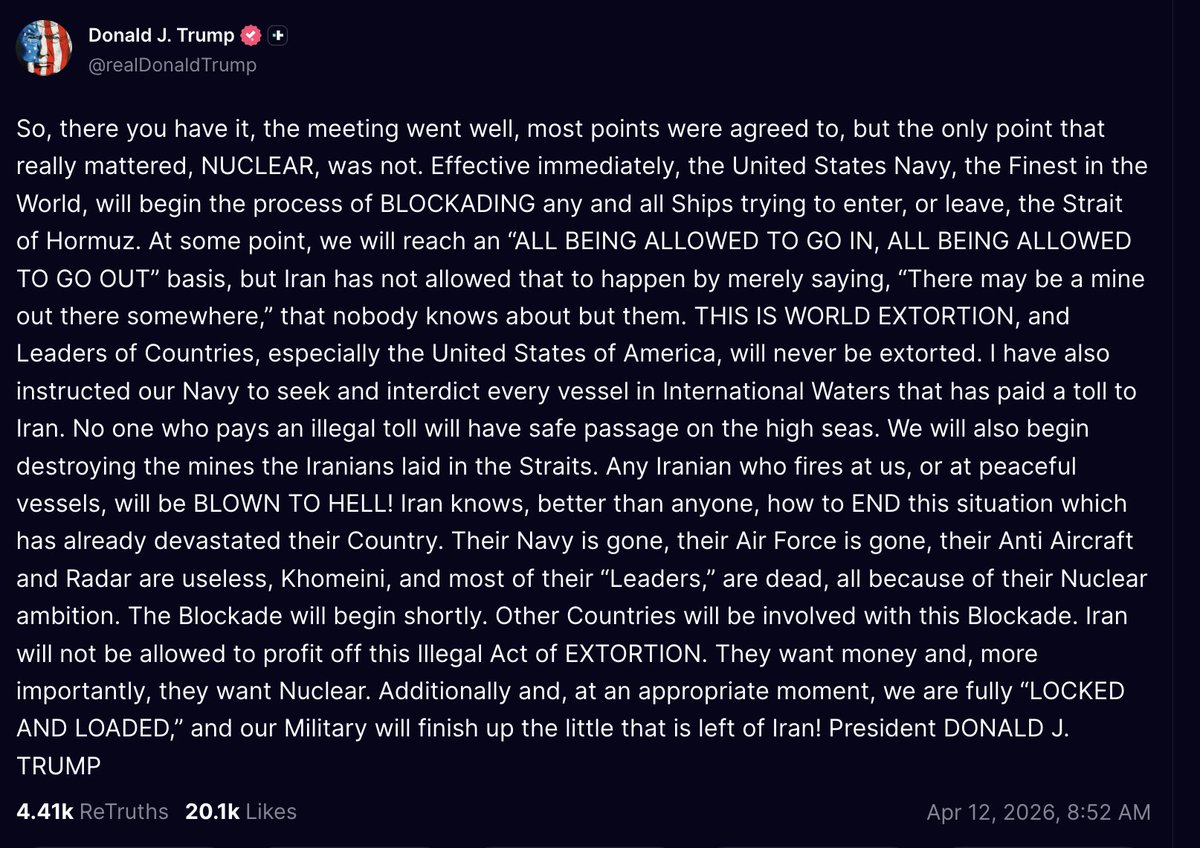
BREAKING: President Trump says the US Navy will begin "blockading any and all ships" trying to enter or leave the Strait of Hormuz.
"Any Iranian who fires at us, or at peaceful vessels, will be blown to hell," he says.
Your paracetamol is 100 percent petrochemical. Phenol from the cumene process, converted to p-aminophenol, acetylated to the tablet in your bathroom cabinet. Your ibuprofen is 100 percent petrochemical. Isobutylbenzene and propionic acid derivatives. Your metformin, the most prescribed diabetes drug on Earth, is 80 to 90 percent petrochemical. Dicyandiamide from natural gas derivatives.
The naphtha that makes these drugs transits the Strait of Hormuz. The strait is mined, uninsured, and unescorted.
The war just reached the medicine cabinet. Nobody is covering this.
Ninety-nine percent of pharmaceutical feedstocks and reagents are petrochemical-derived according to the American Gas Association. Not 50 percent. Not 70. Ninety-nine. The pills are made of oil. The same oil the same strait carries. The same naphtha that becomes polyethylene for a bread bag becomes phenol for a paracetamol tablet. When the petrochemical cracker shuts, both products vanish.
The crackers are shutting. Chandra Asri declared force majeure on March 3rd. Yeochun NCC on March 4th. PCS Singapore on March 5. CNOOC-Shell Huizhou is planning shutdown of its 1.2-million-tonne facility. These are not contained within the plastics industry. They cascade into pharmaceuticals because the feedstocks are identical.
India is the pressure point. Twenty percent of the world’s generic drugs. Forty percent of US generic demand. And India’s methanol supply, a key solvent in API manufacturing, has 87.7 percent exposure to the Hormuz corridor. The Indian government has prioritised household LPG over industrial petrochemical feedstock, starving downstream pharmaceutical supply chains of the naphtha derivatives they need. Indian pharma companies hold three to six months of finished product stock. The buffer exists. It is depleting at an accelerating rate as raw material pipelines empty.
The Serum Institute of India, the world’s largest vaccine manufacturer supplying 40 to 50 percent of global doses in key categories, runs on the same petrochemical chain. mRNA vaccines require petrochemical-derived lipid nanoparticles and solvents. Traditional vaccines use petrochemical intermediates for adjuvants and stabilisers. Every vial is plastic. Every syringe is plastic. Every cold-chain packaging film is plastic. The force majeures that shut the crackers are not just a packaging story. They are a vaccine story.
The developing world’s access to affordable antibiotics, diabetes medication, cardiovascular drugs, and childhood vaccines runs through Indian manufacturing plants that run on petrochemical feedstocks that run through a 21-mile waterway currently seeded with Iranian mines.
This is the fourth domino. The first was energy. The second was fertiliser. The third was packaging. The fourth is the one that converts an economic crisis into a humanitarian one, because you can find an alternative bread wrapper. You cannot find an alternative to metformin for 537 million diabetics worldwide. You cannot find an alternative to amoxicillin for a child with pneumonia. You cannot find an alternative to the vaccines that prevent diseases we spent decades eliminating.
The Fed meets tomorrow to assess inflation driven by energy, fertiliser, packaging, and now pharmaceutical inputs. All repricing through the same chokepoint. Four dominoes. One strait. And the fourth, the medicine, is the one the market has not priced because it does not appear on any commodity index.
It appears on a doctor’s prescription.
Full analysis: https://t.co/iFmUcarGdV
Just started Tesla Robotaxi drives in Austin with no safety monitor in the car.
Congrats to the @Tesla_AI team!
If you’re interested in solving real-world AI, which is likely to lead to AGI imo, join Tesla AI. Solving real-world AI for Optimus will be 100X harder than cars.
Sumitomo Mitsui is prepared to increase its Japanese govt bond portfolio to as much as double the current JPY10.6 trn, global markets head Arihiro Nagata said in an interview: BBG
Now why on earth would you tell the world you are about to buy huge amounts of something?
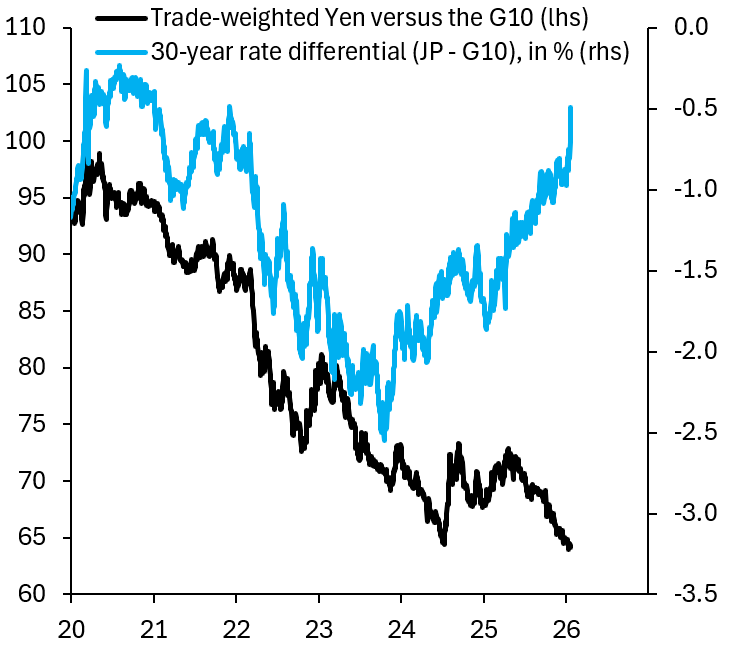
Japan is in denial. If you think you can campaign on an end to "excessive" austerity with debt at 240% of GDP, markets will teach you a harsh lesson. Yesterday, even though Japan's JGB yields shot up (blue), the Yen fell (black). This is crisis territory.
https://t.co/Jx8GF3zdWi
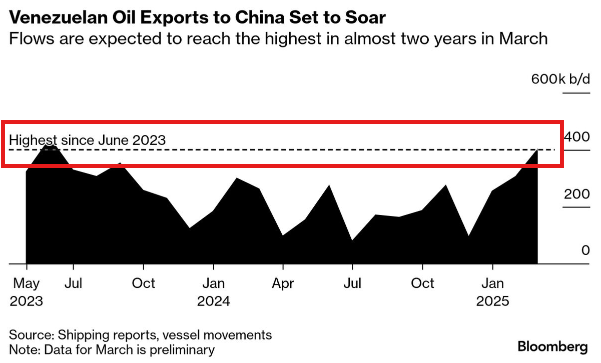
To top it all off, China is the largest buyer of Venezuelan oil.
This accounts for ~5% of China's total annual oil imports.
As the US gains control of Venezuela, this gives President Trump even more control over China.
Trump said he would sell some of this oil to China.
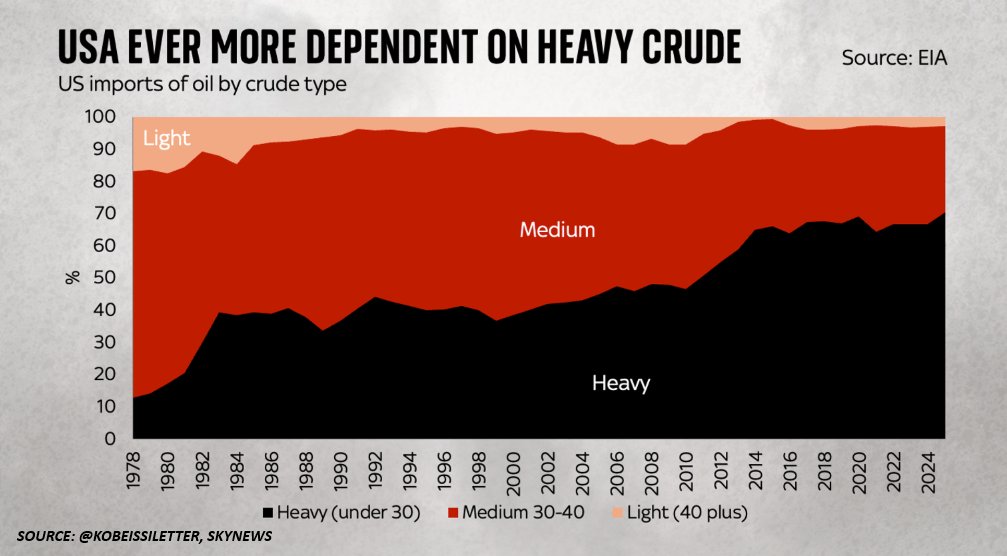
The US has become incredibly dependent on heavy crude oil.
In 1980, just 10-20% of US crude oil imports were heavy crude oil.
Today, the MAJORITY of US crude oil imports are heavy crude oil, at ~70%.
The US wants more heavy crude and Venezuela has BILLIONS of barrels of it.
The Venezuela plot thickens:
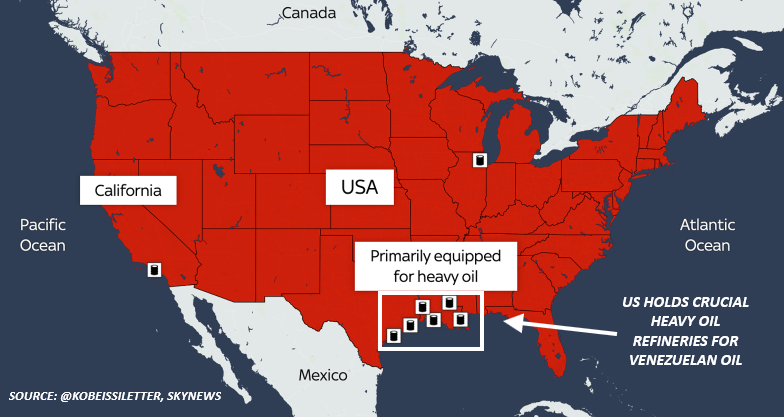
While Venezuela holds 303 BILLION barrels of oil reserves, much of this is HEAVY crude oil.
Texas and Louisiana also *happen* to have 6 of the LARGEST HEAVY crude oil refineries in the world.
What does this mean? Let us explain.
(a thread)