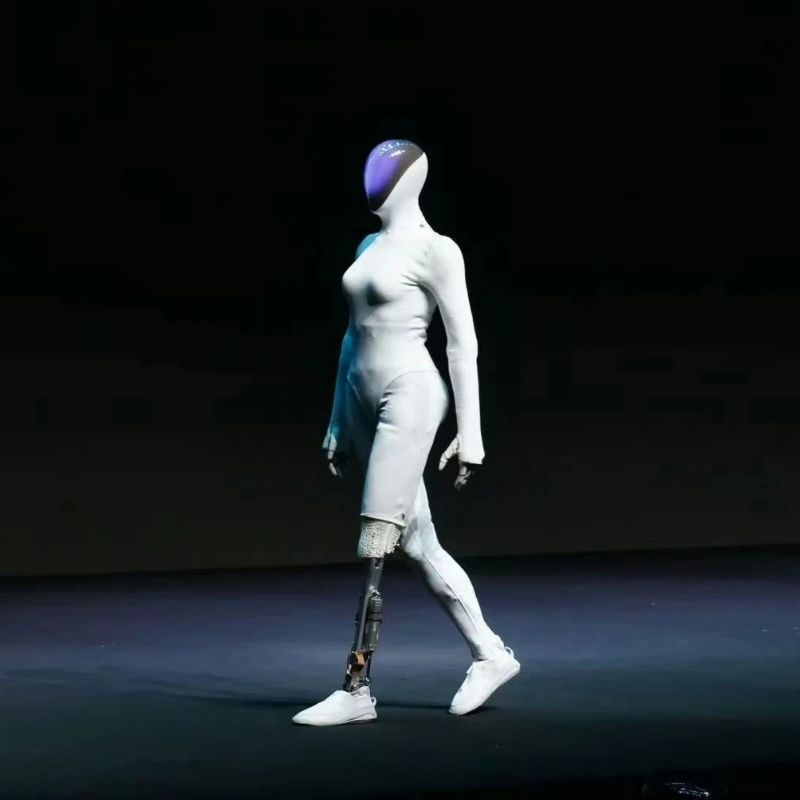
The future isn’t just imagined — it’s engineered.
XPENG’s Next-Gen IRON embodies our passion for technology, powered by an intelligent core to explore what’s next.
Follow to explore where it takes you.
Think @KemiBadenoch should be careful about what she wishes for pushing for Keir's resignation. Need more attacks against Reform than against a decent man, whose leadership is good for you. His repacemebt likely to be much worse.
There's a shocking fact about AI that nobody tells you: You can catch up to the public AI research frontier in just 2 weeks. Yes, really.
I've built a $150M annual revenue startup over the last 8 years and If I were to start a company today, I’d drop everything and go all-in on AI.
But like many busy software builders, I felt lost—overwhelmed by the noisy, crowded and fast-moving modern AI landscape. And I wasn’t alone.
So I spent my entire holiday diving deep into AI research—reading 30+ papers, watching hours of lectures, analyzing trends, and catching up to the research frontier.
✨ Here’s what I learned:
- You don’t need months (or years) to catch up.
- You don’t need a PhD or decades of ML experience.
- You need fewer than 20 papers and 2 weeks to understand the major breakthroughs shaping AI today.
It's because the technology is extremely nascent and most techniques that came before are no longer relevant:
- ChatGPT is barely 2 years old and Transformers are only 7 years old.
- Most game-changing discoveries happened within the last 4 years, driven by a few breakthrough ideas, scaling laws, and efficient matrix multiplication.
The biggest secret?
Many groundbreaking AI papers with thousands of citations are surprisingly simple and applied, like adding "let's think step by step" to the prompt, or simply asking the LLM over and over again to improve its answer (Self-Refine).
I realized there are tons of founders and builders in the same boat—wanting to dive deeper into AI but unsure where to start.
I've created an essential AI Guide that helped me catch up, in just 2 weeks, to the frontier of public AI research to figure out where the next opportunities and gaps were:
- Curated list of only the most important papers
- Simple explanations of key concepts
- Clear pathway to understanding the frontier of modern AI
It’s perfect for:
- Founders expanding into AI
- Builders wanting to innovate at the frontier of AI
- Investors looking to separate the signal from the noise
👇 Want the full guide?
- Like and Share this post
- Comment "AI Guide"
- I'll send you the complete guide
(ps, I’m also teaming up with @VishalVasishth, co-founder of @obviousvc with @ev (focused on large-scale societal impact companies like Twitter, Medium, Beyond Meat), to host a small meetup to discuss what's working and needs to be solved in the AI stack in SF. Message me if you're interested)
I don't really see a clear path where we keep an open internet that is not mostly full of AIs talking to each other. We can't reliably detect AI content, it is cheap and easy to generate, and there are lots of incentives to do so.
You can see the problem on all the social sites.
@kevinnbass And yet there is masses of misinformation everywhere. This is the age of the deep fake where you can make it seem like anyone is saying anything.
Misinformation is the same as propaganda and those who deny it's existence are those on whom the propoganda is working.
@ThePujaTeli@RoryStewartUK@X The Isaacson biography was better.. Musk is a brilliant man, but unfortunately is in his own echo chamber, which is making him rash and unstable. Some of his tweets are mad, bad and dangerous.