"Dear parents,
I saw this video post and I think it is worth sharing to a larger audience👇
NEVER ALLOW YOUR KIDS TO SPEND TOO MUCH TIME ⏰ ON THE Phone."
STOP COMPLAINING — IT’S LITERALLY TRAINING YOUR BRAIN TO BE NEGATIVE
Ever notice how some people seem stressed all the time, even over small things? Science says it’s not just their personality — it’s their brain.
Research shows that repeated complaining actually rewires your brain. Every time you complain, your brain activates stress and threat-detection circuits. Do it again and again, and those circuits get stronger. This process is called neuroplasticity — your brain becomes better at whatever you practice most.
So if you constantly talk about problems, frustrations, and annoyances, your brain learns to search for negativity. What starts as a bad day slowly turns into a habit of negative thinking. Over time, the brain treats the world as a dangerous place, even when nothing is wrong.
This is why chronic complainers often feel tense, irritated, or overwhelmed by small issues. Their stress level stays high because their brain is stuck in “alert mode.” Even minor problems feel big, because the brain has been trained to react that way.
The powerful part? This can be reversed. Stanford researchers explain that once you understand how your brain works, you can retrain it. Shifting how you speak — focusing on solutions, gratitude, or learning — builds new, healthier pathways. Your brain can be trained for calm, resilience, and clarity just as easily as it was trained for stress.
What you repeat, your brain remembers.
So choose your words carefully — you’re shaping your mind every day.
The first 10 years shape your child’s brain for life, and building strong early connections through simple daily brain exercises can support attention, memory, speech, and long term learning.
We now have evidence that gentle parenting doesn’t work.
Here’s an uncomfortable truth about parenting no one wants to say out loud:
The data is not kind to gentle parenting.
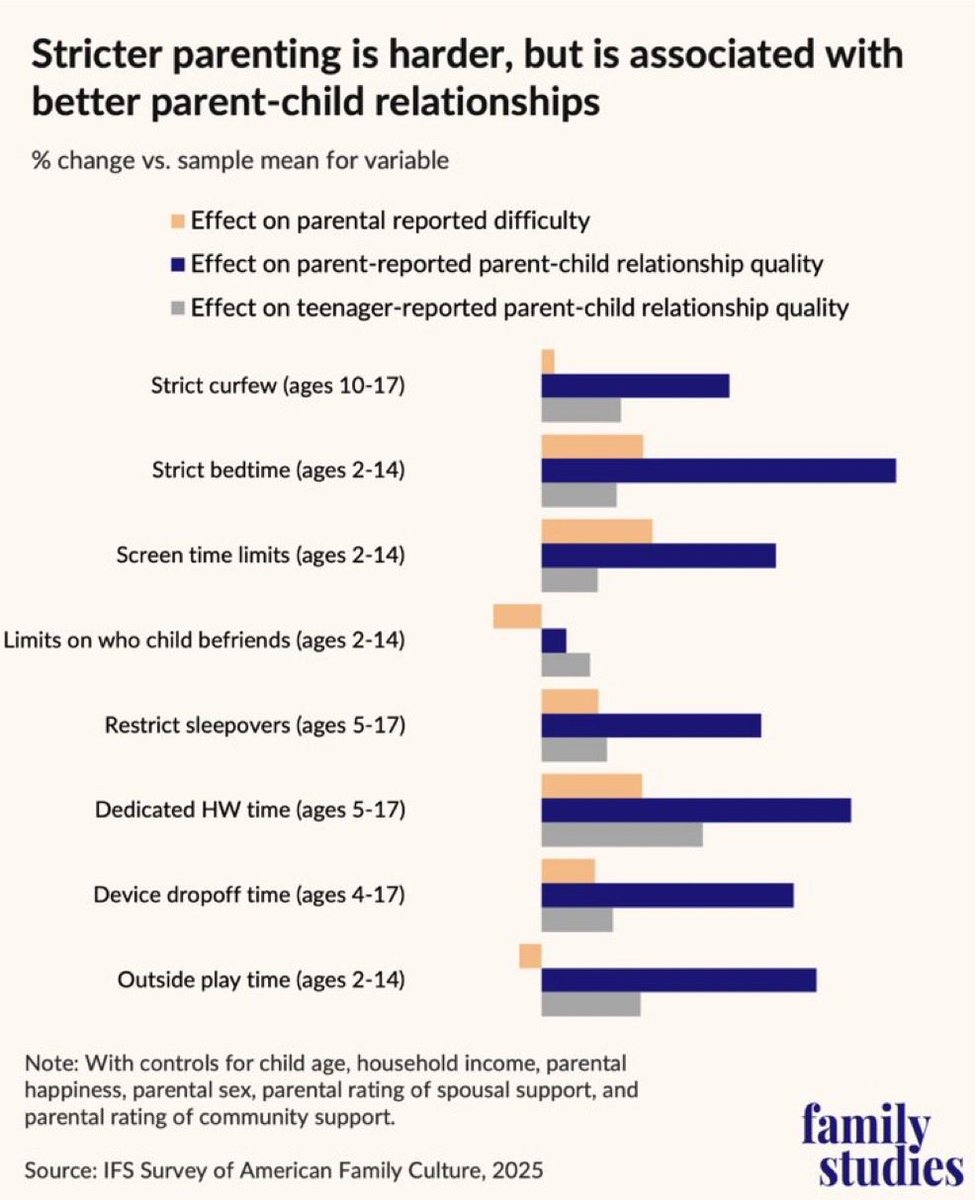
According to teenagers, strict curfews. strict bedtimes, screen limits, device drop off times, dedicated homework blocks, and sleepover restrictions IMPROVE higher relationship quality.
And yes, parenting difficulty goes up.
Of course it does. Leadership is harder than appeasement.
For the past decade we have been sold a watered down, Instagram friendly version of “gentle parenting” that often collapses into boundary avoidance, endless negotiation and emotional processing without enforcement. Parents terrified of saying no because they do not want to rupture connection.
But connection without authority is not connection. It is dependency.
When parents impose structure, the relationship improves.
Teenagers report better parent child relationship quality in homes with curfews and rules. Younger kids report better relationships in homes with screen limits and bedtimes. Even device drop off times correlate positively.
Why?
Because structure is not cruelty. Structure is love made visible.
A bedtime says: your brain matters more than your entertainment.
A screen limit says: your dopamine system is not fully developed and I will guard it until it is.
A curfew says: your safety matters more than your social standing.
That is not authoritarianism. That is caring.
Boundaries create friction. Friction creates growth. The parent absorbs the short term discomfort so the child does not pay the long term cost.
Children do not experience well calibrated limits as rejection. They experience them as stability. The human brain craves predictability. Predictability reduces anxiety. Reduced anxiety strengthens attachment.
That is why relationship quality goes up.
Notice something else in the data. The strongest effects are around time structure. Bedtime. Homework. Devices. Outside play. These are environmental constraints. They scaffold executive function.
The winning formula is not tyranny.
It is high warmth plus high structure.
The modern failure mode is high warmth plus low structure. That is just abdication of responsibility wrapped in empathy.
Children need leadership, not negotiation. They need adults who can tolerate their anger. They need boundaries that do not move every time emotions spike. They need someone whose prefrontal cortex is fully myelinated.
The harder path produces the stronger bond.
Because when a child feels that someone is strong enough to hold the line, they relax. And relaxed nervous systems build durable relationships.
A dad’s impact reaches well beyond routine interactions; his language and behaviors are pivotal in molding a child’s emotional, intellectual, and interpersonal growth.
( Videos below 👇)
Evidence reveals that encouraging and caring fathers cultivate durability, self-assurance, and effective emotional management, whereas critical or inattentive approaches can result in persistent mental harm.
Psychologists note that youngsters absorb parental responses from early on.
Constructive affirmation, motivation, and focused mentorship promote stable bonds, robust self-regard, and versatile handling techniques.
Conversely, disapproval, variability, or emotional detachment may heighten stress, melancholy, and conduct difficulties.
A father’s attendance, demeanor, and reliability deliver crucial indicators for comprehending limits, reliability, and community standards.
Modest regular engagements—like attentive listening, providing commendation, or exhibiting understanding—can profoundly affect a youngster’s advancement.
On the flip side, persistent unfavorable remarks or detrimental actions could erode assurance and influence enduring partnerships. Investigations highlight that deliberate, conscious rearing bolsters the family connection, arming kids with resources to manage life’s hurdles proficiently.
Dads who participate dynamically, convey optimistically, and exemplify beneficial habits not only bolster educational and communal accomplishments but also nurture sustained emotional wellness.
The potency of a father’s expressions and deeds is immense, establishing the groundwork for a child’s prospective psychological, sentimental, and communal vitality.
#MindBox #PsychologyFacts #ParentingTips
The videos below explore the profound influence of fathers on children’s emotional, cognitive, and social development, backed by psychological research and expert insights:
The father effect: Science behind dads impact on children https://t.co/ZA94UM9SpE This video delves into research showing how positive father-child relationships enhance resilience, reduce risks, and shape long-term emotional health.
How Do Fathers Matter for Young Children’s Development? (Volling) https://t.co/WdxHjTbKaA A lecture by Professor Brenda Volling highlighting fathers’ unique contributions to early social, emotional, and cognitive growth through interactions and activities.
The Importance of Fathers - Dr. Kyle Pruett https://t.co/qJGeoqP5r0 Dr. Pruett discusses the scientific evidence on fathers’ roles in fostering emotional regulation, self-esteem, and overall child well-being.
Myths vs Science – Dad’s Influence on Child Well-being https://t.co/6SrsUeGCzX This panel separates myths from research, emphasizing fathers’ effects on physical health, cognitive skills, and emotional resilience in children.
Becoming Dad: The Science of Fatherhood with Anna Machin https://t.co/ZloSr55son An evolutionary perspective on how fathers biologically and psychologically bond with kids, uniquely influencing development worldwide. 4
"How big would you dream if you knew you couldn't fail?
The only thing standing between you and your dreams… is you.
Self-doubt is the biggest killer of ambition.
Take small steps every single day… and watch how quickly you get there."