🔍 With its profound impact and relevance, the Wheyham Documentary takes us deep into the heart of the Nok Civilization, expanding our knowledge and opening our minds to an ancient world of innovation and artistry. 🎨🌾⠀ ⠀
#WheyhamDocumentary#NokCivilization
This artifacts was found in archaeological sites in Janjala, Kagarko Local Government Area of Kaduna state. It is currently preserved by Umaru Yusuf Portiskum at his residence in Kwoi Jaba Local Government area of Kaduna State.
Two face Terracotta Head
The artifact is a terracotta sculptural figure, vertically elongated and cylindrical in form. It represents a stylized human figure with two heads positioned side by side, both showing simplified facial features such as almond-shaped eyes, prominent brows
duality, leadership, or ancestral power. Such imagery may reflect beliefs in supernatural guardianship, ritual roles, or the coexistence of physical and spiritual realms. The decorative markings and body forms likely reference social identity, status, or ritual regalia…
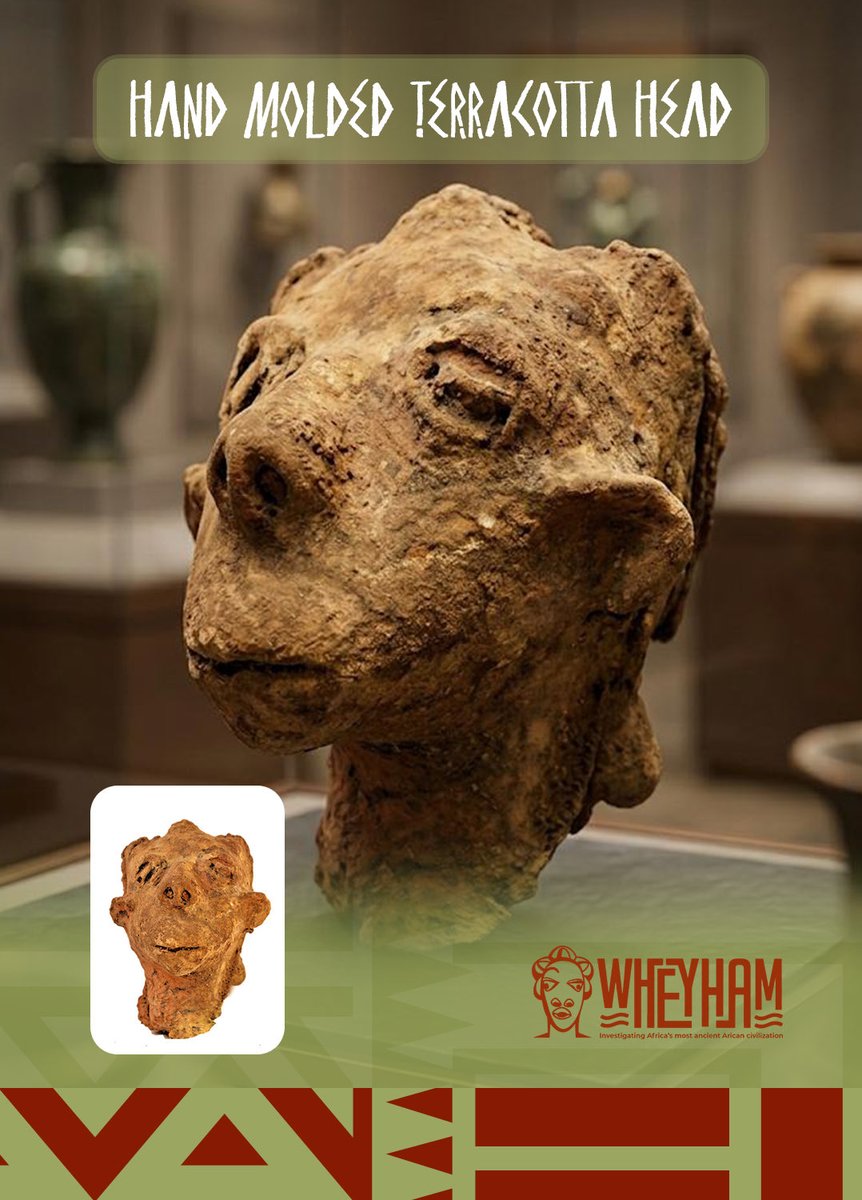
This is a hand-modeled and fired terracotta head, made from local reddish-brown to orange clay mixed with grog or temper for strength, showing a coarse, porous texture with visible inclusions and surface irregularities. The color is earthy terracotta.
This artifact is a fragment of a terracotta head. It is reddish-brown in color, with a coarse and grainy surface texture typical of fired clay mixed with small stone particles. The piece represents part of a human head. The facial features are worn but faintly visible, including
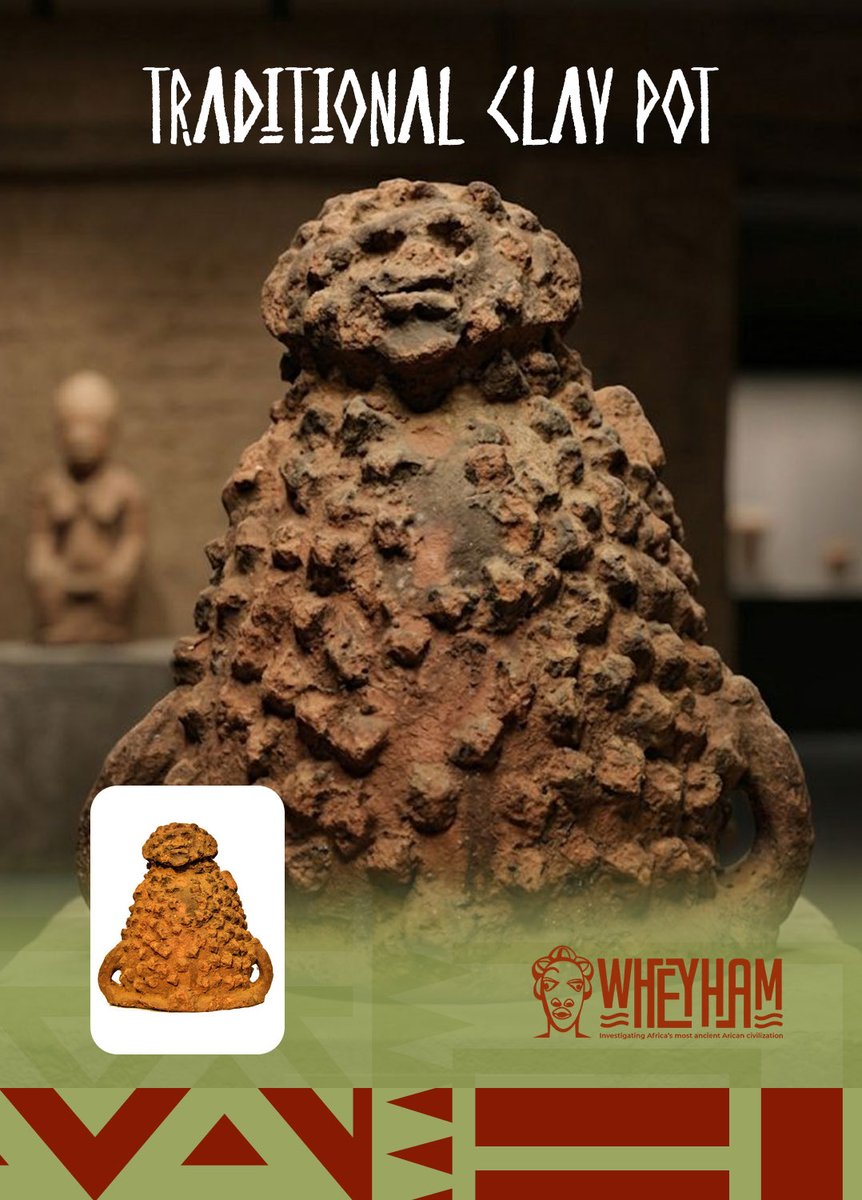
In Nok and related cultures, pottery was not only utilitarian but also a medium for artistic expression and cultural communication, reflecting technological skill and social values.
This is a handmade pot with a facial design at the top. The opening is beneath with two little handles.
The most striking feature is the dense surface decoration covering the lower body, rows of applied, knob-like protrusions arranged in a repetitive, textured pattern.
The elaborate surface decoration suggests that it was more than an ordinary household item; it may have symbolized status, identity, or spiritual beliefs within the community.