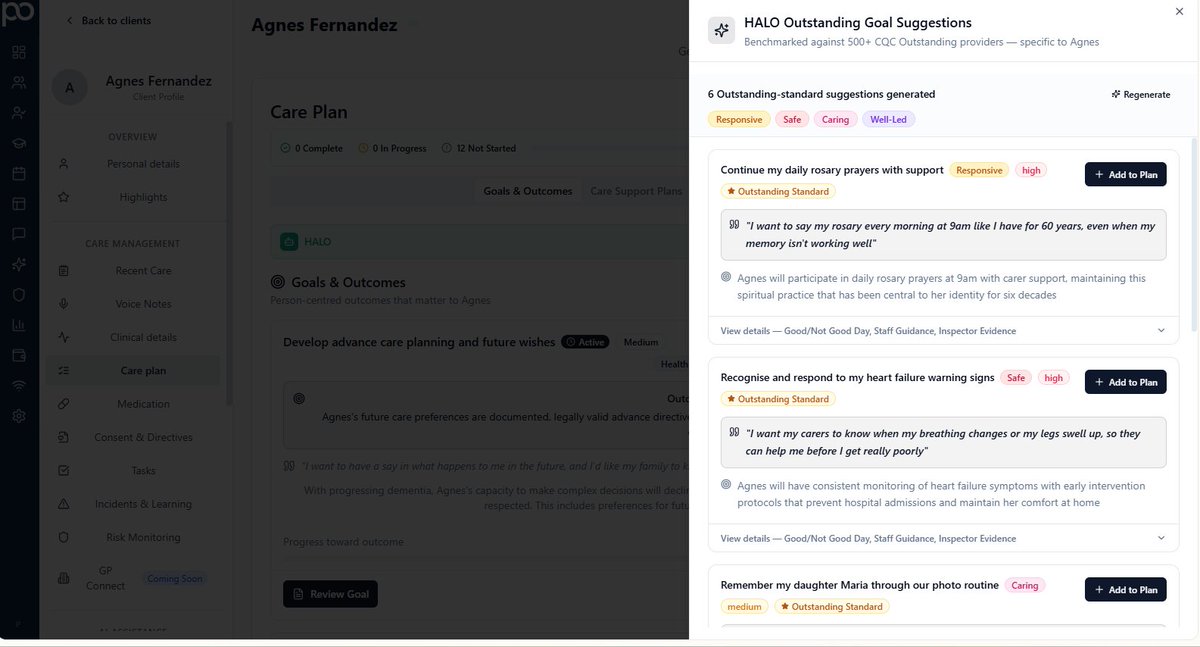
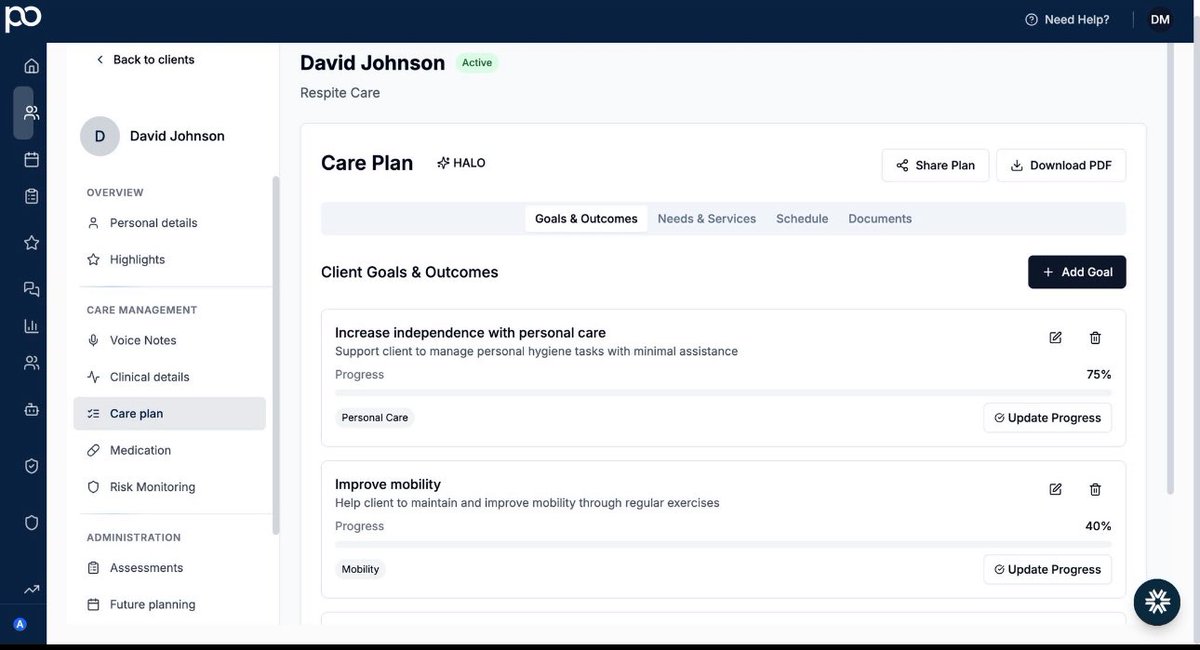
Care agencies pay £10k–£30k/year for outdated management software.
I’m 22 and just replaced ours with something I vibe coded using AI on @lovable @loveableshipped.
this one actually runs the admin itself.
The first AI-native homecare management system built this way in the UK.
@antonosika PulsePoint AI, An AI driven agency management system for the home-care industry which not only monitor predict and prevent risk for service users, & Automate admin
the new startup playbook looks NOTHING like the old one:
– most of your team will be part-time contractors, creators, and ai agents
– your first $1m will come from niching down. your next $10m will come from tastefully scaling out
– one agent spins out 50 longtail SEO pages from transcripts, support tickets, or user reviews
– startups are turning into QVC. except this time, you own the channel and the product
– onboarding will feel like texting a friend. static forms are dead
– every landing page rewrites itself based on who's viewing it (claude or chatgpt-4o + session data)
– every successful company will feel like a subculture. the product is just a portal in
– outbound are agents scraping, qualifying, and writing personalized intros 24/7
– customer support = 1 human backed by 5 lindy agents trained on every support ticket ever written
– micro-apps will outperform mega-tools. specific > general
– growth isn’t an afterthought. it’s built into the product (agent-invite loops, ai-powered referrals)
– if your product doesn't spark curiosity in 2 seconds, it’s invisible
– the best products of the next decade will be memes first, software second
– “launch” is outdated. leak it instead
– the new pricing model: $0 to play, $x to unlock identity
– you won’t sell software. you’ll sell outcomes, transformations, identity upgrades
– more people will leave big tech to build solo. not out of rebellion, but because their side hustles are more interesting
– the best homepages become a scene. your standard shadcn websites won’t hit the same
– default alive is low burn, small team, owned audience, high-leverage systems
– competitor research happens automatically. agents scrape, cluster, and surface positioning gaps
– your CRM isn’t stale. agents log calls, summarize deals, and write follow-ups before you hang up
– venture capital is optional
– customer success isn’t reactive. agents predict churn based on tone in support chats and usage
– we’ll see more “tiny empires”: one founder, one audience, and a constellation of tools they own
– bug reports are summarized, tagged, prioritized, and triaged by an agent before eng ever sees them
– IRL matters. founders become event planners
– most SaaS is overbuilt. the next wave wins by subtracting
– if your product can't be explained in a screenshot, it won't spread
– the creative director is the new power hire. taste is now a growth lever
– churned users get a custom winback campaign built by an agent based on why they left
– knowledge base builds itself from slack threads, loom links, and discord q&a (agents + gpt vision)
– product feedback loops are instant. users speak → agents summarize, prioritize, and mock ui changes
– most startups will die trying to be “all-in-one.” the winners do one weird thing stupidly well
– startup advice used to be: find a technical cofounder. now it’s: find a distribution edge
– your product isn’t finished when it works. it’s finished when people want to wear the hoodie
– the people who win distribution will own demand. the rest will rent it
if this felt like a glimpse into the future, it's because it is.
instead of bookmarking this, share it with a friend, and start building.
you don’t need permission to build like this.
you just need to start.
most people will ignore this.
but this is the new reality...
small teams, infinite leverage.
Happy building.
I'm rooting for you.
Yayy! I hit 13,000 Followers🎉
Here’s a gift from my side!
I’m offering a Figma file featuring 8 stunning headers absolutely FREE for next 48 hours.
Just like, repost, and comment "HERO" below,
(Make sure you’re following so I can DM you)
Each header is uniquely designed by us from scratch.
Academic Publishing is Broken—@nobleblocks Can Fix It 🚀
Years of research. A cure for a rare disease. But publishing costs $10K. Can’t pay? Your breakthrough gets buried.
This is the broken system researchers face. Here’s how @nobleblocks is changing the game: 👇🧵
------------------------------------------
Why This Current System Hurts Everyone
1. Publishing Costs Are Outrageous 💸
Researchers want to share their work—but can’t afford to. Journals like @Nature charge over $11,000 USD to make an article open access. If you don’t pay, your work stays locked behind a paywall where institutions or individuals have to pay $30-$50 just to read it.
It’s a lose-lose. Researchers struggle to publish, and everyone else—from independent scientists to doctors in underfunded hospitals—can’t afford to read what’s published.
2. Rare Diseases Are Left Behind 🧬
Over 300 million people live with rare diseases, yet only 5% of these conditions have treatments. Why? Because there’s no “market” for them. Pharmaceutical companies don’t see a return on investment, so they don’t bother.
Meanwhile, chronic treatments for diabetes or heart disease rake in billions every year. Why fund a cure when you can sell treatments forever? 🤷♂️
3. Data Gets Buried 📉
Here’s something most people don’t realize: A huge chunk of clinical trial results—especially the ones with negative outcomes—never gets published. Not because they aren’t important, but because they don’t serve the bottom line.
This distorts the scientific record and wastes time as other researchers repeat the same mistakes.
-------------------------------------------
What NobleBlocks Brings to the Table 🌟
1. Community-Driven Funding 💡
Forget waiting for Big Pharma or government grants. NobleBlocks introduces bounty pools where anyone can fund neglected areas of research. Think rare diseases, open-source vaccines, or global health crises. If the community cares, the funding is there.
2. Radical Transparency 🔍
Everything on NobleBlocks is recorded on the blockchain. Publications, peer reviews, datasets—it’s all permanent and transparent. Even negative results stay public, so future researchers can learn and build on them instead of starting from scratch.
3. No More Paywalls 🚪🔓
On NobleBlocks, research is open-access by default. Blockchain ensures the work is immutable and transparent, making it permanently accessible to everyone—whether you’re at a top university or in a place where journals are unaffordable
4. Fair Compensation 💰
Peer reviewers and editors play a crucial role in making research reliable and publishable, but they’re rarely paid for their work. Reviewers spend time checking the quality of studies, while editors oversee the whole process, often without recognition or rewards.
NobleBlocks changes this by rewarding everyone involved with $NOBL tokens. Researchers get support for publishing their work, and reviewers and editors are fairly compensated for their contributions. This makes the system more fair and encourages more people to participate.
5. Balancing Privacy and Trust 🛡️
Not everything can or should be fully public. NobleBlocks uses Zero-Knowledge Proofs (ZKPs) to let researchers validate their work while keeping sensitive data private. It’s the best of both worlds.
------------------------------------------
With the platform launch just weeks away, this might be one of 2025’s most exciting opportunities in decentralized science. 🧠
DYOR and stay sharp—don’t let this one pass you by. 👀
Thanks for reading 😎
#DeSci #nobleblocks $NOBL #DYOR