Most people still think @Polymarket is a place to gamble.
I think it's one of the most fascinating information markets on the internet.
Every price represents the collective opinion of thousands of people who are willing to put real money behind their beliefs.
The more confident traders become, the more prices move.
That's why Polymarket often reacts to breaking news faster than traditional media or even social media.
A press conference.
A lineup leak.
An economic report.
A political announcement.
Everything gets reflected in the market almost instantly.
Take tomorrow's France vs Spain match as an example. The current probabilities aren't predictions made by Polymarket itself.
they're simply result of thousands of traders buying and selling based on the information they have.
France is currently priced around 41¢.
That means if you believe France's real chance of winning is much higher than 41%, buying YES could be a good trade.
But here's the interesting part.
You don't even need France to win to make money.
If the market moves from 41¢ to 55¢ before kickoff because of breaking news or strong public confidence, you can simply sell your position and take profit without waiting for the final whistle.
Arcus is not just another cryptocurrency exchange.
It is a flagship trading app built on @RobinhoodApp Chain
Robinhood's new blockchain designed to bring real-world assets to the chain and make them accessible 24/7.
The vision behind @arcus_xyz is simple
Create a single, self-governing platform where users can seamlessly trade:
Tokenized US stocks
Crypto assets
Commodities
Market indices
Perpetual futures
Unlike traditional markets that close every afternoon, assets on Arcus can be traded around the clock.
Instant trading is designed to be fee-free, while roadmap also includes advanced features like using tokenized shares as collateral for perpetual positions, integrated liquidity and access to private and pre-IPO markets as tokenization continues to evolve.
With Robinhood China providing the infrastructure and Arcus building the trading layer, this looks like a glimpse into the next generation of on-chain finance.
Definitely one of the projects I’ll be keeping my eye on.
Most people think that Polymarket is just another betting platform! It’s not.
Each market is actually a live probability market where thousands of traders are constantly pricing in an outcome.
If a market says that Bitcoin has a 68% chance of reaching a certain price, that doesn’t mean that @Polymarket has set the odds.
It simply means that people are currently willing to buy the Yes stock at around $0.68 and the No stock at around $0.32.
The price itself becomes the collective market prediction.
If you buy the Yes at $0.35 and the event eventually happens, each winning share will be worth exactly $1.
You don’t have to wait for the event to end, however.
If new information increases the probability from 35% to 60%, you can simply sell your shares early and lock in your profit.
This is what sets Polymarket apart from traditional sports betting sites.
You are not betting against the casino.
You are trading probabilities with people who are against you.
Every headline, every interview, every economic report and every onchain event can change the market in a matter of seconds.
Sometimes the best trade is not predicting the final outcome.
The prediction is how you will change it before others change their minds.
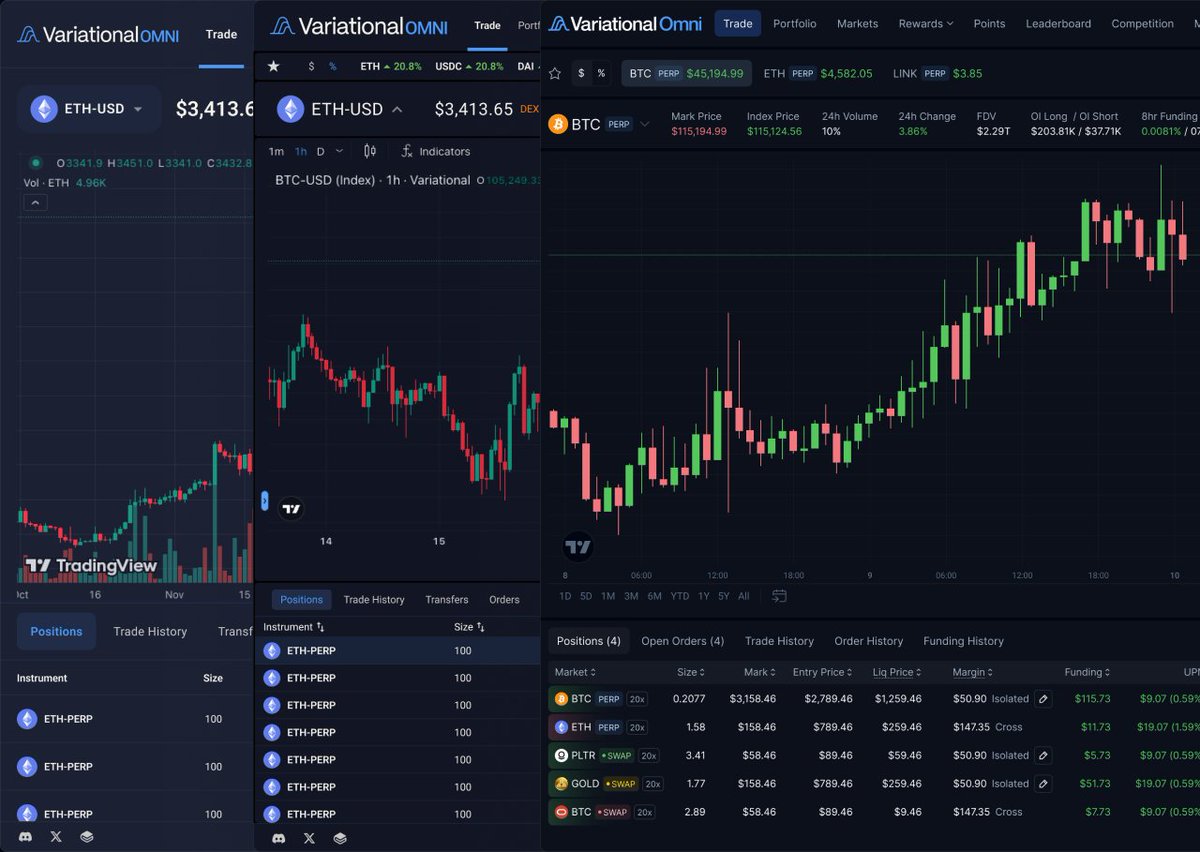
What makes @variational_io interesting is not just another scoring campaign.
It’s the model behind it.
Omni is built on the Variational protocol, an infrastructure for onchain derivatives trading.
Rather than relying on external market makers, the platform uses its own integrated liquidity engine (OLP), allowing traders to access deep liquidity across hundreds of markets while paying no trading fees. Revenue comes from spreads rather than commissions, with a portion of that value channeled into trader rewards like points and loss refunds.
Could it become the next @HyperliquidX ?
It’s impossible to predict.
But projects that combine real world product usage, sustainable incentives and an active scoring system are usually worth checking out long before the market starts talking about them.
The Variational UI has progressed a lot over the years, from the testnet & early mainnet "v1" UI to the recently updated "v3."
All shaped by feedback from traders.
Summer of Football feels like more a marketing campaign.
With the excitement around the World Cup reaching its peak, my guess is that this could be related to predicting the semifinal and final matches.
We'll have to wait and see what @base has up its sleeve.
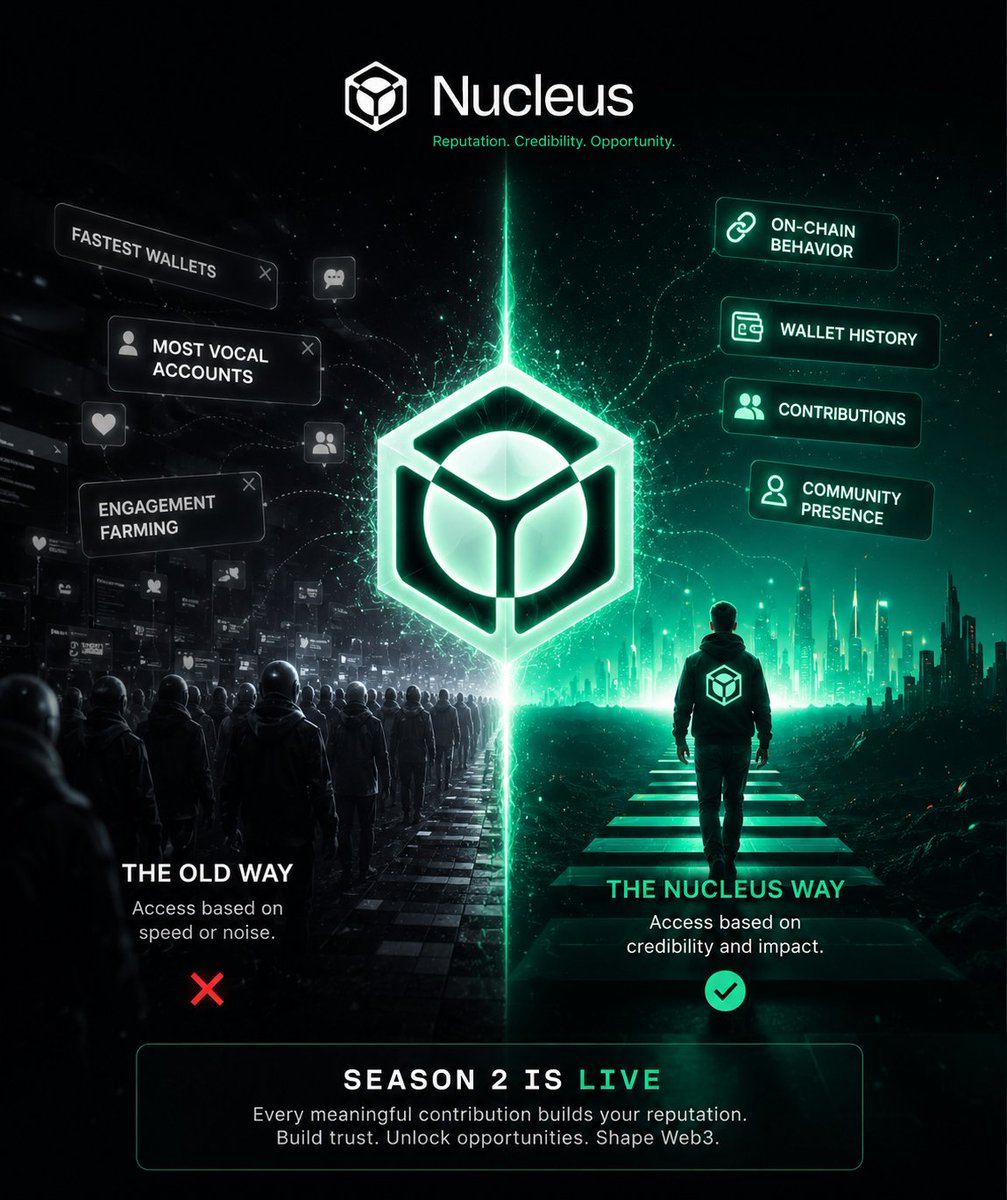
I’ve seen a lot of projects that reward people who make noise but @NucleusCodes is trying something different.
Your reputation is built on what you actually do
your wallet activity, your contributions and how you interact with the community.
Season 2 is live and I love the idea that every quality contribution can help unlock better opportunities in future.
People think they missed @NucleusCodes Season 2 because they didn't start on day one.
I thought the same But after just 2 days of contributing, I climbed to Rank #612 on the leaderboard.
What makes Nucleus interesting is that it's not just another points campaign. It's building an onchain reputation system where your contributions, wallet activity, and consistency can help unlock future opportunities.
There are still 38 days left in Season 2, so if you've been waiting for the right time to start, this is it.
Most people today won’t notice B20 but creators will likely notice it.
A native token standard that maintains ERC-20 compatibility while making token creation more efficient is exactly the kind of infrastructure that helps an ecosystem grow.
Normally, launching a token means writing a contract, securing an audit, and hoping nothing was missed.
B20 turns that into one transaction, while maintaining full ERC-20 parity.
Supply cap, admin, and minting are configured at launch without needing to build separate tools.
What I really like about @ClashoAI is the campaign structure.
Instead of constantly thinking about the type of content a project wants, you get a clear guideline, clear expectations and the freedom to respond in your own style.
This balance is important because it keeps campaigns focused while encouraging creativity.
For creators, this means less guesswork and more time spent creating something meaningful and for brands, it means getting content that’s actually useful instead of hundreds of posts that are almost the same.
It’s a win win for both side.
If you’re posting on X every day, join @clashoAi now.
Instead of posting fun and hoping the algorithm notices you, you can contribute to real brand campaigns with a specific purpose.
I like that the platform encourages creators to write in their own voice rather than copying advertising templates.
Authentic opinions are more valuable than generic marketing, and audiences can usually tell the difference.
It’s not just another platform for posting content
it’s a place where thoughtful creators have a better chance of being seen.
Clasho beta is live.
Anyone can create.
Anyone can earn.
Giving you the power to work with the biggest brands in the world.
Calling all influencers, creators, and earners.
$25K up for grabs.
https://t.co/98CzlrCG5Y
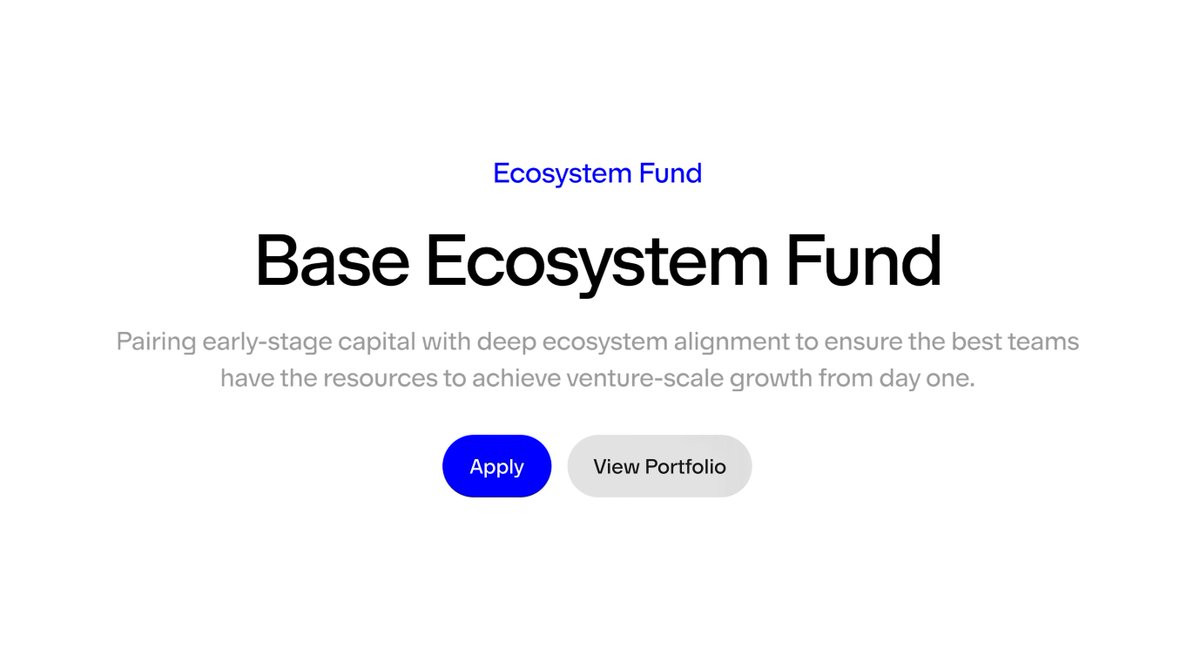
It fits perfectly with everything else Base has been doing recently, partnering with Cloudflare on x402 to make stablecoin payments part of the web, introducing new standards like B20 or providing funding and support for early-stage teams, focus has remained remarkably consistent:
making it easier to build real products on the chain.
Most people judge a blockchain by its day to day metrics but ecosystems don’t happen overnight.
They grow when developers have the resources to test, release and continually improve their products. Supporting over 30 teams is more than just another announcement it’s another sign that @base is thinking about where the ecosystem will be in the next few years, not just where it is today.
People think they missed @NucleusCodes Season 2 because they didn't start on day one.
I thought the same But after just 2 days of contributing, I climbed to Rank #612 on the leaderboard.
What makes Nucleus interesting is that it's not just another points campaign. It's building an onchain reputation system where your contributions, wallet activity, and consistency can help unlock future opportunities.
There are still 38 days left in Season 2, so if you've been waiting for the right time to start, this is it.
Partnership between @Cloudflare and @base is bigger than it seems.
If developers can easily charge for APIs, datasets, websites or AI tools using stablecoins via x402, monetization will become part of the internet itself, rather than something that requires third-party payment systems.
It’s the kind of infrastructure upgrade that could quietly accelerate on-chain adoption.
One of the reasons I’m increasingly bullish on @base is that the conversation no longer feels centered around the chain itself.
focus has shifted to the applications, the creators and actual user activity that happens on top of it and I think that’s exactly where any successful ecosystem needs to end up.
Infrastructure is important, but only because it enables people to build products that others actually want to use.
It seems like every week there’s another project launched, another team testing new ideas or another feature that makes on-chain interaction a little more seamless.
This is the kind of progress that will only increase over time and if Base continues to move in this direction, I wouldn’t be surprised if be biggest..
I’ve wondered why so many Web 3 campaigns struggle to build long-term communities.
Projects spend weeks building hype, thousands of people compete to be whitelisted, the mint runs out, and then a large portion of those wallets disappear within days.
The campaign succeeds on paper, but the community doesn’t actually grow.
That’s why @NucleusCodes caught my attention.
Rather than asking who is the most vocal on social media, it tries to understand who has truly earned trust through their on-chain history and community engagement.
Your wallet isn’t judged by a single transaction or a single post
it’s evaluated by a combination of signals that evolve over time.
Season 2 is another step toward this vision.
Every meaningful contribution becomes part of your credit, making future opportunities seem earned rather than randomly distributed.
If Web 3 is to move beyond agrarian culture, systems like this are likely to play a much larger role.
One of the biggest problems with Web 3 is that access is often divorced from credibility.
Many campaigns still reward the fastest wallets, the most vocal accounts, or people who simply know how to generate engagement.
This approach creates short-term attention, but doesn’t always attract users who will actually support a project once it launches.
@NucleusCodes takes a different approach. Instead of looking only at social metrics, it analyzes on-chain behavior, wallet history, contributions and community presence to create a layer of credibility that evolves over time.
The goal isn’t just to distribute rewards, but to connect the right opportunities with the right participants.
Season 2 is live and every meaningful contribution helps boost your profile. If trust becomes the foundation of Web 3, building it early could be one of the smartest things you do.
Nucleus is building a reputation layer for Web3
one that combines your onchain activity, social presence and real contributions to determine what opportunities you actually deserve.
Season 2 is live and this time it's not about grinding for points. It's about building a reputation that grows with every meaningful action.
In the long run, reputation may become the most valuable asset your wallet owns.