Philly Cheesesteak Casserole
Ingredients
1 Ib ground beef
1 small onion, sliced
1 green bell pepper, sliced
8 oz mushrooms, sliced
2 cloves garlic, minced
1 cup shredded provolone or mozzarella
½ cup cream cheese
½ cup beef broth
1 tbsp Worcestershire sauce
Salt and black pepper
Directions
Brown the ground beef in a skillet; drain excess grease.
Add onion, bell pepper, mushrooms, and garlic. Cook until softened.
Stir in cream cheese, beef broth, Worcestershire sauce, salt, and pepper.
Transfer to a baking dish and top with shredded cheese.
Bake at 375°F (190°C) for 15-20 minutes, until bubbly and golden.
Serve hot.
Life doesn't need to be complicated. Instead of screeching 'Free Palestine', you could simply just tell everyone you're a narcissistic, bullying prick.
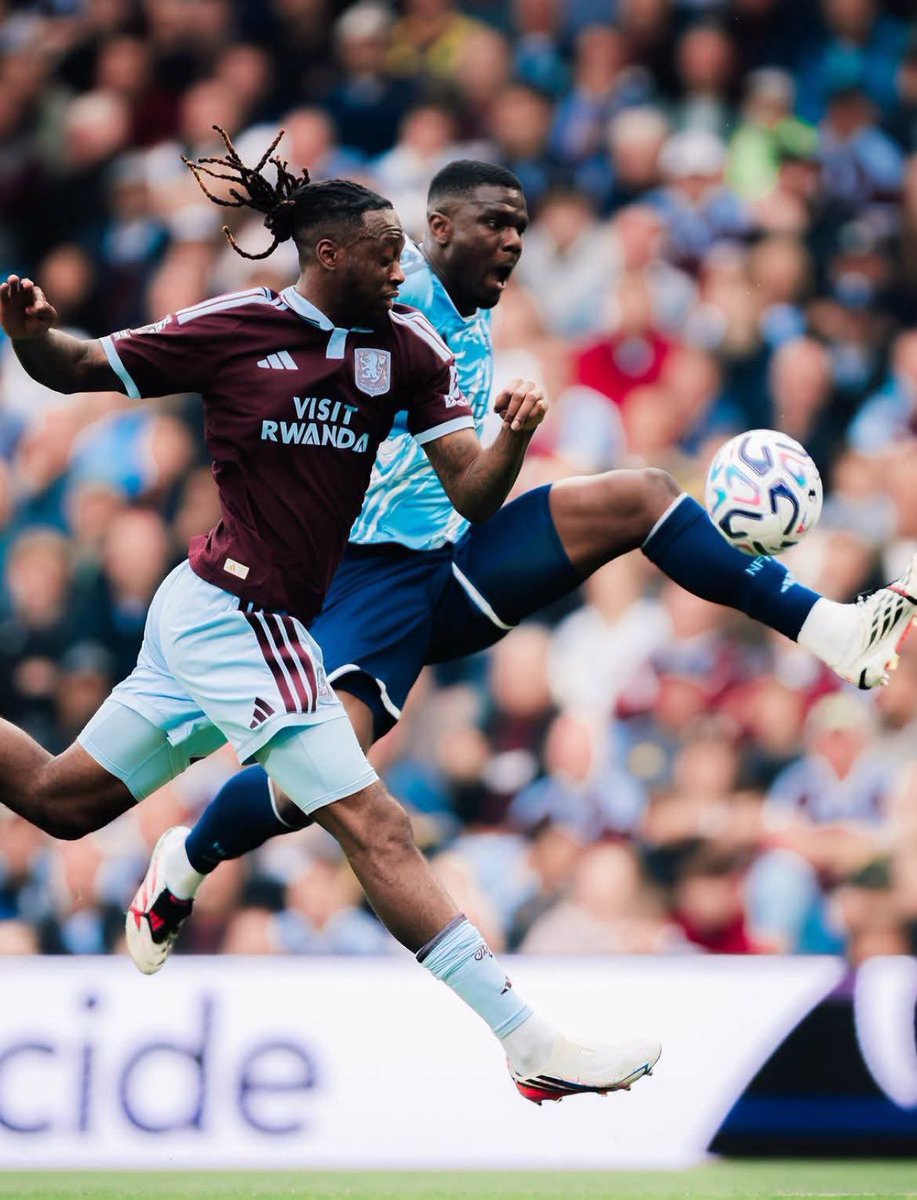
Ousmane Diomande’s stats against Aston Villa:
90 minutes
97% pass accuracy
11 clearances
4 headed clearances
3 ball recoveries
2 ground duels won
80% aerials won
Bloody outstanding on his first PL start 🇨🇮
#NFFC
👁️NEWS: Home Secretary Shabana Mahmood calls on police chiefs to use Orwellian facial recognition at protests
"The Home Secretary’s calls for a dystopian constellation of mask bans, facial recognition and ANPR to police lawful expression are a chilling indictment of our right to protest.
No community deserves to live in fear, but a policing response to offensive or controversial views must not dilute rights that we all rely on.
The police must deal with criminal offences robustly, but stripping lawful protestors of their anonymity merely for expressing controversial views is a dark path to go down.
Protestors across the political spectrum, from environmental campaigners and anti-capitalism hacktivists to dissidents in Hong Kong, have used masks to protect their identity against legitimate concerns, including the loss of their job or income, press and media attacks, social ostracisation and unwarranted intelligence gathering by the police.
Allowing the state to restrict protest rights in relation to views we don’t like sets a dangerous precedent for us all when we want to challenge the status quo or speak truth to power."
- Jasleen Chaggar, Senior Legal and Policy Officer
We Don't Want a Tourist Tax.
So Andy Burnham's latest move has been to delegate unlimited powers on the tourist tax/holiday tax to regional mayors.
This will be devastating news for hospitality businesses in areas like the East Midlands where Labour Mayor Claire Ward has unashamedly declared that she is looking forward to introducing this new tax in Nottinghamshire & Derbyshire.
Well Nottinghamshire & Derbyshire businesses are looking forward to seeing the back end of Labour.
A tourist tax will be a nail in the coffin for hospitality as it will make it more expensive for all people to take a holiday in the areas they are implemented.
A Reform government will axe this tax and keep your bills down.
I will be writing to the East Midlands Mayor to urge her to do the same in Nottinghamshire & Derbyshire.
The Steak Bake Battalions
I have said it for years.
The men who will save this country can be found every morning, from six until half past eight, at almost every Greggs in the land.
They are there before the office lights come on. Before the besuited pen-pushers arrive for their lattes. Before the morning fills with pushchairs, school runs and meetings about meetings.
They are already awake. Already moving. Already at work.
You will know them.
Men in high-vis and cargo shorts. In battered work trousers and steel toe-capped boots. Sometimes in hard hats. Paint-spattered. Plaster-caked. Oil beneath their fingernails. Bags beneath their eyes.
They queue for coffee, bacon rolls and Steak Bakes.
The banter is merciless. The humour is dark. The language is occasionally appalling. But the fellowship is real.
They are the grafters.
Tradesmen. Engineers. Drivers. Fitters. Welders. Bricklayers. Scaffolders. Electricians. Plumbers. Mechanics. Machine operators. Small businessmen. Employers and employees.
Working-class men. Middle-class men. Englishmen, Scotsmen, Welshmen and Northern Irishmen.
British men.
While much of the country still sleeps, they are leaving their wives, their children and their warm homes. They climb into cold vans. They drive through darkness and rain. They go where the work is.
They build Britain.
They keep the lights on and the water flowing. They repair the roads. Raise the scaffolding. Lay the bricks. Weld the steel. Fix the boilers. Clear the drains. Restore the roofs. Mend what is broken.
They rarely appear on television.
Nobody invites them onto fashionable panels. Nobody asks what they think. Nobody in Whitehall seems particularly interested in whether they can afford another van, another apprentice or another year of taxes, regulations and rising costs.
Yet without them, the country stops.
Completely.
These are the descendants of the men of Agincourt and Waterloo. Of the Somme and Dunkirk. Of D-Day, Korea, the Falklands, Iraq and Afghanistan.
Not trained soldiers, most of them. But recognisably of the same temper.
The same stubbornness. The same humour in adversity. The same refusal to make a song and dance of hardship. The same instinct to shoulder the load, finish the job and look after the man beside them.
They carry an inheritance shaped across centuries. Celt and Pict. Roman and Saxon. Viking and Norman. Generations forged by cold seas, hard ground, long winters, dangerous work and war.
Their forebears built ships, railways, bridges, factories and cities. They crossed oceans. They defeated Napoleon, Hitler and Galtieri. They created an empire of extraordinary reach and consequence, and then spent British blood and treasure destroying the slave trade across much of the world.
They were not flawless men. No nation is flawless.
But they were formidable.
And these men are formidable still.
They are not extremists. They are not fanatics. They do not spend their days raging online. Most ask for very little.
A fair wage. A decent home. Safe streets. A future for their children. The freedom to speak plainly. And a country that remembers who built it.
But beneath the dust, the laughter and the apparent indifference, something remains.
A deep attachment to home.
A quiet patriotism.
A line that can be pushed only so far.
When this country finally decides that mass immigration must end, that integration must mean something, that borders must be real and that Britain must remain recognisably British, it will not be delivered by consultants, commentators or career politicians.
It will be delivered by the people who already carry Britain on their backs.
They are out there every morning.
Millions of them.
Waiting patiently in the half-light. Vans lined along the kerb. Engines ticking. Reflective jackets catching the first grey light of dawn.
Coffee in one hand. Steak Bake in the other.
The backbone of Britain.
The Steak Bake Battalions.
By the end of the war one British engine was powering the Spitfire, the Hurricane, the Lancaster, the Mosquito and the American Mustang.
Rolls Royce could not build anywhere near enough of them, so the British government asked a car company for help.
The car company studied the drawings and came back with a problem.
Rolls-Royce's tolerances were too loose.
This is the story of the Merlin..🧵1/4
The threat level against the country continues to grow yet the Burnham government has told the British Army to cease major exercises with Challenger 2 tanks and Apache gunships to save money.
Our Bus-Conductor-in-Chief can find money for all sorts of gimmicks that allow him to play to the gallery. But not for essential defence spending. Unforgivable.
Eubank wasn’t the champion Steve Collins was until he pulled out of the fight and retired Eubank took the fight at a few day’s notice he was preparing for a non title fight at Light Heavyweight and still pushed Calzaghe all the way wobbling him right on the bell at the end
There is a wall of concrete in China holding back so much water that 2 scientists sat down and calculated what it does to the length of a day on Earth.
It does something. They measured it.
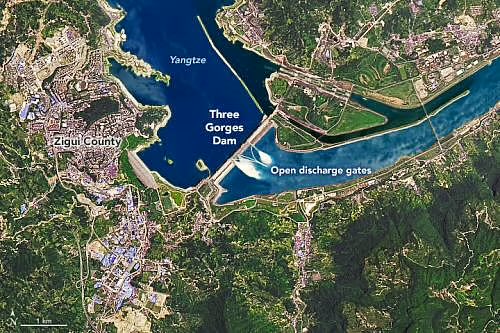
The Three Gorges Dam sits on the Yangtze. Its reservoir holds about 40 cubic kilometres of water, roughly 10 trillion gallons, and it holds it 175 metres above sea level.
That is 39 trillion kilograms of water, lifted up and parked in one place.
The physics is the same as a figure skater. Arms pulled in, they spin faster. Arms out, they slow down. Move mass away from the axis of a spinning object and it slows.
Earth is a spinning object.
In 2005, Benjamin Fong Chao at NASA Goddard and Richard Gross at the Jet Propulsion Laboratory worked out the numbers. A full Three Gorges reservoir would lengthen every day on Earth by 0.06 microseconds, and shift the position of the pole by about 2 centimetres.
The reservoir first reached that level in October 2010.
Nobody has ever missed a train because of it. That is not the point.
The point is the category of thing that normally does this.
The 2004 Sumatra earthquake, the one that caused the Indian Ocean tsunami, shortened the day by 2.68 microseconds. The 2011 Japan earthquake sped the planet up by about 1.8 microseconds.
Those are earthquakes. Tectonic plates. Forces that build over millions of years.
The dam did it with standing water, because somebody decided to put it there.
And it is not alone. A study out of Harvard found that the water held behind roughly 7,000 dams built since the 19th century has shifted the position of the North Pole by about 1 metre, and very slightly lowered global sea level, because all that water is sitting on land instead of in the ocean.
Groundwater does it too. Between 1993 and 2010, humans pumped out around 2,150 gigatonnes of it. That raised sea level by more than 6 millimetres and moved the Earth's rotational axis about 80 centimetres to the east.
We are already at the scale where the planet responds.
Now the part that matters for anyone living in India or Bangladesh.
In July 2025, machinery arrived at the edge of a canyon in Medog county, in southeastern Tibet. Premier Li Qiang announced the start of construction on what will be the largest hydropower project on Earth.
It is on the Yarlung Tsangpo. The river drops about 2,000 metres in the space of 50 kilometres there, through one of the deepest canyons in the world. That drop is the reason engineers want it.
The projected output is around 3 times that of Three Gorges. The cost is put at about 170 billion dollars. Completion is expected around 2035.
The Yarlung Tsangpo does not stay in Tibet. It crosses into India, where it is called the Brahmaputra, and then flows into Bangladesh.
Millions of people plant and harvest according to when that river rises and falls. Fish migrate on it. The silt it carries builds the land they farm on.
All of that is decided upstream, in another country, by whoever operates the gates.
Nobody has publicly calculated what a structure 3 times the size of Three Gorges does to the spin of the planet.
And it is going into the Himalaya, which is the most seismically active mountain range on Earth, and which spent this week demonstrating exactly how fast water can come down it.
The old assumption was that geology moves slowly and humans move fast, on separate timescales that never really touch.
That assumption is finished. We are now building at the scale where the Earth notices.