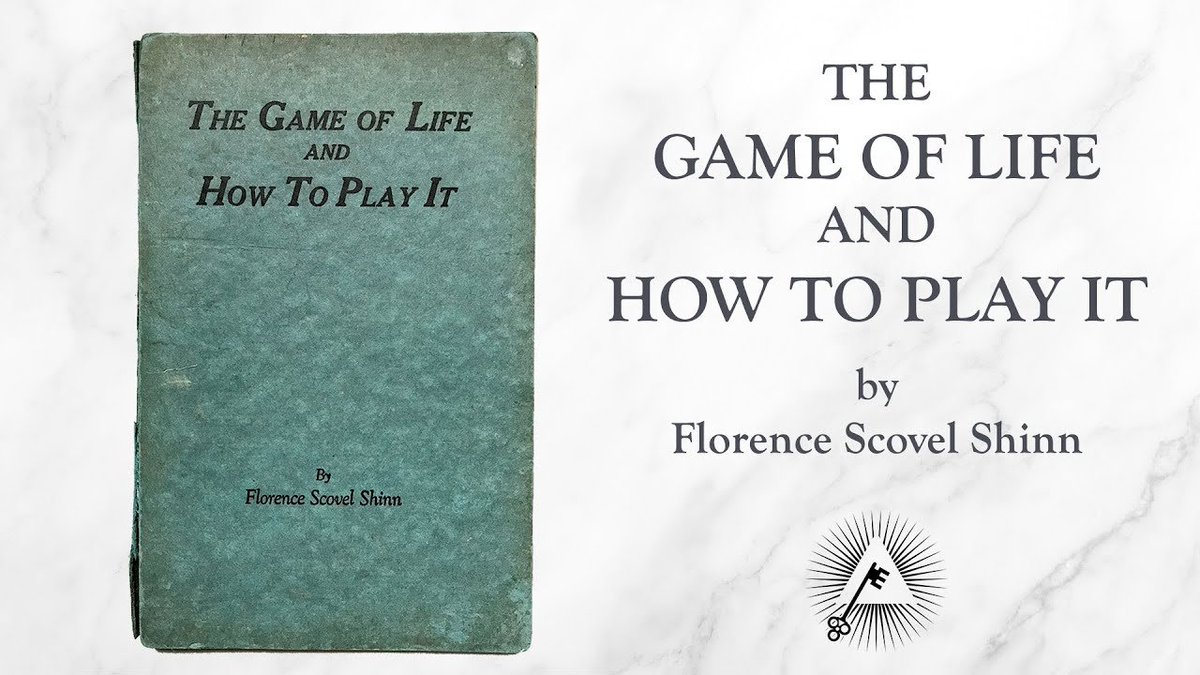
In 1925, a woman who had never studied psychology, philosophy, or neuroscience wrote a 100-page book that described exactly how your thoughts construct your reality, decades before science had a name for any of it.
Her name is Florence Scovel Shinn, and almost nobody talks about her. She was not an academic. She was not a therapist. She was a commercial illustrator living in New York who began teaching small private groups after watching the same pattern destroy the same kinds of people over and over.
They were intelligent, they were hardworking, and their lives were not working. The book she eventually wrote from those sessions has never gone out of print in a hundred years.
Here is the framework inside it that I have not been able to stop thinking about.
Shinn argued that every human being is playing a game they do not know the rules to. The game is not business or relationships or money. The game is the relationship between what you think and what you get. And the core rule is one most people spend their entire lives violating without realizing it.
Your subconscious mind does not understand the difference between what you want and what you fear. It responds to the dominant image you hold, not the dominant wish.
Which means the person who constantly imagines failure while claiming to want success is not being unlucky. They are being precise. The subconscious is executing exactly what it was given.
She called this the law of karma, but stripped of any mysticism the mechanism is almost mechanical. Every thought is a cause.
Every condition in your life is an effect. Change the cause and the effect must change, because it cannot do anything else.
The insight that floored me was her argument about words. She believed spoken words carry a charge that most people waste entirely by speaking carelessly.
The person who constantly says "I never have enough" is not describing reality. They are issuing a standing order.
What neuroscience now calls self-fulfilling belief loops and cognitive priming, Shinn described in plain language a century ago with no laboratory and no funding.
She just watched people carefully enough to see what the researchers eventually proved.
The game was always the same. Most people just never learned they were playing it.
“How can I get a quick start on writing a new book?”
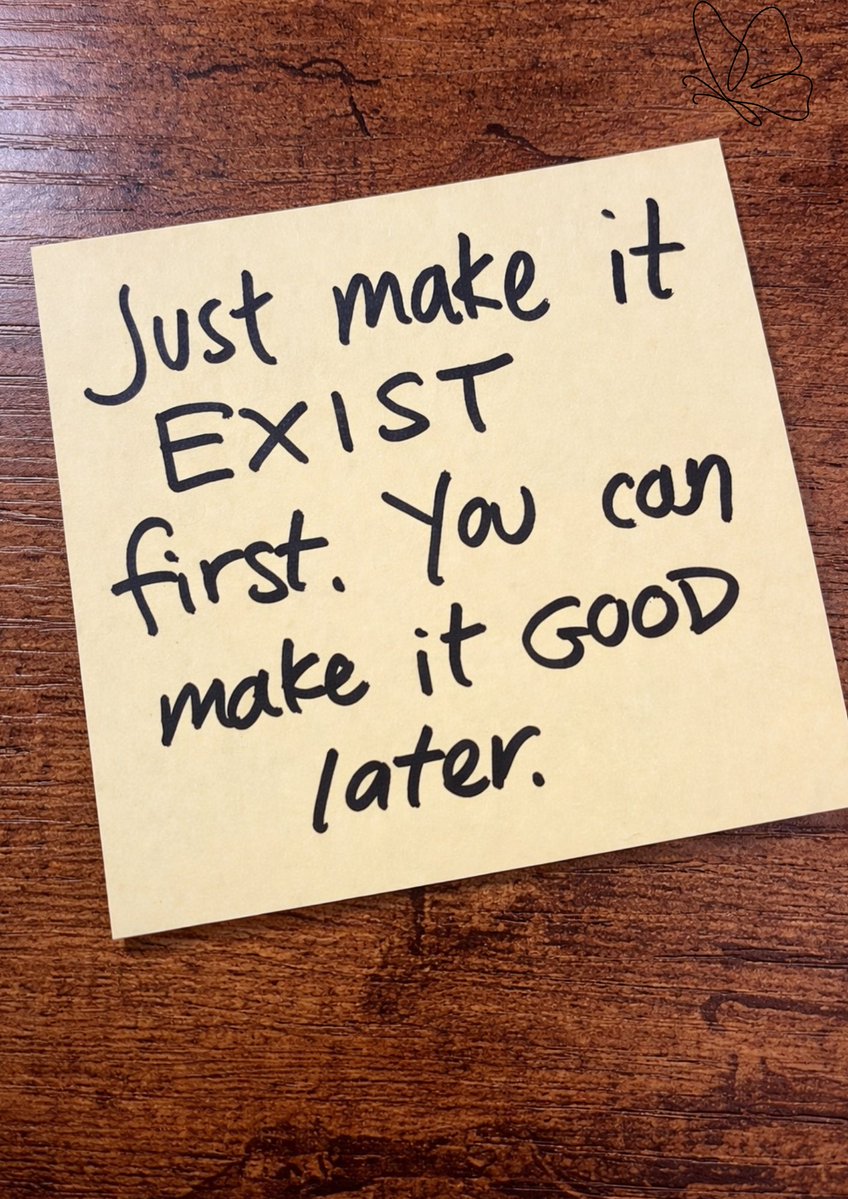
Embrace cliches. You don't have time to develop your characters or milieu, or set yourself any challenges as a writer. Getting crap on paper is your primary goal. Still, try to do a good job of writing — snappy dialogue, quirky minor characters, a compelling dilemma (to which you already know the solution).
Writing better takes a little longer. Invent more deeply. Complicate your storyline. Disguise your use of commonplace tropes. Your goal was to start quickly — but that doesn't mean you shouldn't try to create a positive reading experience.
As for the topic? Choose a character who suffers greatly, undergoes great challenges, and doesn't die. Set her in a milieu that you know well enough to write without much research. Create a few characters who do not just exist for your convenience, but have agendas of their own. Give your main character a reason to keep going despite all dangers and risks. Give your main character a job. Even if she hates her job, we need to see her working.
It's like I tell authors, if you only write one or two books, don't count on anyone knowing your name. If Rembrandt had stopped at one work, he would be this guy.
in 1646, a mysterious austrian man named johannes gumpp created this self-portrait and then disappeared from history. he painted himself from behind while looking in the mirror, creating 3 different perspectives on a single canvas. it was his only work; nothing is known about him
Nero Wolfe is not really that fat. Rex Stout wrote the Nero Wolfe books during a time when Americans were not fat. By those standards, A 5'11" middle-aged man weighing 260 lbs. was huge, and everyone noticed. In today's America, it's practically a norm.
In 1953, the American food company Swanson found itself facing an unexpected problem after Thanksgiving. The company had misjudged demand and was left with an enormous surplus of frozen turkey, estimated at about 260 tons. Warehouses were filled with unsold birds, and the company needed a creative way to prevent the costly stockpile from going to waste.
A Swanson salesman named Gerry Thomas proposed an idea inspired by airline meals that were served in small aluminum trays. Instead of selling whole turkeys, the leftover meat could be sliced and packaged into individual portions alongside side dishes like cornbread stuffing, peas, and sweet potatoes. Each meal would be placed in a divided aluminum tray, allowing people to heat it in the oven and eat directly from the container.
The result was the “TV Dinner,” a product designed for the growing number of American households that were spending evenings gathered around their television sets. Marketed as the Swanson TV Dinner, the meal quickly became a sensation. In its first year alone, Swanson sold more than 10 million trays. What began as a desperate attempt to deal with excess turkey ended up launching one of the most influential convenience foods of the 20th century.
#drthehistories
Never organize book shelves in some trendy visual way. (Spines facing in, grouped by color).
Always organize alphabetically, into sections that make sense. Fiction by author, non-fiction by subject. Poetry, biography, reference.
Woke up and realized it’s a lovely day to crash out about how authors are expected to be so performative nowadays and I wish I was born when writers just smoked and drank all day and were comfortably mentally ill and didn’t have to be jesters on social media
I have been informed that I should not write anything that is true if it sounds untrue because a reader can't handle it.
For example: There is a legitimate medical condition where if you sever your spinal cord, you could have an erection. However, I am being told an author should not have the legitimate medical fact in their book because it would confuse a reader unaware of it and break their suspension of disbelief.
Now, I'm not British, but the word "bollocks" comes to mind. If a reader doesn't know something, they can look it up.
I have also been told I should not use Spanish Moss in my book because not everyone is familiar with what it is and therefore would ruin the story.
Would really love your opinions because I feel like I'm going crazy with treating my reader, and expecting authors to treat me, with intelligence.