Everyone congratulating @narendramodi should also recognise the efforts by all state governments during the time of corona and vaccination. Their support and struggle should also be considered. Its not a modi victory, its a collective effort. #VaccineCentury
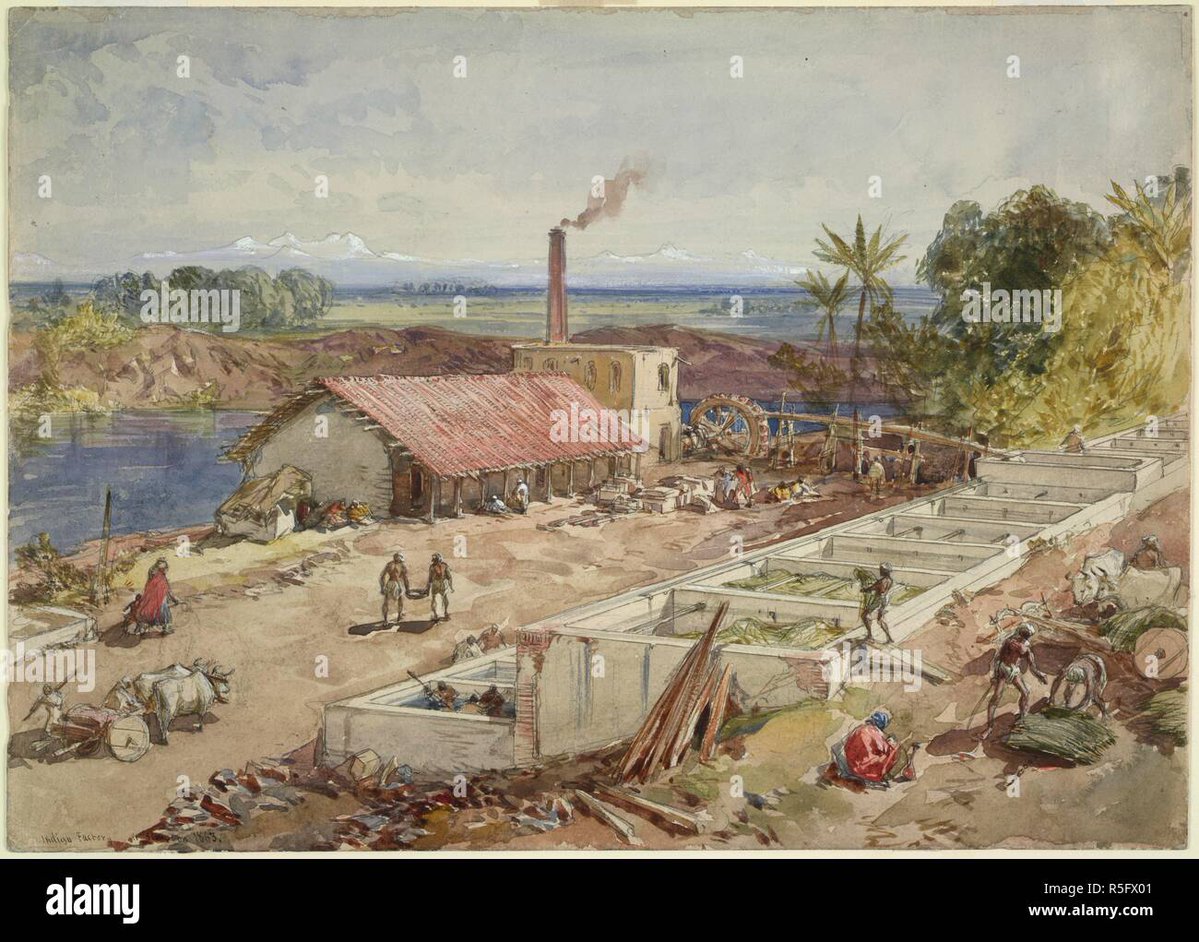
“Bengal has never been a hub for large manufacturing & cannot be.”
A government that failed to build industry finds it convenient to claim it never existed.
The problem isn’t history but it’s governance
Bengal’s history tells a very different story.
[THREAD]
@Bhayankur Indians are not kissing ass of donald trump , and this is the reason why others countries that have self respect are staying away, this is a very stupid question , questions your interests and intelligence.
@AtishiAAP Are u dumb ?? Why will he talk about that ?? He is speaking about common indian issues , why will he speak on Bengal elections , this so the end of AAP
Leprosy is one of the oldest documented diseases in human history, with origins traced by geneticists to East Africa or the Near East, from where it spread across the globe along migration, trade, and slave trade routes.
A 2005 study using comparative genomics identified four distinct strains of Mycobacterium leprae, each concentrated in specific regions: Strain 1 in East Africa, Asia, and the Pacific; Strain 2 in Ethiopia, Malawi, Nepal, and New Caledonia; Strain 3 in Europe, North Africa, and the Americas; and Strain 4 in West Africa and the Caribbean.
The oldest known physical evidence of the disease comes from skeletal remains discovered at Balathal in Rajasthan, India, dating to approximately 2000 BCE, placing it firmly within the Indus Valley Civilization.
Ancient texts from India, China, Persia, Greece, and Rome all reference the disease, though early records are complicated by the fact that many skin conditions were grouped together under the same terminology.
The Hebrew concept of tzara'ath, often translated as leprosy in the Bible, likely referred to a range of skin disorders rather than Hansen's disease specifically.
In ancient China, a legal text from the State of Qin dated between 266 and 246 BCE gave the earliest unambiguous clinical description of leprosy symptoms, including destruction of the nasal septum, loss of hair, and nerve damage.
The Persian polymath Avicenna, writing in the 11th century, was the first outside of China to describe the destruction of the nasal septum as a symptom of the disease.
For centuries, treatments ranged from blood baths to snake venom to scorpion stings, reflecting the desperate and largely ineffective attempts to manage a disease that was poorly understood.
Chaulmoogra oil, derived from trees native to India and Burma, became the most widely used pre-modern treatment, having been used in Ayurvedic medicine for centuries before being introduced to Western medicine in 1854.
In 1916, African-American chemist Alice Ball developed a pioneering injectable form of chaulmoogra oil at the University of Hawaii, making the treatment far more effective and accessible, though she passed away in a laboratory accident at just 24 years old before seeing its full impact.
The true breakthrough came in 1873 when Norwegian scientist G.H. Armauer Hansen identified Mycobacterium leprae as the causative agent, making it the first bacterium ever identified as causing disease in humans.
Hansen's discovery was controversial at the time, as his own father-in-law, Daniel Danielssen, maintained that leprosy was hereditary rather than infectious, a view that had dominated medical thinking for decades.
It was not until 1943 that the first truly effective treatment, the drug promin, was proven to work at the Carville leprosy facility in Louisiana.
Dapsone followed as an orally administered treatment, but the bacteria eventually developed resistance when dapsone was used alone, rendering the world's primary anti-leprosy drug ineffective by the 1960s.
The introduction of clofazimine and rifampicin in the 1960s and 1970s opened the door to combination therapy, and in 1981 the World Health Organization formally recommended multidrug therapy combining all three drugs, a regimen that remains standard today.
Across much of history, people with leprosy were forced into isolation in leprosaria, or leper colonies, though these institutions varied widely in their conditions and restrictions.
In Japan, leprosy laws enacted between 1907 and 1953 mandated segregation and included forced sterilization of male patients and forced abortions for pregnant female patients, practices rooted in the mistaken belief that the disease was hereditary.
The stigma surrounding leprosy has proven far more persistent than the disease itself, discouraging patients from seeking treatment and driving continued discrimination even in modern times.
#archaeohistories
🚨 The most sacred relic in Christianity might have been woven 4,000 miles from Jerusalem.
New genetic analysis of the Shroud of Turin reveals DNA signatures that trace back to the Indian subcontinent. Pollen grains embedded in the fabric match species native to the Kashmir region. The linen itself carries molecular markers consistent with flax grown in areas spanning modern day Pakistan and northern India.
Every Christian scholar who built their career defending the Shroud’s authenticity as the burial cloth of Christ is now staring at evidence that completely reshapes the narrative.
But the implications run deeper than authentication debates.
What we’re looking at could be the smoking gun for first century trade networks that medieval historians claimed didn’t exist yet. The idea that fine Indian textiles reached Palestine 2,000 years ago contradicted everything we thought we knew about early commerce patterns. The Silk Road wasn’t supposed to be fully operational. Maritime trade between India and the Mediterranean was considered marginal.
The DNA evidence suggests otherwise.
If the Shroud originated in India, it means luxury textile production and long distance commerce were far more sophisticated in the first century than any textbook admits. Indian weavers were already creating fabrics so extraordinary that they traveled thousands of miles to reach the most important burial sites in the ancient world.
Think about what that required. Quality control systems to maintain fabric integrity across months of transport. Financial instruments sophisticated enough to handle payments across multiple currencies and kingdoms. Cultural exchange networks deep enough that Indian craftsmen understood and catered to specific burial customs in distant lands.
The genetic markers tell a story of globalization that predates our supposed “global” era by two millennia.
Archaeological orthodoxy just took a massive hit.
The traditional timeline puts sophisticated Indian Ocean commerce centuries later. The standard model claims the Roman Empire was insular, dependent on local production with minimal eastern trade. Economic historians built entire theories around the idea that complex international supply chains were modern inventions.
DNA doesn’t lie about geography.
Those pollen grains traveled from Kashmir valleys to a tomb in Jerusalem through human networks that were supposed to be impossible in 30 AD. Either the dating is wrong, or our entire understanding of ancient economic systems is incomplete.
The religious angle creates its own earthquake.
If the Shroud is authentic but Indian, it means the burial cloths of Christ were luxury imports, not local Palestinian linen. The man Christians worship was laid to rest in fabric that cost the equivalent of a house, shipped from craftsmen who never heard his name but whose work became the most venerated textile in human history.
That detail rewrites crucifixion accounts. Someone with access to international luxury goods provided the burial materials. The narrative of Christ dying poor and abandoned doesn’t align with being wrapped in premium Indian textiles.
The forensic anthropology adds another layer.
DNA analysis also found genetic material from individuals with South Asian ancestry who handled the cloth. Multiple handlers across centuries left traces. But the original genetic signatures point toward the Indian subcontinent as the fabric’s birthplace, not just its journey.
What emerges is a picture of the first century world that’s far more connected, sophisticated, and globally integrated than academic consensus admits.
The Shroud might force a complete revision of ancient trade histories, early Christian economics, and our assumptions about technological capabilities in the Roman world.
DNA evidence rarely lies.
But it frequently demolishes the stories we built around artifacts we thought we understood.
Portuguese colonists polluted village wells by putting beef into them, which made the entire water source impure for the village to such an extent that the only option left was to convert to Christianity.
Thousands of Hindus were converted using such cheap tactics. Dogmatic faith is a cancer to society; it clearly supports the growth of centralized politics and money while keeping people busy with endless distractions.
Hinduism is a non-dogmatic faith by origin. Please don't take inspiration from dogmatic faiths, and let people design their own belief systems based on eternal values rather than religious patriotism.
Religious patriotism and "goonism" destroyed millions of innocent lives in the past; it changed people’s identities and corrupted human minds. It should be diluted into ideology-based sects, cults, or tribes for the better future of our grandkids.
A 140 million year femur bone that weighs 1102 lb (500kg) was found in France....
The femur shown was discovered at the Angeac-Charente fossil site, one of Europe’s most productive dinosaur excavation areas.
The bone is attributed to a sauropod, a group of long-necked herbivorous dinosaurs that dominated the Late Jurassic and Early Cretaceous periods. At roughly 2 meters (6.5 feet) long and weighing about 500 kg (1,100 lbs), it is among the largest dinosaur femurs ever recorded.
The site itself dates to around 140 million years ago, and has yielded thousands of fossils, including teeth, vertebrae, and partial skeletons. Paleontologists believe the area was once a floodplain, where carcasses accumulated and were rapidly buried, aiding preservation.
Sauropods reached lengths of 25–30 meters (80–100 feet) and weights exceeding 50 tons, making them the largest land animals to have ever lived.
The Angeac-Charente site is unusual because fossils are often found in dense clusters, suggesting possible mass-death events or repeated seasonal flooding that concentrated remains in a single location.
#drthehistories
@zoo_bear@OishaniB_ Good going by the Government, it's okay to criticize the Government, but not criticize the country , ban this handle also , this guy has no use , he has achieved nothing
@Telugu360 Nobody agrees with you , this review is just stupid and your stupidity is visible 😭 keep crying it's fun to see you guys cry , because thats all you will do