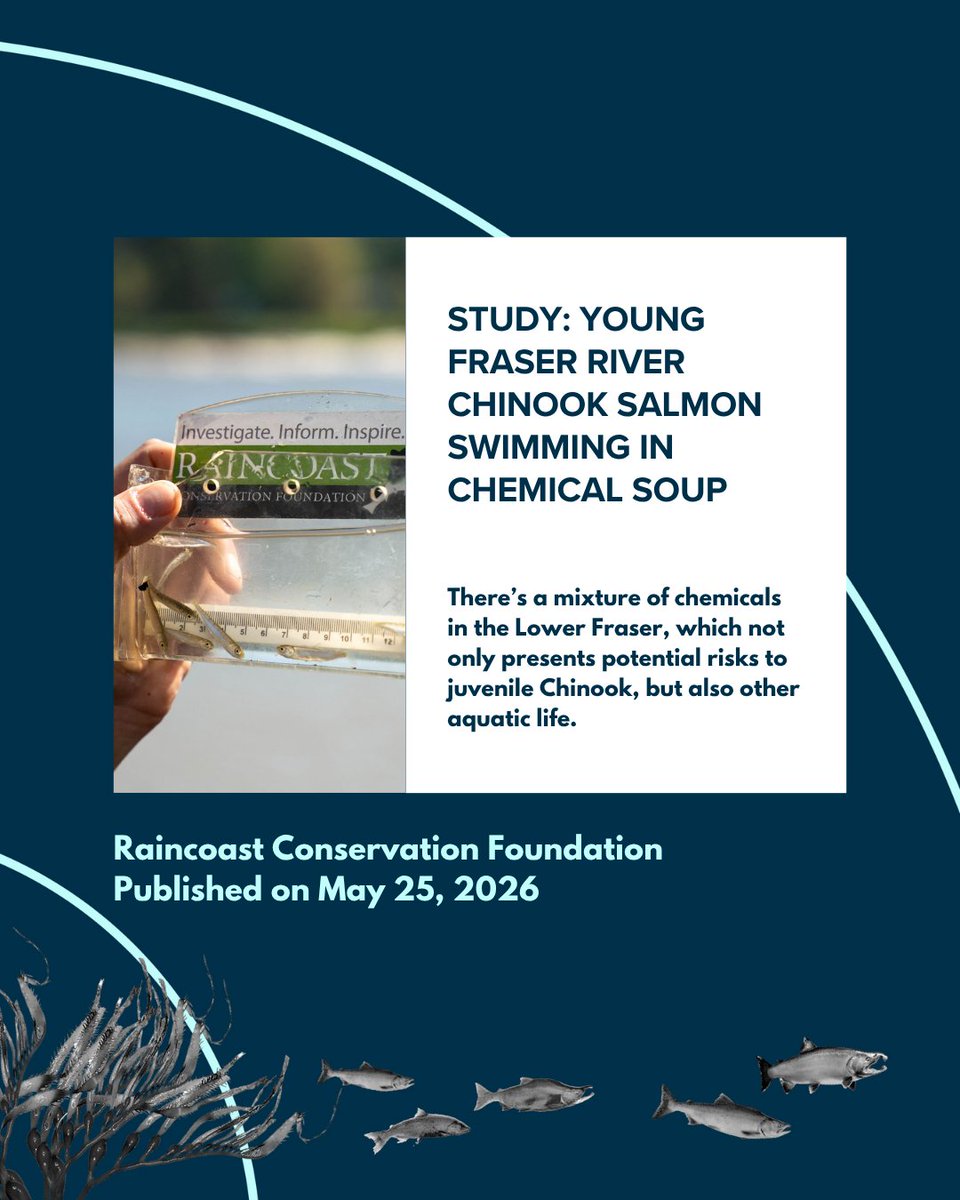
A new study found juvenile Fraser River Chinook salmon are being exposed to hundreds of contaminants in the Lower Fraser estuary, including pesticides, pharmaceuticals, and industrial chemicals.
Protecting wild salmon from further contamination from open-net pens can't wait.
Read more: https://t.co/9ArjRcQLHE
Watershed Watch’s recap of the 2026 Salmon Outlook highlights the conditions impacting this year’s wild salmon returns in BC: https://t.co/k6NZ7CmR3X
Wild salmon are already under pressure. Protecting them means reducing the risks we can control - like open net pen salmon farming.
Across BC, First Nations are leading salmon conservation through habitat restoration, monitoring, and stewardship.
Protecting wild salmon means supporting Indigenous-led recovery and the ecosystems salmon depend on.
Read more: https://t.co/1LBBnUBNxK
APTN reports that First Nations-led salmon conservation efforts are growing in BC — but leaders say sustainable, long-term funding is needed to protect Pacific salmon.
Read more: https://t.co/kdUXhHVVYt
A new protected marine area is being established on BC’s central coast through a partnership between six First Nations and federal/provincial governments.
Protecting wild salmon means protecting the future of coastal ecosystems and communities.
https://t.co/1gdAoofkSD
Fisheries and Oceans Canada’s Pacific Salmon Allocation Policy review states that conservation and sustainable management will remain the highest priority, followed by First Nations right-based fisheries.
Read more: https://t.co/HFX9lX7OR4
Pure Salmon Technology’s RAS systems recycle and reuse water in land-based facilities designed to support fish health and reduce environmental impacts.
The transition is not theoretical. It’s already being built.
Read more: https://t.co/OHmyYIypdw
The 2025 Pacific salmon harvest was the lowest odd-year harvest since 1987, according to the North Pacific Anadromous Fish Commission.
Read more: https://t.co/n5z7KNsldN
Responsibly transitioning away from open-net salmon farming will protect wild Pacific salmon populations today, and for generations to come.
Canada promised to transition open-net salmon farms out of BC waters by 2029.
That commitment matters — for wild salmon, coastal communities, Indigenous stewardship, and the Canada's economy.
The opportunity is clear. Now it’s time to finish the job.
The science is clear. And the urgency is growing.
Wild Pacific salmon are already under immense pressure. Protecting them means acting before ecosystem damage becomes irreversible.
Canada committed to transition open-net salmon farms by 2029. Now it’s time to follow through.
Canada’s Pacific Salmon Strategy Initiative (PSSI) is focused on restoring wild salmon populations, rebuilding habitat, and supporting long-term ecosystem resilience.
Spending on Canada's PSSI without removing salmon farms would defeat the purpose of this vital initiative. Protecting wild salmon means investing in their future — before it’s too late.
Read more: https://t.co/NKyvZH1W8x
It’s #WorldFishMigrationDay !
Driven by instinct and survival, a vital part of a salmon’s life cycle is its extraordinary journey from freshwater to ocean.
Migrating fish depend on healthy and connecting waterways to survive.
Salmon farming and First Nations:
Benefits for the few at the expense of the many? BC First Nation representatives travel to Ottawa to call for prioritizing native salmon and removal of nonnative Atlantic salmon farms.
https://t.co/CzLboQpyTC
#salmon#bcpoli@CBC@CTVNews
130 First Nations support the protection of wild salmon from open net pen fish farms.
Canada has the opportunity to protect these salmon, while building a modern seafood economy.
With Canada’s 2029 transition deadline approaching, new research and policy discussions continue around the risks open-net salmon farms may pose to wild Pacific salmon.
Read more: https://t.co/RQsdBmiiJq
Food security and wild salmon protection can go hand in hand.
Canada has an opportunity to support sustainable seafood production, strengthen coastal economies, and protect wild ecosystems at the same time.
Canada committed to transition open-net salmon farms out of BC waters by 2029.
The federal government called the plan “responsible, realistic and achievable.”
Now it’s time to follow through.
Read more: https://t.co/7csVI0Sa1z
There’s a constructive path forward.
Protecting wild salmon and strengthening coastal economies can go hand in hand through modern seafood production, food security, and sustainable innovation.
Canada has an opportunity to lead the transition.
📣Open-net pen salmon farms will be *banned* in BC by 2029. Wild salmon don't need five more years of these disease-ridden pens, but it's encouraging there will be stricter licensing conditions and an end in sight.
Read more: https://t.co/MLBsXqvHdT
#EndThePens#FishFarmsOut