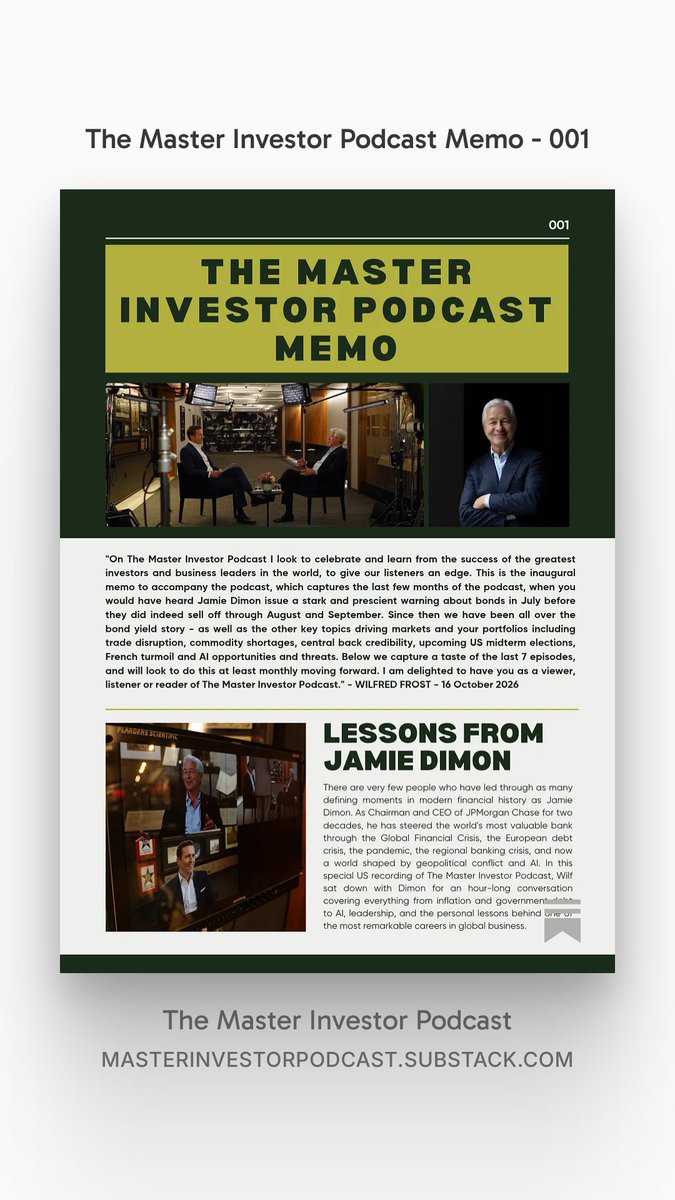
Delighted to share the inaugural memo to accompany The Master Investor Podcast, which captures the last few months of guests - Jamie Dimon, Thomas Peterffy, Jim Mellon, Liz Ann Sonders, Ed Conway, Jim Bianco, Luke Gromen, Michael Hartnett & Jeff Currie.
https://t.co/y5lvITe2Kd
Delighted to share the inaugural memo to accompany The Master Investor Podcast, which captures the last few months of guests - Jamie Dimon, Thomas Peterffy, Jim Mellon, Liz Ann Sonders, Ed Conway, Jim Bianco, Luke Gromen, Michael Hartnett & Jeff Currie.
https://t.co/y5lvITe2Kd
The national resilience moment that very nearly barely happened:
A huge amount of work has gone on behind the scenes to plan for the "Be Ready" rollout, which was first trailed during the dying days of Sir Keir Starmer's government.
Andy Burnham inherited the project as well as leadership of the much-promised but minimally-delivered national conversation on defence.
Yet he appears to have chosen not to speak out on the launch of the new readiness campaign despite its national significance.
Even Dan Jarvis, the security minister, who is leading on resilience, stayed away from journalists on Thursday, instead just publishing his ministerial statement and sending out a written post on social media.
This lacklustre approach was met privately with disappointment among members of the resilience community.
The concern - rightly or wrongly - is that it creates the impression that preparing the country (every post code!) for the possibility of any crisis, up to and including war, is not a top priority for the government.
https://t.co/MdiIXCUqFd
Is it time to buy bonds?
Jim Bianco explains why he thinks it is.
Full episode with @biancoresearch below or here:
YT: https://t.co/PflhE0WDS4
Apple: https://t.co/FqfLI1qa5i
Spotify: https://t.co/8q10PNwGxZ
Delighted to share the inaugural memo to accompany The Master Investor Podcast, which captures the last few months of guests - Jamie Dimon, Thomas Peterffy, Jim Mellon, Liz Ann Sonders, Ed Conway, Jim Bianco, Luke Gromen, Michael Hartnett & Jeff Currie.
https://t.co/y5lvITe2Kd
Why the Nike bubble burst?
“When you have a very high valuation, management kind of drink their own Kool-Aid and they start to make mistakes.”
Full episode with Django Davidson here:
YT: https://t.co/XJ80eGleyT
Apple: https://t.co/0HdPvZSMZT
Spotify: https://t.co/J5tgzmG98s
🚨NEW EPISODE🚨with DJANGO DAVIDSON of Hosking Partners on capital cycle investing:
- How to spot a turn in the cycle
- Always focus on supply, not demand storytelling
- BUY Japan, Platinum, Copper, Chemicals
- SELL Semis
- Nike "beware high valuations"
Timestamps:
0:00 Intro
3:25 Capital Cycle Investing
5:58 US capital returns declining
10:30 How to spot turn in cycle
14:05 Unconstrained globally
20:00 Focus on supply
24:30 Semis – time to sell
27:18 Buy Chemicals
29:30 Long time horizons
31:25 Buy Platinum
33:53 Buy Copper
36:20 Less constructive Gold
38:11 Buy Japan
41:00 What Nike got wrong
45:10 Rising yields
47:50 Contrarian…and right
SUPPLY: "Supply is measurable, but demand is storytelling. I can count the number of semiconductor fabs. I can count the number of ships. I can count the number of copper mines. I can't predict what happens to the demand for copper, the demand for semis, the demand for oil tankers. But if I see that discipline supply, that curtailment of supply, the lack of new supply coming, what I do is increase my odds of a better investment outcome in the future. If there's any increase in demand, you will benefit from it as a supply constrained industry. So whether that's AI in memory semis, whether that's geopolitical disruption for shipping, whether that's an amazing green boom for copper...You can't predict precisely when they will happen, but if you've got this supply discipline to your investment approach, you stand to benefit from that luck."
NOW SELLING SEMIS: "One of the reasons that we are selling our positions now and have been quite aggressively over the last six months or so is that the enterprise value to replacement cost - what it would cost to build a new fab versus what it would cost to buy the existing fabs in the valuation of the companies - has moved very significantly, such that these memory semi companies are now valued at three or four times what it would cost to rebuild their infrastructure. And one of the biggest capital cycle tells is if I had a dollar in my pocket, could I buy this company for less than it would cost me to rebuild it from scratch? So this price to replacement cost analysis is a very powerful driver of capital cycle thinking. It will take some time,we are much closer to the top of this cycle than we are at the bottom."
BUY JAPAN: "It's a really interesting country level capital cycle. If you think very simply about a return on capital calculation, it's profits over invested capital. Now, most companies, most industries who are looking to improve their return on capital will try and grow the numerator, try and grow the profits, find a new product to go into, find a new technology, grow the company. What's very difficult and what most companies don't do is reduce the denominator, reduce their invested capital because that comes with a lot of social friction. You've got to cut staff, you've got to close down factories, you've got to get out of certain countries. What is happening at Japan is you've got this country level capital cycle where there is a kind of cultural and economy wide buy-in to shrinking the denominator, to improving returns through addressing very flabby balance sheets, cross holdings, lots of cash, massively over capitalised balance sheets, two, three head offices, a plant that isn't used, taking lots of very difficult decisions to shrink that denominator. And this has been evident for a number of years now, but I think this has got a long way to run."
NIKE: "So this comes to this idea that valuations and profitability in and of themselves determine agent behaviour. When you have very high profits, when you have very high valuations, management teams in particular become blinded to their own frailties. Nike is a similar situation of a very high valuation, very high profitability, creating a corporate culture that was kind of totally detached from the customer. When you have a high valuation, you make lots of profit, you attract lots of competition. And the agents who are in those companies, they kind of drink their own Kool-Aid and they start to make mistakes, whether it's on capital allocation, pricing and so on. So you have to be really, really careful about investing in high valuations."
OUTPERFORMANCE: "I think it is down to a kind of reappraisal of capital in this higher interest rate world. When the cost of capital was free, when interest rates were zero, a lot of these capital cycles were a little bit stymied. But as interest rates have normalised, the creative destruction that underlines this capital cycle investing has really come back."
Following a request from one of our Mornings viewers, Sky's @WilfredFrost takes you through what is happening on South Korea's stock market ⬇️
https://t.co/hHvL4yPxXn
'Trump, do the right thing... give this guy the support he needs to defeat the modern-day Hitler.'
@piersmorgan gives his message to Trump as Ukraine's President @ZelenskyyUa thanks him and the UK for their continued support.
Watch more 👇
📺 https://t.co/ukYrKq0sB9
BREAKING: President Zelensky tells Piers Morgan he feels 'betrayed' over Trump announcing an energy ceasefire and diesel deal with Putin.
'This is not the right side of history.'
Full exclusive interview dropping soon 👇
📺 https://t.co/1nTb79BH8D
@piersmorgan | @ZelenskyyUa
Enjoying @WilfredFrost conversations as of late.
The capital cycle investing framework presented here reminds me heavily of Spitznagel's Dao of Capital. Increasingly important as cost of capital finds a new normal.
https://t.co/Xq9nFeEsa5
The case for Japanese stocks.
“This has got a long way to run.”
Full episode with Django Davidson of Hosking Partners below or here:
YT: https://t.co/XJ80eGleyT
Apple: https://t.co/0HdPvZSMZT
Spotify: https://t.co/J5tgzmG98s
🚨NEW EPISODE🚨with DJANGO DAVIDSON of Hosking Partners on capital cycle investing:
- How to spot a turn in the cycle
- Always focus on supply, not demand storytelling
- BUY Japan, Platinum, Copper, Chemicals
- SELL Semis
- Nike "beware high valuations"
Timestamps:
0:00 Intro
3:25 Capital Cycle Investing
5:58 US capital returns declining
10:30 How to spot turn in cycle
14:05 Unconstrained globally
20:00 Focus on supply
24:30 Semis – time to sell
27:18 Buy Chemicals
29:30 Long time horizons
31:25 Buy Platinum
33:53 Buy Copper
36:20 Less constructive Gold
38:11 Buy Japan
41:00 What Nike got wrong
45:10 Rising yields
47:50 Contrarian…and right
SUPPLY: "Supply is measurable, but demand is storytelling. I can count the number of semiconductor fabs. I can count the number of ships. I can count the number of copper mines. I can't predict what happens to the demand for copper, the demand for semis, the demand for oil tankers. But if I see that discipline supply, that curtailment of supply, the lack of new supply coming, what I do is increase my odds of a better investment outcome in the future. If there's any increase in demand, you will benefit from it as a supply constrained industry. So whether that's AI in memory semis, whether that's geopolitical disruption for shipping, whether that's an amazing green boom for copper...You can't predict precisely when they will happen, but if you've got this supply discipline to your investment approach, you stand to benefit from that luck."
NOW SELLING SEMIS: "One of the reasons that we are selling our positions now and have been quite aggressively over the last six months or so is that the enterprise value to replacement cost - what it would cost to build a new fab versus what it would cost to buy the existing fabs in the valuation of the companies - has moved very significantly, such that these memory semi companies are now valued at three or four times what it would cost to rebuild their infrastructure. And one of the biggest capital cycle tells is if I had a dollar in my pocket, could I buy this company for less than it would cost me to rebuild it from scratch? So this price to replacement cost analysis is a very powerful driver of capital cycle thinking. It will take some time,we are much closer to the top of this cycle than we are at the bottom."
BUY JAPAN: "It's a really interesting country level capital cycle. If you think very simply about a return on capital calculation, it's profits over invested capital. Now, most companies, most industries who are looking to improve their return on capital will try and grow the numerator, try and grow the profits, find a new product to go into, find a new technology, grow the company. What's very difficult and what most companies don't do is reduce the denominator, reduce their invested capital because that comes with a lot of social friction. You've got to cut staff, you've got to close down factories, you've got to get out of certain countries. What is happening at Japan is you've got this country level capital cycle where there is a kind of cultural and economy wide buy-in to shrinking the denominator, to improving returns through addressing very flabby balance sheets, cross holdings, lots of cash, massively over capitalised balance sheets, two, three head offices, a plant that isn't used, taking lots of very difficult decisions to shrink that denominator. And this has been evident for a number of years now, but I think this has got a long way to run."
NIKE: "So this comes to this idea that valuations and profitability in and of themselves determine agent behaviour. When you have very high profits, when you have very high valuations, management teams in particular become blinded to their own frailties. Nike is a similar situation of a very high valuation, very high profitability, creating a corporate culture that was kind of totally detached from the customer. When you have a high valuation, you make lots of profit, you attract lots of competition. And the agents who are in those companies, they kind of drink their own Kool-Aid and they start to make mistakes, whether it's on capital allocation, pricing and so on. So you have to be really, really careful about investing in high valuations."
OUTPERFORMANCE: "I think it is down to a kind of reappraisal of capital in this higher interest rate world. When the cost of capital was free, when interest rates were zero, a lot of these capital cycles were a little bit stymied. But as interest rates have normalised, the creative destruction that underlines this capital cycle investing has really come back."
The Conservatives seem to be enjoying a conference bounce as they jump to second in our voting intention, while Labour lead by 4.
🌹 LAB 28% (-1)
🌳 CON 24% (+3)
⏩ REF 21% (-3)
🔶 LIB DEM 11% (+1)
🟢 GREEN 7% (-)
⚫ RES: 5% (+1)
N = 2,101 | Fieldwork 9-12/10 | Changes w 5/10
How supply side analysis led Django to buy Memory Semis a decade ago, & why it’s led him to take profits aggressively now.
Full episode with Django Davidson below or here:
YT: https://t.co/XJ80eGlMor
Apple: https://t.co/0HdPvZTkPr
Spotify: https://t.co/J5tgzmGGY0
How supply side analysis led Django to buy Memory Semis a decade ago, & why it’s led him to take profits aggressively now.
Full episode with Django Davidson below or here:
YT: https://t.co/XJ80eGlMor
Apple: https://t.co/0HdPvZTkPr
Spotify: https://t.co/J5tgzmGGY0
🚨NEW EPISODE🚨with DJANGO DAVIDSON of Hosking Partners on capital cycle investing:
- How to spot a turn in the cycle
- Always focus on supply, not demand storytelling
- BUY Japan, Platinum, Copper, Chemicals
- SELL Semis
- Nike "beware high valuations"
Timestamps:
0:00 Intro
3:25 Capital Cycle Investing
5:58 US capital returns declining
10:30 How to spot turn in cycle
14:05 Unconstrained globally
20:00 Focus on supply
24:30 Semis – time to sell
27:18 Buy Chemicals
29:30 Long time horizons
31:25 Buy Platinum
33:53 Buy Copper
36:20 Less constructive Gold
38:11 Buy Japan
41:00 What Nike got wrong
45:10 Rising yields
47:50 Contrarian…and right
SUPPLY: "Supply is measurable, but demand is storytelling. I can count the number of semiconductor fabs. I can count the number of ships. I can count the number of copper mines. I can't predict what happens to the demand for copper, the demand for semis, the demand for oil tankers. But if I see that discipline supply, that curtailment of supply, the lack of new supply coming, what I do is increase my odds of a better investment outcome in the future. If there's any increase in demand, you will benefit from it as a supply constrained industry. So whether that's AI in memory semis, whether that's geopolitical disruption for shipping, whether that's an amazing green boom for copper...You can't predict precisely when they will happen, but if you've got this supply discipline to your investment approach, you stand to benefit from that luck."
NOW SELLING SEMIS: "One of the reasons that we are selling our positions now and have been quite aggressively over the last six months or so is that the enterprise value to replacement cost - what it would cost to build a new fab versus what it would cost to buy the existing fabs in the valuation of the companies - has moved very significantly, such that these memory semi companies are now valued at three or four times what it would cost to rebuild their infrastructure. And one of the biggest capital cycle tells is if I had a dollar in my pocket, could I buy this company for less than it would cost me to rebuild it from scratch? So this price to replacement cost analysis is a very powerful driver of capital cycle thinking. It will take some time,we are much closer to the top of this cycle than we are at the bottom."
BUY JAPAN: "It's a really interesting country level capital cycle. If you think very simply about a return on capital calculation, it's profits over invested capital. Now, most companies, most industries who are looking to improve their return on capital will try and grow the numerator, try and grow the profits, find a new product to go into, find a new technology, grow the company. What's very difficult and what most companies don't do is reduce the denominator, reduce their invested capital because that comes with a lot of social friction. You've got to cut staff, you've got to close down factories, you've got to get out of certain countries. What is happening at Japan is you've got this country level capital cycle where there is a kind of cultural and economy wide buy-in to shrinking the denominator, to improving returns through addressing very flabby balance sheets, cross holdings, lots of cash, massively over capitalised balance sheets, two, three head offices, a plant that isn't used, taking lots of very difficult decisions to shrink that denominator. And this has been evident for a number of years now, but I think this has got a long way to run."
NIKE: "So this comes to this idea that valuations and profitability in and of themselves determine agent behaviour. When you have very high profits, when you have very high valuations, management teams in particular become blinded to their own frailties. Nike is a similar situation of a very high valuation, very high profitability, creating a corporate culture that was kind of totally detached from the customer. When you have a high valuation, you make lots of profit, you attract lots of competition. And the agents who are in those companies, they kind of drink their own Kool-Aid and they start to make mistakes, whether it's on capital allocation, pricing and so on. So you have to be really, really careful about investing in high valuations."
OUTPERFORMANCE: "I think it is down to a kind of reappraisal of capital in this higher interest rate world. When the cost of capital was free, when interest rates were zero, a lot of these capital cycles were a little bit stymied. But as interest rates have normalised, the creative destruction that underlines this capital cycle investing has really come back."