This week is a high-volatility earnings window. GOOGL / IBM / TSLA report after Wednesday’s close, AAL / BX / LMT / NOK / RTX report before Thursday’s open, with INTC reporting after the close.
When a new opportunity comes along, many people’s first reaction is to sell the winners they already hold to free up cash for the next trade. But the cost is that they also close out their original view.
That’s also how I’m looking at rToken this week. With market sentiment already deeply depressed around INTC and IBM, and TSLA’s volatility high to begin with, Bitget Unified Account allows existing assets to continue serving as collateral or margin, while expressing new views through rINTC, rIBM, and rTSLA.
The same capital doesn’t have to do just one thing at a time.
If your crypto gets stolen, the government will tell you recovering it is difficult.
But if you break the law, the government somehow manages to freeze your crypto with remarkable precision.
That's insane.
Schools never taught us this:
At age 30, two people each have $200,000.
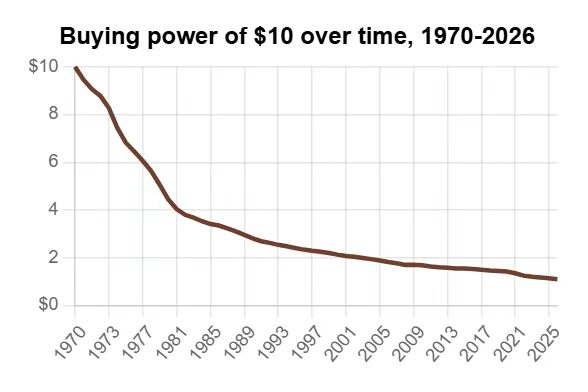
One keeps it in cash, leaving it with only about $101,000 of purchasing power by age 60.
The other invests it in an S&P 500 index fund, earning an average annual return of 10%. By age 60, it's worth approximately $3.49 million.
$HYPE Now | Market Watch
The bearish setup continues to play out.
$HYPE is also on track to print a second consecutive red monthly candle, suggesting this correction is no longer just short-term noise.
Price has now dropped into the $57–59 short-term support zone.
If this level fails to hold, the next downside target remains $53–55.
Below that, $48–50 is the key structural support.
BitMEX is disappearing, but the perpetual contract it created now dominates the crypto market.
BitMEX’s market share has fallen from around 32% in 2019 to less than 0.01% today.
Meanwhile, annual perpetual trading volume surged from $28 trillion in 2023 to $86.2 trillion in 2025.
Everyone tells you that holding cash loses money.
But no one tells you just how much.
And this isn't unique to one country.
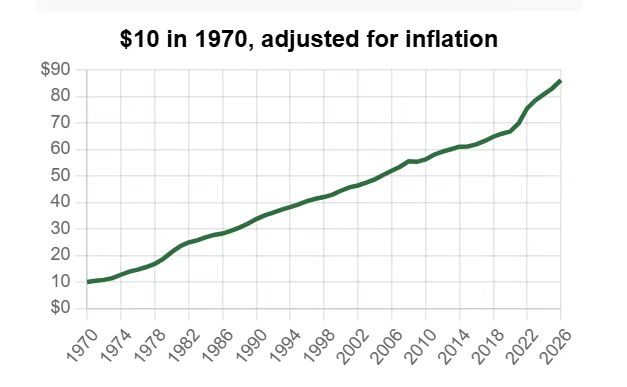
If you had held cash for the past 40 years:
USD: Purchasing power down to 12%
CNY: Down to 21%
KRW: Down to 17.5%
GBP: Down to 5.5%
Put another way:
The milk $10 could buy 40 years ago would cost more than $80 today.
These two days mark the most concentrated earnings window for US AI giants.
META and MSFT report on July 29. AMZN and AAPL follow on July 30. Every desk will have a view, one company can beat and guide higher while another disappoints, and the tape can still move violently in both directions.
That is why I’m watching the rToken setup this week.
Rather than committing fresh capital to four separate spot positions, traders can use an existing position as collateral and express views across rMETA, rMSFT, rAMZN, and rAAPL. The point is not to max out leverage or force exposure to every ticker. It is simply a more flexible way to manage several event-driven positions from one collateral pool.
For earnings, that flexibility matters.
You may want a small long in one name, a hedge in another, or room to adjust after the numbers hit without first unwinding an entirely separate position. With rToken margin trading now live in the Bitget app, more than 10 additional rTokens can also be used as collateral. That makes the structure more practical for traders who already manage exposure across several markets.
There are now 30+ newly listed rTokens as well, alongside trend-following bot support, lending, and weekend trading. Not every feature will matter to every trader, but the direction is clear: tokenized equities are becoming something you can actively manage around events, rather than just hold.
I’m treating this week as a market-structure test as much as an earnings trade.
In 2026, the value of crypto lost to hacks has already exceeded several billion dollars. If the essence of finance is money flowing from the less informed to the better informed, and most crypto is in the hands of hackers, does that really make sense?
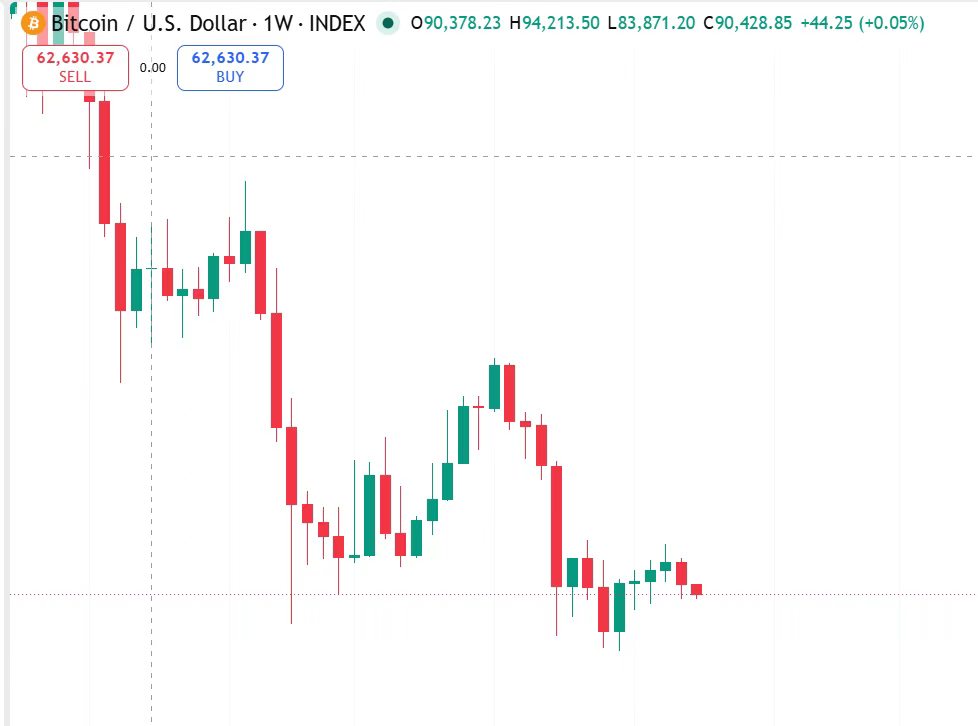
I keep asking myself one question: which black swan event will become the catalyst for Bitcoin’s final bottom?
Because the market has already shown many signals that “look like a bottom.”
-The market is concerned whether Strategy’s highly leveraged BTC strategy could become a new source of risk.
-BitMEX and BitMart exchanges have successively announced their shutdowns.
-Coldcard was hacked, with more than $80 million worth of BTC stolen.
-The Altcoin Season Index has remained below 50 for a long time, and altcoins have been ignored by the market.
-Falling prices have squeezed miners’ profits, forcing some mining companies to sell BTC.
Which black swan event will become the final straw?
$SNDK Now | Market Watch
SNDK reports earnings this Wednesday after market close.
Since its re-IPO, SNDK has delivered positive reactions in 4 of its last 5 earnings reports, with an average gain of 6.1%.
Technically, SNDK is testing a key support zone around $1,200–1,250 after a sharp pullback.
A breakout above $1,500–1,600 could signal a new move higher.
AI storage is a sector worth watching.
Unfortunately, I found a signal that Bitcoin may have one more shakeout ahead.
In August 2022, BTC reclaimed the 200-week moving average, but one final deep correction hit before the true bottom was formed.
Today, we are seeing a similar setup:
BTC has reclaimed the 200-day moving average and is attempting to move closer to the 200-week MA.
If history repeats, mid-August could bring another painful sell-off for Bitcoin holders.