If you take a step back $SPCE is gorgeous. Now is the moment where all the new bears from today start sweating and will add fuel to the squeeze.
We closed the opening gap and are bouncing back strongly. If we close above $8 - $8,50 - tomorrow will be crazy. 🚀🌕
$SPCE Watch what happens when milestones start stacking. Test flight → successful data → commercial launch → increased cadence. Markets don’t wait for perfection, they front-run momentum. If SPCE starts hitting these checkpoints cleanly,
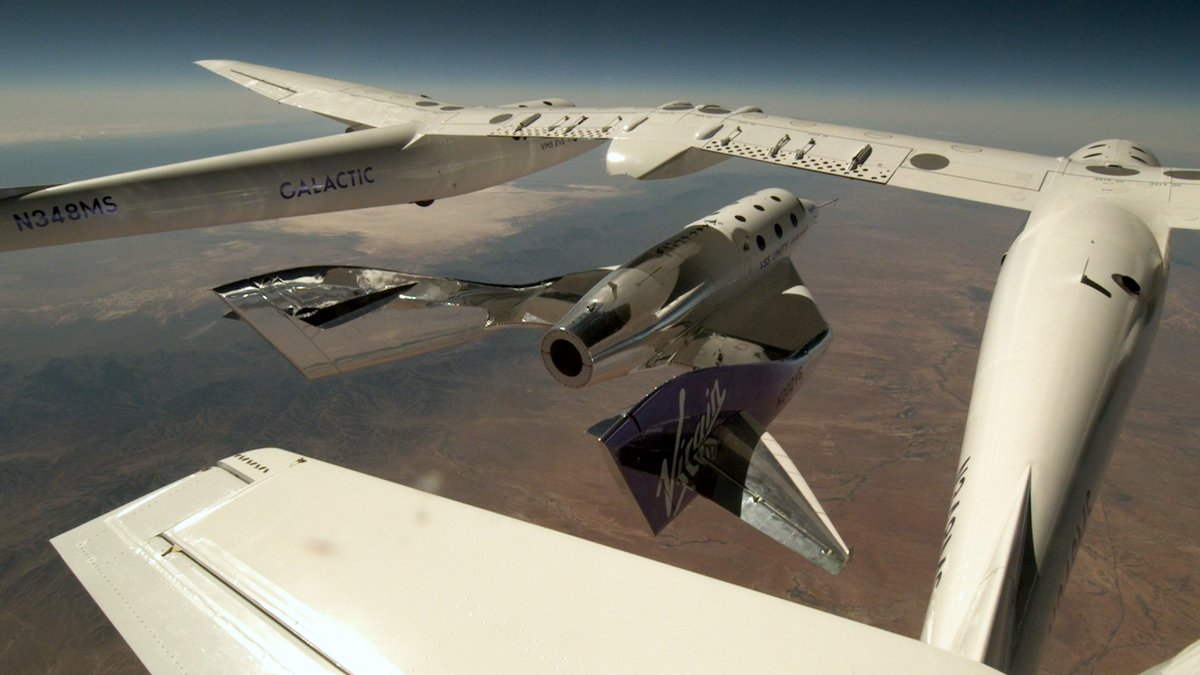
We’ve just had Unity test flights, and any day now we’re due a look at a completed Delta ship with its new livery.
The $SPCX IPO is going to drive unprecedented demand and interest in the $SPCE story.
This is the moment of maximum opportunity. NFA.
VSS Unity completed a successful glide flight today above @Spaceport_NM. Pilots, ground crew, and Mission Control all running live operations, building the rhythm our new spaceship program demands → https://t.co/eCNl1tR5fo
Welcoming Operation Period to our 2027 spaceflight manifest. This will be the first spaceflight ever dedicated to studying menstruation in microgravity, investigating how space travel affects menstrual physiology, with implications for astronaut health and reproductive medicine on Earth. This is what inclusive-by-design research looks like → https://t.co/orze0lpiEf
$SPCE
🔸 Virgin Galactic is actively expanding its business to support broader space technology and payload research.
• While their primary focus remains on suborbital human spaceflight, they are significantly scaling up their commercial research capabilities.
—————————-
🔸 Their current expansion into space technology includes the following specific initiatives:
•Delta-Class Payload Capabilities:
The company's new fleet of Delta-class spaceships (scheduled to enter commercial service) is purpose-built to hold up to 20 payload lockers or five autonomous experiment racks per flight.
•Scientific Partnerships: Virgin Galactic has partnered with aerospace infrastructure company Redwire to integrate advanced microgravity research hardware into their spaceships.
•Targeted Tech Research: The flights are specifically designed to accommodate experiments in biotechnology, nanotechnology, nanomedicine, and fluid dynamics, as well as testing hardware for future lunar or Martian landers.
A few takeaways...
CEO Michael Colglazier shared that commercial service remains planned for 2026, with both research and private astronaut flights expected in the fall of next year.