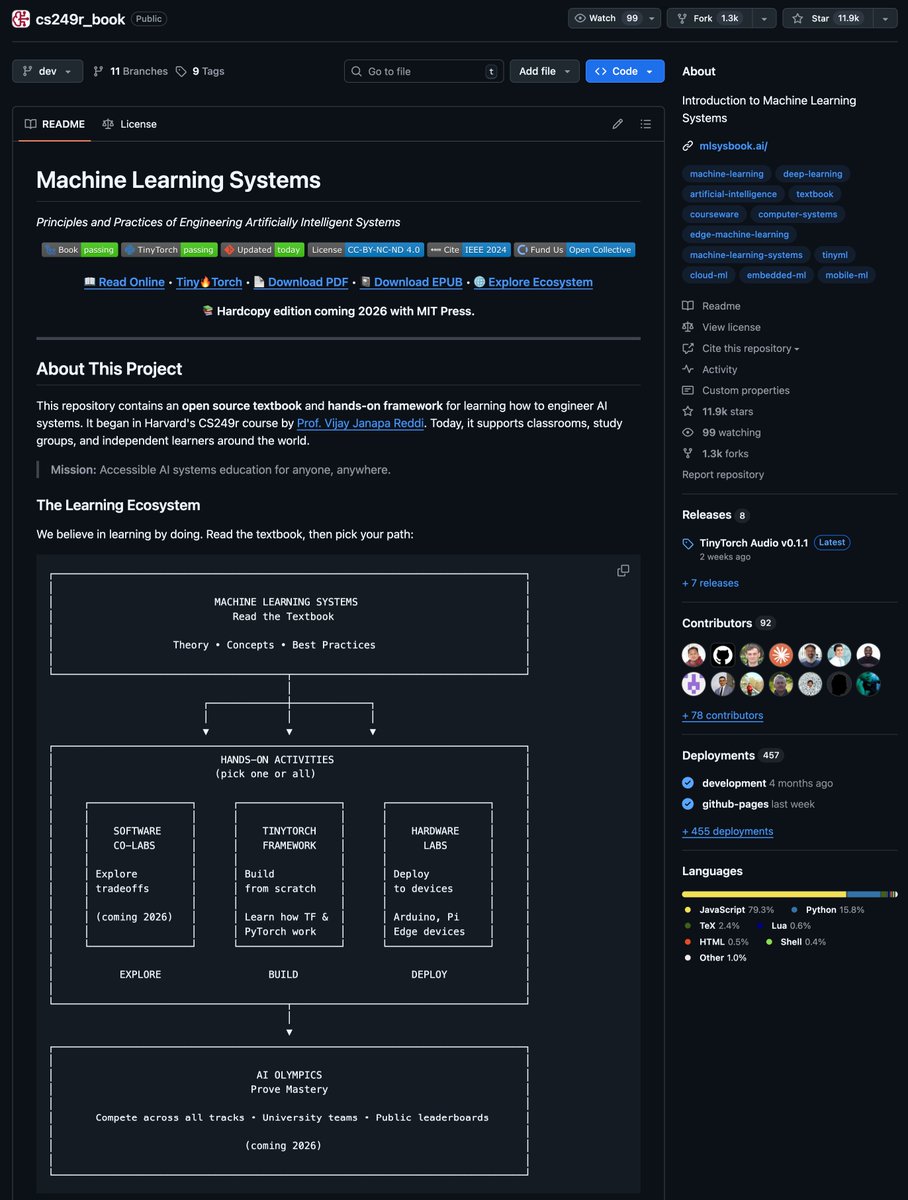
Harvard's just open-sourced their ML Systems textbook. it's extremely practical for not just learning how to build and train models, but to build production systems (the skill that actually matters). topics are cool af:
> building autograd, optimizers, attention, and a mini-pytorch from scratch to truly learn how an ML framework runs. (i love this the most)
> basics of DL, batch sizes, precision, model architectures, and training
> ML performance optimization, HW acceleration, benchmarking, efficiency
so this is not just an intro to machine learning, it's the full package from the beginning to the actual end. right now you can read the book and access the code for free. this is one of the best books I've seen dropping in 2025, so don't sleep on it.
here's the repo (you can find the book link there): https://t.co/5OEWPBNaJp
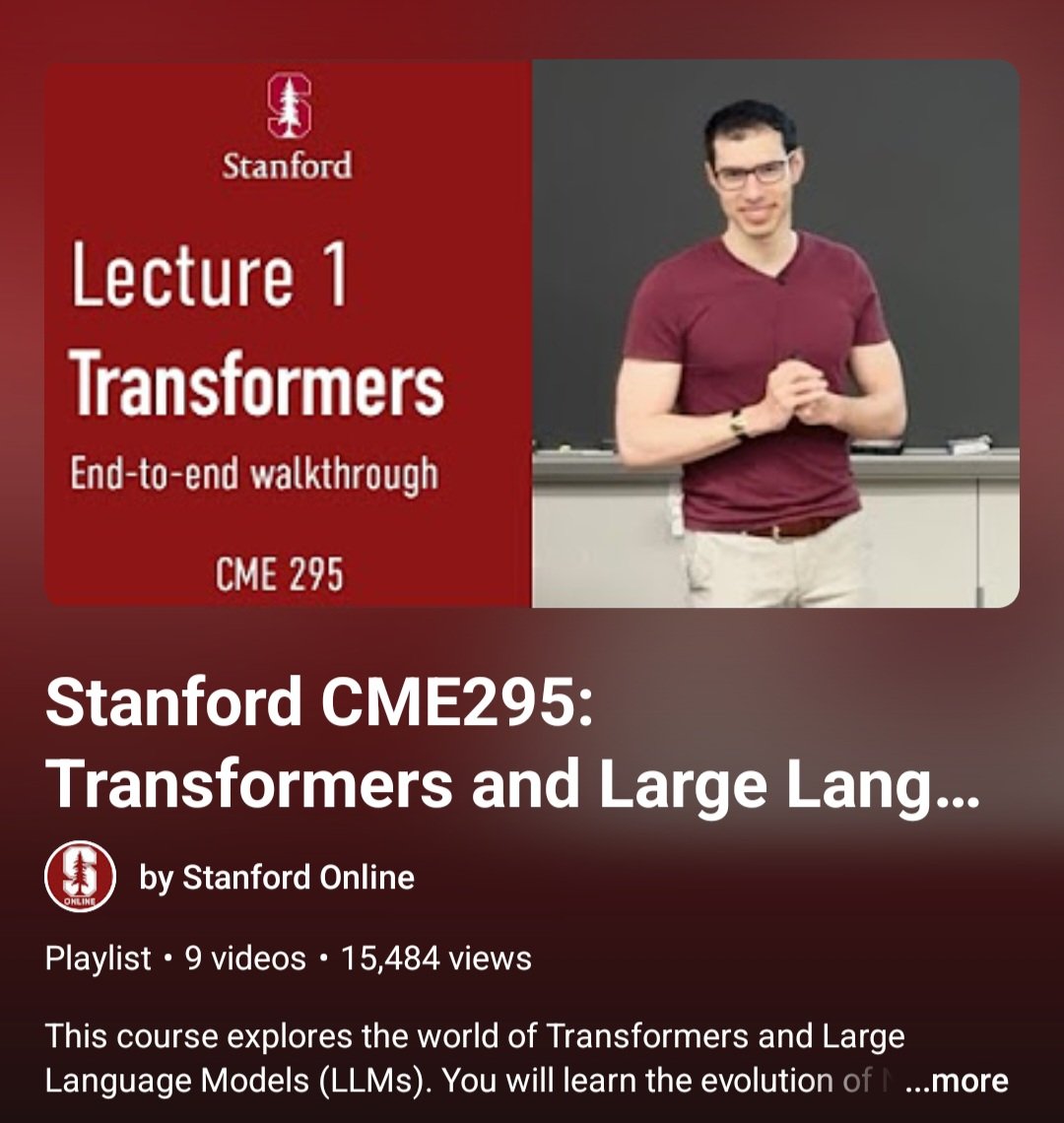
Stanford just dropped their full LLM course on YouTube.
9 lectures.
Completely Free.
Real curriculum-level depth.
CME 295: Transformers & Large Language Models
This isn’t:
• a hype tutorial
• a prompt-engineering hack
• a tech influencer hot take
It’s Stanford’s Autumn 2025 course.
They cover: Transformers from first principles
Tokenization, attention, positional embeddings
Decoding, MoE, scaling laws
LoRA, RLHF, fine-tuning
RAG, tool calling, evaluation
RoPE, quantization, optimization tricks
This is foundation-level AI knowledge.
The kind that actually gets you ahead.
If you’re serious about learning AI:
👉 bookmark this
👉 repost for later
👉 stop doomscrolling and build
Playlist link: https://t.co/6rEBdY9tIU
Pulled in $37K this month from affiliate commissions.
No filming. No editing. No team.
Just AI avatars reviewing e-com products —
30+ videos/day on autopilot.
Drop a like + RT and comment “AFF” and I’ll DM you the playbook
(must be following)
Gemini 3 has a capability most people don't even know exists.
it's not the 1M tokens.
it's not the multimodal processing.
it's something else entirely.
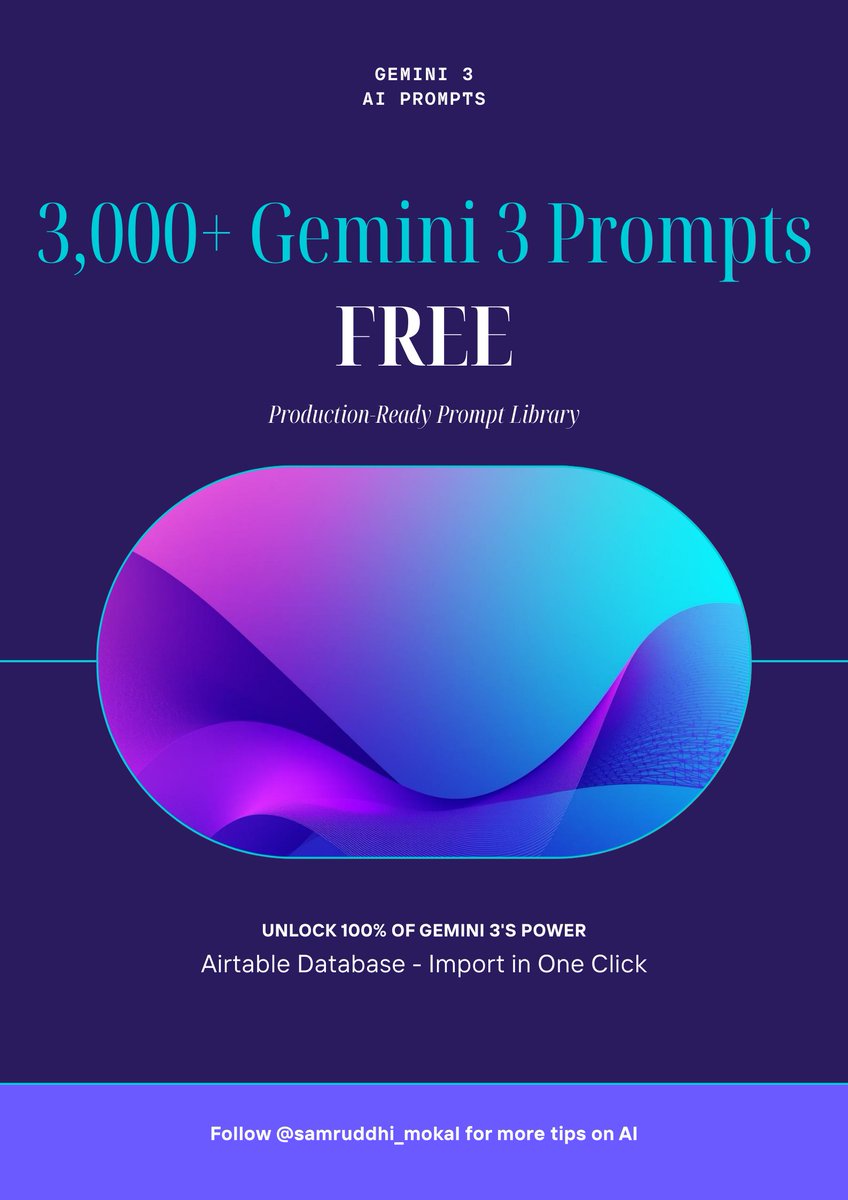
And it's the reason I built 3,000+ prompts specifically for Gemini 3.
Everyone talks about Gemini's specs:
→ 1 million token context
→ Native multimodal inputs
→ Deep Think mode
→ Agentic workflows
But they're missing what happens when you combine these features.
The secret is persistent systems thinking.
Gemini 3 doesn't just process large contexts.
It maintains coherent reasoning ACROSS those contexts while simultaneously:
- Analyzing images
- Reading documents
- Planning multi-step workflows
- Adapting based on previous outputs
This creates emergent capabilities that don't exist in other models.
I built 3,000+ prompts that exploit this.
Each prompt is built around this core insight:
Gemini 3's real power isn't WHAT it can process.
It's HOW it connects everything together.
The library includes:
✓ 3,000+ production-ready prompts
✓ Organized by difficulty (beginner → advanced)
✓ Real use cases for each prompt
Like, RT + reply "GEMINI" and I'll DM you the guide.
(Must be following so I can DM)
Skip this and keep wondering why your Gemini results feel the same as ChatGPT.
Or grab the library and start using the capability everyone's missing.