The political marketplace is broken. Today, we’re fixing it.
Democrats have built an apparatus that spams supporters, enriches middlemen, and fuels "rage-bait" that actually hurts candidates in swing districts.
Here are the 7 Deadly Sins of the current landscape and why we’re launching Investing to Win.
"According to state data released last month, 1 in 4 Massachusetts public high school students are enrolled in some form of technical education (excluding “early college”)."
https://t.co/Jiu4jjFrNb
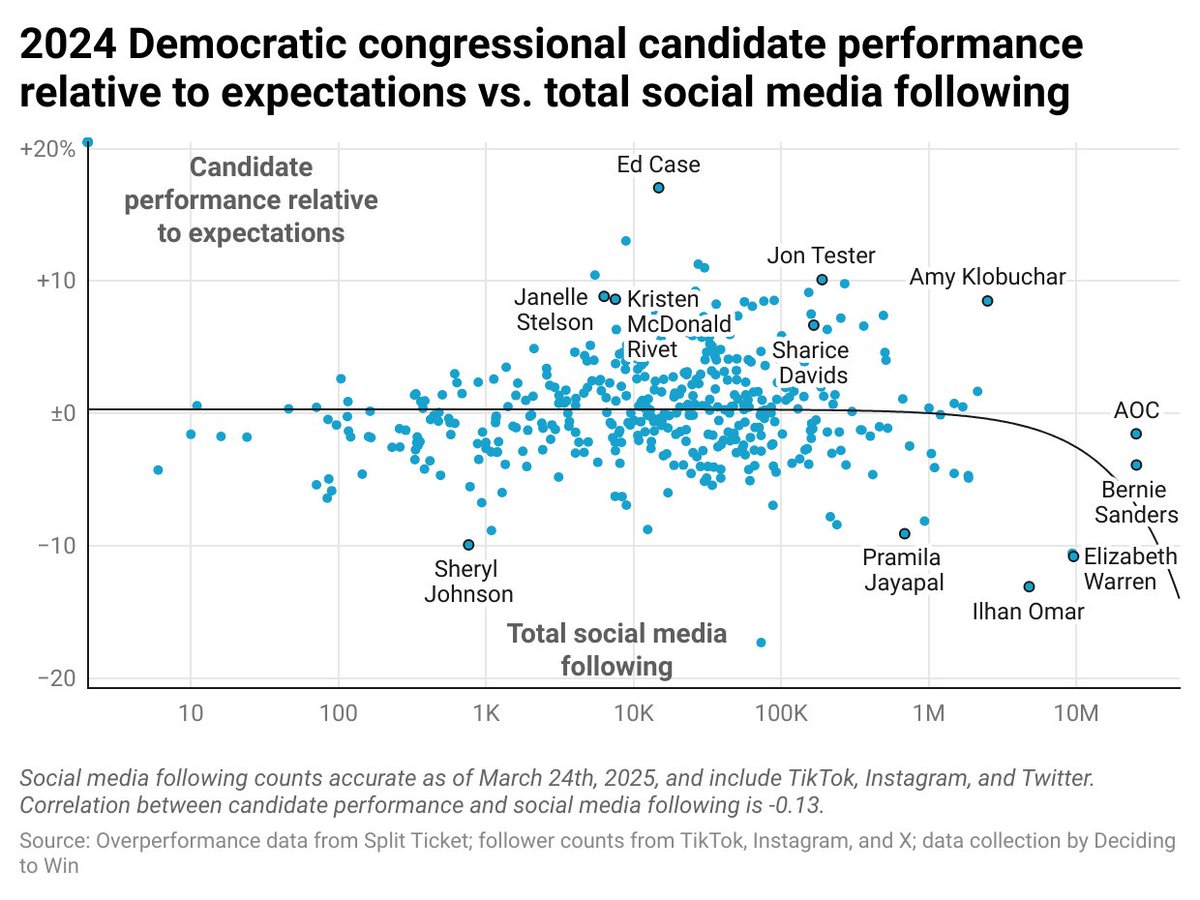
Attention is not the problem.
The Democrats with the biggest social media followings did WORSE in 2024.
Our party's problems are substantive, not cosmetic.
It's time to renew the Democratic Party.
Introducing DECIDING TO WIN: the most comprehensive account yet of where Democrats went wrong, and what we need to do to win again.
With a year of research and tons of new data, by @laurenhpope, @liamkerr, and me.
Link and 🧵 below.
Fun fact: The federal endowment tax applies only to colleges with over $500,000 in wealth per student. If colleges subject to the current endowment tax let in enough more students, they could escape the tax entirely. @ezraklein@mattyglesias@willfaustin https://t.co/91jaMZjeix
"Question 2 appears to be yet another data point documenting a major political realignment in this country. Higher educational attainment has become a significant marker for how many people identify politically and vote." -@willfaustin https://t.co/XLGVIcaMMH
“Setting clear goals, public leadership, creating monitoring systems, reinforcing culture, celebrating success, and empowering individual schools does not fit on a bumper sticker. But that is how you drive change.” - @willfaustin. https://t.co/UjyfZ2jkA2
Any intervention in response to recent MCAS results will go only so far without students frequently participating in class, writes @willfaustin. https://t.co/OhFARfe1hJ
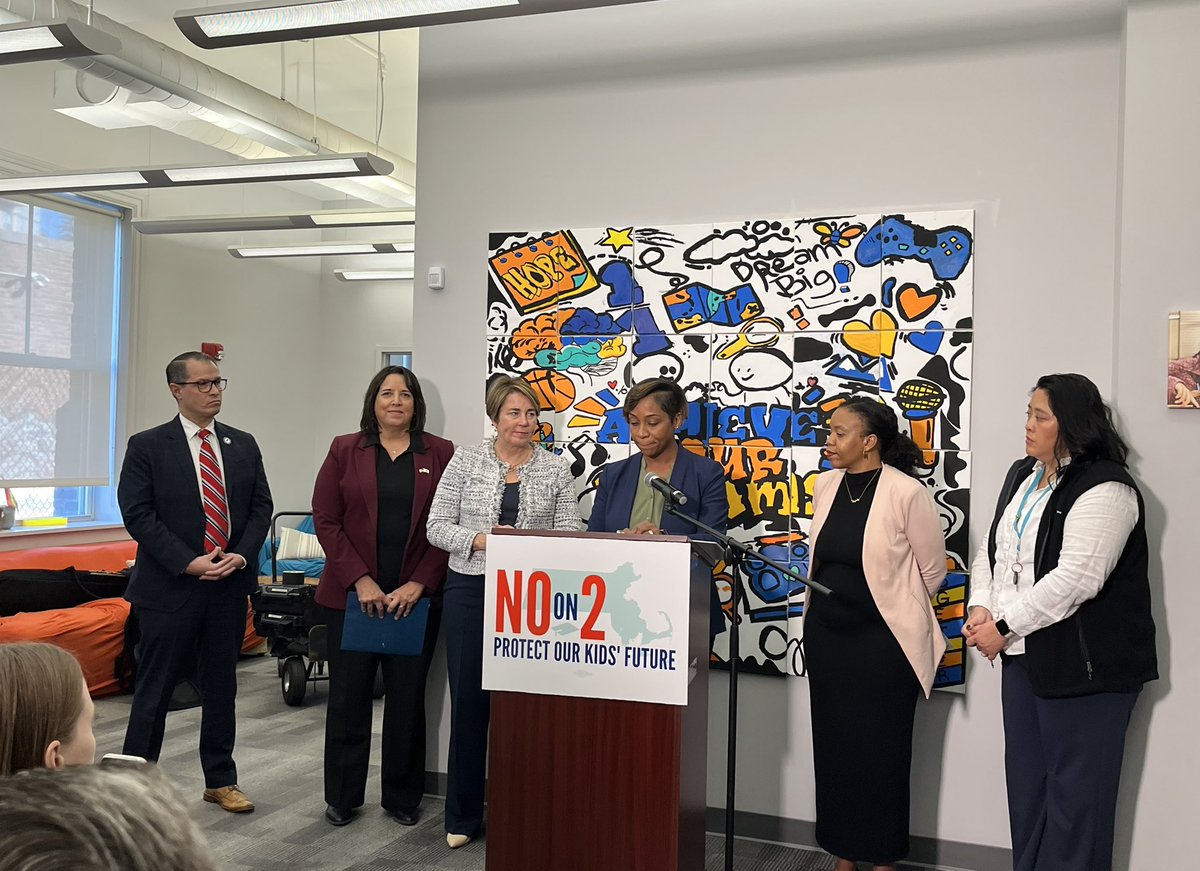
I’m voting No on 2 because no matter the community, every child deserves the highest quality education.
If Question 2 passes, we'll become one of two states that don’t have a statewide standard for graduation. The only standard remaining would be four years of gym.
There is an uncomfortable but true trade-off: Whatever real or perceived value of safety a cellphone may bring, it will most definitely mean a child will do worse in school academically and socially, writes @willfaustin. https://t.co/WmgRgJ3qxK
"Closing the summer access gap is a potential path to closing achievement and opportunity gaps." Research shows that youth who attend 80% of summer programming will see better outcomes. We're honored to be featured in this piece by @willfaustin.
https://t.co/79HKJBeuoZ #summerlearning #summerforall
Page 2. https://t.co/WssxNRIFln. Even on a spot check, there are schools with no invitations where applicants averaged a B. No doubt, the GPA requirement means fewer students qualify but it doesn’t explain the total difference.
@willfaustin Very interesting - didn’t the number of applicants from Year Z of the old policy to Year 1 of the new policy approximately halve? (Without looking it up, something like 2,200 -> 1,200?)
If you could point to where that data appears in the court record, would love to review it.
I thought the same thing! But when I extrapolated from the GPA data provided for the 2021 court case, I found that the vast majority of students in the former admission system had B averages are higher, too. Thank you for amplifying my work!
Although Will’s op-ed in @GlobeOpinion gets the big things right, it misses the real reason exam school applications are down. Under the old system, any student - even academically poor ones - could apply. The new GPA minimum weeds out a lot of no-chance applicants.
#bospoli
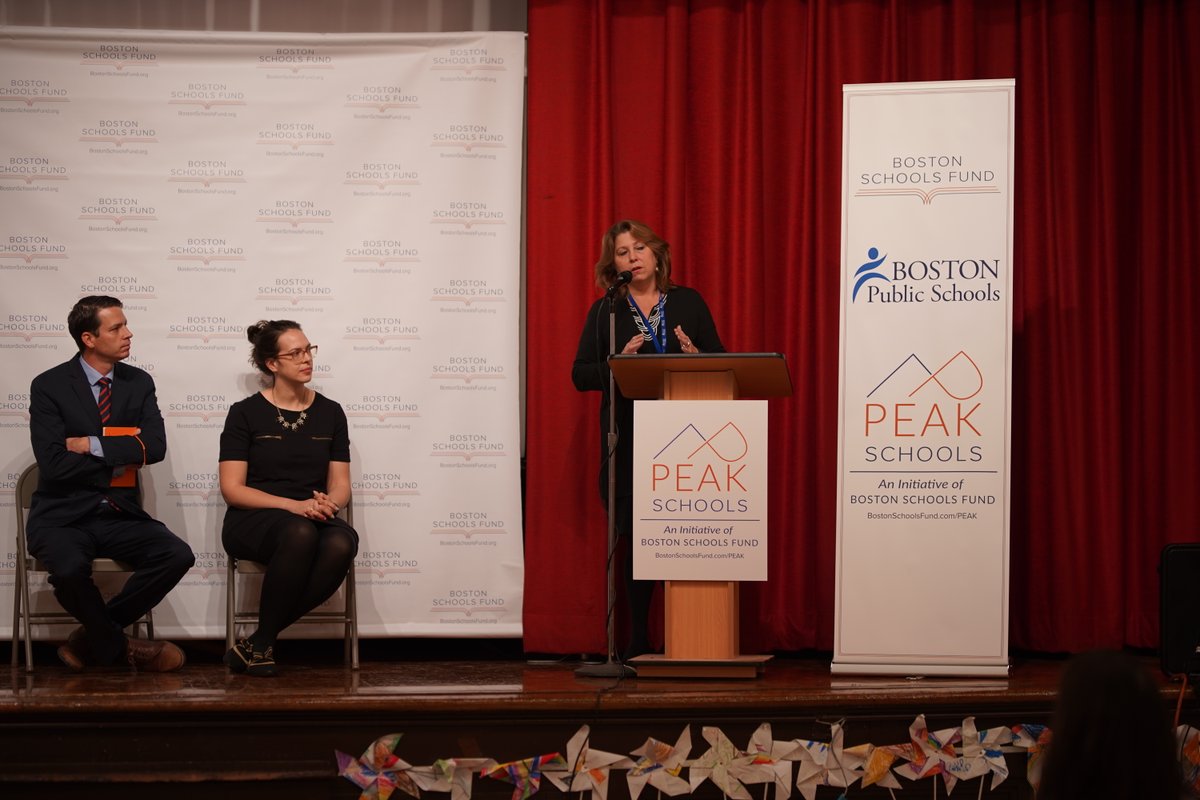
Thank you to the @BosSchoolsFund who announced Wednesday at the Rafael Hernandez School the first recipients of the PEAK investment, which is part of a $2.3M initiative over the next three years. Among these recipients are the @hernandezK8sch, @SamuelAdamsEB, and @SumnerBPS