@EricJorgenson@JamesClear I envision you deep diving into Leverage and @JamesClear tying the three ‘forces’ together (Compounding, Leverage, and Asymmetric Opportunities)... just a thought - but could be really cool
@DanielPriestley Let’s assume a wealth tax of 100%. That would clearly be expropriation and violate private property, with all the dire consequences of that (including significant negative impact on incentives). If this is the case for a 100% wealth tax, then it also applies to a 1% wealth tax
Pavel Durov, founder of Telegram, says that passengers on the Titanic actually didn’t want to leave the ship for almost two hours after it hit the iceberg.
Pavel Durov says we are in a similar situation: our ship has already hit the iceberg. We have already started to sink without even realizing it. He is talking about the ship of our personal freedoms.
He says that personal freedoms have been eroded almost everywhere in the world, with very few exceptions. He has witnessed firsthand the methods governments use to suppress our freedoms and take away our basic rights. He has seen all the tricks: the PR tricks, the legal tricks, the political tricks, the manipulations, and the official excuses.
The thing that bothers him most today is that some of the same tricks employed by authoritarian regimes in places like Russia, China, and Iran are now also being used in some Western countries.
—————
Here are some key statements from Pavel Durov:
“Thousands of people are getting arrested every year in the United Kingdom for social media posts.”
“You say something politically incorrect online, you may end up being fined or spend some time in prison. In Germany, people get arrested and persecuted for insulting politicians online, thousands of people every year.”
“You call a politician a bigot or a thief online and you can serve up to 3 years in prison. So, now people are afraid to use their real identities. People stop using their real names when they make comments online.”
“The criminals will be fine. It will be the law-abiding citizens who will be put in danger.”
“Last year, a French tax official was caught stealing the financial data of people who held large amount of crypto assets… you have a catastrophic rise in the number of kidnappings in France. Just in the first 3 months of 2026, you have over 40 victims of kidnappings in France.”
“Another trick that has been used by authoritarians for decades. And now it is being increasingly exported from the East to the West. I’m talking about selective enforcement of laws.
The way it works is pretty straightforward. First, you need to introduce a large number of laws. You need to overburden a certain industry with excessive, mutually exclusive, contradictory regulation. As a result, you make compliance impossible. Now you can treat every entrepreneur, every CEO, every business owner in this country as a criminal.
But then the government carefully starts to choose who to persecute. If the business owner is loyal, if it complies with immoral, unlawful demands from the government, gives certain political favors, then the law enforcement system and the judicial system look the other way. But if the business owner decides to stand up for the constitutional rights of his or her fellow citizens, if they refuse to cave in to political demands from the authoritarian government, then the persecution comes in full.”
“We cannot afford to have this ship sunk. There is nowhere to escape. In the past, dissidents from authoritarian countries could flee to the West. But if the current trajectory continues, in a decade or two from now, they will have hard time trying to understand whether they have already left their repressive homeland or they’re just entering another open-air prison.”
“Those who are willing to give up their essential liberty for some temporary safety deserve neither liberty nor safety.”
—————
Which would you choose: essential liberty or temporary safety?
Expected when some committee in Moscow decided tanks were priority number one.
Central planning MUST misallocate resources because it destroys the only tools that make rational allocation possible:
>price signals that reveal real scarcity and consumer demand
>profit and loss that reward what works and kill what doesn’t
>private property that creates skin in the game and local knowledge
Without those, planners can force resources into whatever flatters their power like tanks, rockets, gulags, or five year plans.
But they cannot force wheat to grow, farmers to care, or distribution networks to function when every incentive is inverted.
@RockChartrand 2) Let’s assume a wealth tax of 100%. That would clearly be expropriation and violate private property, with all the dire consequences of that (including significant negative impact on incentives). If this is the case for a 100% wealth tax, then it also applies to a 1% wealth tax
Two comments: 1) Don’t ever go into the argument of ‘moral’ or ‘fair’, because then you accept that this is a valid way to argue. But ‘moral’ and ‘fair’ are deeply subjective, hence can support any argument or “will of the people”. Ask instead, how do we create the best incentives to create most value for others
Genuine question: In a free market the price of a house is the cost of materials and labor + some profit to the builder who takes on a risk (profit in a free market is competed down to a ‘reasonable’ level). In this setup, how is it that capitalism and free markets are the problem?
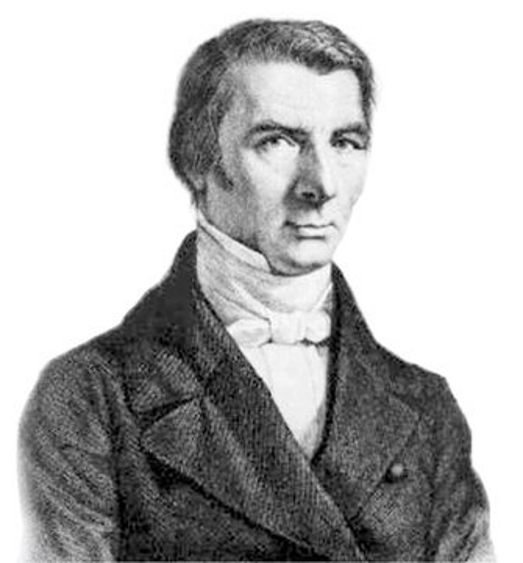
Frédéric Bastiat captured the essence of modern politics in a single sentence:
“The State is that great fiction by which everyone tries to live at the expense of everyone else.”
Once the state becomes the primary mechanism for distributing resources, politics stops being about protecting rights or creating the conditions for voluntary cooperation. It becomes a contest in which every group attempts to extract wealth from others through taxation, subsidies, regulation and welfare.
Farmers demand agricultural subsidies. Pensioners demand higher benefits. Students demand free tuition. Corporations demand bailouts and protection from competition. Each group frames its demands as a matter of justice or necessity, while ignoring that the money must come from someone else’s labour and property.
This creates a deeply corrosive dynamic. Instead of producing value through trade and innovation, people invest time and resources in political activity designed to redistribute existing wealth. The result is not greater prosperity, but higher taxes, expanding bureaucracy and a culture of dependency, victimhood and resentment.
The state transforms society into a zero-sum game. When everyone is encouraged to view government as a source of unearned benefits, the moral and practical foundations of a free society are steadily undermined. The fiction eventually collapses under the weight of its own contradictions.
@naval I love hard working people, and hard work is usually needed to create a lot of value to other individuals. But it is fundamentally not a requirement for getting rich
@naval It is not about hard work. You get paid by providing value to others and they are willing to pay you for it. You can then get rich by 1) provide a lot of value (eg cure cancer), 2) use leverage (eg capital or code) and/or 3) work hard.
“Democracy is the foundation of our freedom.”
Cette phrase est fascinante.
Pas parce que la démocratie n’est pas importante.
Mais parce qu’aujourd’hui, certains responsables politiques semblent avoir inversé le sens des mots.
Orwell appelait cela la novlangue.
Le principe est simple : quand le pouvoir change la définition des mots, il change progressivement ce que les gens acceptent comme normal.
La censure devient la “protection de la démocratie”.
Les restrictions de certaines libertés deviennent la “défense de la liberté”.
La centralisation du pouvoir devient la “protection des citoyens”.
La critique devient de la “désinformation”.
Plus les mots perdent leur sens, plus il devient difficile d’avoir un débat honnête.
La démocratie n’est pas un slogan.
C’est la possibilité de contester le pouvoir, de débattre librement et de changer les dirigeants.
Orwell n’avait pas peur des mots.
Il avait peur du jour où les dirigeants n’hésiteraient plus à leur faire dire exactement le contraire de ce qu’ils signifient.
1984 était un avertissement, pas un mode d’emploi.
@alojoh They are catching up to Falcon 9. But they are far from Starship, where they need to solve many more problems before they catch up. Also, landing on the moon at least initially needs legs and that capability.
Saying socialists understand economics just as well as capitalists makes no sense if they advocate opposite economic principles. Either both are wrong, or one is. They can't both be equally right about mutually contradictory ideas.
And if socialists truly understood economics, they'd recognize that "managing the economy" isn't capitalism at all. It's central planning. Capitalism doesn't centrally manage the economy. It leaves production, prices, and investment to voluntary exchange instead of political direction.
Capitalism isn't the government managing the economy badly. It's the government not managing the economy in the first place.
By this standard they view capitalism as a competing form of socialism.