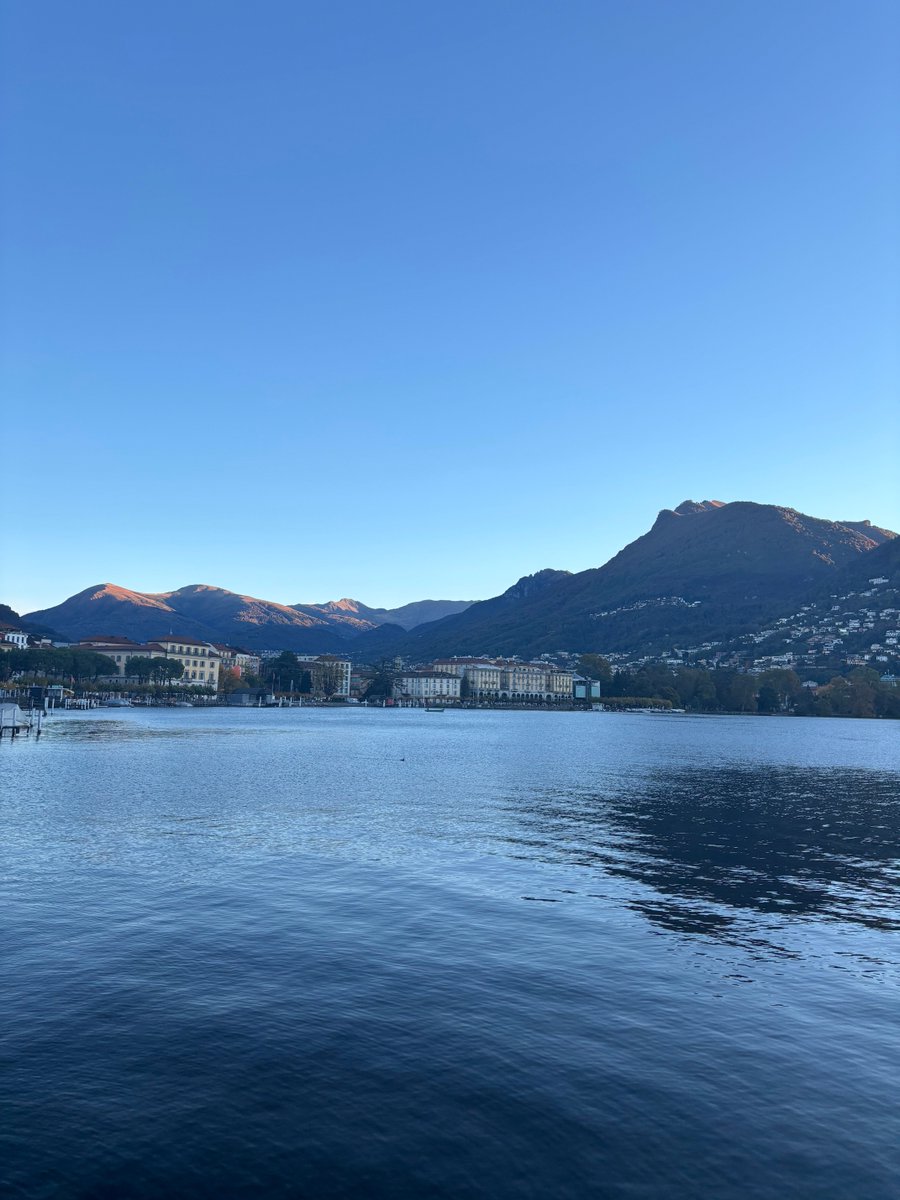
In the Middle Ages, this lake was a trade crossroads fought over by Como and Milan. The Swiss took it in 1513. Today it's Switzerland's 3rd largest banking center. Some places just understand the flow of capital.
#LakeLugano#Switzerland#SwissBanking#HiddenHistory#Ticino
Australia's grazing land mass is roughly the same size as the entire European Union. Rural NSW alone just hit a record $25.5 billion in output — doubled in a decade. Non-correlated. Tangible. Underallocated.
By 1849, more wool passed between these two headlands than all of Europe produced combined. Today Sydney Harbour's commercial shipping has moved south to Port Botany — 2.8 million containers a year. The Heads now guide cruise ships, not clipper ships. #TradeRoutes
A London mews. Once the back-of-house that powered trade - stables, coach houses, servants' quarters. Now per-square-foot among the most valuable real estate on earth. Every city tells you what it values by what it preserves and what it prices.
In the 1870s, traders met at Fullerton Square every day at 2pm to strike deals in the open air — Singapore's original trading floor.
Beneath them, a tunnel carried mail by conveyor belt onto steamships bound for London.
England's first global export economy was built in the Cotswolds - wool traded to Flanders and Florence. The Lord Chancellor still sits on the Woolsack in Parliament as a reminder.
800 years on, capital still flows to real, productive assets. Only the structures evolve.
The Venetians built Europe's first investment banks in the shadow of the Alps.
500 years later, northern Italy remains a capital of enterprise - home to thousands of family businesses that quietly participate in global markets.
Generational wealth.
Luxembourg's fortress was besieged 20 times. Never fell. Today it guards something else: €5.8 trillion in assets, AAA-rated sovereignty, and Europe's strongest investor protections.
Portugal is emerging as a strategically important Atlantic gateway connecting European capital with African and American resources, underpinned by EU stability
Lisbon, 1469. After Prince Henry the Navigator died, the Crown couldn't afford exploration. So they did something radical: granted a private merchant, Fernão Gomes, monopoly trading rights in exchange for discovering 100 leagues of African coastline
@El_FreedomFairy Nice work. Gold’s narrative has thousands of years of head start - massive advantage. Makes me think - most people don’t really understand how money works, yet trust banks without question. How does that impact bitcoin’s journey
Most mass afluent ($100k - $1M) & HNW investors ($1–5M) barely touch alternative assets. The ultra-wealthy ($5M+) invest around 20%.
It’s not about appetite - it’s about access and structure.