Update on CVE-2025-66478 (React2Shell):
An npm package has been released to scan and update affected Next.js apps. Use `npx fix-react2shell-next` to update to patched versions.
All users should update as soon as possible.
More details our blog:
https://t.co/fjNfpv3huI
i've been hacked
and traced the malware's wallet to see how much money they actually made from this new exploit
(if you use Next.js/React, READ THIS!)
I woke up to a terrifying email from Hetzner: "Netscan Detected."
my server was blocked and a botnet was using my IP to attack others
i dug into the logs and what I found the anatomy of the attack:
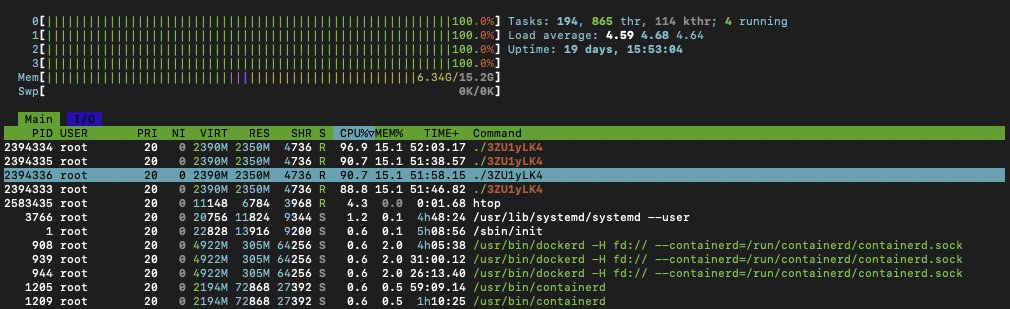
1) The Symptoms: I logged into htop and saw the mess:
- CPU usage: 361%
- A process named ./3ZU1yLK4 running wild
- Random connections to an IP in the Netherlands
my server wasn't serving my app anymore; it was mining crypto for someone else!
2) The Culprit: It wasn't a random SSH brute force. It was inside my Next.js container
the malware was sophisticated
it renamed itself nginxs and apaches to look like web servers
it even had a "killer" script that hunted down other hackers' miners to kill the competition
3) The "Root" Cause (literally): Probably the recent React/Next.js CVE-2025-66478 exploit was the entry point
(my project was running on "next": "15.5.4", behind cloudflare dns, but their recent fix didn't work apparently)
but the fatal error was mine: my Docker container was running as ROOT
Coolify deploys like this automatically when using Nixpacks, and I never changed it...
so because of USER root, the malware could install cron, systemd, and persistence scripts to survive reboots
meaning, it was able to infect my whole server, from a single Next.js docker!
4) The Forensics: I ran docker diff on the container - the hacker didn't just run a script, they installed a whole toolset..
- /tmp/apaches.sh (The installer)
- /var/spool/cron/root (The persistence)
- /c.json (The wallet config)
5) The Fix: I killed the container, scrubbed the host, and extracted the malware for analysis.
but the real fix is in the Dockerfile. if you are deploying Node/Next.js, DO NOT use the default (root), you must:
- RUN adduser --system nextjs
- USER nextjs
if you have Docker on ROOT and didn't update the exploited react version, you'll be hacked soon
check your containers NOW. Run: docker exec <container_id> id
(or get the full list first: docker stats --no-stream)
If it says uid=0(root), you are one vulnerability away from being a crypto-miner host.
(it's easy to notice when hacked, it will be a command running on the top CPU%, using all your hardware resources)
6) The Money: I dug deeper and recovered the config file (c.json)
- Wallet: A Monero (XMR) address: 831abXJn8dBdVe5nZ***
- Pool: auto.c3pool . org
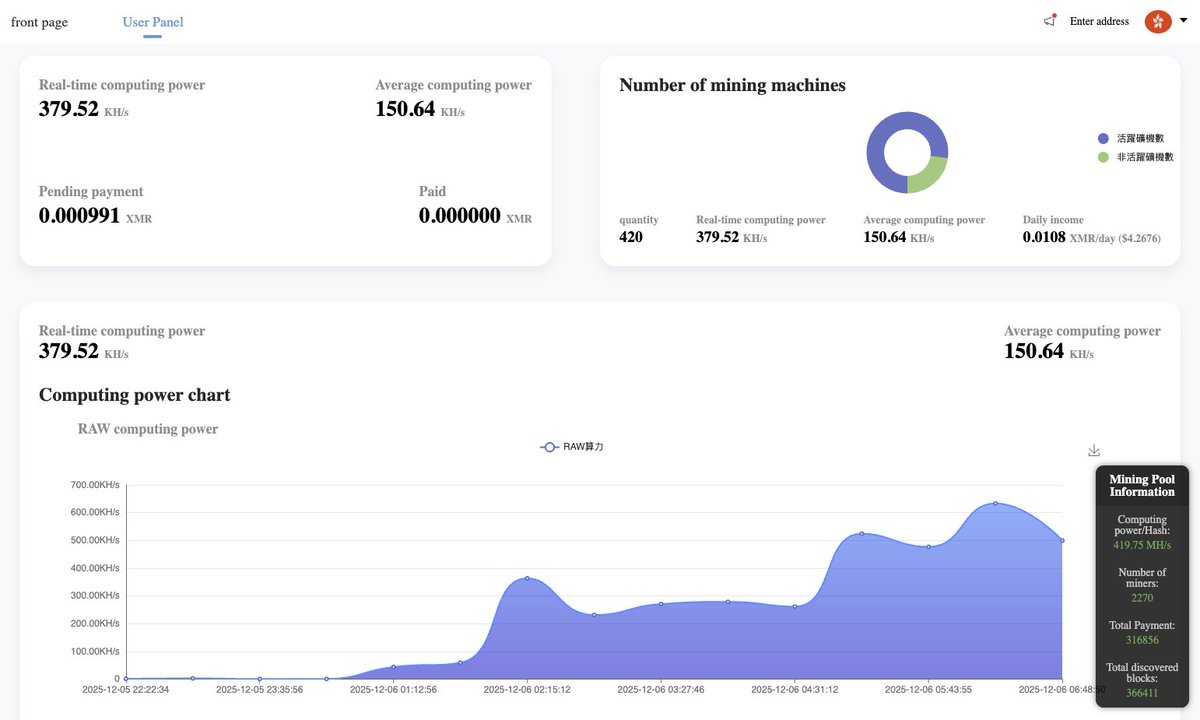
and ofc i tracked the hacker’s wallet on the mining pool
7) The Scale: My server wasn't alone. It was just 1 of 415 active zombies in this botnet
they are burning the CPU of 400+ cloud servers... to earn...
guess how many millions?
$4.26/day
on the image attached you can see: "Total Paid: 0.00", meaning this campaign just started. I caught them on Day 1.
i also tracked back the server where they hosted the malware, and by inspecting the code, I found several comments in Chinese, so I guess that's their origin
im rebuilding from scratch on a fresh VPS. the lesson was expensive, but at least I caught it before the hosting nuked my account permanently...
PS: I have the IP for all the other machines mining with that malware, not sure how I can help them, but feel free to contact me if ur doing infosec
stay safe
Internet não tira folga: em pleno feriado de 21/04/25, o https://t.co/QK8nT9riM3, o maior ponto de troca de tráfego do mundo que é operado por uma organização sem fins lucrativos (https://t.co/nIaa0puCpz) e que fica no Brasil atingiu mais um recorde de tráfego: 40,27 Tbps, mais de quarenta milhões de megabits por segundo.
O legal de Rest é que só olhando o path dos endpoints você consegue ver que tem problema de modelagem. Para mim seria melhor se fosse assim (não vou listar todos, mas tem espaço pra melhorar tudo):
GET /api/turmas/:id/tarefas melhor que /api/tarefas/turma/:turmaId
GET /api/professores/:professor/turmas/:turma/tarefas melhor que /api/tarefas/professoras/turmas/:turmaId
GET /api/tarefas/:tarefa/notas/ melhor que /api/tarefas/professores/notas/:id
E por fim, se você olhar da ótica do front-end, vai ver que fica ruim para integrar. Olha como seria melhor esses últimos 3 endpoints pro front.
GET /api/turmas/ (pega todas as turmas)
GET /api/turmas/:id/tarefas (pega todas as tarefas de um turma selecionada)
GET /api/tarefas/:tarefa/notas/ (pega todas as notas de uma tarefa selecionada, previamente selecionada para uma turma).
Já era titio, vapo.
More languages, more insights!
A few interesting takeaways:
* Java and Kotlin are quick! Possible explanation: Google is heavily invested in performance here.
* Js is really fast as far as interpreted / jit languages go.
* Python is quite slow without things like PyPy.