@brivael "...order isn't natural. It's built and maintained, sometimes by force. A state that refuses to use legitimate violence doesn't abolish violence. It hands the monopoly to whoever is willing to use it." 🎯
Lydia Miljan just eviscerated the Carney government on CTV over the Stellantis fiasco
On Melanie Joly: “Minister Joly started very badly in the Trudeau government with the $5 million skating rink. This is much worse. And so her ability to fail upward is actually quite spectacular.”
On the “new” government: “It’s feeling very much like an old government. It’s almost like the emperor has new clothes… And really, the only thing that’s new about this government is Mark Carney. And he’s starting to look kind of naked.”
They knew about the sale in advance, burned ~$1B in taxpayer money (federal + provincial), and now threaten lawsuits that will take years while Windsor plants sit in shutdown. Word salads and holdover Trudeau-era incompetence instead of delivery
Canadians are judging results, not résumés. So far it’s the same old failures, just with a new face out front
@lmiljan
Mark Carney, the climate banker turned prime minister, keeps Canada's net zero by 2050 promise
The bill: C$1,650 billion ($1,190 billion)
The world gets 0.0160°C less warming in 2100
31¢ back on every dollar
https://t.co/RkRo3bXap5
What makes Darlington's SMR cost & schedule overruns particularly galling is Canada's failure to think strategically in the national interest. Rather than investing in CANDU, we have committed billions in public financing to pioneer GE Vernova Hitachi Nuclear Energy's American BWRX-300, potentially creating a formidable U.S. competitor to future Canadian reactor exports.
With OPG acknowledging a cost overrun, Canada's financial exposure is growing. The BWRX-300 benefits from Canadian generosity in the form of cheap public financing, avoiding the punishing commercial capital costs that have bedevilled nuclear construction elsewhere, most notably Britain's Hinkley Point C.
Ottawa has committed up to $2 billion through the Canada Growth Fund, Ontario's Building Ontario Fund another $1 billion in equity & the Canada Infrastructure Bank $970 million in low-interest financing. Eligible expenditures can also benefit from the federal 15 percent Clean Electricity Investment Tax Credit. Ontario ratepayers finance the remainder.
Canada is deploying the full weight of its public balance sheets to overcome two of nuclear construction's greatest obstacles: the cost of capital & the financial risks of building first. Yet this extraordinary industrial policy support is helping establish a U.S. reactor design rather than strengthening our own.
If the BWRX-300 succeeds, GVH will have a commercially demonstrated reactor to market globally. Canadian suppliers may win export contracts & OPG could benefit from its pioneering experience.
Yet OPG has a much stronger stake in CANDU, inheriting Ontario Hydro's design expertise & intellectual property interests arising from its historic collaboration with AECL at its Darlington CANDU plant.
With the BWRX-300, GVH retains control of the core IP & international reactor-sales franchise, while Canadian taxpayers & electricity customers shoulder the financial risk.
OPG deserves credit for securing exceptionally high Canadian content in the BWRX-300. But achieving that localization comes at a cost, requiring domestic manufacturers to qualify new components & develop capabilities for an unfamiliar U.S. design.
Meanwhile, Canada's $26 billion nuclear refurbishment program has already revitalized a domestic CANDU supply chain.
An Enhanced CANDU 6 at Darlington, which I tirelessly advocated for since 2024, could have leveraged those investments while establishing a modern reference plant to strengthen Canadian exports.
The benefits, from IP & engineering expertise to future reactor sales, would have accrued far more substantially to Canada.
Few countries with an indigenous nuclear industry would be so cavalier about financing a potential competitor. From aviation & telecommunications to AI & now nuclear, Canada has repeatedly failed to champion its own advanced technologies & capture their economic value.
As we face a large reactor technology selection pitting the U.S. AP1000 against CANDU, we can't repeat this own goal.
@Sflecce@fordnation@timhodgsonmt@melaniejoly@MarkJCarney@FP_Champagne@DLeBlancNB@PBethlenfalvy@PierrePoilievre@MaritStiles@jamiewestndp@tedhsu@Rae_Matt
Yes it’s true … British tax payers are going to be forced to bail out the National grid.
Just so you know the ‘National Grid’ isn’t owned by us. Er no….
It’s a privately owned company with international shareholders, with almost £49 BILLION of debt, forecast to reach £60–70 BILLION by 2031.
The massive costs of upgrading the grid including financing costs and shareholder returns (obvs) , is paid through increasing OUR energy bills.
Much of this investment is because of the Government’s Net Zero targets.
And if it gets into serious financial trouble, the law even allows government financial support (paid for by taxpayers)
It’s a bloody brilliant private investment where the investors never lose. And ordinary people always pay.
Now watch what they do with nature.
Bill Maher and Coleman Hughes finish each other's sentences for 3 minutes straight as they lay out how teachers' unions wrecked public education.
The MS NOW host thought she could sit this one out quietly. Then Maher turned and lobbed a grenade right at her.
MAHER: "The reason why they don't know that socialism didn't work... is because NOBODY taught them in school."
HUGHES: "A lot of kids go to underperforming public schools, which is our euphemism for government-funded daycare centers with occasional school-like activities."
MAHER: "I knew they weren't learning anything, but like you said, it's like a daycare center and not a good one."
HUGHES: "And I think people on the left want to blame funding because that's the easy issue. But the truth is, this school was well funded. You know, it's 50,000 per pupil at this school. The problem isn't the funding. It's that you can't fire anyone bad."
MAHER: "Yes.... The problem is the union, the teachers union, is too powerful. We've seen it in results in states where the union is less powerful, the schools do better."
HUGHES: "I call it the chalkboard mafia."
MAHER: "The problem, the unions protect bad schools and bad teachers, and the party protects the union. It's almost impossible in a lot of these cities to fire a teacher. I mean literally like you could sell drugs to a kid and it's got to be two offenses before we get—"
HUGHES: "It wasn't that long ago that the unions lobbied for a law in New York State to ban even collecting data that you would use to assess which teachers are better than others. You can't even get the data. So obviously the teachers union serves the teachers, they don't serve the students, and if you're a Democrat or any American that's serious about public school reform, you have to challenge the teachers union, period."
MAHER: "And I think in this school, where they were learning nothing with no supervision and absentee principals and teachers, I think spending 50,000 dollars per year per student, it's not money. That's what you always hear from the left. 'Oh, it's underfunded.' It's not the funding. The funding isn't the issue."
HUGHES: "No, it hasn't been for a very long time."
MAHER: "I think this is the kind of thing I will NEVER hear on MS NOW."
ALI VITALI: "I think you hear a lot of perspectives on MS NOW."
MAHER: "I don't ever hear that one."
CONTEXT: Maher and Hughes aren't making this up. On the latest Nation's Report Card, high school seniors posted the lowest reading and math scores ever recorded on the test.
And getting rid of bad teachers is nearly impossible. Federal survey data shows the average school district dismissed just 0.2 tenured teachers for poor performance in a year. That's roughly 1 in 500.
Meanwhile, students do better long-term in states where unions have less power.
A 2019 study in the American Economic Journal found that boys who went to school in states that forced districts to bargain with teachers' unions went on to earn about $2,100 LESS per year as adults compared to boys in states without those laws.
If a business failed this badly, someone would get fired. As Hughes put it: "The teachers union serves the teachers; they don't serve the students."
Recently I told you there are two kinds of people in this system: cynics and believers.
Ursula von der Leyen, I put her with the believers. And that's exactly why you need to understand how the machine works.
Because cynics are very rare. Soros, I put him in that category: he knows exactly what he's doing, and he has never hidden it.
He read Popper, he has a theory of change, and he understood early on something the right still hasn't figured out: you don't change a society by winning an election. You change it by funding, for thirty years, the people who will write the reports, train the lawyers, and advise whoever wins the elections.
$24 billion spent by Open Society since its creation. More than 50,000 grants. In 2015, he wrote in plain text that the EU must accept at least a million asylum seekers a year, and mobilize NGOs, churches and businesses to take them in.
All of it is public. That's the most impressive part.
Here's how the system got hacked, in three steps.
Step one: selection.
Nobody recruits idiots. No need. The money does the selecting on its own.
A grant never goes to the person who doubts. It goes to the person who already believes. Repeat that over thirty years and tens of thousands of grants, and you get an entire ecosystem where the free thinker was filtered out at the door. He wasn't fired. He just never got funded.
What's left: people who are sincere, credentialed, conformist, and whose paycheck depends on the cause.
Step two: funding manufactures conviction.
Try explaining something to someone whose paycheck depends on not getting it.
The NGO produces a report. The report gets cited by an expert. The expert testifies before the Commission. The Commission turns it into a directive. And the NGO guy ends up in a cabinet, then goes back to a foundation.
Everyone knows each other, cites each other, funds each other. It's an echo chamber with a budget.
Step three: emotion.
You never debate results. You debate intentions.
One photo beats a thousand statistics. Every objection backed by numbers becomes a moral failing. And when reality contradicts the narrative, the dissonance always gets resolved the same way:
"It's a necessary evil."
"It's collateral damage."
"The real problem is elsewhere."
Immigration is never a problem. The problem is your perception.
The result: the system doesn't produce corrupt people. It produces NPCs. People reciting a script while convinced they wrote it themselves.
Ursula doesn't need to be bought. She has spent her entire career in an environment where every expert, every report, every "civil society" group tells her the same thing. She is convinced she's on the side of good. And that's what makes her immune to facts.
And the best part of the story: Soros isn't even the system's biggest funder anymore.
You are.
Between 2021 and 2023, €7.4 billion in EU funds went to more than 12,000 NGOs. The European Court of Auditors itself says it can't get a reliable picture of who gets what.
The hack worked so well that the machine now runs on your taxes.
This is not a conspiracy. A conspiracy hides. Here, the amounts are public, the op-eds are public, the recipients are public.
It's an incentive system. And you don't fight an incentive system by insulting the believers. You fight it by cutting off the tap and demanding total transparency: who funds whom, to say what.
As long as it stays opaque, they'll keep shipping believers at scale.
🇨🇦 Every Canadian should read this twice.
Canada sits on one of the greatest concentrations of natural wealth on Earth.
🛢️ Among the world’s largest oil reserves.
⚛️ A global uranium powerhouse.
🌾 The world’s leading potash producer.
🥇 A major gold and nickel producer.
💧 Vast freshwater resources.
🌲 Enormous forests, minerals and energy potential.
Countries spend generations trying to secure access to resources Canada already possesses.
Yet Canadians are struggling to afford homes, businesses face investment barriers, and governments keep debating how to restore economic growth.
Think about the contradiction.
We have the energy to power industries.
The minerals to build tomorrow’s technologies.
The land, water and resources to support generations of prosperity.
But natural wealth alone doesn’t guarantee national prosperity.
It takes investment, infrastructure, productivity and the ability to turn resources into higher living standards.
Canada doesn’t lack resources. The question is why so much potential has yet to translate into greater prosperity for ordinary Canadians.
🇨🇦 #Canada #Resources #Economy
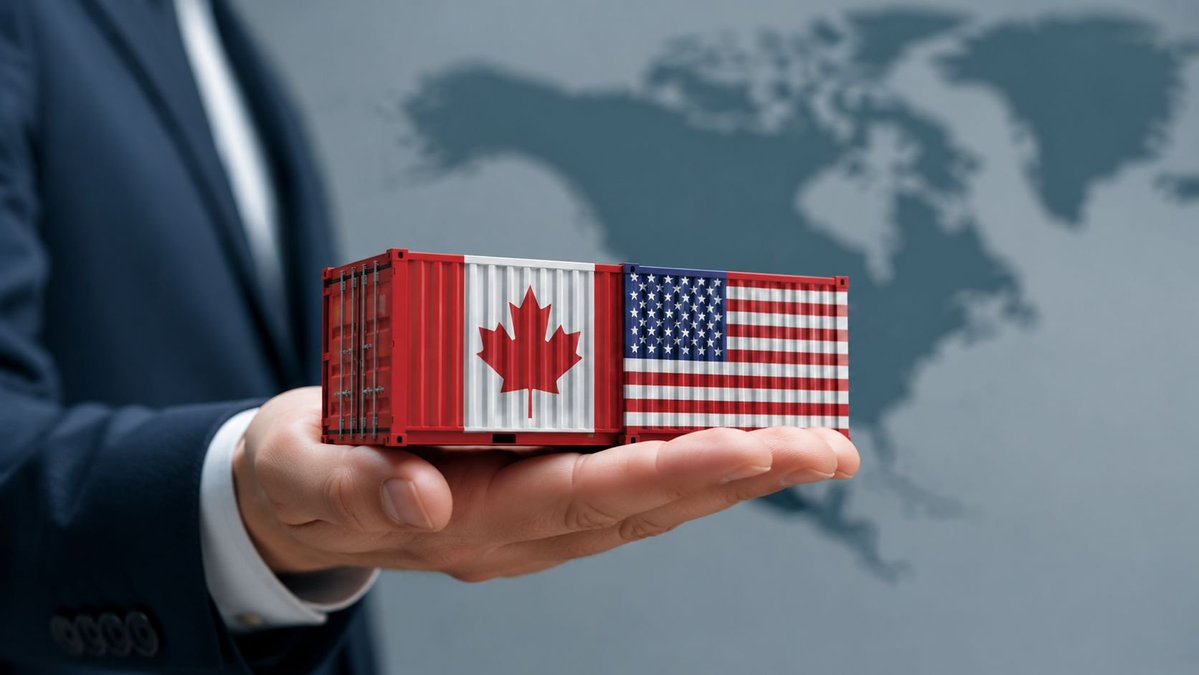
The agreement provides welcome predictability for Canadian exporters, but it also effectively locks in Canada's commitments on tariff exemptions for certain Chinese steel and aluminum products for another two years. That is an important part of the bargain and will now have to be factored into Canada's ongoing trade negotiations with the United States. Ottawa is increasingly having to navigate its economic relationships with Beijing and Washington simultaneously, and decisions made in one relationship inevitably have implications for the other.
Canada just restarted high-level economic talks with China after an 8-year freeze, opening the door to Chinese banks while running a huge trade deficit.
On Nov 8-9 in Vancouver, Vice-Premier He Lifeng met Finance Minister Champagne and Trade Minister Sidhu for the Second Canada-China Economic and Financial Strategic Dialogue. It was the first since 2018 and follows Carney’s January Beijing visit and new trade roadmap.
They agreed to expand financial sector access, deepen capital-market and regulatory ties, and signed deals creating a new Financial Regulatory and Supervisory Dialogue (OSFI-NFRA) plus a Financial Working Group. Both sides also welcomed the yuan-Canadian dollar currency swap.
Two-way trade hit $125.7 billion in 2025. Canada exported $35 billion. China exported $90.6 billion. Chinese investment stock in Canada: $43.4 billion. Canadian investment in China: $15 billion.
The talks come right before Carney’s expected APEC meeting with Xi. China is also preparing to issue its first sovereign green bonds in Canada outside Hong Kong, Macau, and London.
Both sides call it a return to a “sound track.” The numbers show a widening gap and deeper financial integration.
Honda is investing in our next 50 years in America.
Today, we announced plans to establish a new $3 billion auto plant in Ohio, creating more than 2,000 jobs and expanding our U.S. auto production capacity to almost 1.3 million vehicles a year using domestic and globally made parts.
The facility is part of a broader investment in Honda manufacturing operations in Ohio, Alabama and Georgia that will expand and strengthen an integrated U.S. production network to boost the production of hybrid-electric vehicles, engines, and hybrid systems.
This investment will establish the foundation for our next generation of manufacturing and support new Honda and Acura models being developed right here in the U.S.
Important Fact About Sam Cooper: The Liberal Government & All Liberal Operatives HATE SAM
For the last 15 Years the Liberal Establishment has insisted everything Sam publishes is untrue or distorted
But in the end, this is what we learn about Sam' work:
EVERY WORD IS TRUE
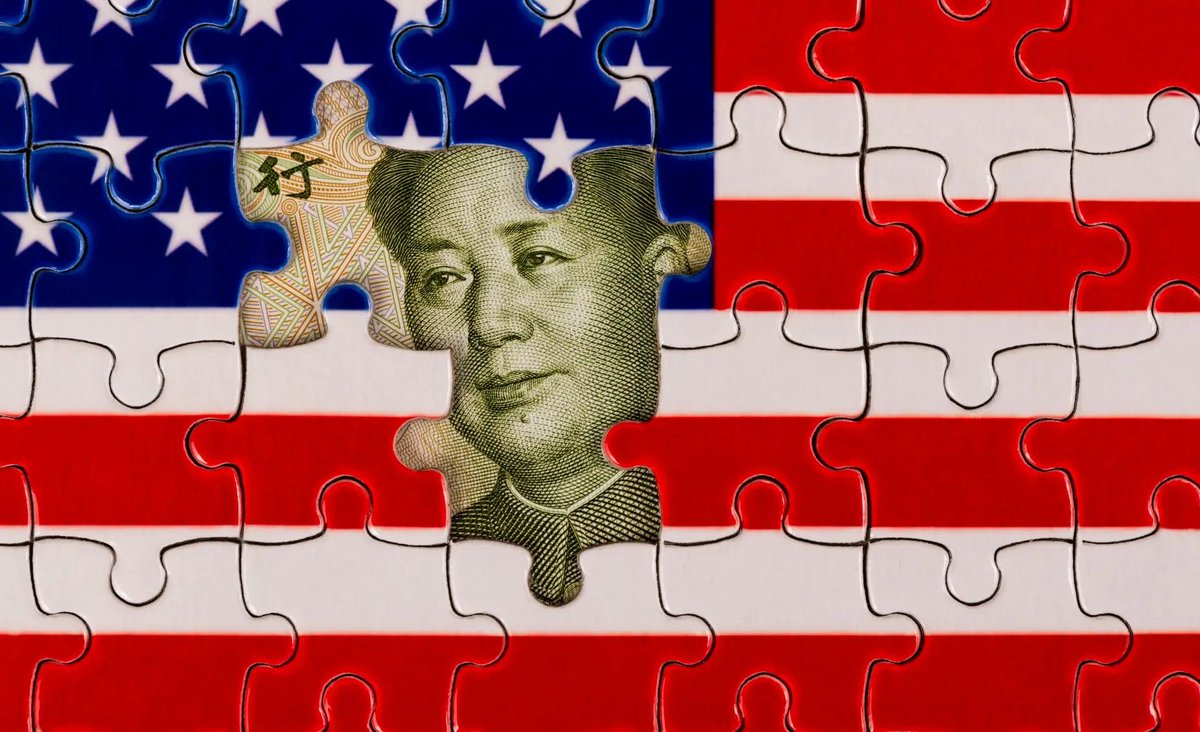
Canada’s US bond holdings quadrupled in five years. Wall Street thinks the real buyer might actually be China.
Canada went from holding about $106 billion in US Treasuries in 2021 to $464.6 billion by August 2026, jumping to fifth place among all foreign holders. At the same time, China’s official holdings fell from over $1 trillion to just $590.7 billion, an 18-year low.
Here’s the theory making the rounds on Wall Street. A DoubleLine analyst asked market participants why Canada’s buying looked so aggressive. The answer he kept hearing: “It’s not Canada. It’s the other Canada,” meaning China.
The mechanism is simple to explain. US data records who’s holding the bonds based on which bank custodian they sit with, not who actually owns them. If China moves its bonds to a Canadian bank instead of holding them directly, the holdings show up as “Canadian” in official data, even though Beijing still controls the money. One former Treasury official put it bluntly: “China has been much better at hiding its dollars than it’s been about getting out of the dollar.”
Why would China do this? It runs massive trade surpluses and needs somewhere safe to park all those dollars. But openly holding US debt doesn’t fit the story Beijing tells about reducing dependence on America. Quietly rerouting through a custodian lets China keep the safe asset while looking like it’s walking away.
To be fair, this isn’t proven. Some of Canada’s buying is likely real, pension funds and banks chasing higher US yields. Nobody, not China’s government, not Canadian regulators, has confirmed any of it.
Still, the numbers line up awfully well: as China’s reported holdings shrank, Canada’s grew by almost exactly the same amount.
WOOHOOO!!!THE VIDEO GOT TO PRESIDENT TRUMP!!! He just reposted it!
The beginning of BYE BYE FAKE NEWS!!! WE THE PEOPLE!!!! 🙌🏻🇺🇸🇺🇸🇺🇸💥💥💥💥💥🥳🥳🥳 well done Elly!
Le mensonge de l’ONU vient de s’effondrer en une semaine sur Haïti.
Pendant 30 ans, l’ONU et la « communauté internationale » ont multiplié les résolutions, les missions (MINUSTAH, MSS, GSF), les rapports, les expertises et les mandats limités.
Résultat : les gangs contrôlent 80-90 % de Port-au-Prince, des milliers de morts par an, plus d’un million de déplacés, un État fantôme. La Force de Suppression des Gangs, autorisée par le Conseil de sécurité, a mis plus d’un an à déployer environ 1 500 hommes avec un impact dérisoire. Les gangs ont même réussi à tendre une embuscade à des techniciens salvadoriens sous mandat ONU.
Bukele arrive. En une dizaine de jours, il déploie plus de 2 000 soldats salvadoriens davantage que toute la force ONU, hors du carcan bureaucratique et des chaînes de commandement multilatérales. Pas de six mois de négociations, pas de rapports de 200 pages, pas de « respect des droits des gangs ». Juste des soldats, des blindés, des hélicoptères, et une volonté claire.
Et soudain, les gangs se cachent. Les habitants sortent dans la rue, crient, célèbrent. Le mot d’ordre est simple : « Se débloque le pays ». Les chefs de gangs appellent l’ONU pour « dialoguer » et demander la médiation. La panique s’installe chez ceux qui terrorisaient le pays depuis des années.
Ce n’est pas un miracle. C’est la démonstration que le problème n’a jamais été « trop complexe pour être résolu ». Le problème, c’était le dogme : que seule l’approche multilatérale molle, procédurale, obsédée par les « droits humains » des criminels, pouvait être légitime. Que la souveraineté, la force décisive et les résultats concrets étaient suspects.
Bukele a déjà prouvé chez lui qu’on pouvait casser les gangs. Il vient de le montrer en Haïti en une semaine, pendant que l’ONU en parlait depuis trois décennies. Les Haïtiens dans la rue l’ont compris plus vite que les experts de New York et de Genève.
La question n’est plus « comment faire ? ».
Elle est : combien de temps encore allons-nous prétendre que les processus internationaux qui perpétuent le chaos sont la seule solution possible ?
A bon entendeur.